Addition Practice Normal Worksheets for Ages 5-6 - Page 2
29 filtered results
-
From - To
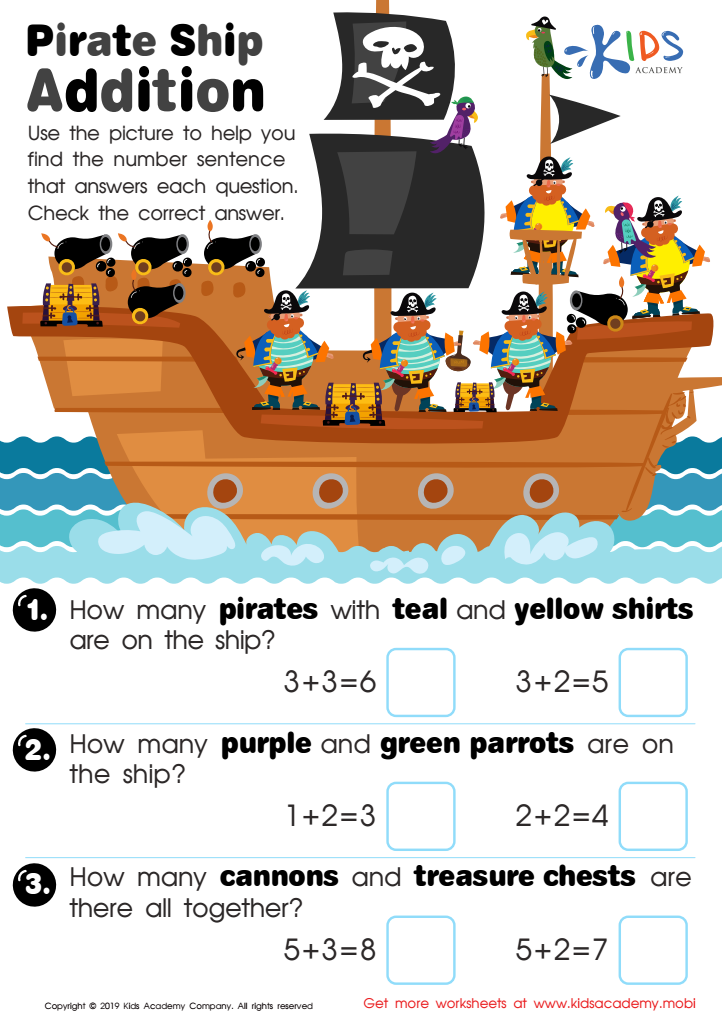
Pirate Ship Addition Worksheet
 Assign to My Students
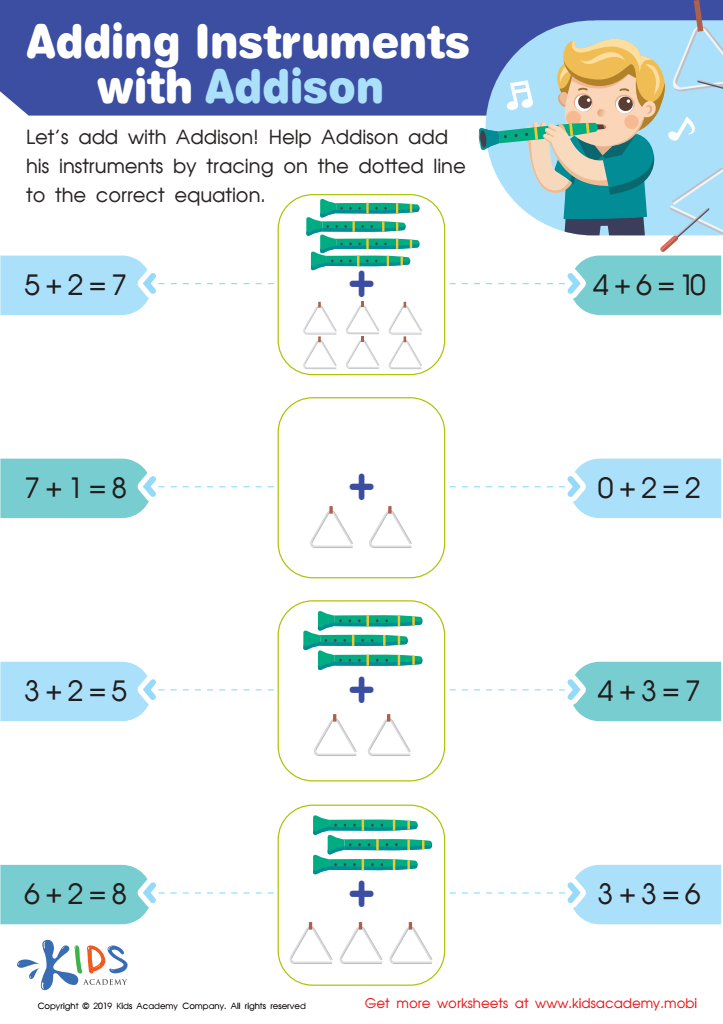
Adding Instruments with Addison Worksheet
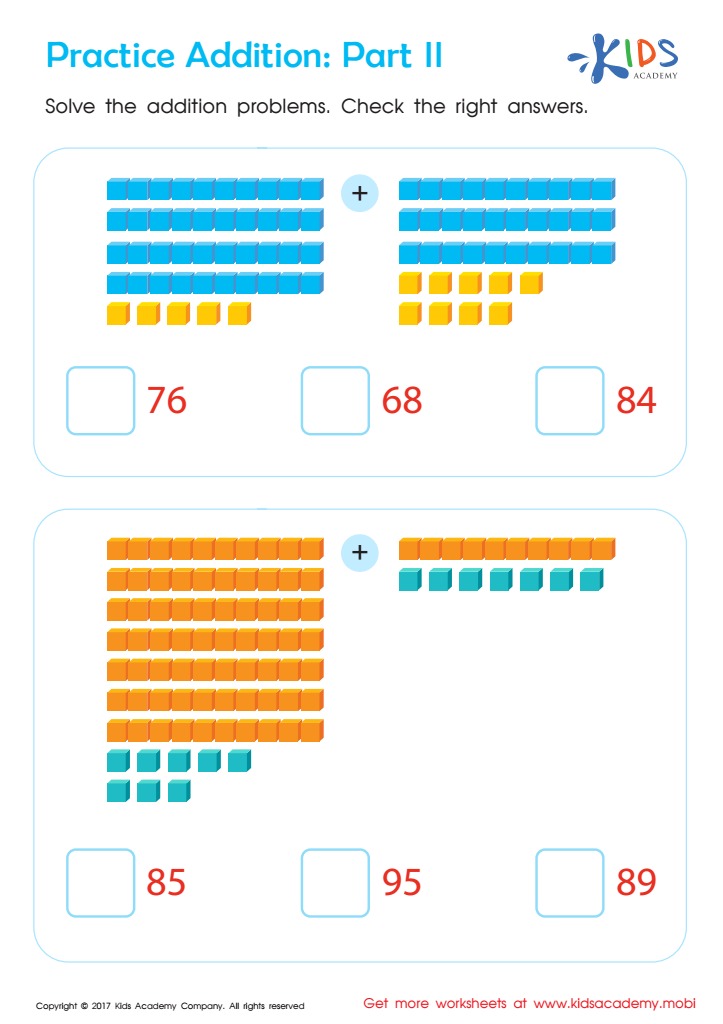
Practice Addition: Part 2 Worksheet
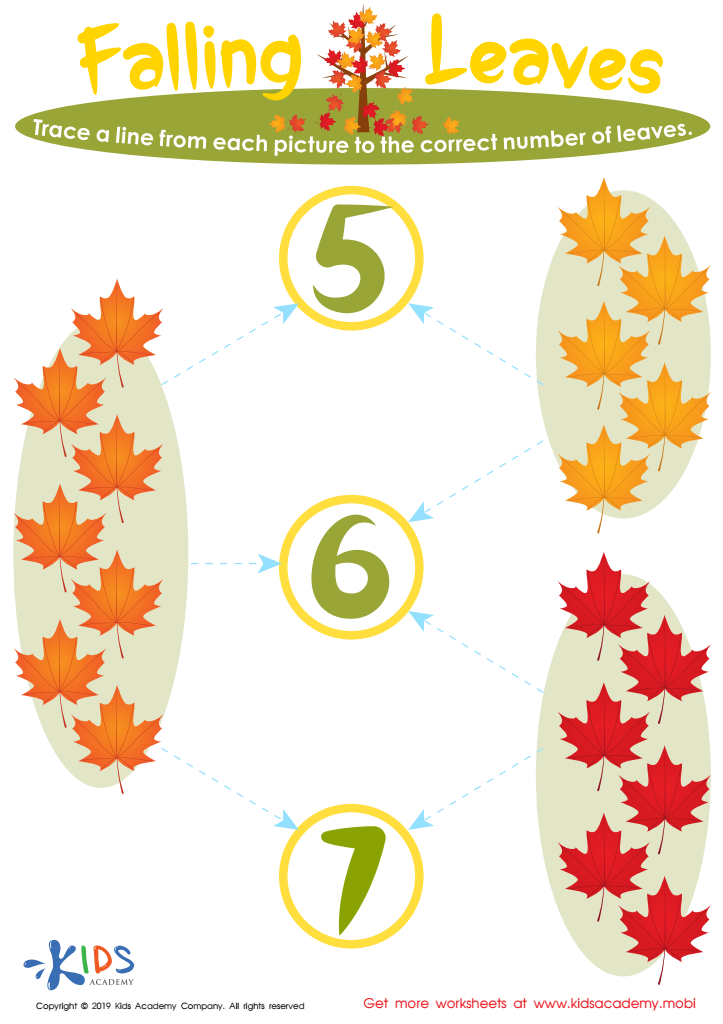
Falling Leaves Worksheet
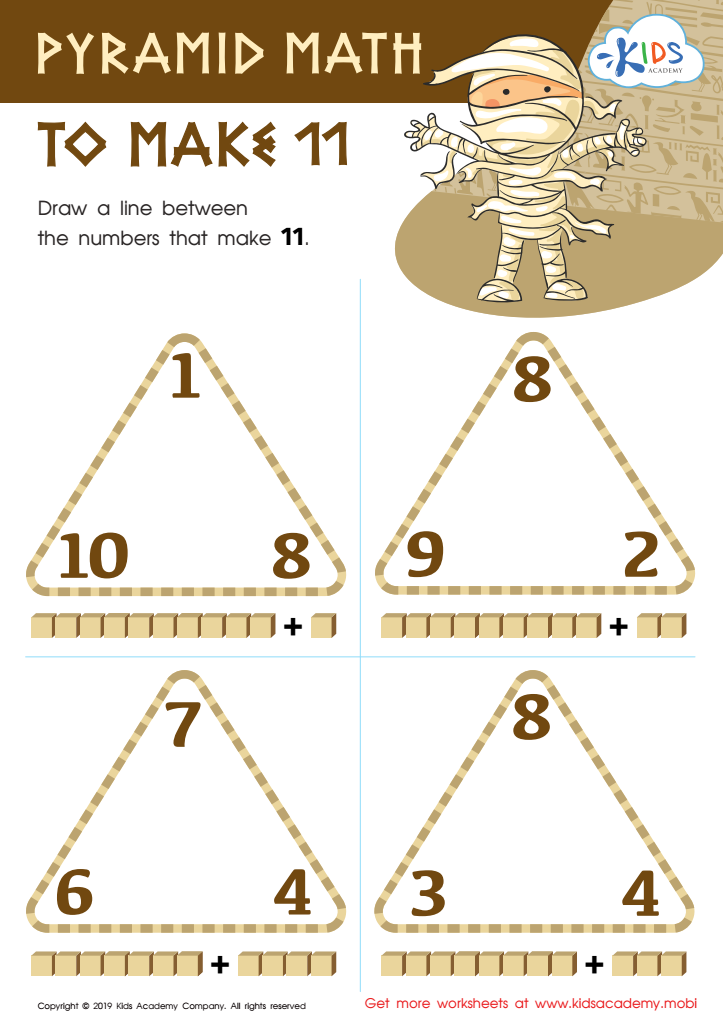
Pyramid Math to Make 11 Worksheet







Addition practice for children aged 5-6 is crucial because it lays the foundational skills for future mathematics understanding. At this age, children are beginning to grasp basic mathematical concepts. Engaging them in addition helps develop numerical literacy, which is essential for daily activities and problem-solving.
Incorporating addition into early learning promotes cognitive development, enhances memory, and strengthens critical thinking abilities. As children practice adding numbers, they learn to recognize patterns, understand quantities, and improve their attention spans. Mastering addition also boosts confidence, encouraging a positive attitude towards math and learning in general.
Additionally, parental and teacher involvement in addition practice fosters a collaborative learning environment. Parents can stimulate curiosity and reinforce what children learn in school, while teachers can create a structured approach to ensure all students are adequately supported in their learning journeys.
Moreover, developing addition skills at a young age can prevent future math-related anxiety, making it easier for children to grasp more complex concepts later on. Ultimately, prioritizing addition practice not only supports mathematical proficiency but also contributes to a child’s overall academic success and lifelong learning.








