Astronomy basics Normal Worksheets for Ages 5-6
3 filtered results
-
From - To
Explore the wonders of the universe with our Astronomy Basics Worksheets designed specifically for ages 5-6! These engaging printable activities introduce young learners to celestial concepts, including planets, stars, and the moon. Perfect for early grade teachers and parents, our worksheets incorporate fun visuals and simple language to captivate young minds. Each activity encourages creativity and curiosity, helping children develop essential skills while discovering the magic of astronomy. With a variety of coloring, tracing, and matching exercises, these worksheets make learning about space both enjoyable and educational. Ignite your child's interest in the cosmos today with our thoughtfully crafted astronomy resources!
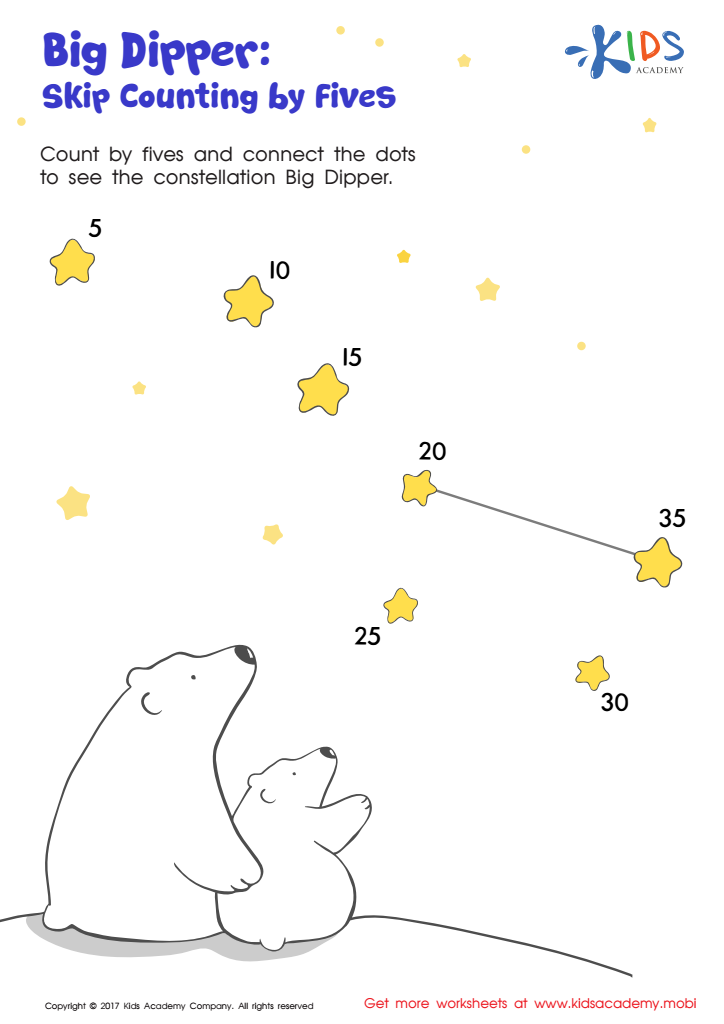
 Assign to My Students
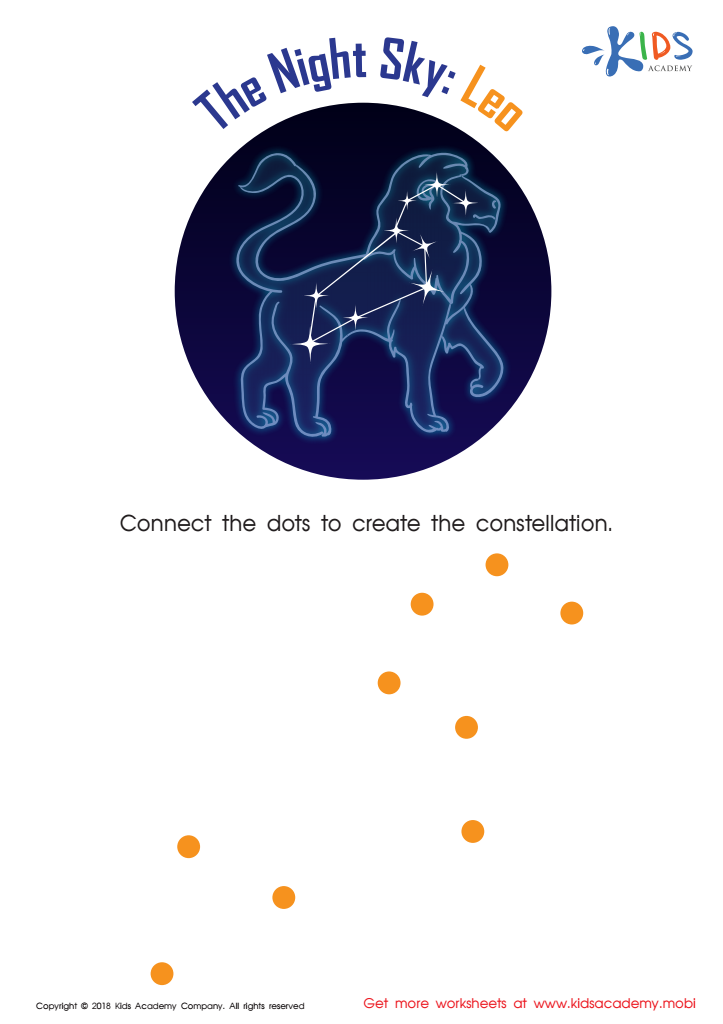
The Night Sky: Leo Worksheet
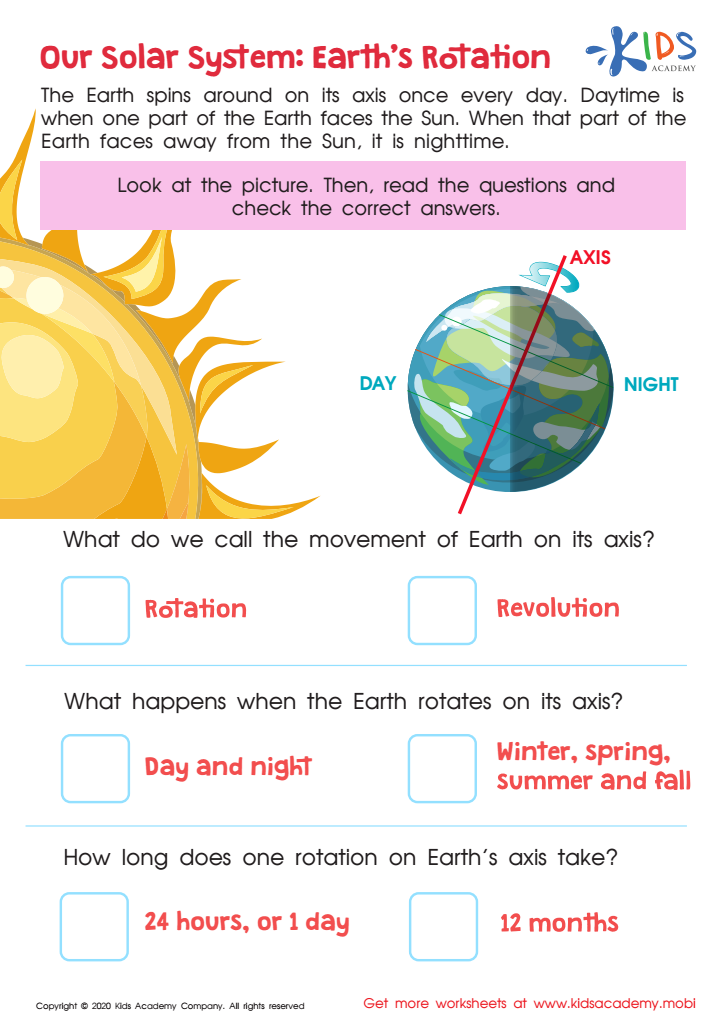
Our Solar System: Earth's Rotation Printable







Astronomy basics are essential for children ages 5-6 as they spark curiosity and wonder about the universe. At this age, children are naturally inclined to ask questions about the night sky, and introducing them to astronomy helps satisfy their curiosity in a fun and engaging way. Learning about stars, planets, and the moon cultivates critical thinking skills through exploration and observation. It encourages them to ask questions like, "Why does the moon change shape?" or "How do stars twinkle?"
Additionally, astronomy fosters a love for science and can inspire future learning in STEM (Science, Technology, Engineering, and Mathematics) fields. Engaging with astronomy presents opportunities for hands-on activities, like stargazing or creating simple models of the solar system, allowing children to learn through play.
Moreover, teaching astronomy can also enhance storytelling skills and creativity as kids imagine distant planets and galaxies. It builds important cognitive and social skills as kids share their thoughts and discoveries with peers and adults. By embracing astronomy, parents and teachers create enriching learning experiences and nurture a sense of wonder, encouraging lifelong learning and a deeper appreciation of the world around them.








