Basic measurement concepts Normal Worksheets for Ages 5-6
3 filtered results
-
From - To
Introduce your child to essential measurement concepts with our Basic Measurement Concepts Worksheets, designed specifically for ages 5-6. These engaging and colorful worksheets provide a fun way to learn about length, weight, and volume through hands-on activities. Each worksheet focuses on simple, age-appropriate tasks that help young learners grasp foundational measurement skills, laying the groundwork for future mathematical understanding. With a variety of exercises, including comparisons and ordering objects, children will develop confidence and competence in measuring. Perfect for home or classroom use, our printable worksheets offer an interactive experience that supports early childhood education and enhances your child's learning journey.
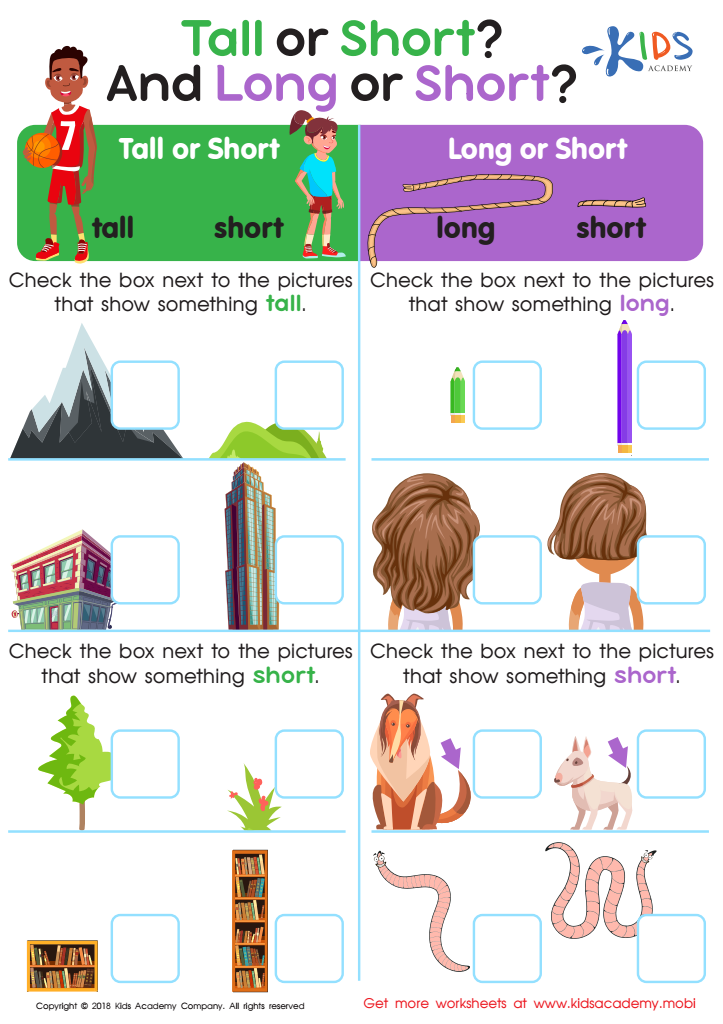
Tall or Short and Long or Short? Worksheet
 Assign to My Students
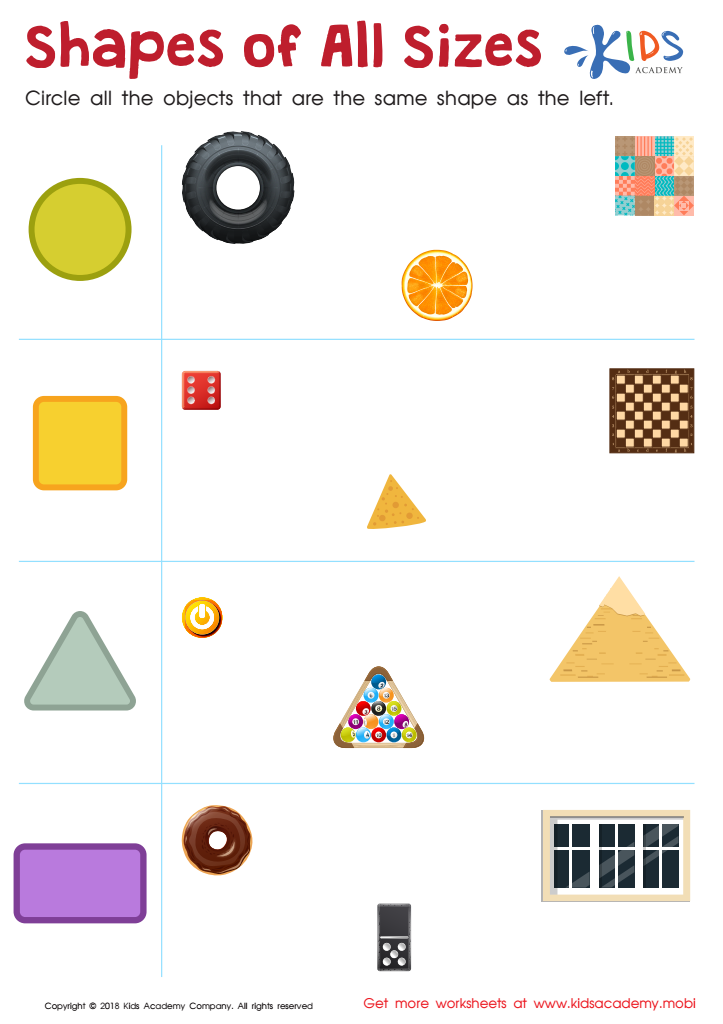
Shapes of All Sizes Worksheet
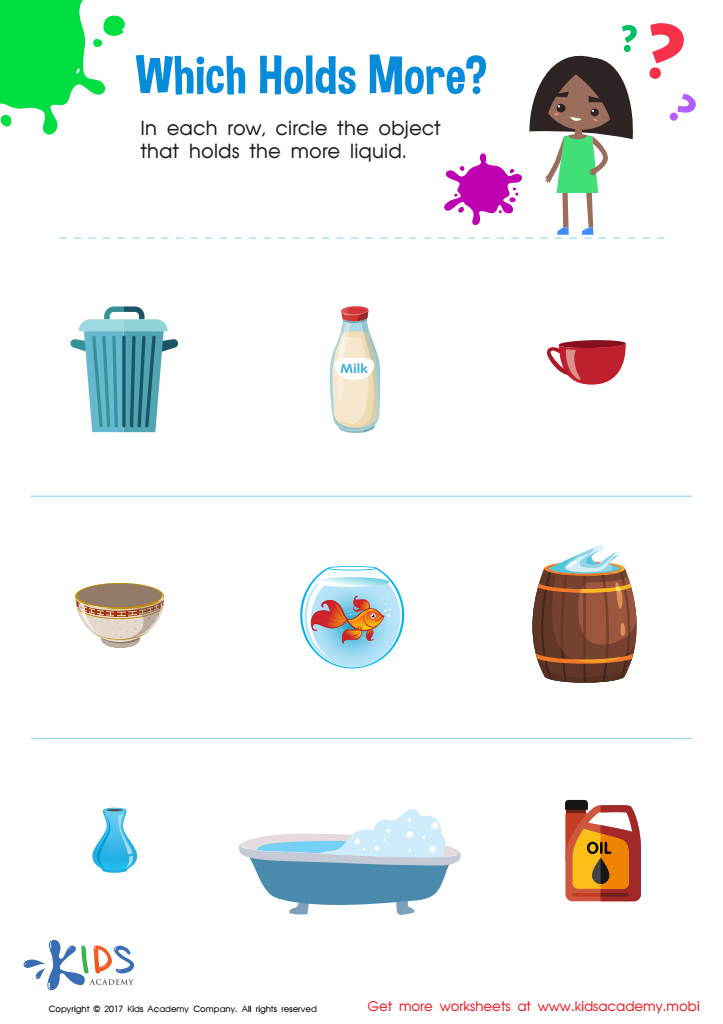
Which Holds More: Capacity Worksheet






Teaching basic measurement concepts to children ages 5-6 is pivotal for several reasons. First, these foundational skills foster critical thinking and problem-solving abilities. By introducing children to concepts of length, weight, and volume, we equip them with the tools to understand and analyze their environment. For instance, when children learn to compare the heights of different objects or the weight of various toys, they not only grasp the measurements themselves but also develop reasoning skills as they assess differences and similarities.
Furthermore, measurement concepts are essential for fostering early math skills. Understanding these ideas lays the groundwork for more advanced mathematical concepts, such as addition, subtraction, and geometry, which builds academic confidence in young learners.
Parents and teachers also help children connect measurement to real-life situations, such as cooking, building, or gardening. By incorporating playful activities involving measurement, learners engage in hands-on experiences that make learning enjoyable and memorable. In addition, these skills enhance communication as children start to articulate their findings, promoting effective expression and dialogue. Ultimately, nurturing measurement concepts enables children to navigate the world around them intelligently, making this early education investment highly significant for their development.








