Enhancing observational skills Normal Worksheets for Ages 5-6
3 filtered results
-
From - To
Enhance your child's observational skills with our thoughtfully designed worksheets for ages 5-6. These engaging activities focus on developing critical thinking and attention to detail through fun, interactive tasks. Children will explore patterns, colors, and shapes while practicing essential cognitive skills that pave the way for academic success. Our worksheets are user-friendly and cater to young learners, making learning enjoyable and effective. Perfect for home or classroom use, they provide an excellent way to stimulate curiosity and foster a love for learning. Foster your child's growth today with our enriching, age-appropriate worksheets that empower them to observe, analyze, and succeed!
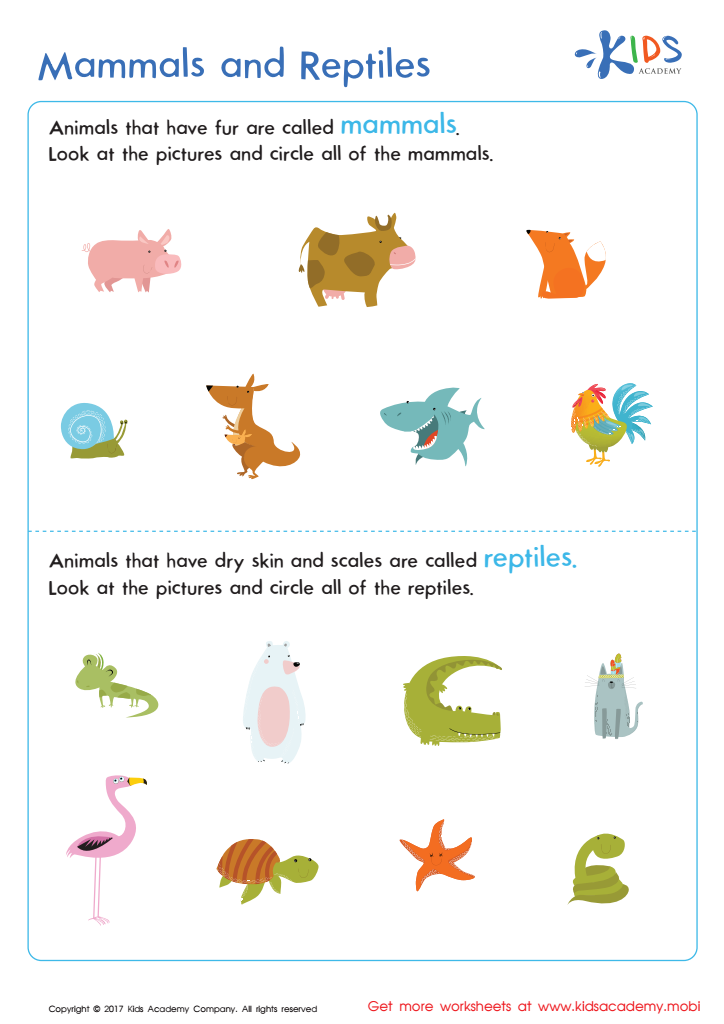
Mammals and Reptiles Worksheet
 Assign to My Students
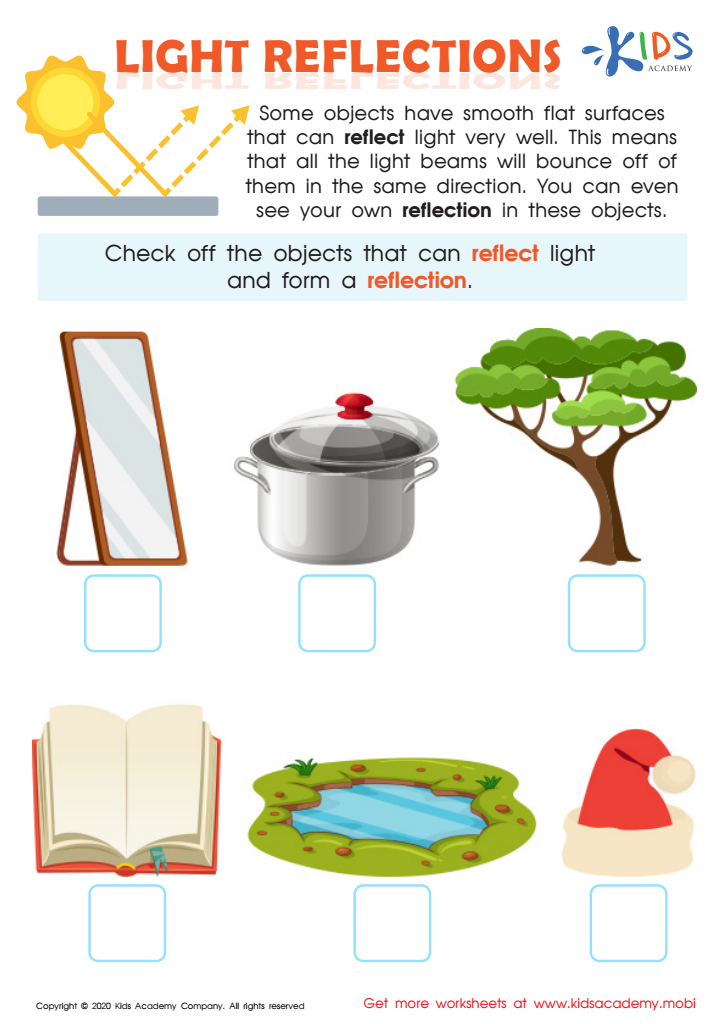
Light Reflections Worksheet
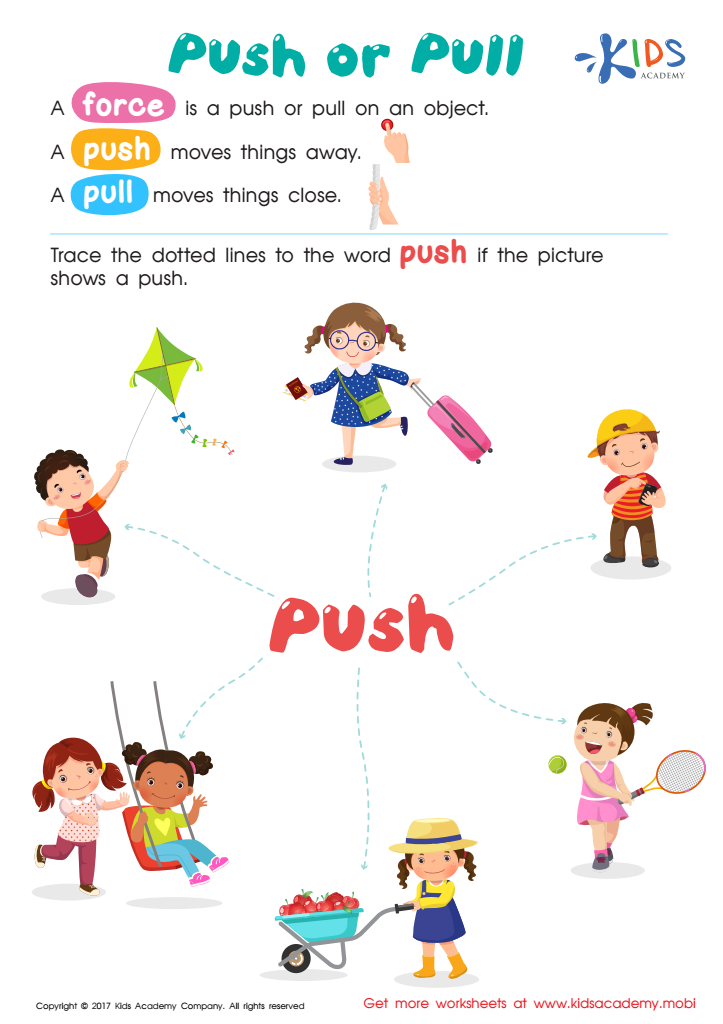
Push or Pull Worksheet








Enhancing observational skills in children aged 5-6 is crucial for their overall development and learning. During these formative years, children develop their ability to notice details in their environment, which fosters curiosity and critical thinking. Observational skills form the foundation for skills in literacy and numeracy; for instance, children need to observe shapes and patterns to understand math concepts and recognize letters and sounds for reading.
Moreover, improved observational skills promote social-emotional development. Children learn to recognize non-verbal cues in their peers, understanding emotions and building empathy. This awareness fosters better communication and collaborative skills among classmates, both essential for future interpersonal success.
For parents and teachers, enhancing observational skills means creating opportunities for children to explore, ask questions, and engage with their surroundings. This engagement can be as simple as nature walks, interactive discussions, or activities that encourage looking closely and thinking deeply. By nurturing these skills, caregivers can cultivate a love for learning and lay the groundwork for academic achievements. Ultimately, caring about and investing time in enhancing observational skills supports a child's ability to thrive academically and socially, setting them up for a lifetime of exploration and discovery.








