Filters

124 filtered results

Clear all filters
Favorites
With answer key
Interactive

124 filtered results

Difficulty Level

Grade


Check out this FREE "Fine Motor Skills" Trial Lesson for age 5-6!

D

Favorites
With answer key
Interactive
  • 5-6
  • Fine Motor Skills
  • Normal
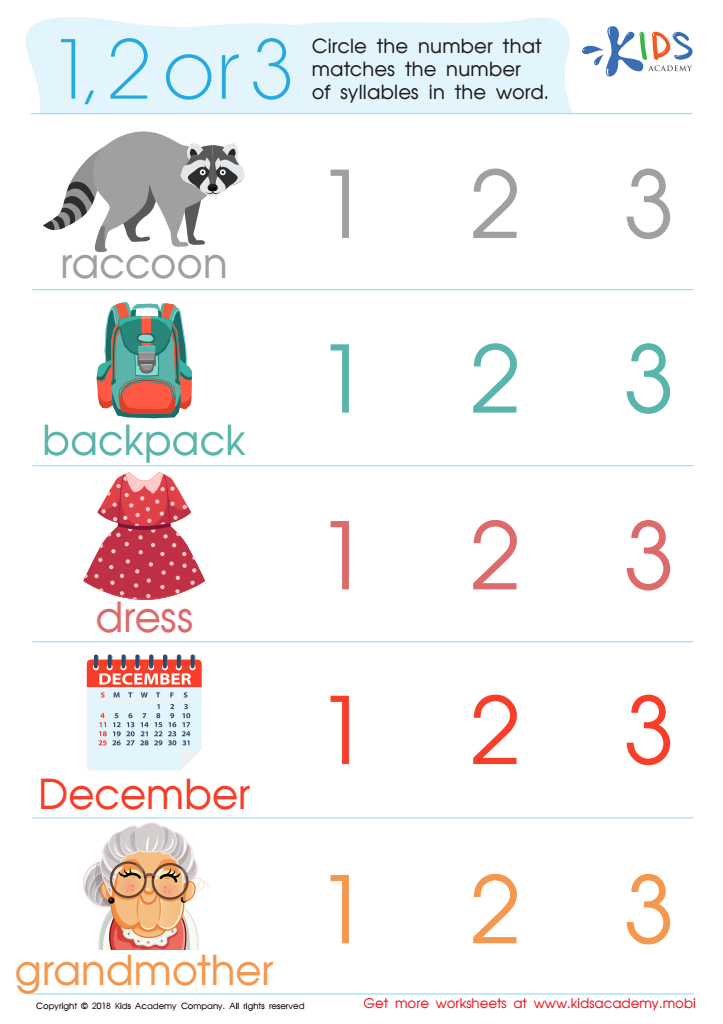
1, 2 or 3? Worksheet

1, 2 or 3? Worksheet

Do your kids know about syllables? Test their understanding with this worksheet. Read the words aloud and ask them to say them with you. Help them circle the number that matches the number of syllables in each word. Perfect for expanding knowledge or testing how much they've already learned.
1, 2 or 3? Worksheet
Worksheet
letter d worksheets
letter d worksheets

Letter D Tracing Page

Trace and write capital and lowercase letter "D" with our free printable alphabet worksheet! Be careful not to mix up "b" and "d" - just look at the ducks and write their first letter. The dolphin wants to join the fun too - do you like dolphins? Get more fun worksheets and activities at Kids Academy!
Letter D Tracing Page
Worksheet
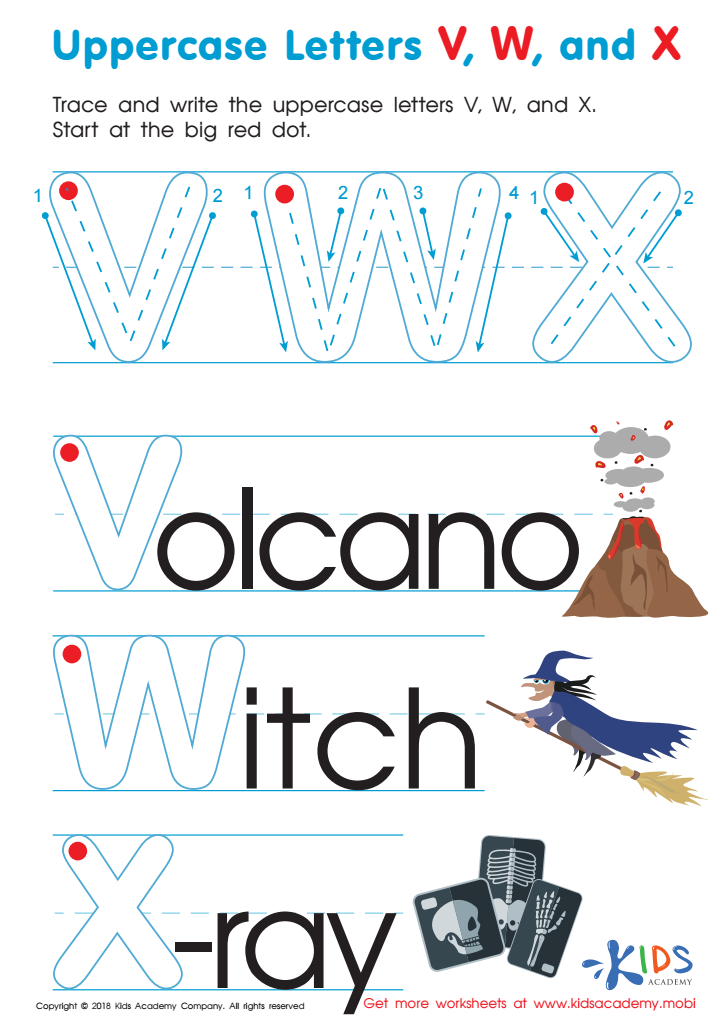
Uppercase Letters V, W, and X Worksheet

Uppercase Letters V, W, and X Worksheet

This worksheet is perfect for kids struggling to write uppercase letters V, W, and X. Warm up their brains first by having them name words starting with these letters. Then, help them trace and write each letter from the big red dot. With your assistance, they will quickly sharpen their writing skills.
Uppercase Letters V, W, and X Worksheet
Worksheet
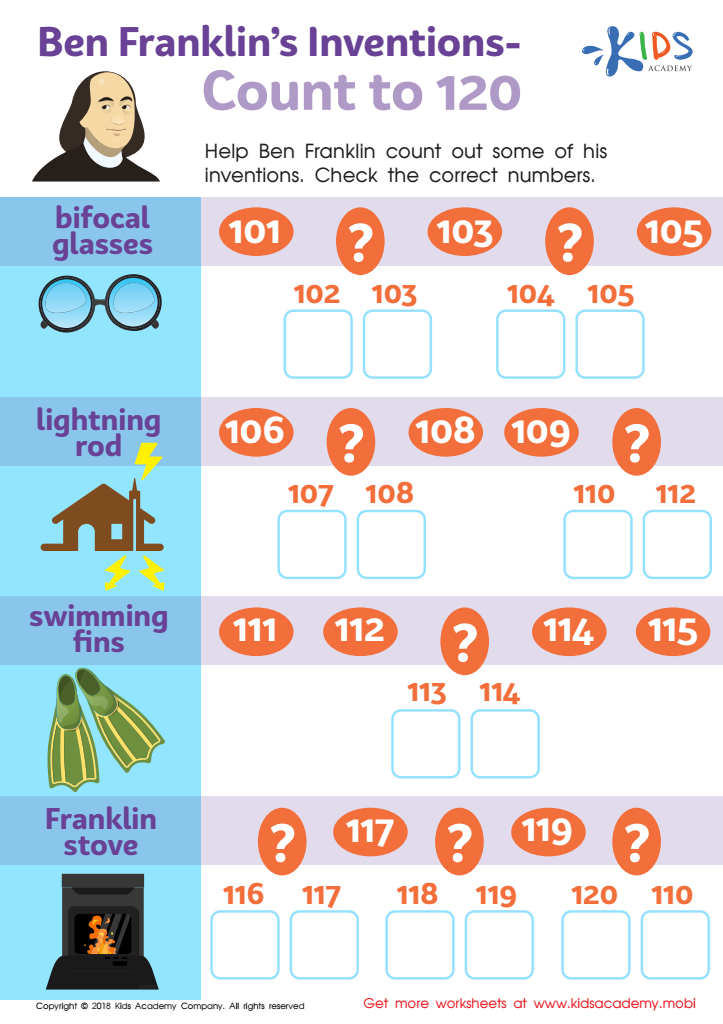
Ben Franklin’s Inventions – Count to 120 Worksheet


Ben Franklin’s Inventions – Count to 120 Worksheet

Benjamin Franklin is a significant figure in US history. He invented objects we use daily. If your child is interested in object history and invention, they'll love this worksheet. See if they can help Mr Franklin count his inventions and check their answers. It's a simple and enjoyable task!
Ben Franklin’s Inventions – Count to 120 Worksheet

Worksheet


... 5 6

Fine motor skills are essential for children aged 5-6 as they play a crucial role in their overall development and daily activities. At this age, children are refining their ability to use small muscle movements, which are integral for tasks like writing, buttoning clothes, and manipulating small objects. Parents and teachers should care deeply about fine motor skills development because these skills impact academic success and social interactions.

A child's proficiency in fine motor skills can affect their confidence and independence. For instance, children who struggle with these skills may feel frustration during common activities, leading to avoidance and reduced learning opportunities. Furthermore, fine motor development is linked to cognitive development; tasks that promote these skills often enhance hand-eye coordination and cognitive processing.

Additionally, fine motor skills are foundational for more complex academic tasks in later grades. Assisting children in developing these skills through playful activities—like drawing, cutting, or playing with building blocks—can encourage creativity and problem-solving abilities. In essence, fostering fine motor skills in young learners supports a well-rounded educational experience, contributing not only to academic achievement but also to their ability to navigate the world confidently.