Improving counting skills Normal Worksheets for Ages 5-6
3 filtered results
-
From - To
Enhance your child's counting skills with our engaging Normal Worksheets designed specifically for ages 5-6. These worksheets offer a fun and interactive way for young learners to practice essential counting concepts, from recognizing numbers to basic addition. With colorful illustrations and age-appropriate activities, kids will develop their numerical understanding while enjoying hands-on practice. Each worksheet targets key skills to build confidence and foster a love for learning. Perfect for parents and teachers alike, these printable resources are ideal for home or classroom use. Start your child's counting journey today and watch them thrive in early mathematics!
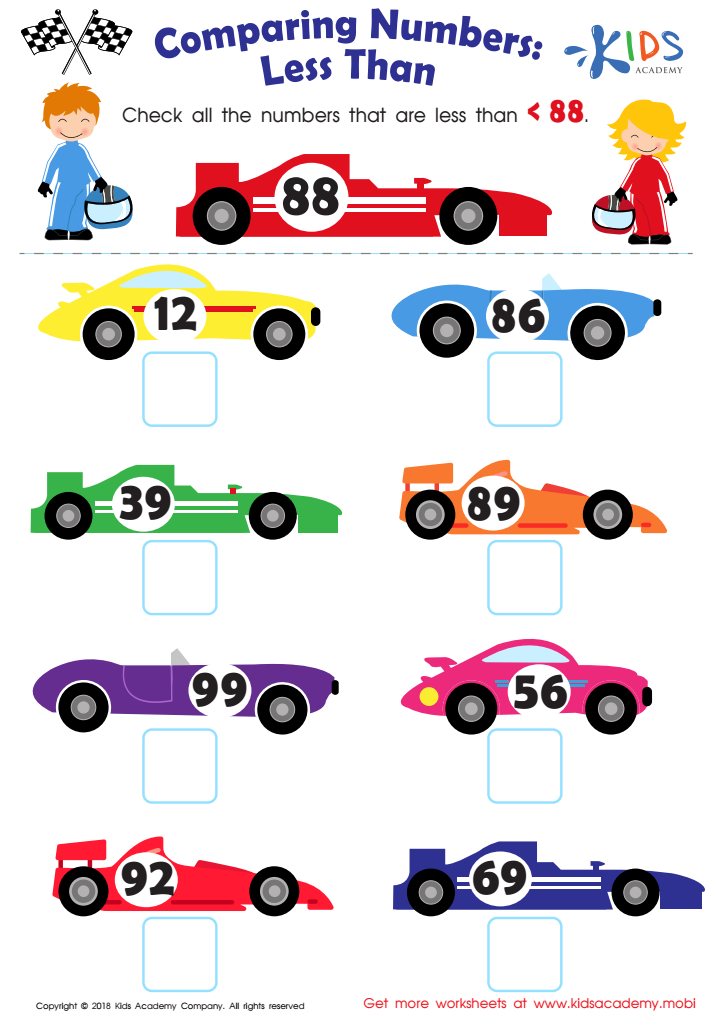
Less Than Worksheet
 Assign to My Students
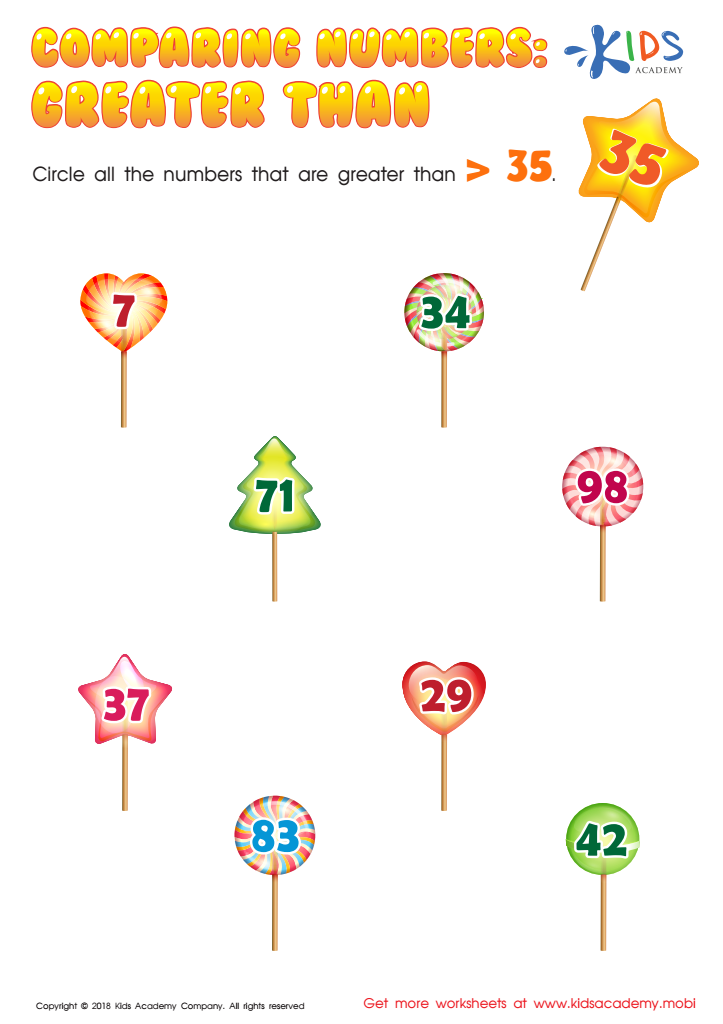
Greater Than Worksheet
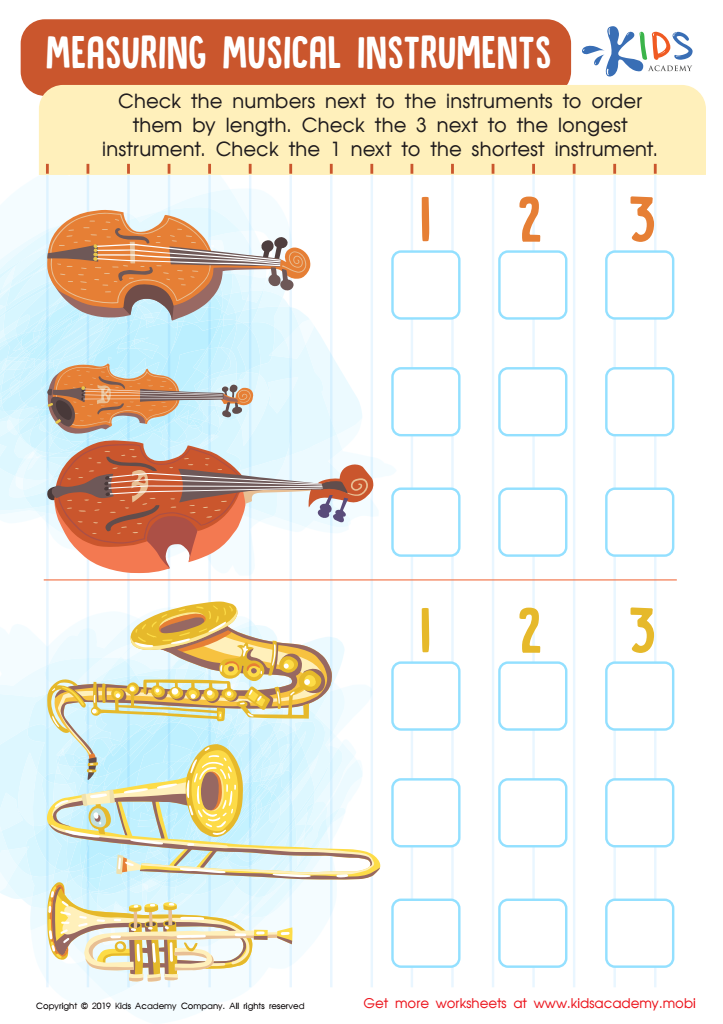
Measuring Musical Instruments Worksheet




.jpg)
.jpg)


Improving counting skills in children aged 5-6 is crucial for their overall cognitive development. At this age, children begin to grasp foundational math concepts that are essential for later learning. Counting not only enhances numerical skills but also promotes logical thinking and problem-solving abilities.
Parents and teachers should care about these skills because they impact a child’s academic confidence and interest in math. Mastering counting lays the groundwork for understanding more complex mathematical concepts such as addition, subtraction, and even basic geometry. When children can confidently count, they develop a positive attitude toward math, seeing it as approachable rather than intimidating.
Moreover, counting is key in various real-life situations. From simple tasks like counting toys to understanding time and money, a strong foundation in counting helps children navigate everyday challenges. Additionally, improving counting skills fosters essential life skills such as organization and patience.
In summary, investing in counting skills for young children not only supports their academic journey but also equips them with valuable tools for managing everyday experiences. Encouraging these skills at an early age builds confidence and a love for learning that can last a lifetime.








