Map reading skills Normal Worksheets for Ages 5-6
6 filtered results
-
From - To
Introducing our engaging Map Reading Skills Worksheets for Ages 5-6! These thoughtfully designed activities will help young learners develop essential map reading skills through fun, hands-on practice. Children will learn to identify map symbols, locate landmarks, understand basic directions, and interpret simple maps, all while enhancing their spatial awareness and critical thinking abilities. Tailored specifically for early readers, our worksheets feature bright, colorful illustrations and straightforward instructions to keep kids excited and motivated. Perfect for both classroom use and at-home learning, these resources make geography exciting and accessible for early learners. Start your child's map-reading journey today!
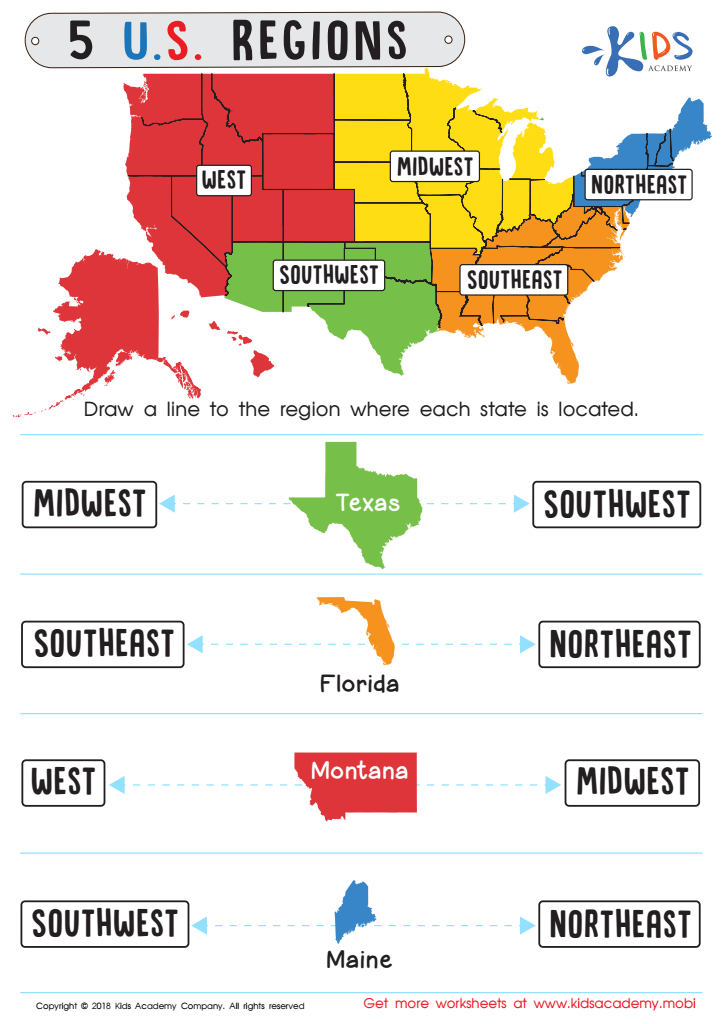
5 U.S. Regions Worksheet
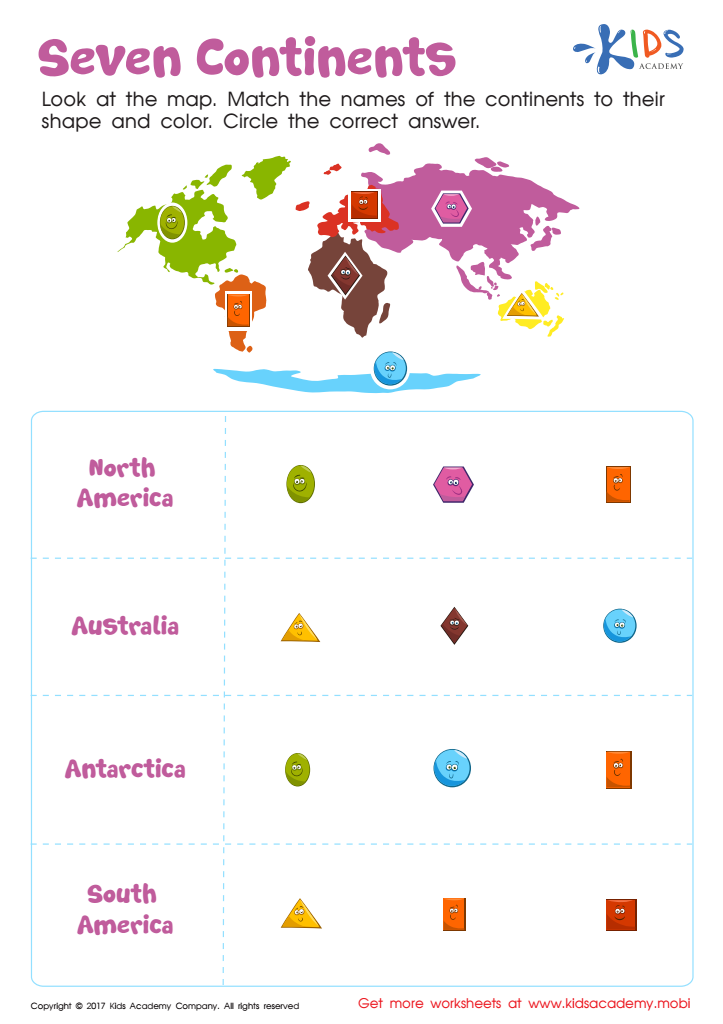
Seven Continents Worksheet
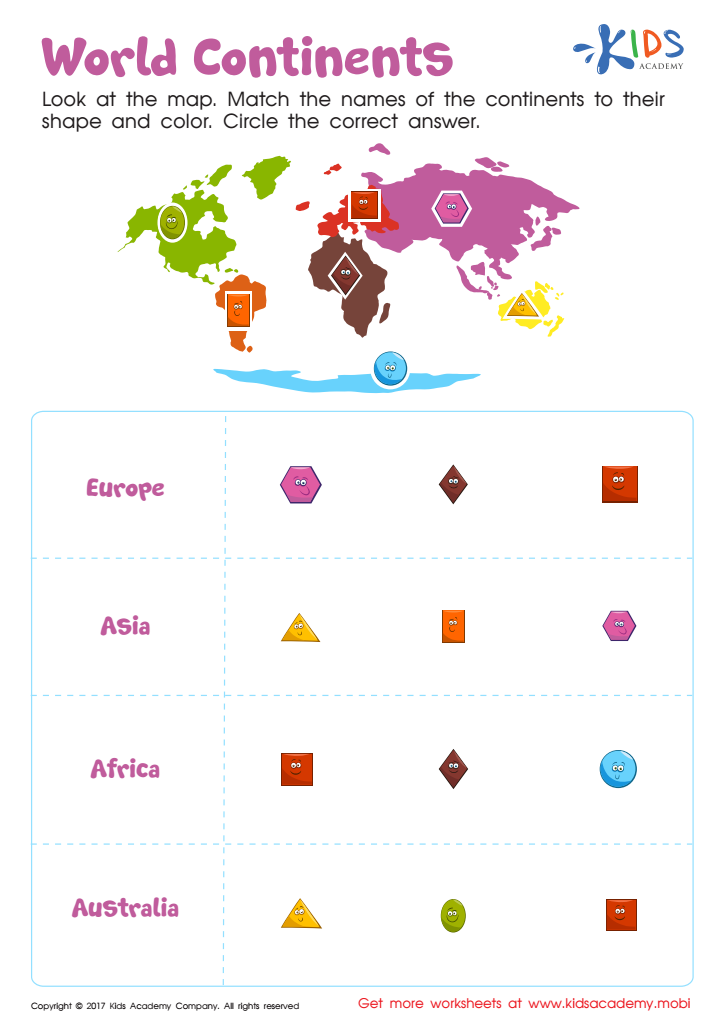
World Continents Worksheet
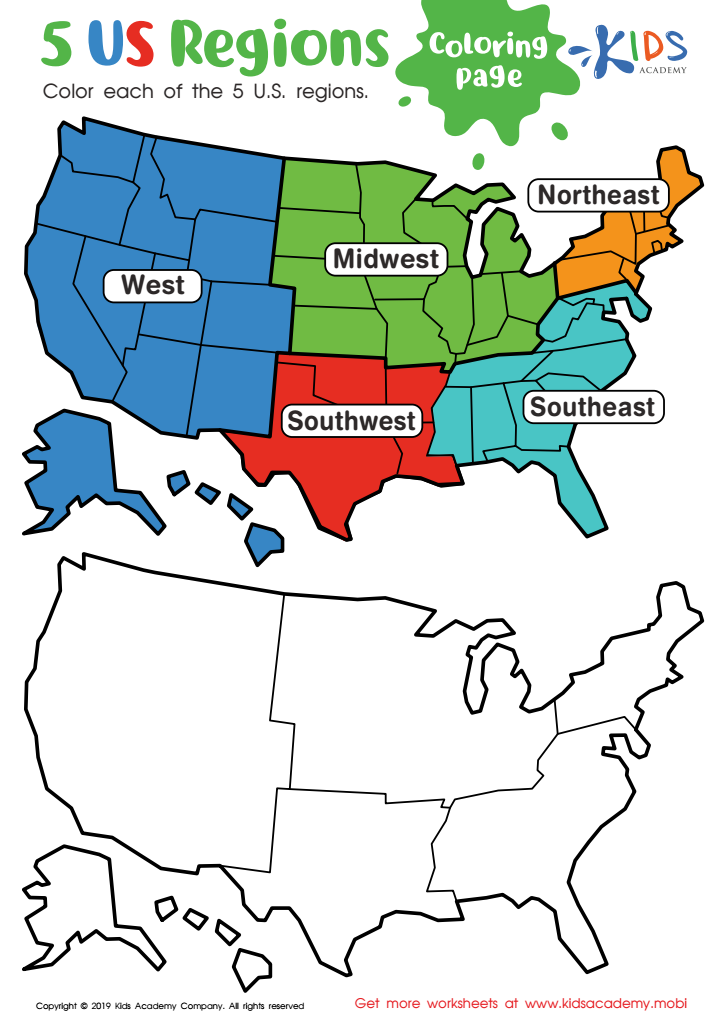
US Regions Coloring Page Worksheet
 Assign to My Students
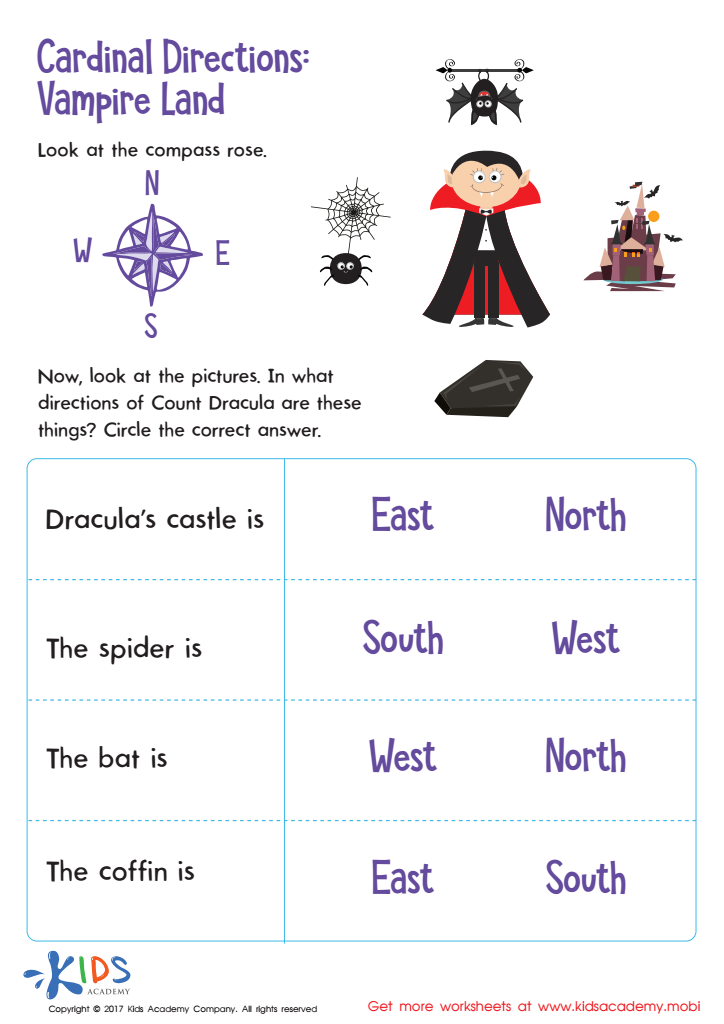
Cardinal Directions Printable

Towns Worksheet







Map reading skills are essential for young children aged 5-6 as they lay the foundation for a variety of fundamental cognitive and practical abilities. At this impressionable age, kids are naturally curious about their surroundings, and maps serve as an excellent tool to harness and direct this curiosity effectively.
Firstly, understanding maps can significantly enhance a child's spatial awareness and sense of direction. This awareness helps them navigate not just physical spaces, but also abstract concepts later in life, such as math and geometry. The ability to visualize objects in space bolsters critical thinking and problem-solving skills, which are vital across all areas of learning.
Secondly, map reading nurtures fine motor skills and hand-eye coordination. Interpreting symbols, tracing routes, and understanding legends require precision and attentiveness, skills that are also crucial for writing and other detailed tasks.
Moreover, engaging with maps cultivates inquiry and exploration, encouraging children to ask questions and seek answers, thus fostering a love for learning. Maps also introduce basic geographical knowledge, giving children an early appreciation for the diversity of places and landscapes around them.
Lastly, mastering map reading promotes independence and confidence. As children begin to recognize and understand various locations, they gain a sense of mastery over the environment, which enhances their self-esteem. Introducing map reading skills at a young age prepares children with essential tools for both academic success and everyday life.








