Practicing arithmetic operations Normal Worksheets for Ages 5-6
3 filtered results
-
From - To
Help your 5-6 year old master the basics of addition and subtraction with our Practicing Arithmetic Operations Normal Worksheets! These carefully designed printables are perfect for young learners, building foundational math skills through engaging and age-appropriate activities. Each worksheet mixes fun illustrations with problems that encourage children to practice counting and simple calculations. Designed to boost confidence and proficiency, our worksheets ensure your child grasps essential arithmetic concepts while enjoying the learning process. Discover a variety of exercises tailored to enhance problem-solving skills, preparing your child for future math challenges in a fun and interactive way.
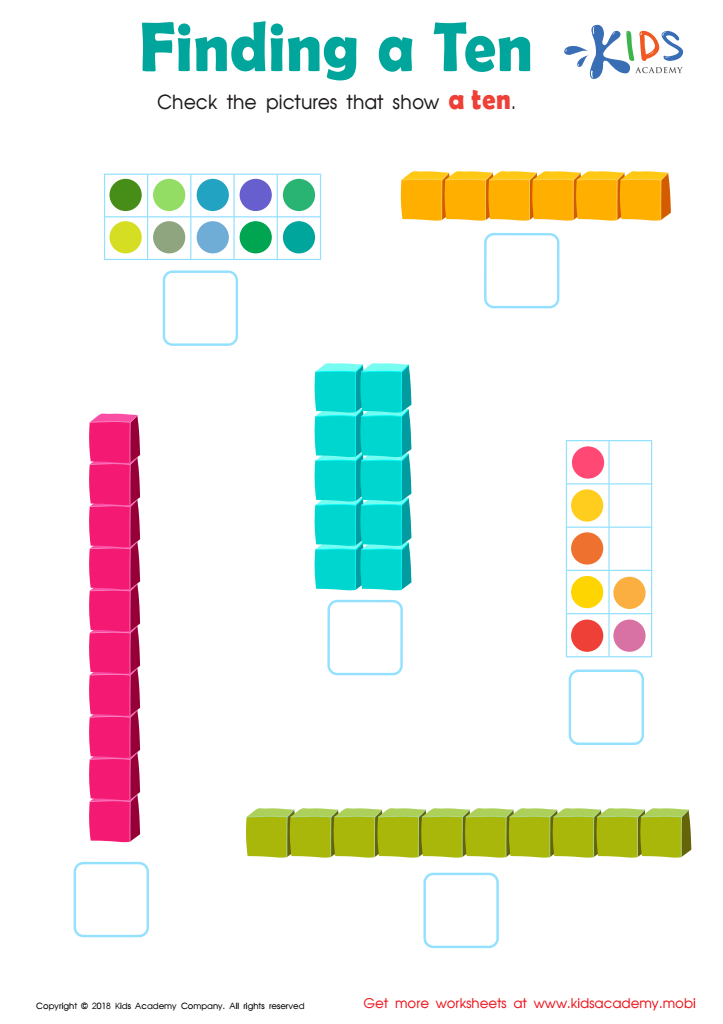
Finding a Ten Worksheet
 Assign to My Students
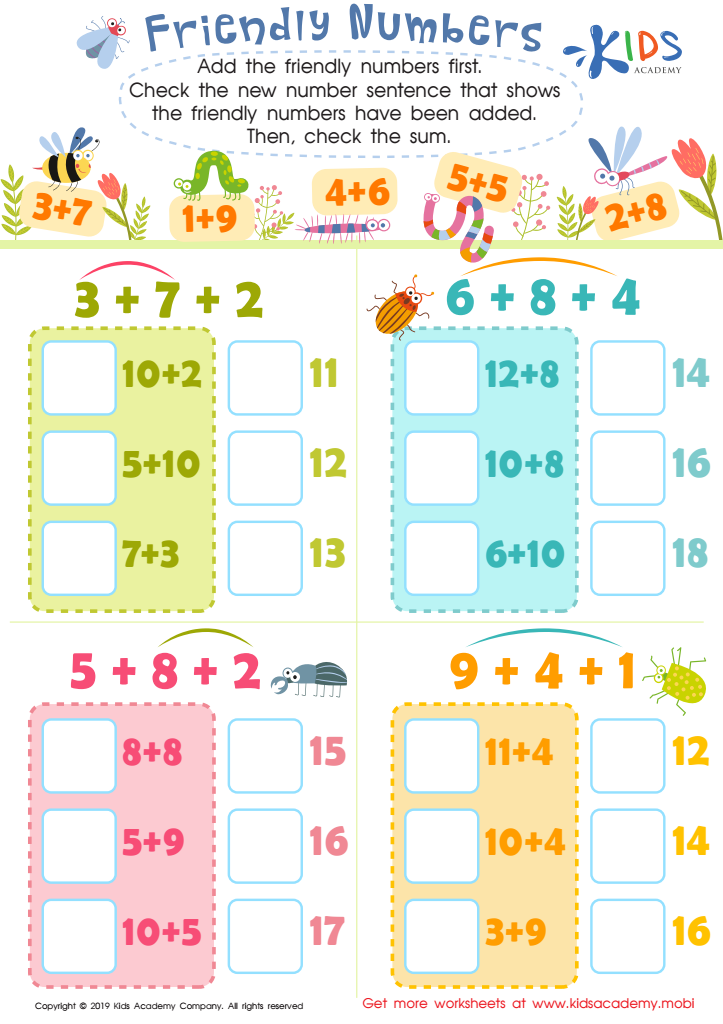
Friendly Numbers Worksheet
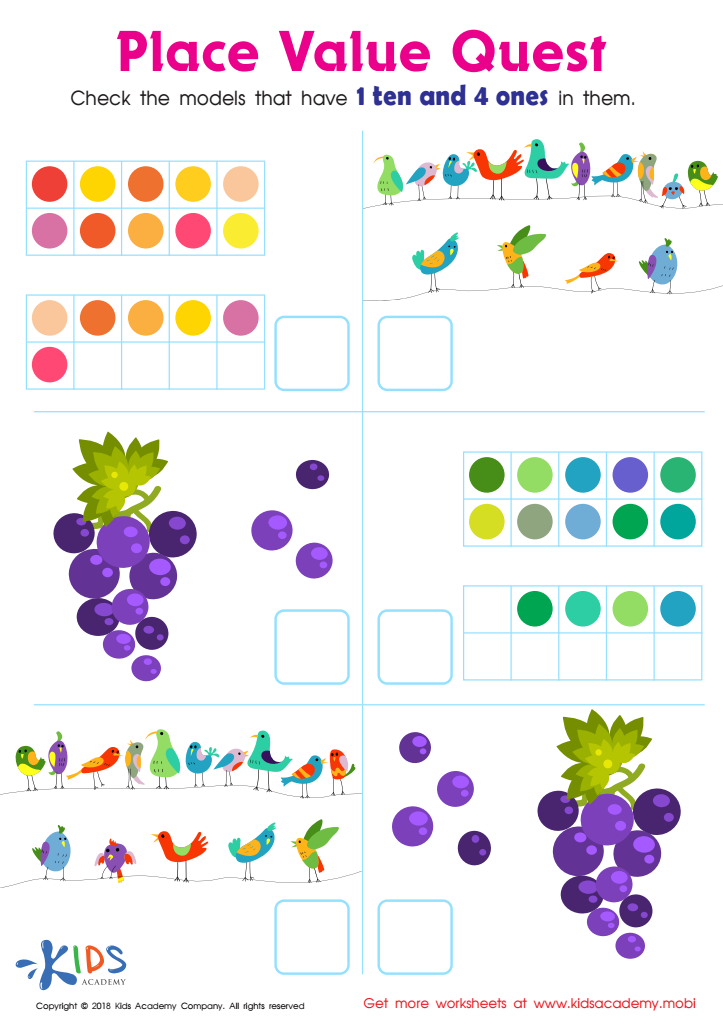
Place Value Quest Worksheet








Introducing arithmetic operations to children aged 5-6 is crucial for their cognitive and academic growth. At this early stage, young minds are exceptionally receptive to new concepts. Practicing arithmetic enhances their numeracy skills, laying a strong foundation for more complex mathematical learning in the future. As children learn to add and subtract, they also develop critical thinking and problem-solving skills.
Arithmetic exercises improve concentration and attention to detail. When children figure out simple math problems, they learn to follow logical steps and develop an ability to spot patterns and relationships. Consistent practice further establishes valuable learning habits, such as perseverance and patience, which benefit all areas of schoolwork and daily life.
Moreover, early arithmetic fluency boosts self-confidence. When children recognize that they can solve problems and understand numbers, they gain a sense of accomplishment. This positive experience fosters a love for learning and exploration across other subjects. Arithmetic also has practical applications; understanding basic math concepts enables children to engage in everyday activities, such as counting objects, telling time, and comprehending the concept of money.
Involvement from parents and teachers during this learning phase can make all the difference. Providing support, encouragement, and appropriate challenges ensures children maintain interest and make steady progress, setting the stage for educational success.








