Recognizing Patterns Normal Worksheets for Ages 5-6
6 filtered results
-
From - To
Explore our engaging "Recognizing Patterns Normal Worksheets" tailored for children ages 5-6! These interactive worksheets are designed to enhance critical thinking and cognitive skills as young learners identify and create patterns using colorful visuals and fun exercises. Ideal for preschool and kindergarten classrooms, our resources promote kinesthetic learning through various activities, including sorting, sequencing, and matching objects. By engaging with these patterns, kids will develop essential skills while enjoying hands-on practice. Perfect for parents and educators seeking to reinforce early learning concepts, our worksheets offer a fun and educational approach to mastering pattern recognition. Download today and inspire creativity in learning!
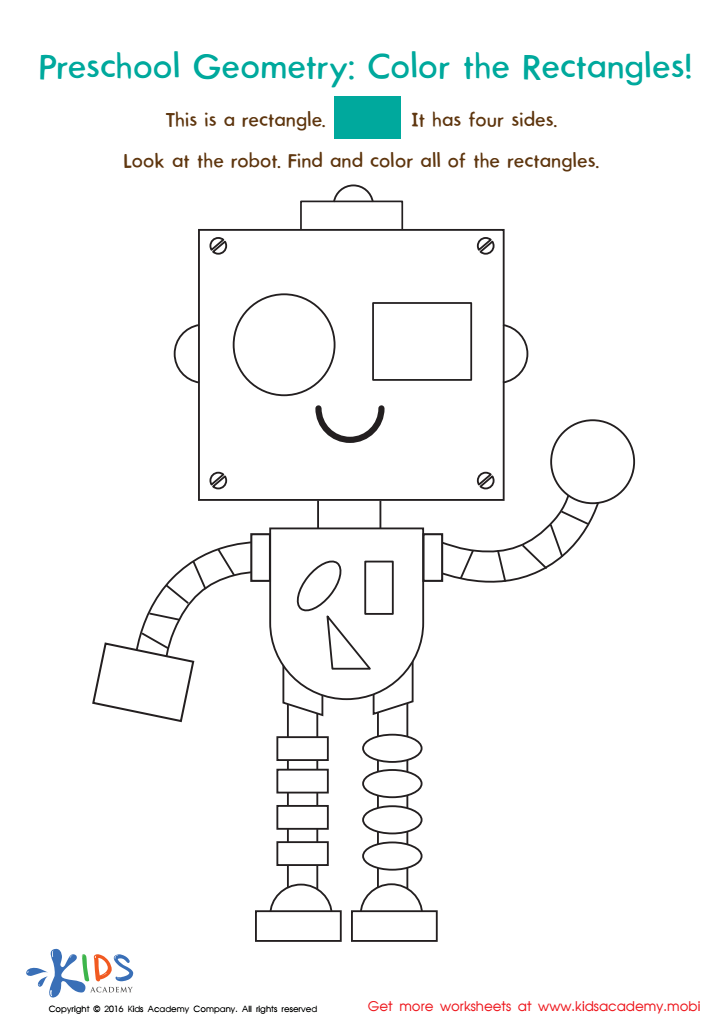
Geometry Worksheet
 Assign to My Students
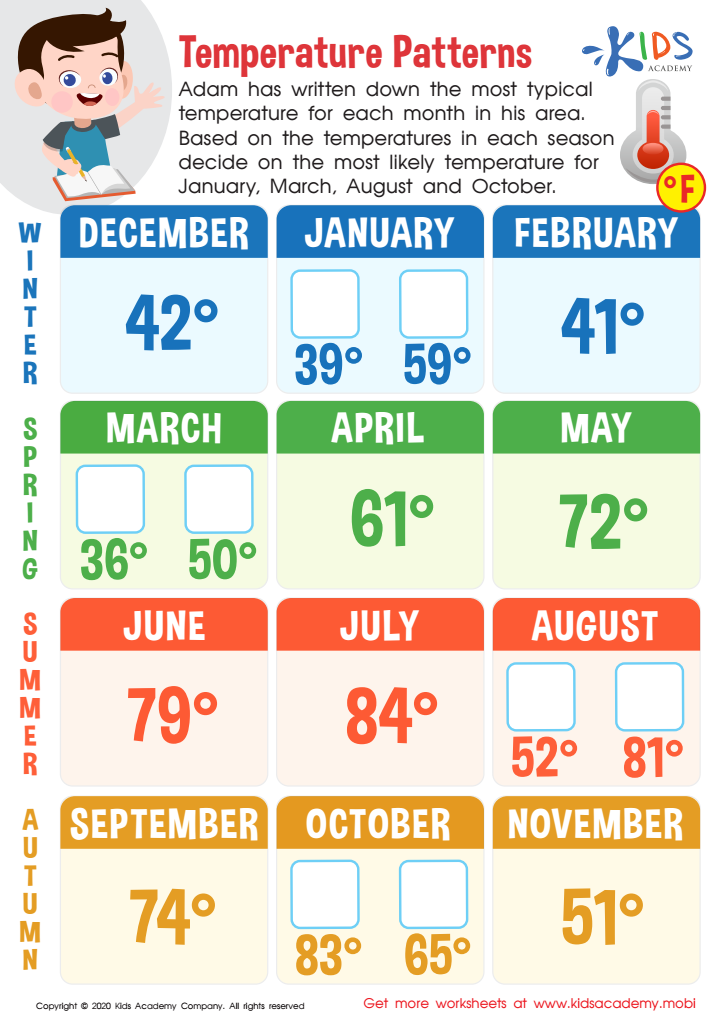
Temperature Patterns Worksheet
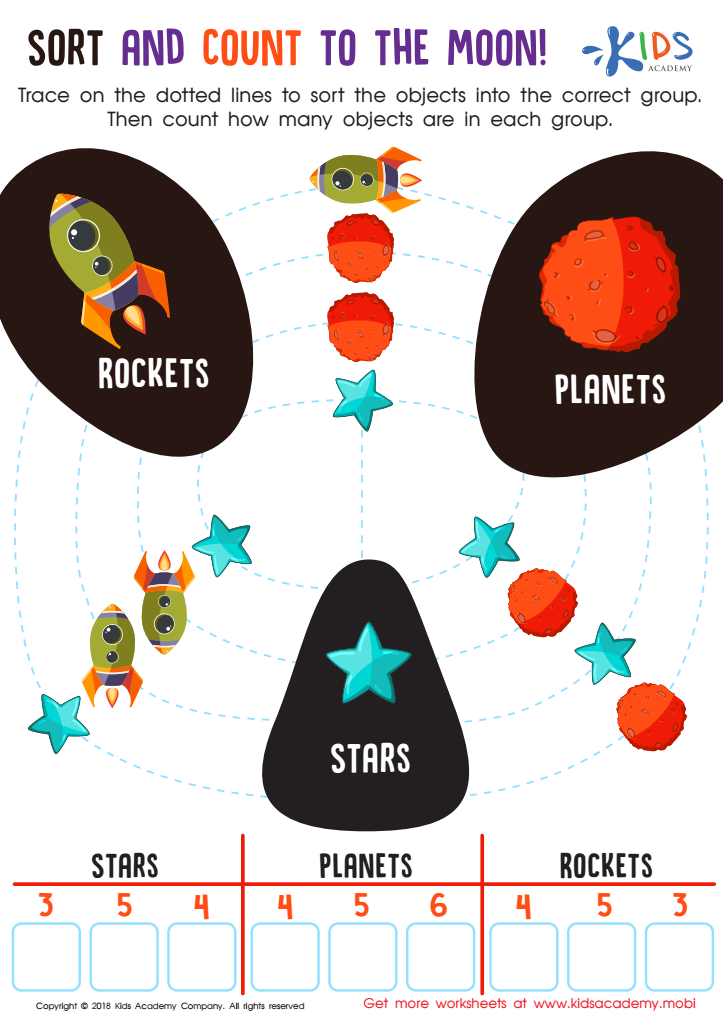
Sort and Count to the Moon Worksheet
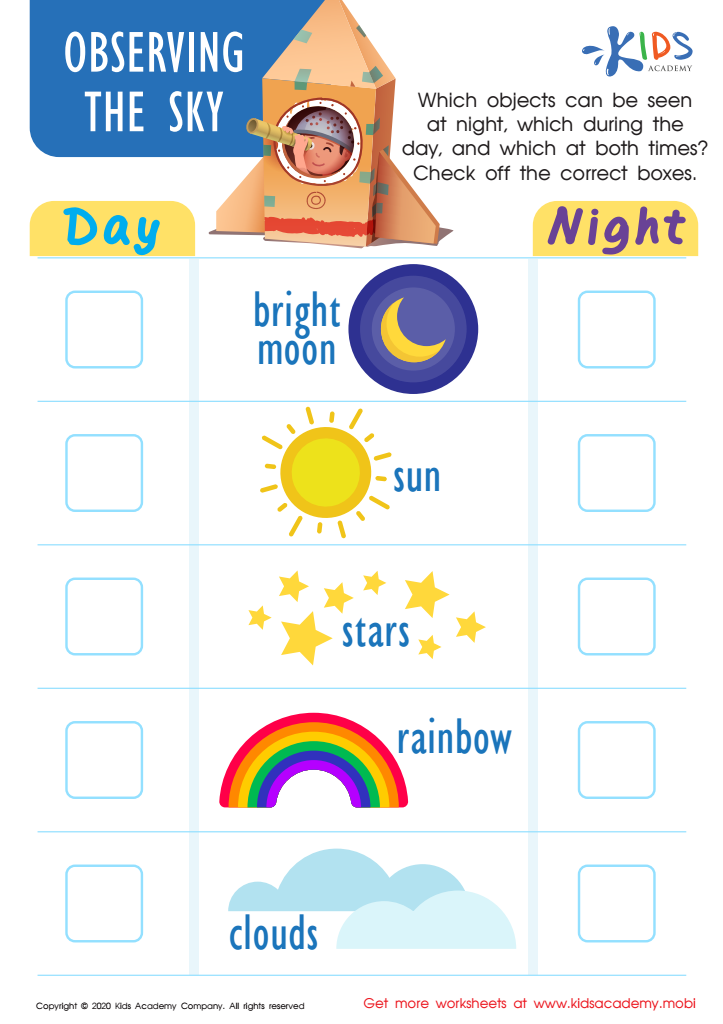
Observing the Sky Worksheet
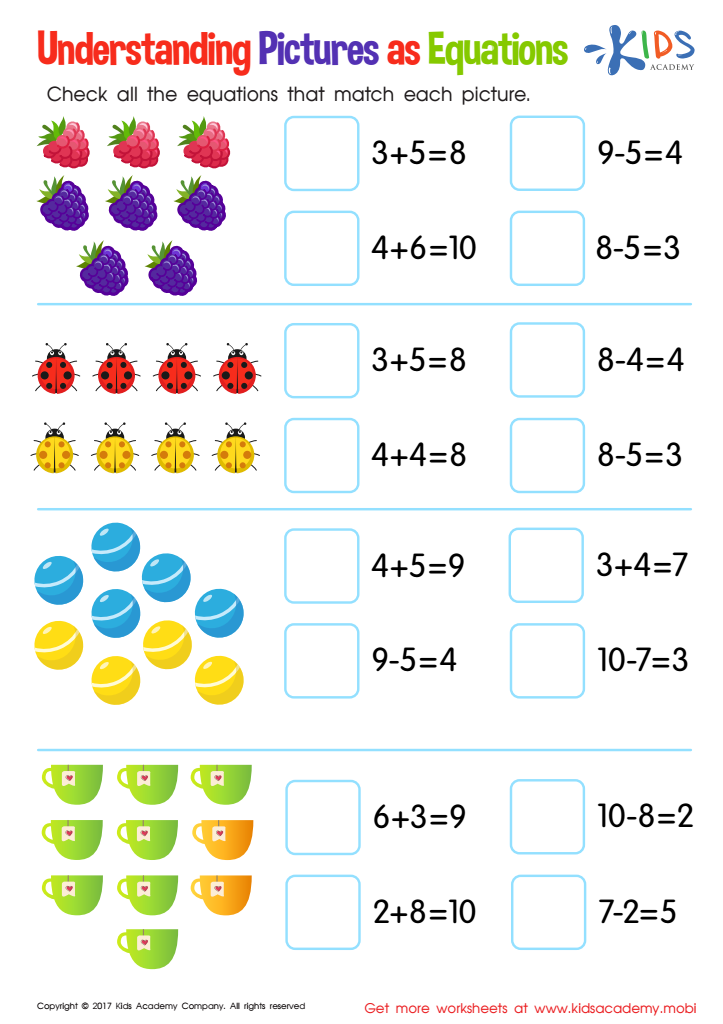
Understanding Pictures as Equations Worksheet
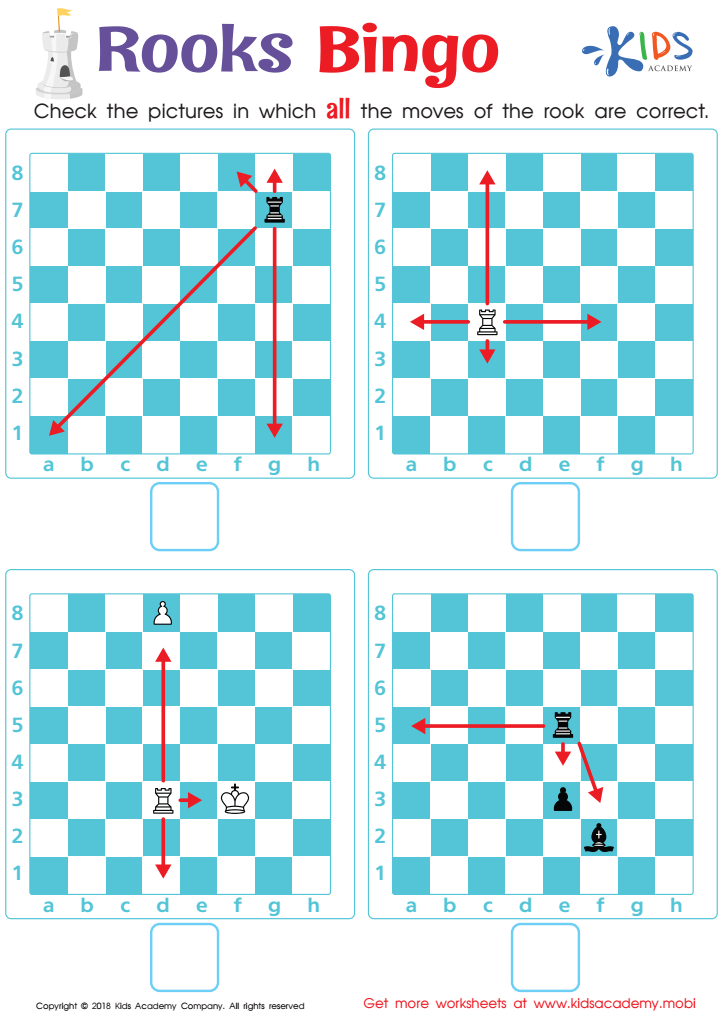
Rooks Bingo Worksheet








Recognizing patterns is a fundamental skill for children ages 5-6, laying a crucial foundation for future learning in math and reasoning. At this age, children begin to identify and create sequences, distinguishing regularities in colors, shapes, numbers, and sounds. This cognitive ability not only enhances their mathematical thinking but also fosters critical thinking skills as they learn to predict outcomes and make connections between concepts.
Teachers and parents should care about pattern recognition as it promotes analytical skills essential for academic success. Engaging young children in pattern-related activities strengthens their problem-solving abilities as they learn to analyze, compare, and classify.
Furthermore, recognizing patterns is a gateway to more complex topics like equations in math and reasoning in science. It encourages creativity, as children invent their own patterns, supporting their artistic and cognitive development simultaneously.
Moreover, the repetition in pattern activities will aid memory retention, further cementing various life skills, including organization and planning. By fostering an environment where pattern recognition is prioritized, parents and teachers equip children with tools for lifelong learning, ultimately influencing their confidence, persistence, and overall academic achievement. Recognizing patterns, therefore, is not merely an academic exercise; it's a holistic approach to nurturing well-rounded learners.








