Science vocabulary expansion Normal Worksheets for Ages 5-6
3 filtered results
-
From - To
Discover our "Science Vocabulary Expansion Normal Worksheets for Ages 5-6," designed to engage young learners in the wonders of science! These worksheets are perfect for introducing essential science vocabulary, fostering curiosity, and promoting comprehension in early education. With interactive activities tailored for children aged 5 to 6, your students will explore topics such as nature, weather, and basic scientific concepts in a fun and engaging way. Each worksheet encourages creativity and critical thinking, making learning an enjoyable experience. Enhance your science curriculum and help your students build a strong foundation in vocabulary with our comprehensive, age-appropriate resources!
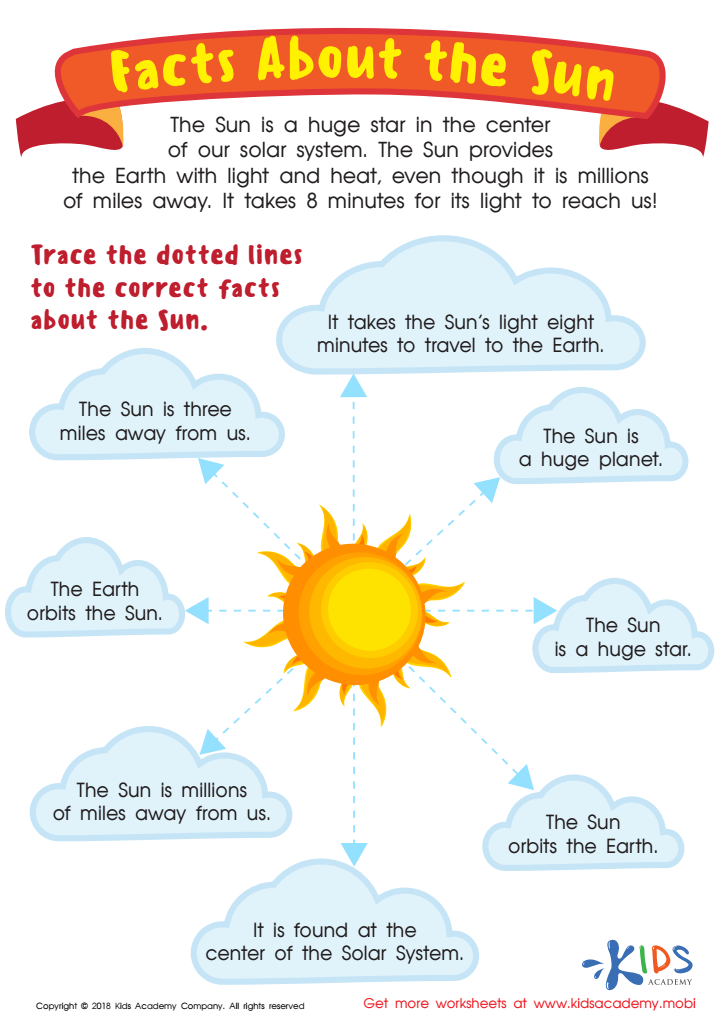
Facts About the Sun Worksheet
 Assign to My Students
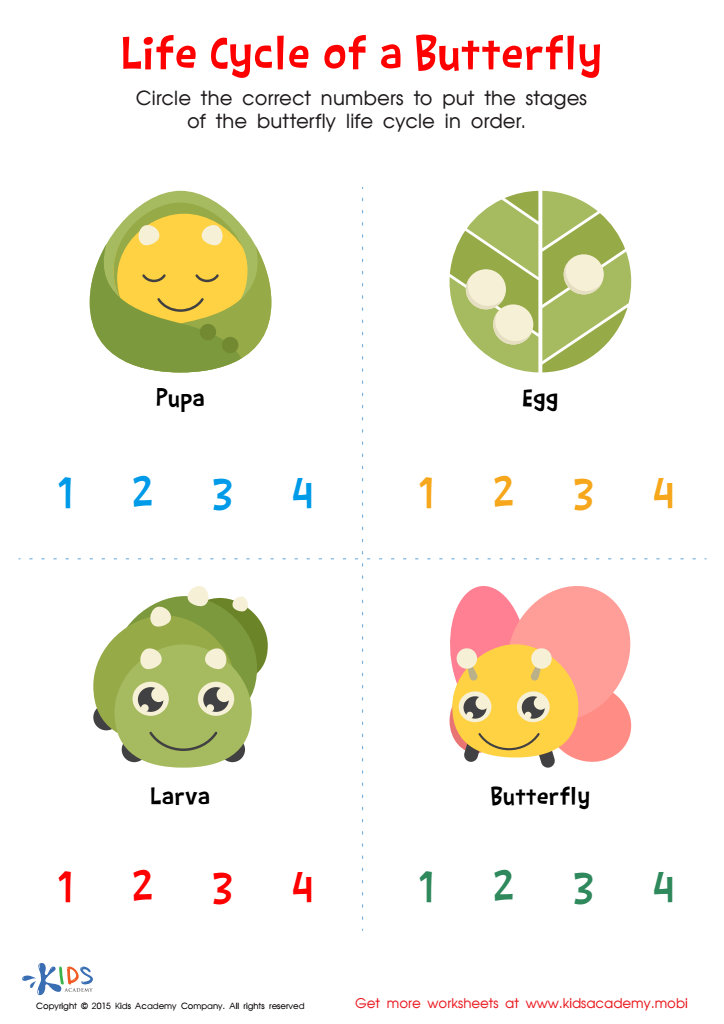
Life Cycle of Butterfly Printable
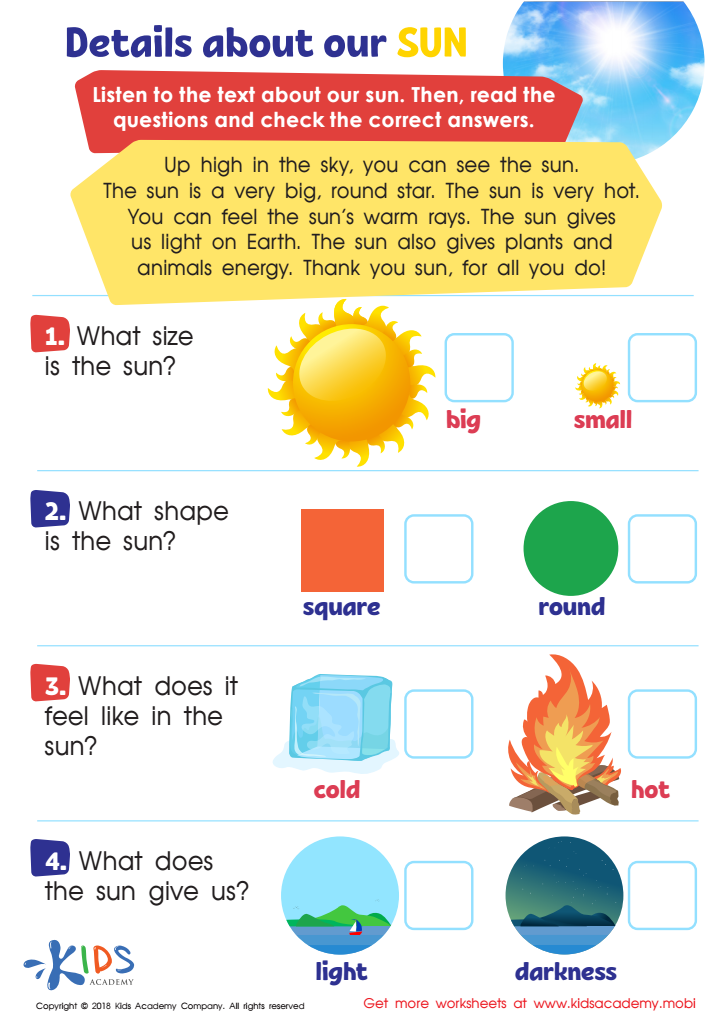
Details About Our Sun Worksheet







Parents and teachers should prioritize science vocabulary expansion for children aged 5-6 because it lays the foundation for critical thinking and comprehension in a variety of subjects. At this age, children are naturally curious about the world around them, and introducing them to science-specific vocabulary nurtures that curiosity. A robust science vocabulary helps children articulate their observations, ask insightful questions, and engage meaningfully in science-related discussions.
Additionally, vocabulary in science enhances literacy skills. When children acquire terms related to concepts such as living things, weather, or simple machines, they better grasp texts in both fiction and non-fiction, improving reading comprehension. This understanding is crucial as many subjects intersect with science throughout their educational journey.
Moreover, expanded vocabulary fosters a sense of confidence and encourages lifelong learning. Children who feel empowered to articulate scientific ideas are more likely to pursue further exploration and inquiry, essential for fostering a love of learning. Finally, expanding science vocabulary promotes critical skills such as categorization, prediction, and analysis—capabilities needed not just in science, but across all domains of education. Engaging in science vocabulary expansion creates a richer, more meaningful educational environment for young learners.








