
Spatial reasoning Normal Worksheets for Ages 5-6
5 filtered results
Difficulty Level
Grade
Age
-
From - To
Subject
Activity
Standards
Unlock the power of spatial reasoning with our specially designed worksheets for ages 5-6! These engaging resources from Kids Academy help young learners understand shapes, visualize transformations, and solve puzzles, laying a strong foundation for future learning in math, science, and art. Each activity is tailored to captivate curious minds, making critical thinking and problem-solving both fun and effective. Aligned with educational standards, our worksheets foster skills essential for school success and beyond. Start your child’s journey into the fascinating world of spatial reasoning today — watch their confidence and abilities grow effortlessly!
Favorites
With answer key
Interactive
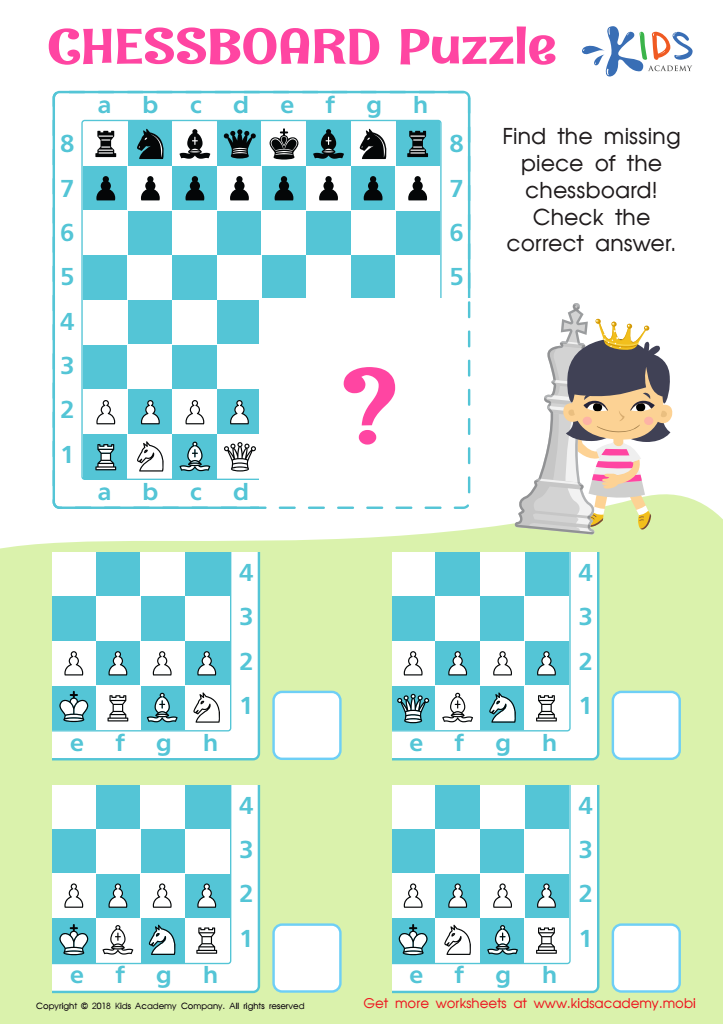
Chessboard Puzzle Worksheet
Test your child's chess prowess with this simple worksheet. They must find the missing pieces to complete the white side of an empty chessboard. The black pieces are already arranged properly on the board. Correct answers are provided so you can see how they did!
 Assign to My Students
Chessboard Puzzle Worksheet
Worksheet
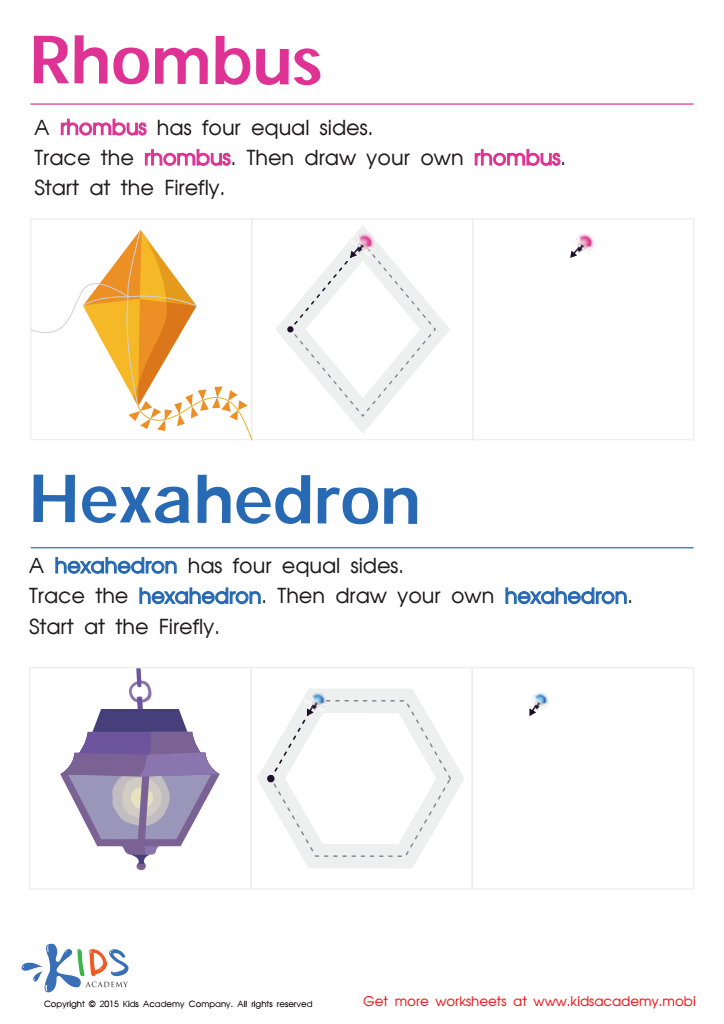
Draw a Rhombus And a Hexahedron Printable
Trace, draw and recognize shapes like rhombus, hexahedron and more! Start with the firefly to trace a rhombus, then use the yellow kite to remember the shape. Use the light to trace and draw a hexahedron. Learn with the best!
Draw a Rhombus And a Hexahedron Printable
Worksheet
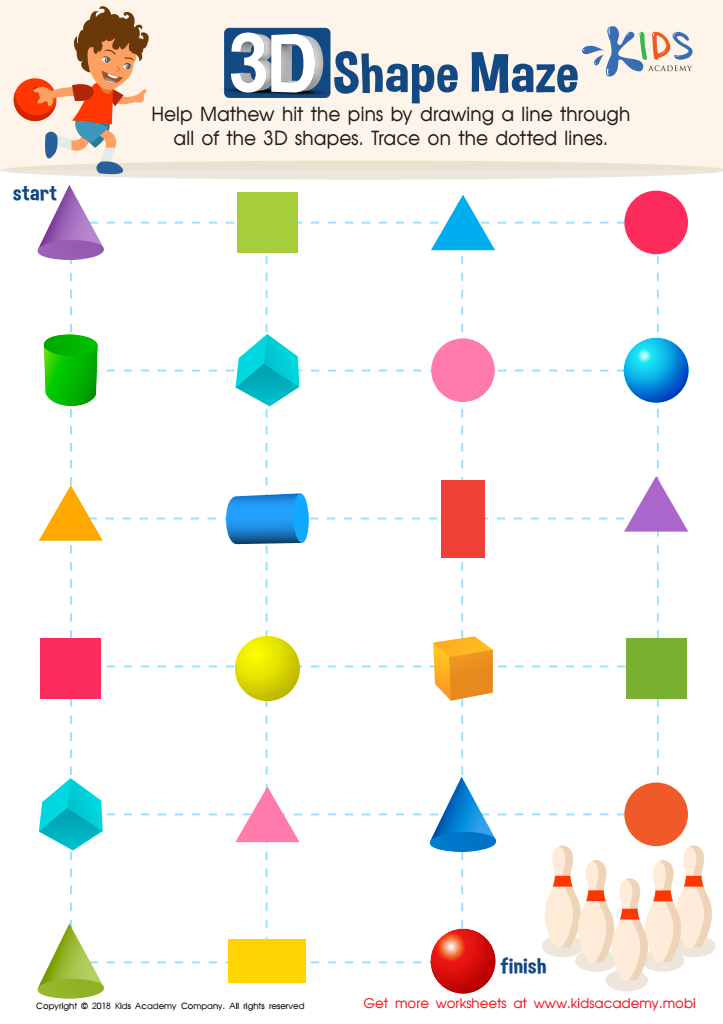
Shapes Maze Geometry Worksheet
Boost your child's geometry skills with this shapes maze worksheet! Help Matthew bowl a strike by guiding him through the maze to draw a line through every 3D shape. It's a fun and challenging way to practice foundational math skills!
Shapes Maze Geometry Worksheet
Worksheet
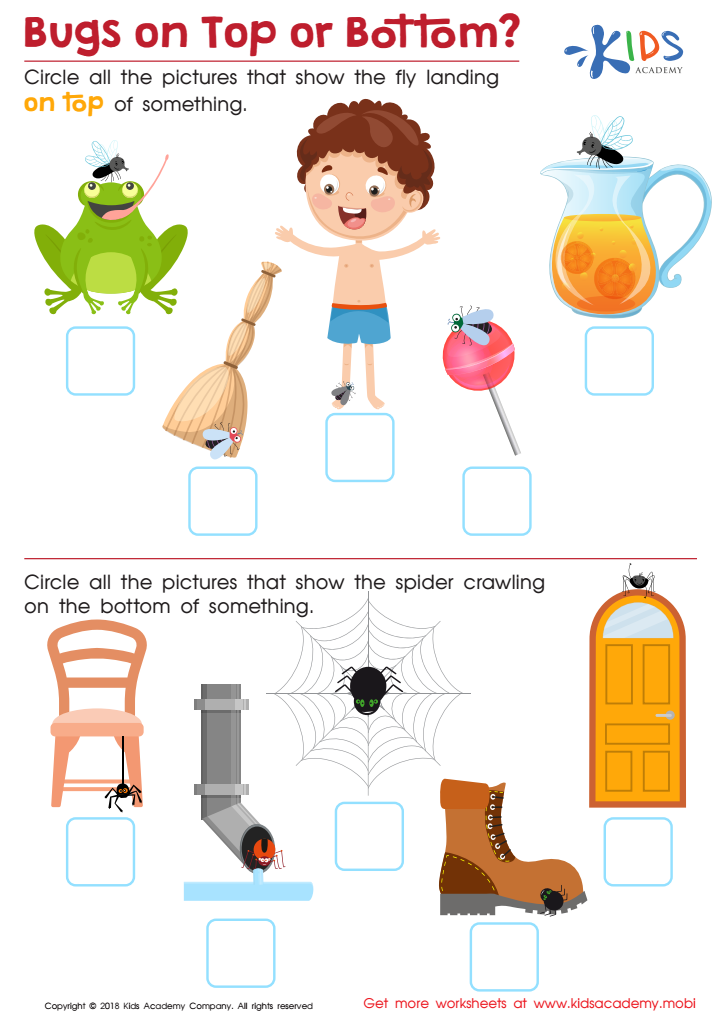
Bugs on Top or Bottom? Worksheet
Preschoolers need to learn directional skills such as top and bottom. This PDF worksheet helps them recognize bugs on the top or bottom using fun visuals. It builds their spatial reasoning while teaching prepositional words in an engaging way.
Bugs on Top or Bottom? Worksheet
Worksheet
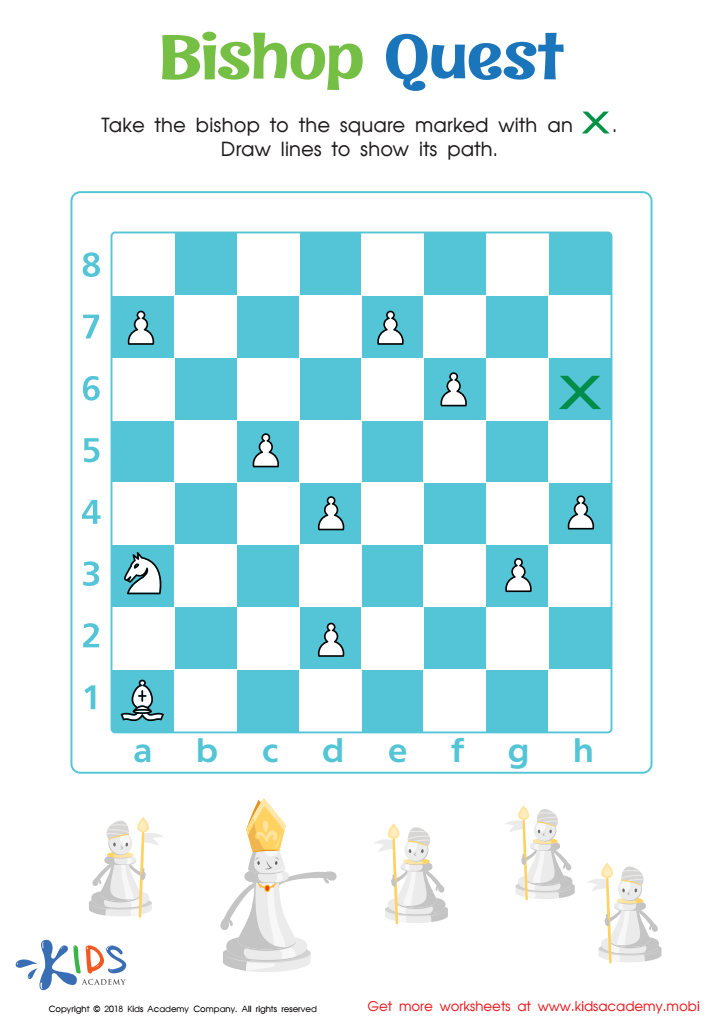
Bishop Quest Worksheet
Show kids the board and ask them to identify the bishop. Then ask them to move it to the square marked 'x', drawing lines to show its path. This worksheet helps teach kids how to move the bishop on a chessboard.
Bishop Quest Worksheet
Worksheet
Join Kids Academy for Free
Who is primarily going to use this learning content?


.jpg)



.jpg)

Spatial reasoning is a fundamental cognitive skill that involves understanding and remembering the location and relationships between objects. For children aged 5-6, developing strong spatial reasoning abilities is crucial for several reasons. Firstly, it directly supports their learning in subjects like mathematics. Skills in areas such as geometry, measurement, and understanding mathematical patterns are deeply rooted in spatial awareness. When children can visualize shapes, understand symmetry, and recognize how parts fit together, they are better equipped to tackle math problems later. Secondly, spatial reasoning extends beyond mathematical competence. It plays a vital role in everyday tasks and artistic activities. Building with blocks, drawing pictures, solving puzzles, and even navigating their environment all require a well-developed sense of space and relationships among objects. Moreover, strong spatial skills can contribute to early success in STEM (Science, Technology, Engineering, and Mathematics) learning. Understanding how objects fit and move within space can pave the way for engineering principles and scientific understanding. Teachers and parents should nurture this skill through playful and educational activities. By doing so, they provide children with a foundation for academic success and practical, everyday problem-solving abilities, ultimately promoting cognitive growth, creativity, and curiosity in young learners.








