Visual interpretation Normal Worksheets for Ages 5-6
3 filtered results
-
From - To
Discover our "Visual Interpretation Normal Worksheets for Ages 5-6" designed to sharpen young minds. These educational resources from Kids Academy boost visual processing skills through engaging exercises tailored for kindergarteners and first graders. Each worksheet encourages kids to interpret images, recognize patterns, and understand visuals, laying a foundation for reading and math success. Crafted by expert educators, these activities make learning enjoyable and effective. Perfect for both classroom and home settings, our worksheets aid in developing critical early learning skills in a fun, interactive way. Explore our collection and support your child's visual learning journey!
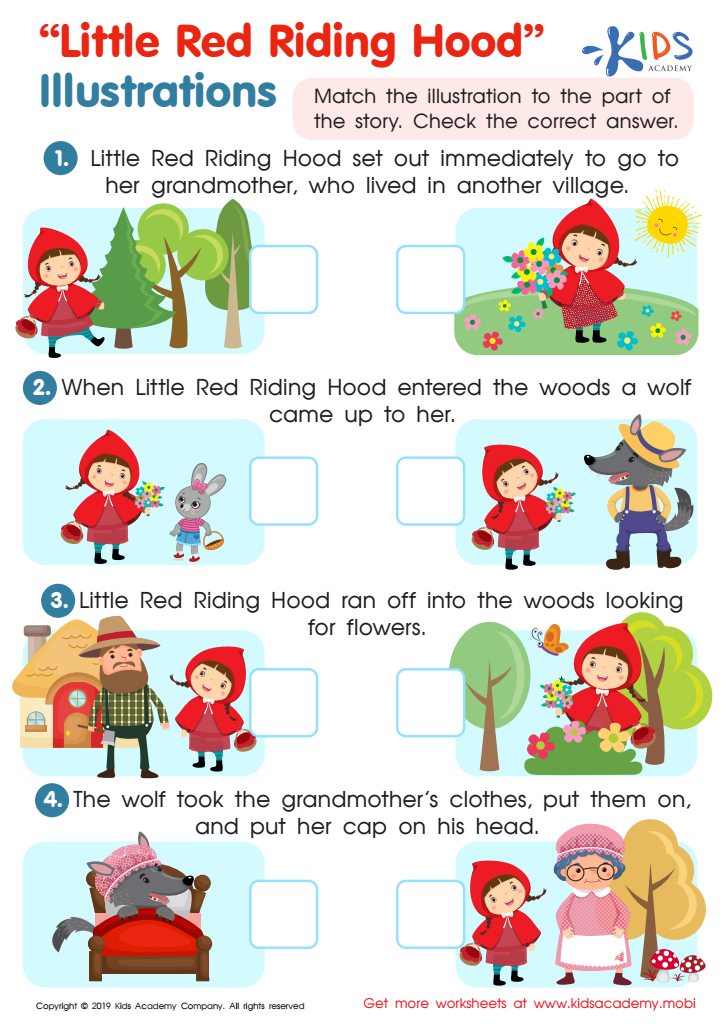
Little Red Riding Hood: Illustrations Worksheet
 Assign to My Students
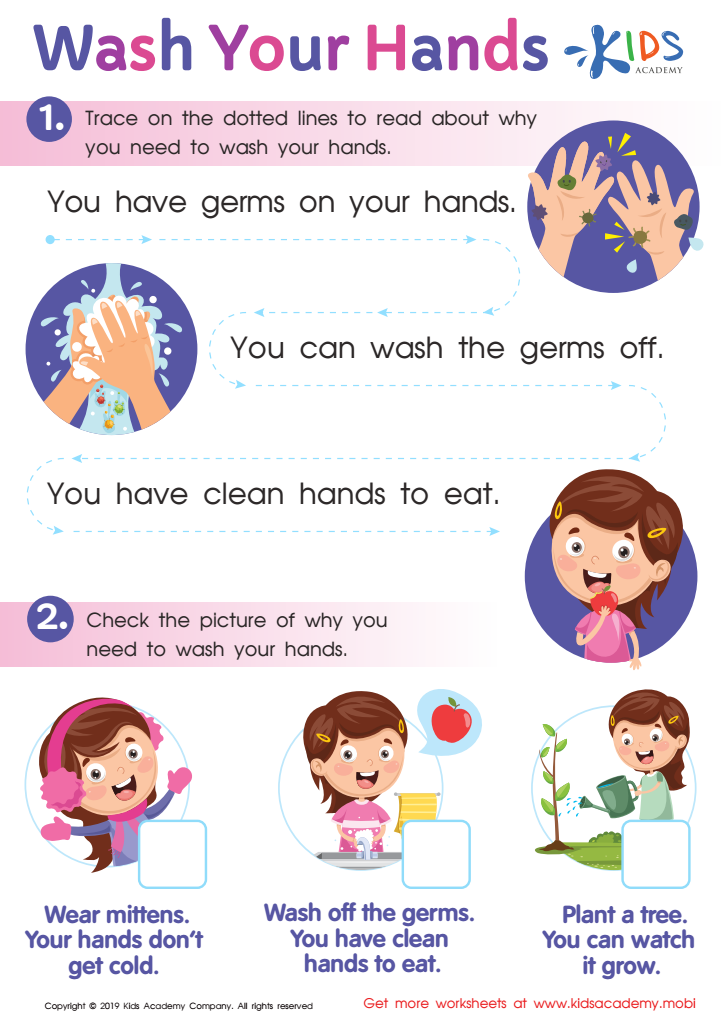
Wash Your Hands Worksheet
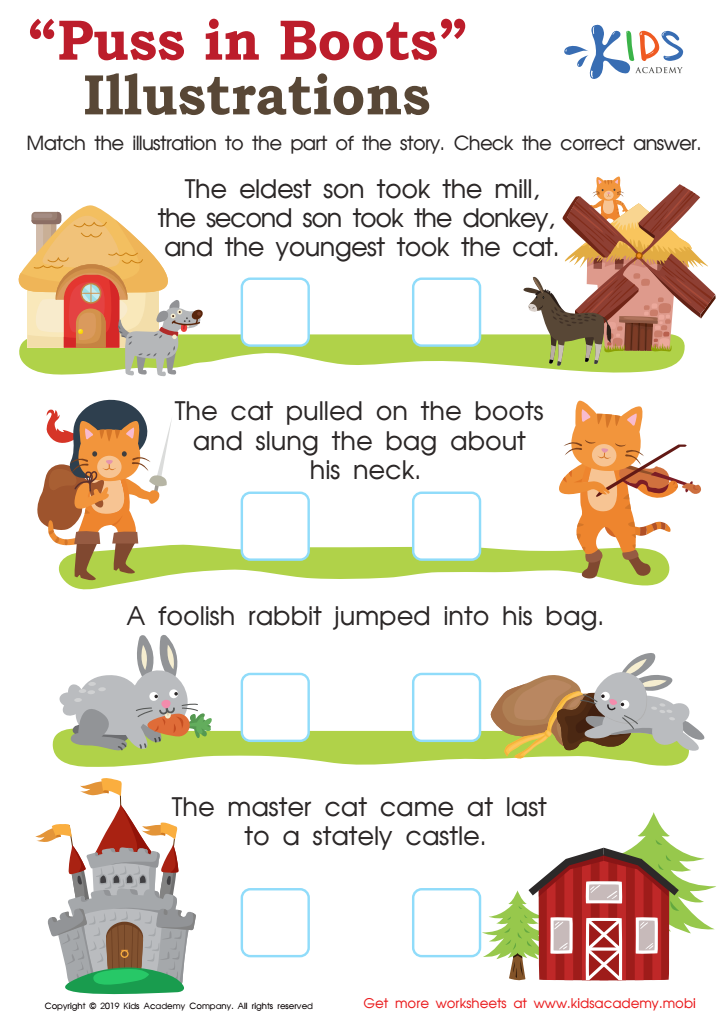
Puss in Boots Illustrations Worksheet



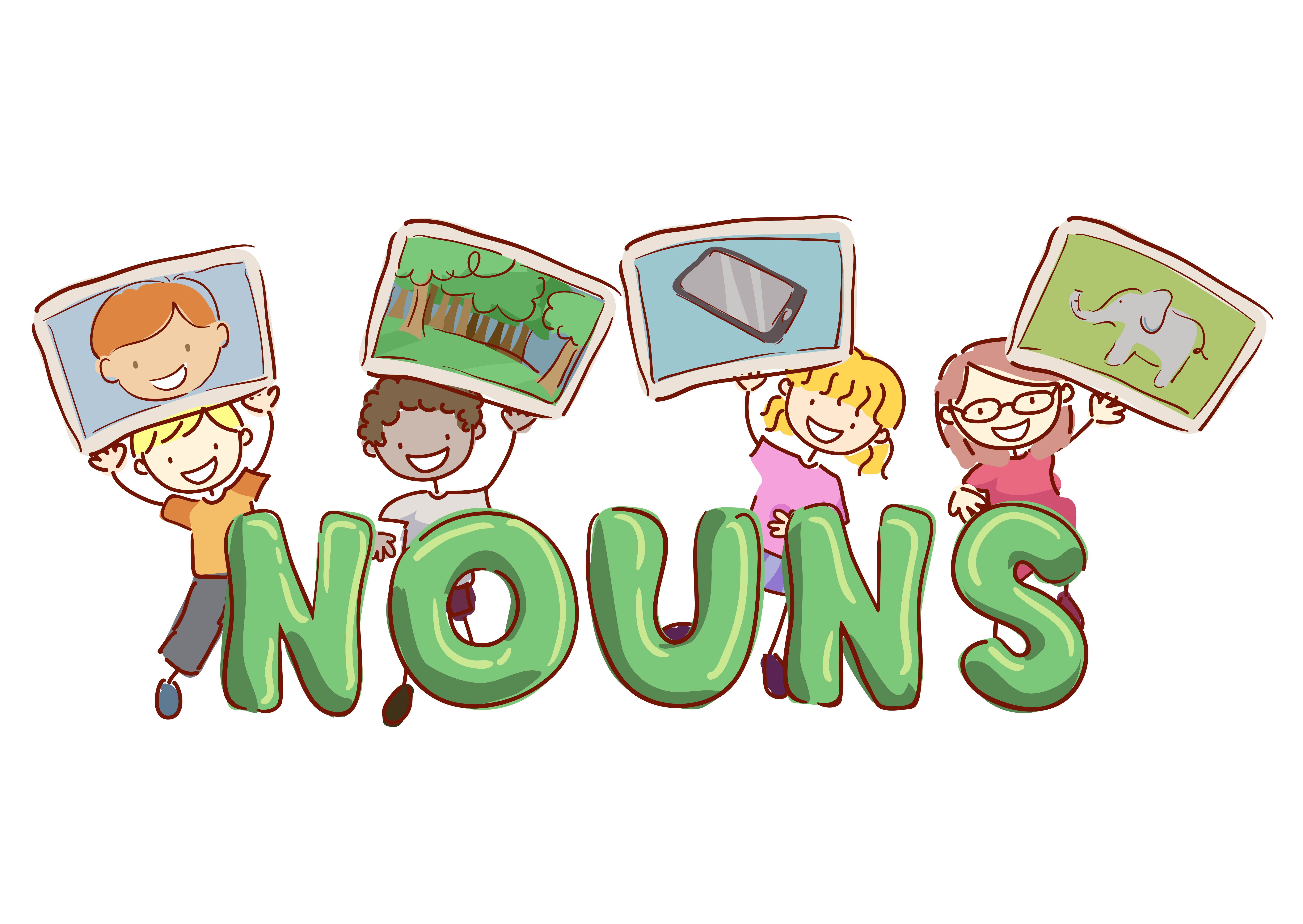



Parents and teachers should care about visual interpretation skills at ages 5-6 because these abilities are fundamental for children's overall cognitive and academic development. Visual interpretation involves understanding and processing visual information from the world around them, which is crucial for reading, writing, and arithmetic—the cornerstone skills for early education.
Children at this age are at a pivotal stage in their development where they begin recognizing patterns, shapes, and symbols, which are essential for learning to read and write. For instance, recognizing letters and their corresponding sounds requires strong visual discrimination abilities—a key aspect of visual interpretation.
Additionally, visual interpretation skills are crucial for spatial awareness and understanding relationships between objects, which lays a foundation for subjects like mathematics. When kids interpret visual data correctly, it enhances their ability to follow instructions, solve puzzles, and engage in various learning activities optimally.
Encouraging activities that strengthen these skills contributes to improved hand-eye coordination, fine motor skills, and attentiveness, all of which are critical for success in a classroom environment. Furthermore, strong visual interpretation skills support social development, as children better understand visual cues and non-verbal communication, enriching their capacity to interact and collaborate with peers. Therefore, focusing on visual interpretation during these formative years maximizes children’s potential to navigate both academic challenges and everyday situations effectively.








