Counting skills Normal 2D Shapes Worksheets for Ages 5-6
4 filtered results
-
From - To
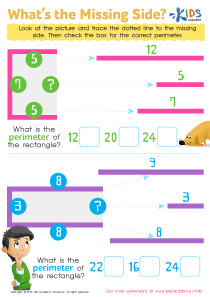
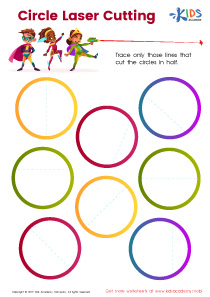
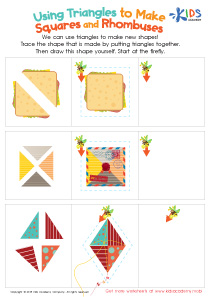
Explore our engaging Counting Skills Worksheets focused on Normal 2D Shapes, specially designed for children ages 5-6. These worksheets provide a fun and interactive way for young learners to enhance their understanding of shapes while practicing counting. From circles to squares and triangles, each activity encourages students to identify, sort, and count various 2D shapes, reinforcing fundamental mathematical concepts. Interactive and visually appealing, these worksheets help build confidence in counting and shape recognition. Perfect for home or classroom use, our resources promote essential skills crucial for early math development, ensuring kids are equipped for future success in their educational journey!
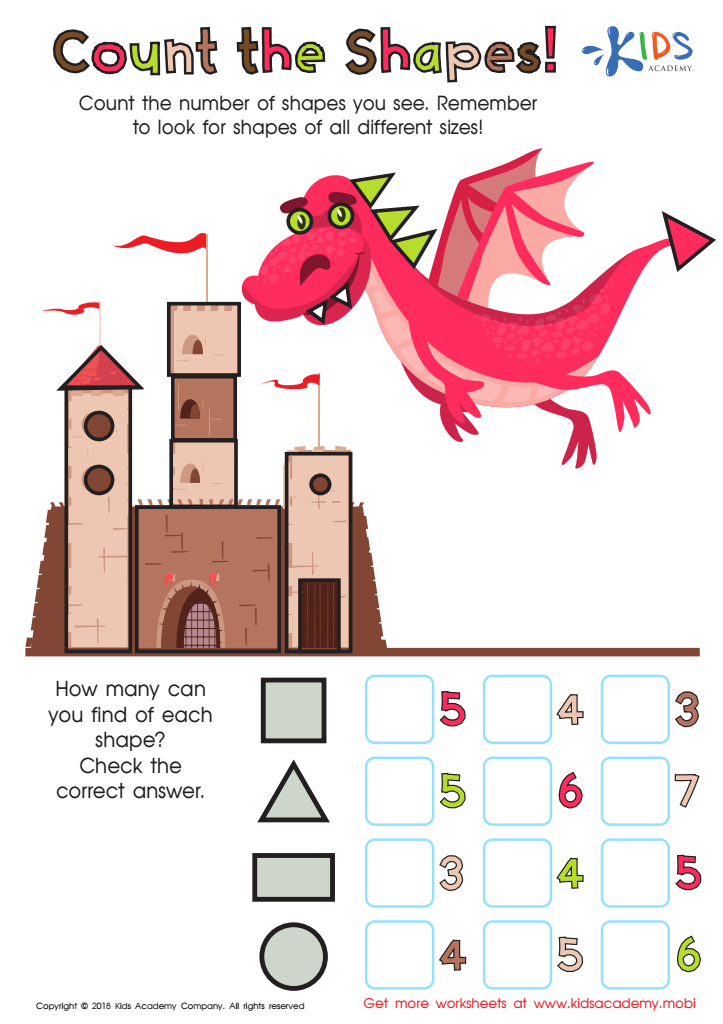
Count the Shapes Worksheet
 Assign to My Students











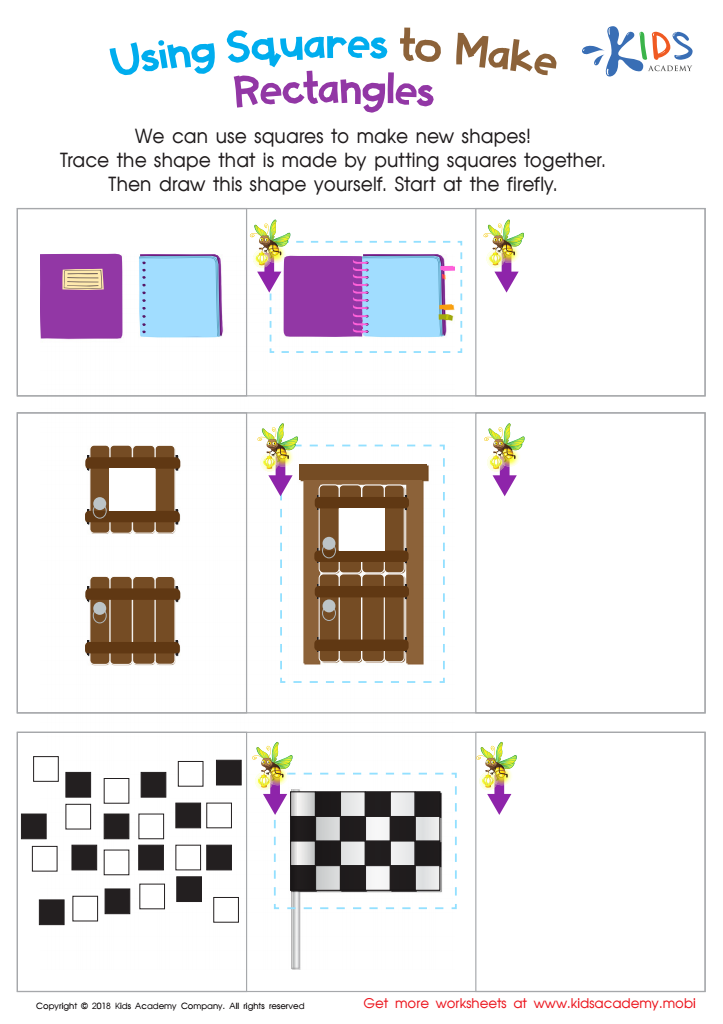
Using Squares to Make Rectangles Worksheet
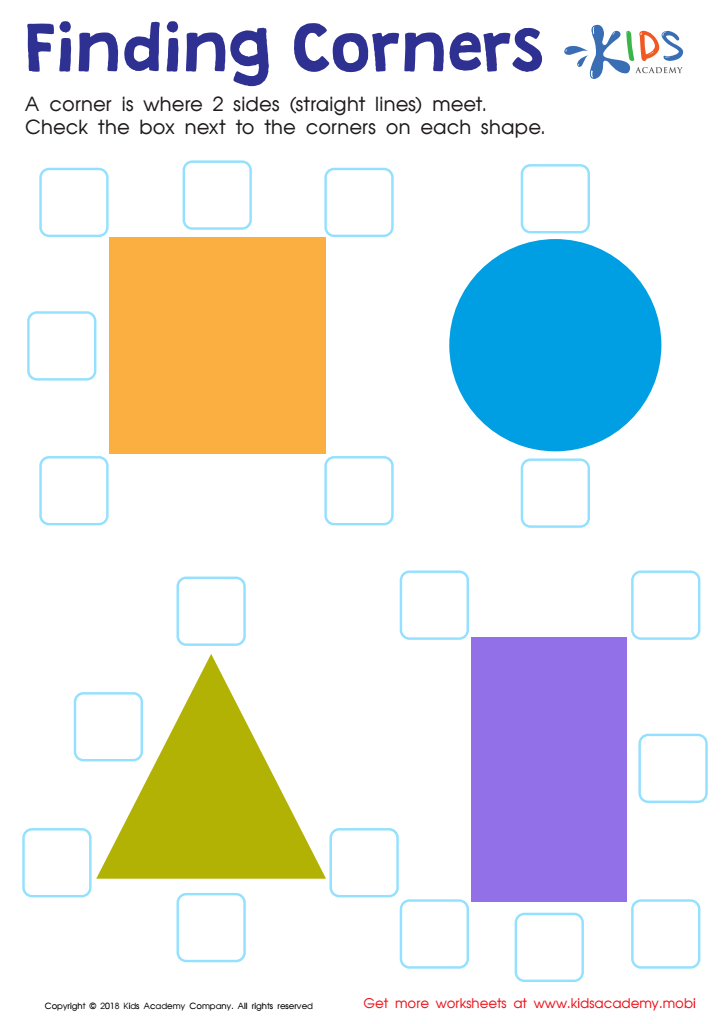
Finding Corners Worksheet
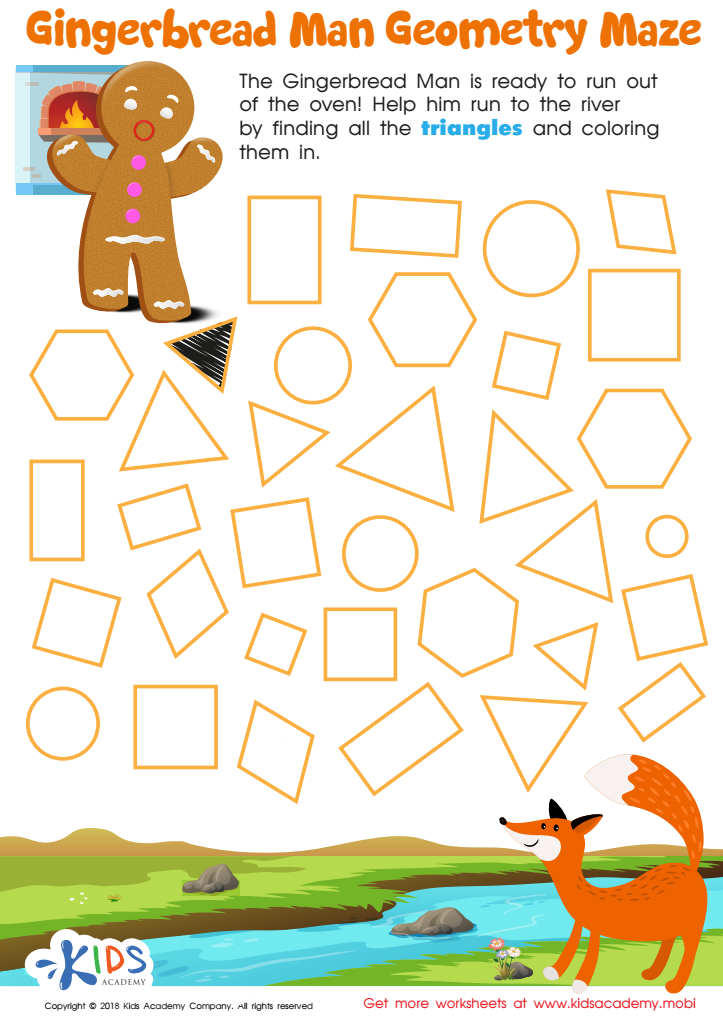
Gingerbread Man Geometry Maze Worksheet








Counting skills and understanding normal 2D shapes are foundational components of early childhood education, crucial for students aged 5-6. At this age, children are developing essential mathematical skills that will serve as a base for future learning.
Counting lays the groundwork for more complex math concepts. It enhances children’s numerical understanding, improving their ability to perform addition, subtraction, and even more advanced mathematics later on. By practicing counting with objects, children develop one-to-one correspondence and strengthen their number sense, which is critical for problem-solving.
Understanding 2D shapes (like circles, squares, and triangles) is equally important. Recognizing and categorizing shapes supports spatial awareness, an essential skill not just in math, but also in real-world contexts, such as understanding maps or navigating space. It promotes logical reasoning and helps in identifying patterns, fostering critical thinking abilities.
Engaging children in activities that combine counting and shape recognition encourages hands-on learning, making math fun and relatable. Ultimately, parents and teachers should care because these skills are building blocks for academic success, contributing to overall cognitive development and laying a strong foundation for lifelong learning. Invested learning at this age cultivates confidence and enthusiasm around mathematics, shaping positive attitudes for the future.