Shape identification Normal Geometry Worksheets for Ages 5-6
5 filtered results
-
From - To
Explore our Shape Identification Normal Geometry Worksheets designed specifically for children ages 5-6. These engaging resources help young learners recognize and name common shapes such as circles, squares, triangles, and rectangles. Each worksheet includes fun activities that enhance visual recognition and critical thinking skills, ensuring that your child develops a solid understanding of basic geometric concepts. Our colorful illustrations and age-appropriate tasks keep kids motivated and excited about learning. Ideal for home or classroom use, these worksheets foster early math skills in a playful environment, setting the foundation for future success in geometry and beyond. Get started today!
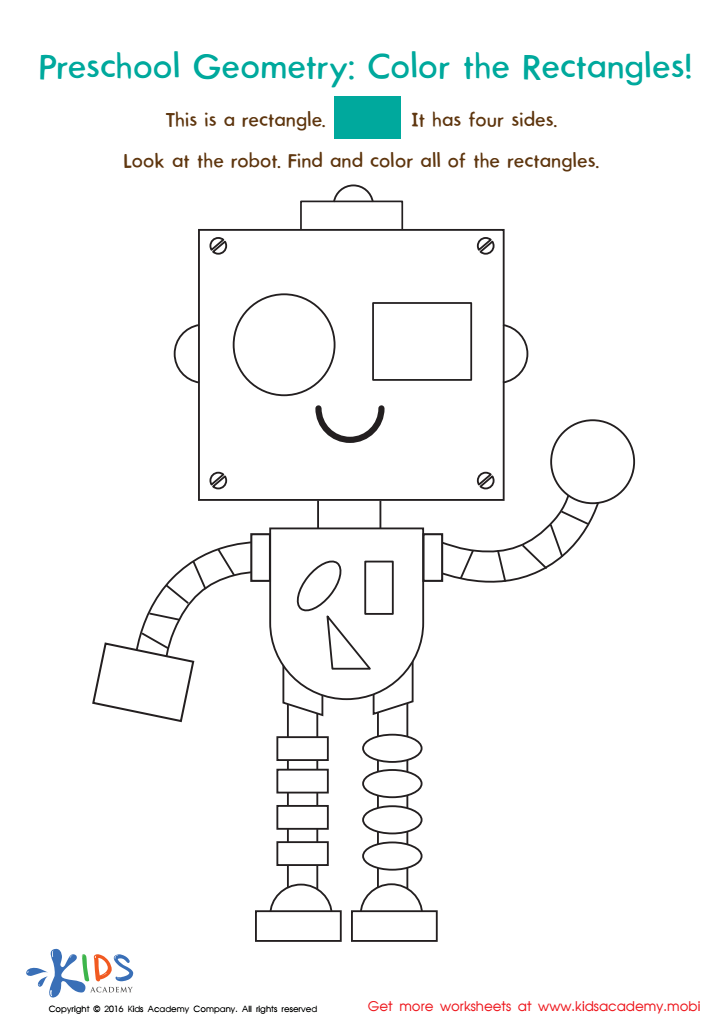
Geometry Worksheet
 Assign to My Students











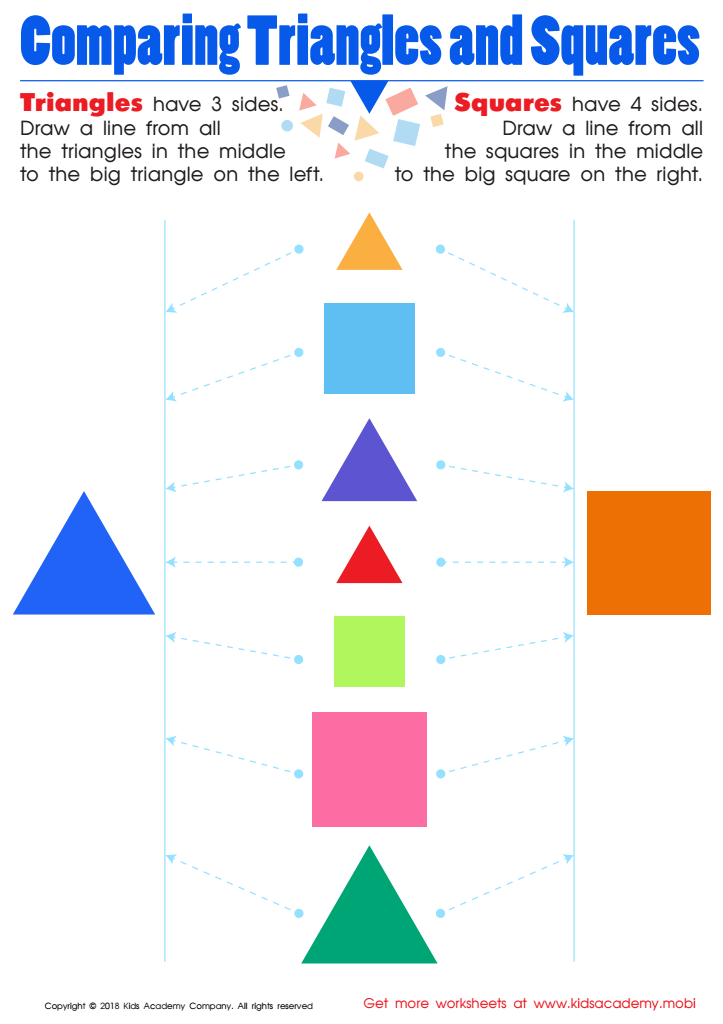
Comparing Triangles Squares Worksheet
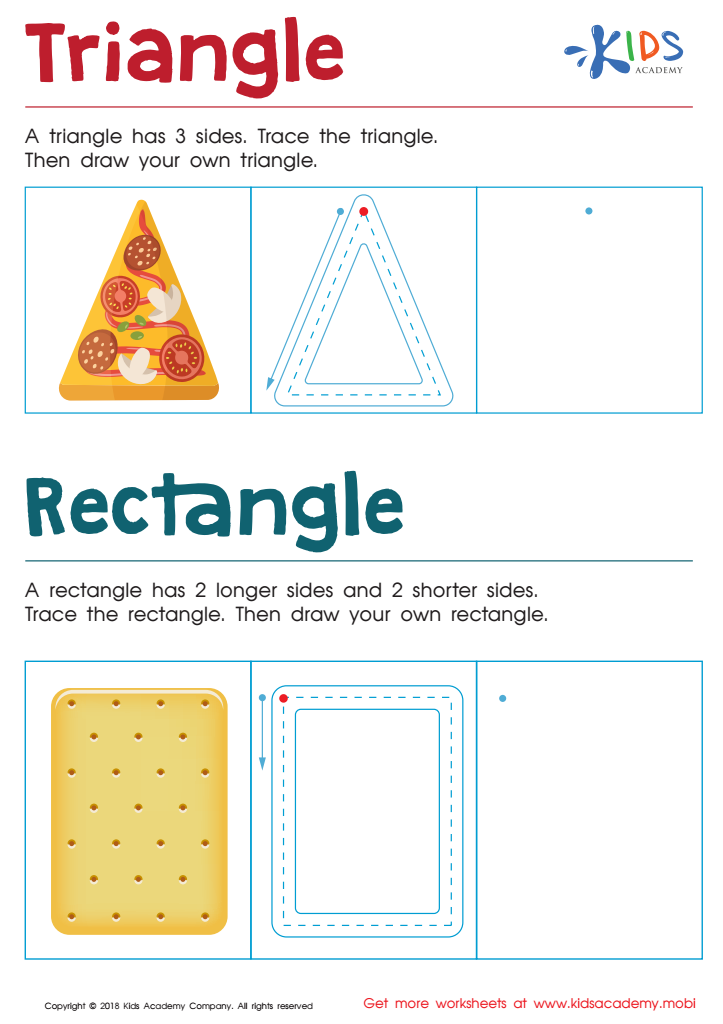
Triangle Rectangle Worksheet
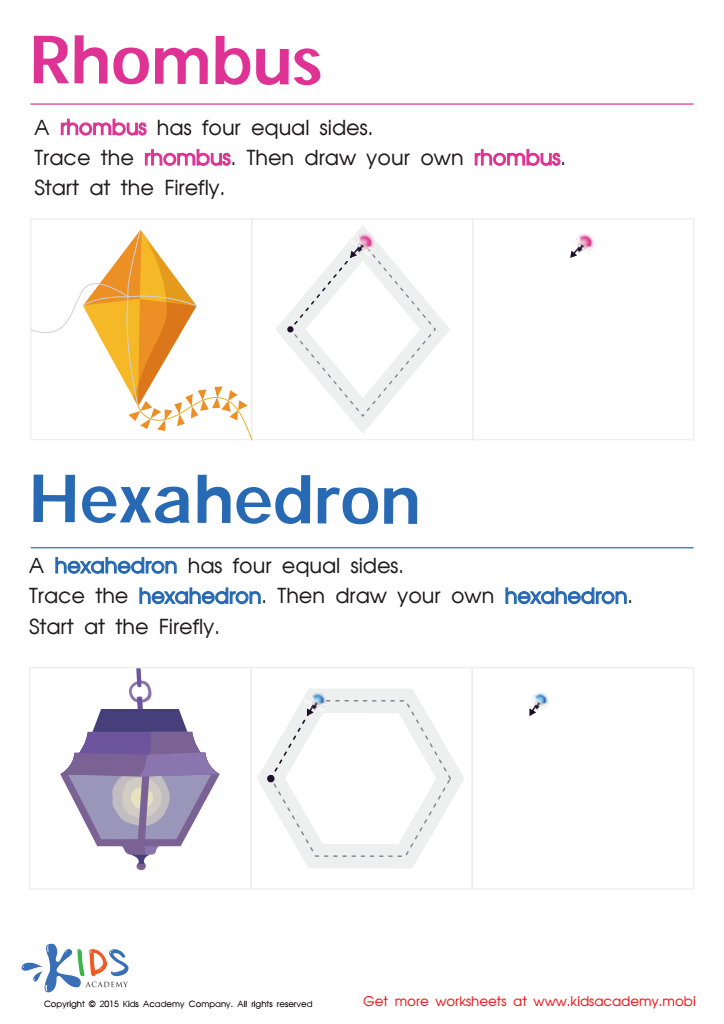
Draw a Rhombus And a Hexahedron Printable
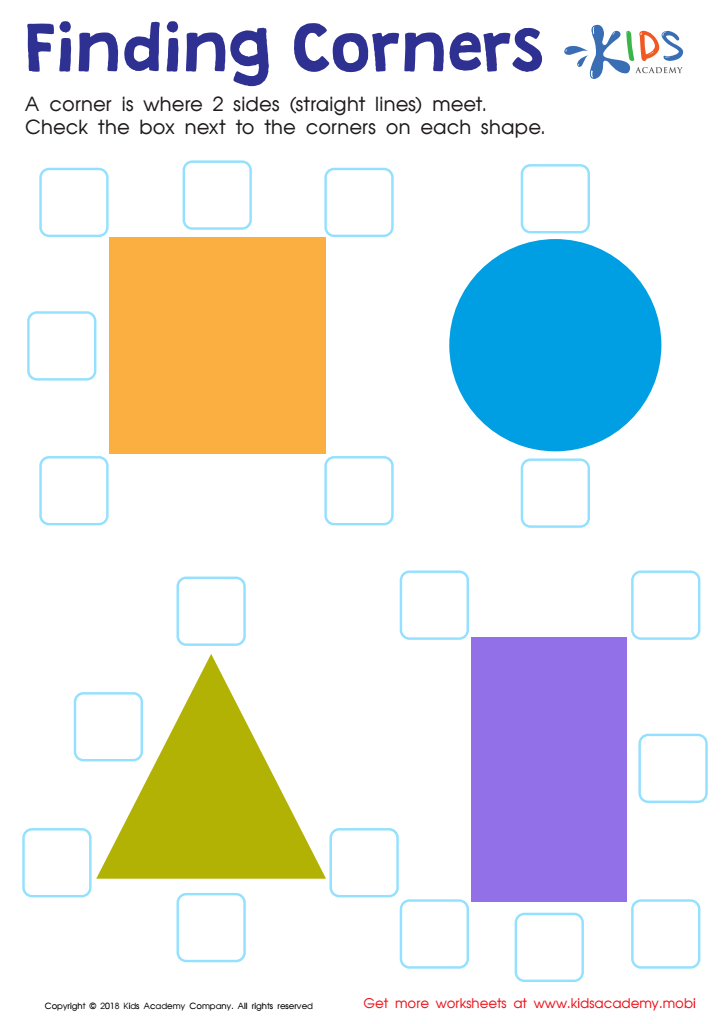
Finding Corners Worksheet








Shape identification is a fundamental building block in early mathematics education for children ages 5-6. Understanding shapes lays the groundwork for essential cognitive and spatial skills that are crucial for future learning. Parents and teachers should care about shape identification because it not only helps children recognize and categorize the world around them, but it also fosters problem-solving abilities and critical thinking skills.
Learning shapes introduces concepts such as symmetry, angles, and attributes, enhancing children's ability to observe and analyze their environment. It enriches their vocabulary and reinforces language development, as children learn to describe characteristics of different shapes (e.g., number of sides, roundness). This knowledge also serves as a stepping stone for more complex mathematical concepts in later years, such as geometry and algebra.
Moreover, engaging activities focused on shape identification promote fine motor skills through hands-on experiences like drawing, cutting, or manipulating shape-based toys. As children explore, they develop coordination and creativity. Overall, by emphasizing shape identification, parents and teachers contribute to a well-rounded educational foundation that builds confidence and eagerness for ongoing learning in mathematics and beyond.








