Hand-eye Coordination Normal Numbers Worksheets for Ages 5-6
3 filtered results
-
From - To
Enhance your child's hand-eye coordination skills with our expertly crafted worksheets designed for children aged 5-6. These engaging activities are meticulously developed to support fine motor skill development while simultaneously introducing young learners to essential number concepts. Each worksheet provides fun and interactive exercises that promote the synaptic connections necessary for effective hand-eye coordination. By integrating exciting numeric challenges with visual and motor tasks, your child will sharpen their ability to recognize, trace, and write numbers confidently. Perfect for early learners, these resources offer a foundation for future academic success and a love for lifelong learning. Boost your child’s proficiency with our top-notch educational tools today!
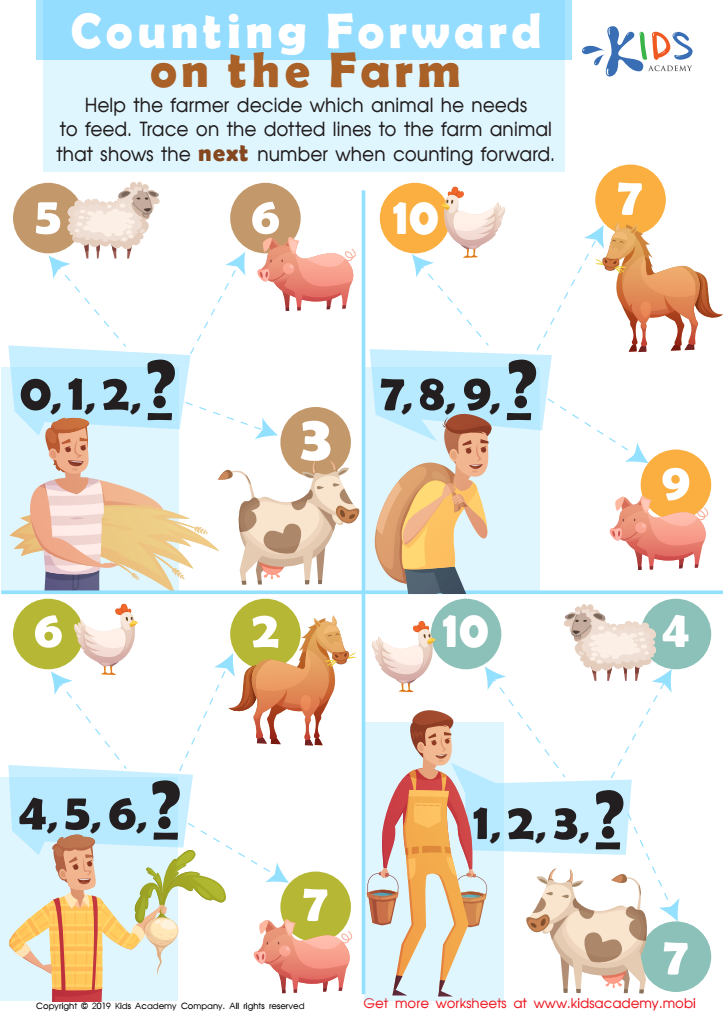
Counting Forward On the Farm Worksheet
 Assign to My Students
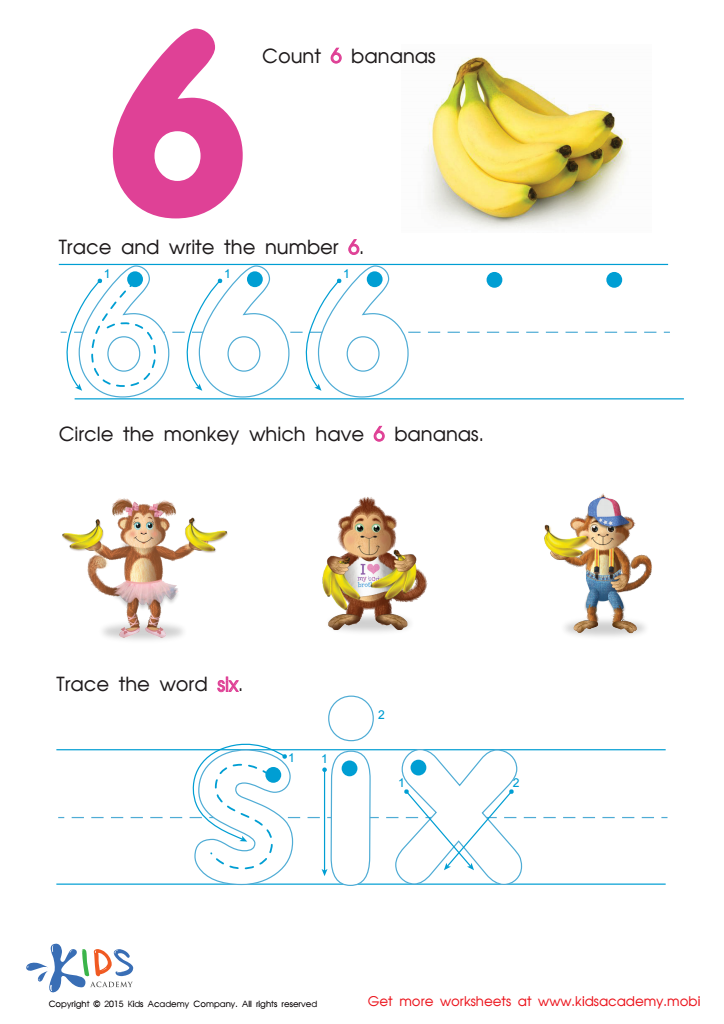
Tracing And Writing Number 6 Worksheet
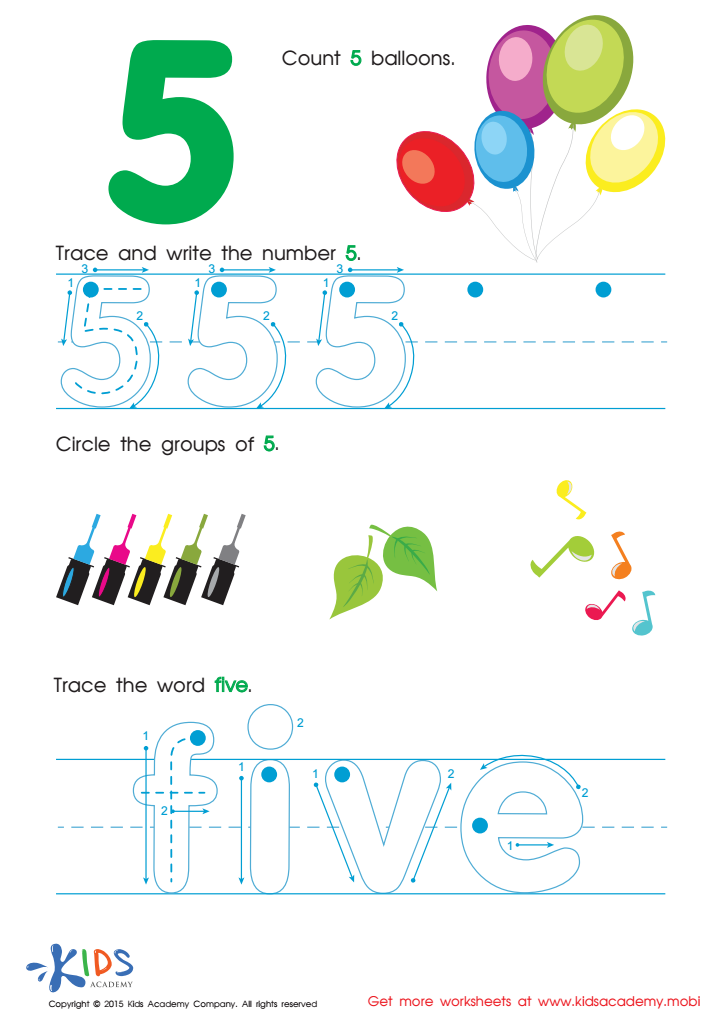
Practice Writing Number 5 Worksheet








Hand-eye coordination is the ability to process information received through the eyes and use it to direct the movement of the hands. For children aged 5-6, this skill is crucial for many aspects of development and daily functioning, both in and out of the classroom. Parents and teachers should particularly care about hand-eye coordination normal numbers—standard benchmarks that indicate typical development at this age—because they offer a reference to gauge if a child is on track or may need additional support.
At this age, children are beginning to refine their motor skills and coordination. Good hand-eye coordination supports learning to read and write, as these activities require the ability to steadily control a pencil while focusing on letters and words. It also aids in more physical tasks like tying shoelaces, dressing, and engaging in activities like sports, which are vital for their physical health and social interaction.
Monitoring hand-eye coordination and comparing it to normal developmental ranges ensures that issues can be identified early. Early detection of potential delays allows for timely intervention strategies, such as occupational therapy or targeted activities, that can help improve these skills. This ensures children have the foundational abilities they need to succeed academically and socially, fostering overall well-being and development.








