Number Recognition Normal Numbers Worksheets for Ages 5-6 - Page 4
76 filtered results
-
From - To
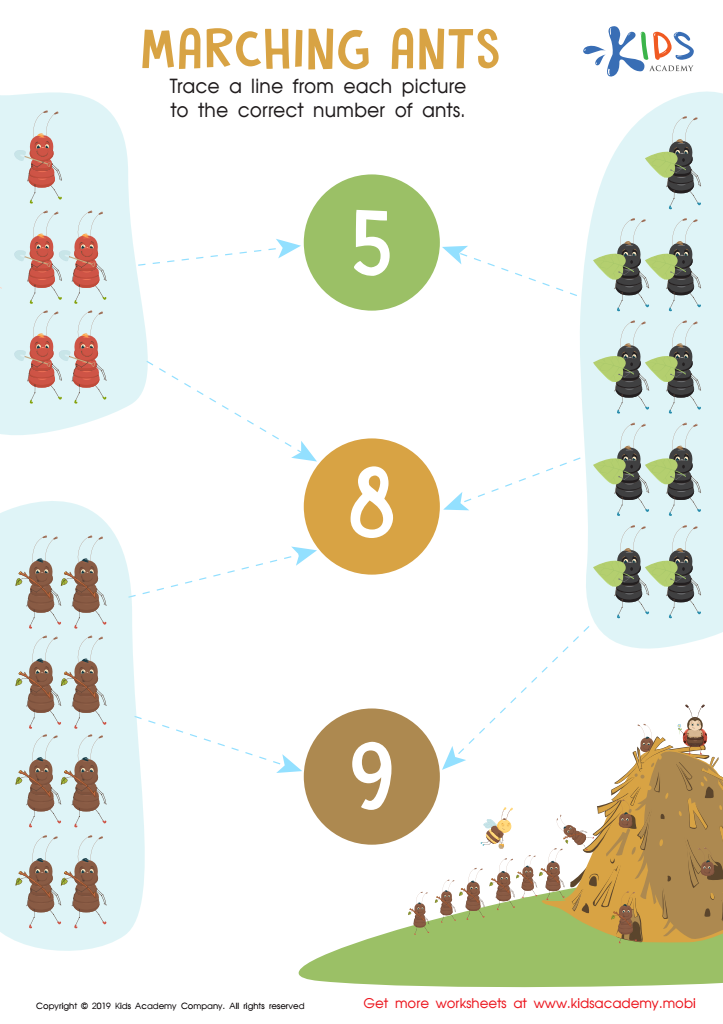
Marching Ants Worksheet
 Assign to My Students
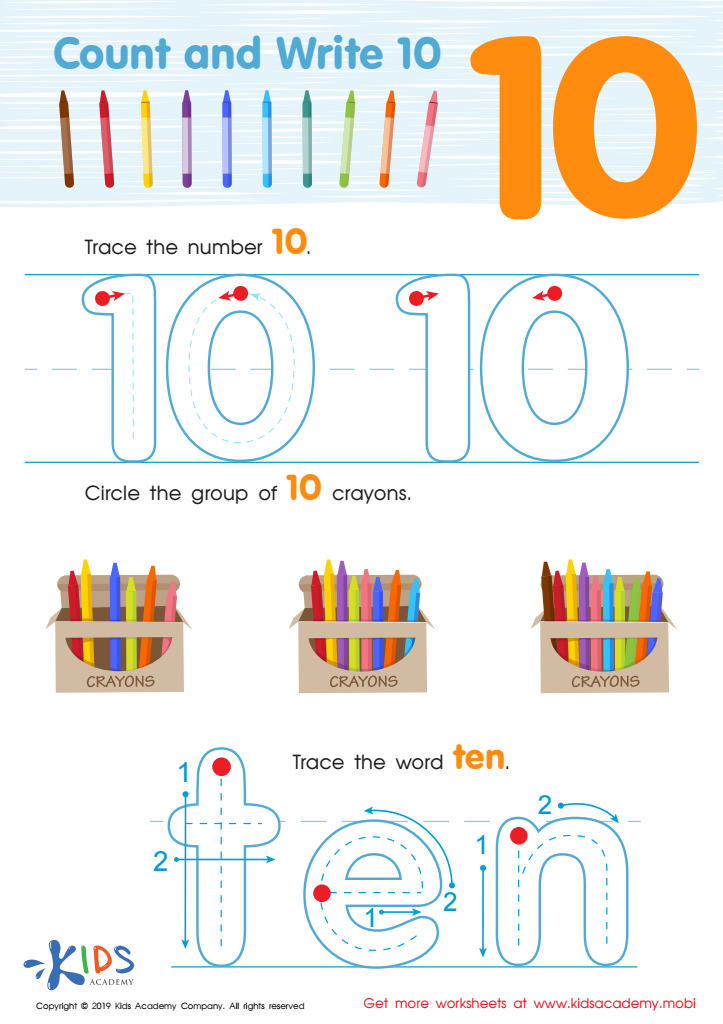
Count and Write 10 Worksheet
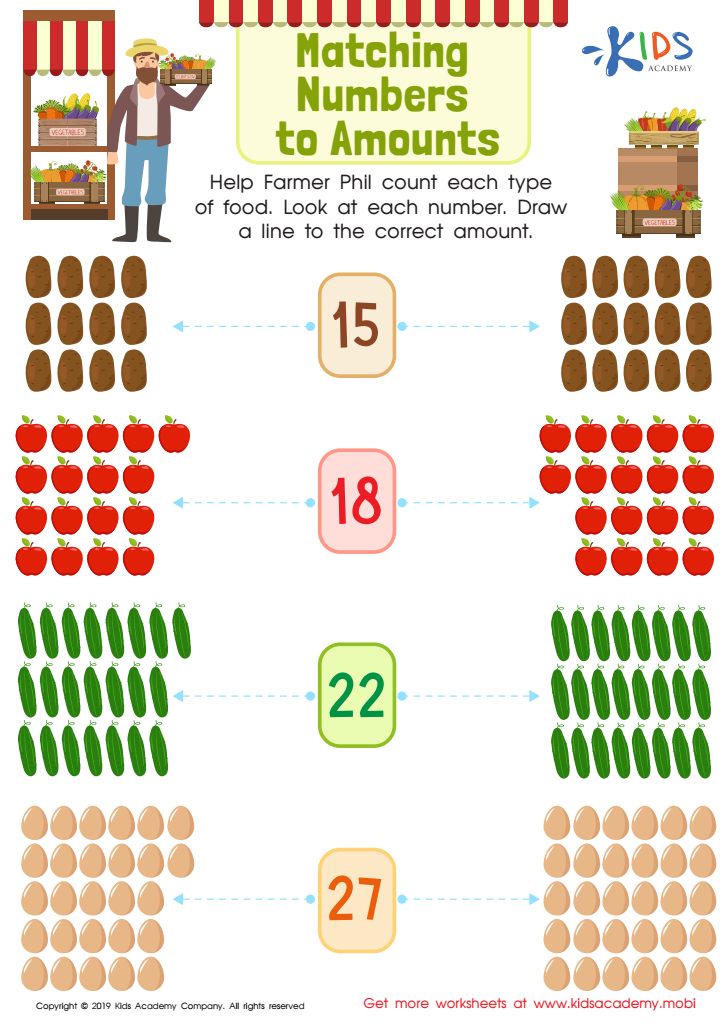
Matching Numbers to Amounts Worksheet
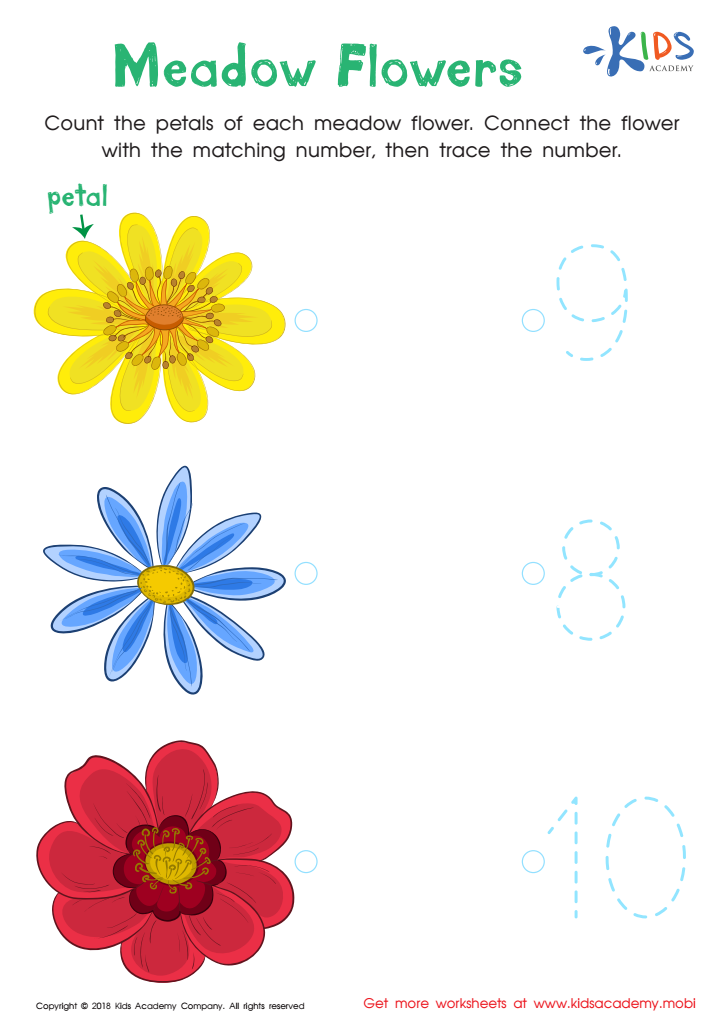
Kindergarten Number Tracing: Medow Flowers Worksheet








Number recognition is a foundational skill crucial for children aged 5-6, as it forms the basis for their future mathematical learning. At this developmental stage, children are beginning to make sense of the world, and number recognition helps them understand the concept of quantity, order, and value, which are essential for more complex mathematical concepts they will encounter later.
For parents and teachers, ensuring children can recognize numbers aids in everyday tasks and sets the stage for a positive attitude towards math. When children are competent in identifying numbers, they are more likely to succeed with activities that involve counting, simple addition and subtraction, and pattern recognition. These skills are not only useful in academic settings but also in practical, day-to-day tasks like sharing toys, telling time, and understanding money.
Moreover, early number recognition can boost children’s confidence and enthusiasm for learning. As they achieve small successes, their self-esteem increases, leading to greater engagement in the classroom or during learning activities at home. Recognizing numbers also plays a role in cognitive development, helping children enhance their memory, attention to detail, and problem-solving skills.
In summary, number recognition at ages 5-6 is integral as it lays a crucial foundation for future academic success, fosters cognitive development, and supports practical life skills.








