Improving counting skills Normal Math Worksheets for Ages 5-6
3 filtered results
-
From - To
Discover engaging worksheets designed to enhance counting skills for children ages 5-6 at Kids Academy. Our Normal Math Worksheets provide interactive and fun activities tailored to develop numerical comprehension, with a focus on counting objects, recognition of numbers, and simple addition and subtraction. Each worksheet is crafted to ignite a love for learning while reinforcing foundational math skills. Perfect for teachers and parents, these resources aim to empower young learners through playful exercises and colorful illustrations that capture their imagination. Support your child's math journey and boost their confidence with our thoughtfully designed counting skills worksheets! Get started today!
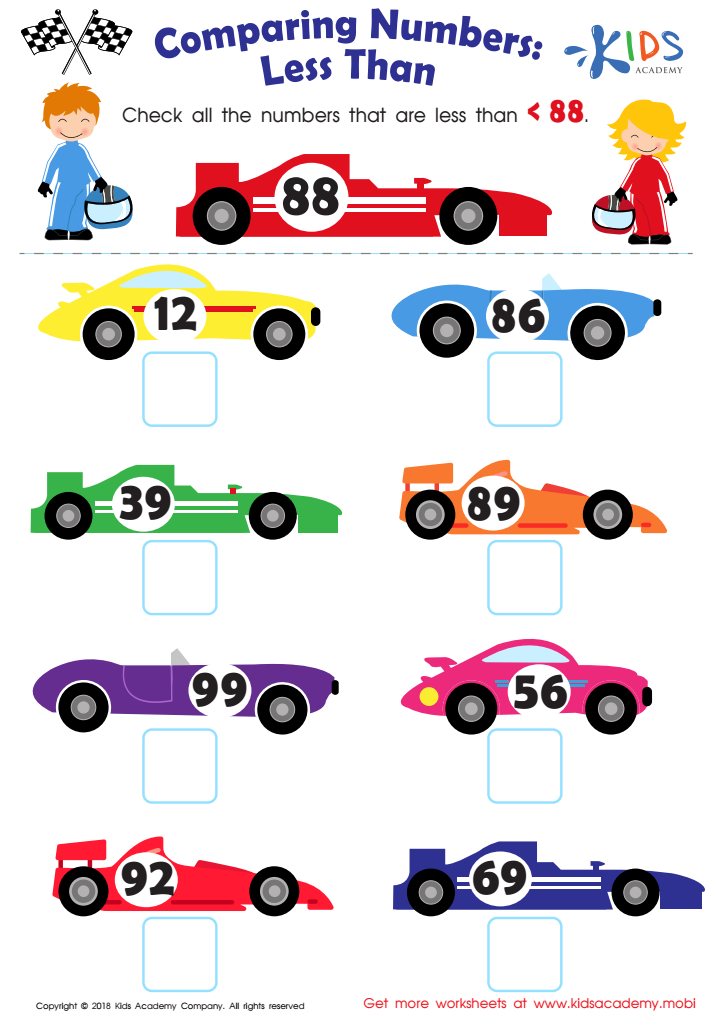
Less Than Worksheet
 Assign to My Students
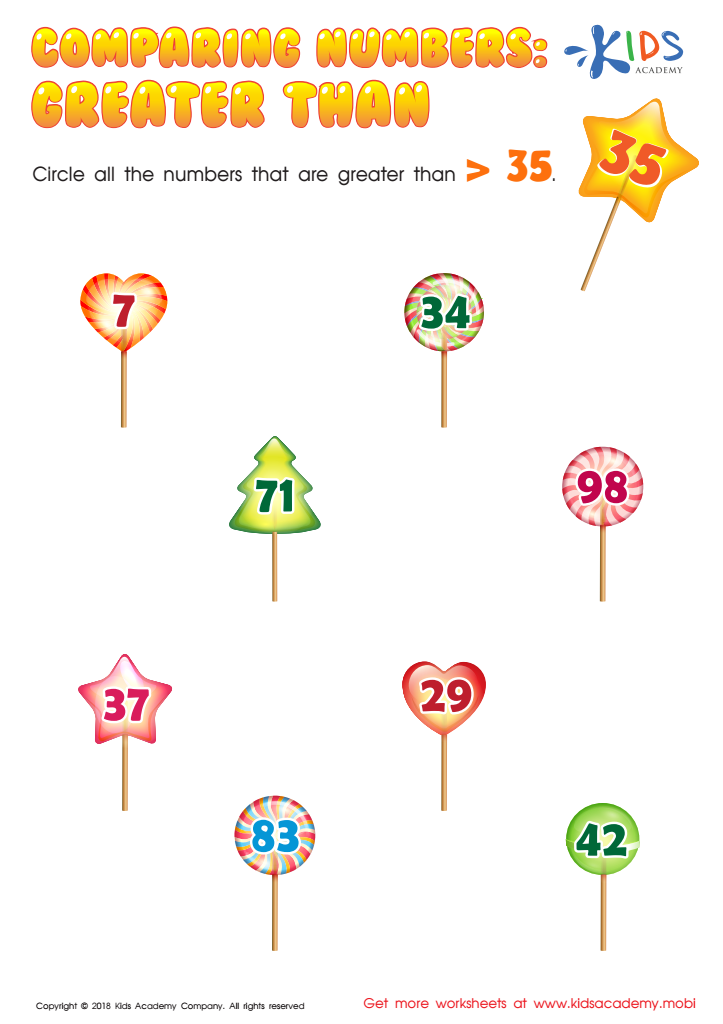
Greater Than Worksheet
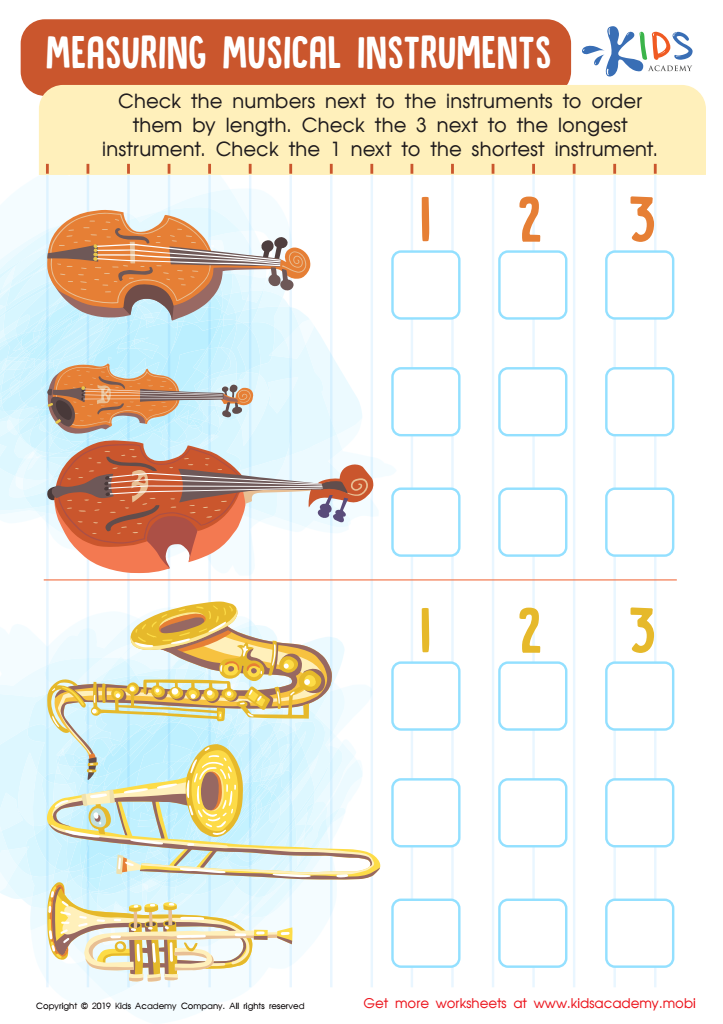
Measuring Musical Instruments Worksheet








Improving counting skills in children aged 5-6 is crucial for several reasons. First, these foundational skills are essential for future mathematical understanding. At this age, children are not only learning to count but are also beginning to recognize the relationship between numbers and quantities, which lays the groundwork for addition, subtraction, and more complex math concepts.
Moreover, enhanced counting skills promote problem-solving abilities. When children can count accurately, they can tackle everyday challenges—like sharing items or managing time—more effectively. This builds confidence and fosters a positive attitude toward learning.
From a developmental perspective, engaging in counting activities supports cognitive growth. It stimulates critical thinking and enhances memory as children practice remembering and recognizing numbers.
For parents and teachers, nurturing these skills can lead to stronger academic performance and increased enjoyment in learning. Children who are confident in their counting abilities are more likely to participate actively in classroom activities and develop a love for math, which can shape their future educational paths. In summary, focusing on counting skills within the early years not only equips children with necessary tools for math but also supports their overall cognitive and emotional development.








