Counting skills Normal Matching Worksheets for Ages 5-6
6 filtered results
-
From - To
Enhance your child's counting abilities with our engaging Counting Skills Normal Matching Worksheets for ages 5-6. These printable resources are designed to make learning fun and interactive, helping young children develop essential numeracy skills. Each worksheet features colorful visuals and simple exercises where kids can match numbers to corresponding quantities, providing a hands-on experience that reinforces their understanding of counting. Perfect for parents and educators, these worksheets promote independent practice and boost confidence in mathematical concepts. Unlock your child's potential with our carefully crafted materials, ensuring a solid foundation in counting as they embark on their educational journey!
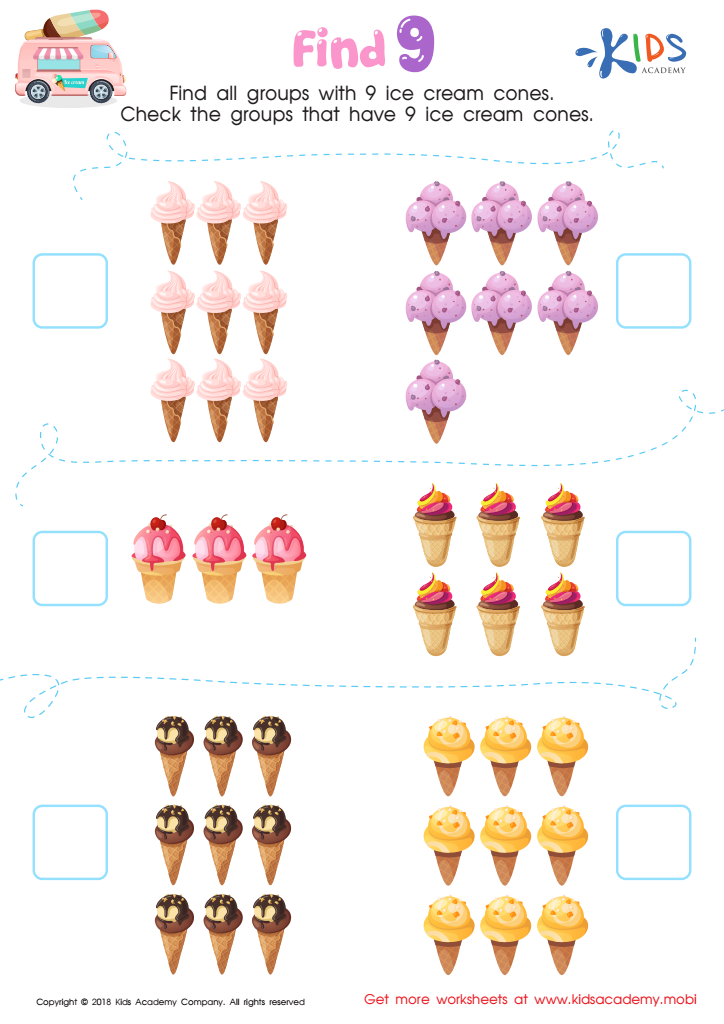
Find 9 Worksheet
 Assign to My Students
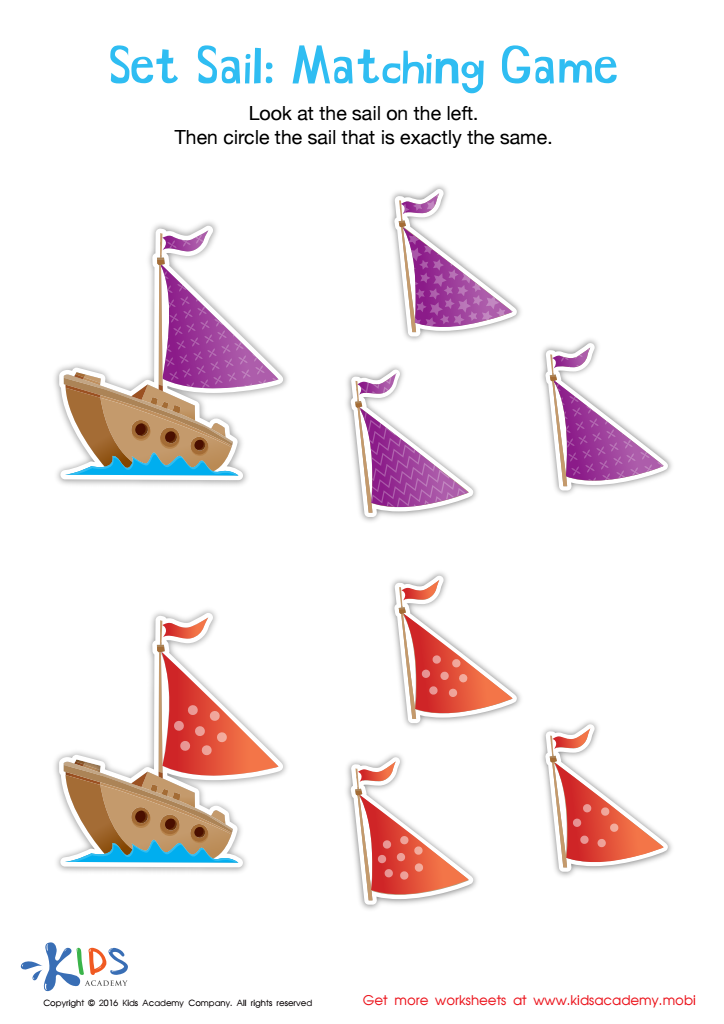
Set Sail Worksheet
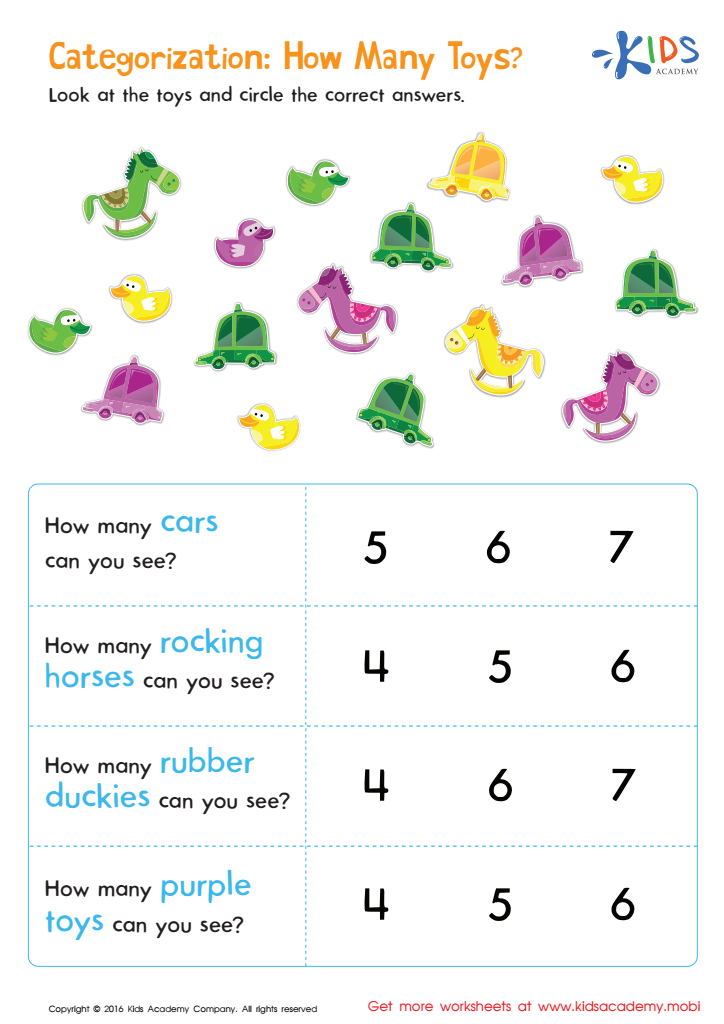
Classifying Toys by Type and Color Sorting Worksheet
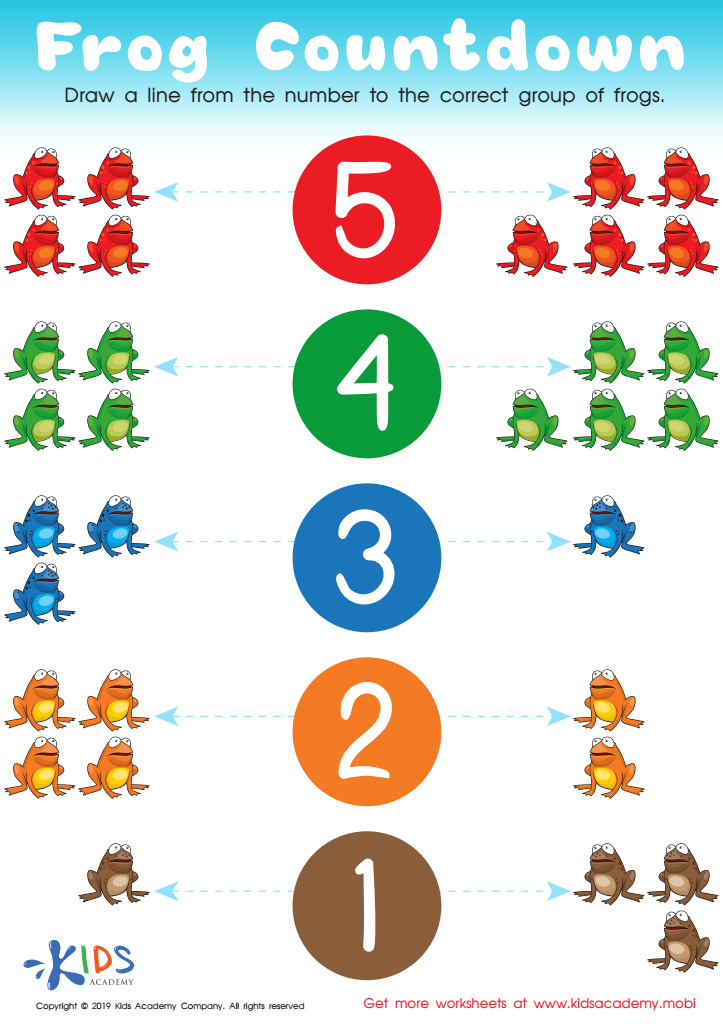
Frog Countdown Worksheet

Ten in the Bed Worksheet
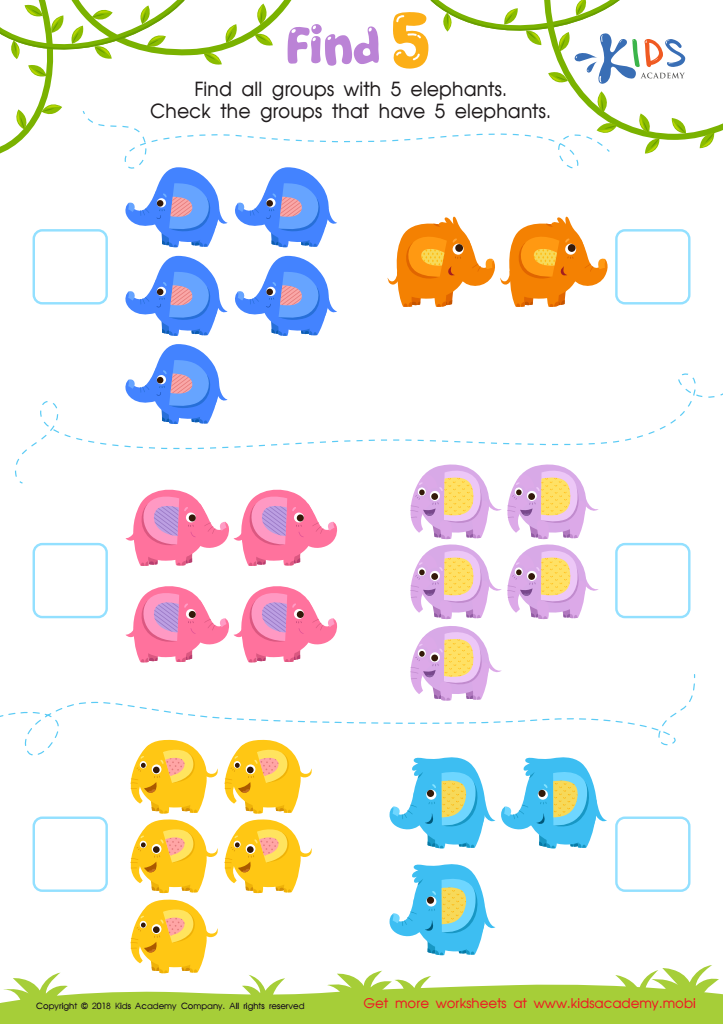
Find 5 Worksheet







Counting skills, specifically normal matching for ages 5-6, play a foundational role in a child's cognitive development and lay the groundwork for future mathematical understanding. At this age, children are naturally curious, and engaging them in counting activities fosters both their interest and competence in mathematics. Normal matching involves recognizing and pairing quantities and written numbers, which enhances number recognition and encourages a deeper understanding of one-to-one correspondence.
Parents and teachers should care about these skills as they directly impact a child’s ability to perform more complex mathematical tasks later on. Proficient counting and matching skills are linked to improved problem-solving abilities and critical thinking. Additionally, these competencies are beneficial for daily life, setting children up for success in scenarios like shopping or sharing items equally among friends.
Moreover, these skills promote concepts of quantity, emergence of addition and subtraction, and foster confidence in handling numbers. By nurturing counting skills through engaging activities, parents and teachers can create a strong foundation for lifelong learning in mathematics, ultimately helping children to succeed academically and beyond. Children who master these basic skills are better prepared for future school challenges and can develop a positive attitude towards learning math.








