Handwriting practice Normal Numbers 0–10 Worksheets for Ages 5-6
3 filtered results
-
From - To
Enhance your child's learning experience with our "Handwriting Practice: Normal Numbers 0–10" worksheets, specially designed for ages 5-6. These engaging worksheets provide children with a structured way to practice writing numbers while developing essential fine motor skills. Each worksheet features clear, bold letters and guided lines that help young learners master number formation. Fun illustrations accompany each number, making the learning process enjoyable and interactive. Ideal for parents and educators, these worksheets support early math concepts while fostering a love for handwriting. Download now and give your child the tools they need for a strong foundation in math and writing!
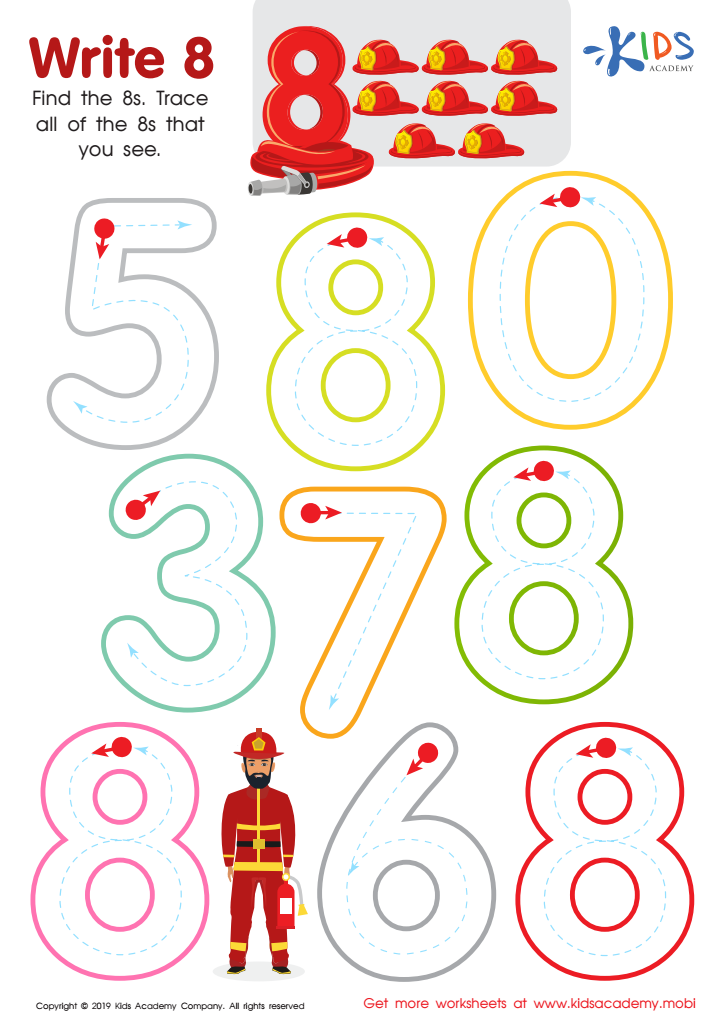
Write 8 Worksheet
 Assign to My Students
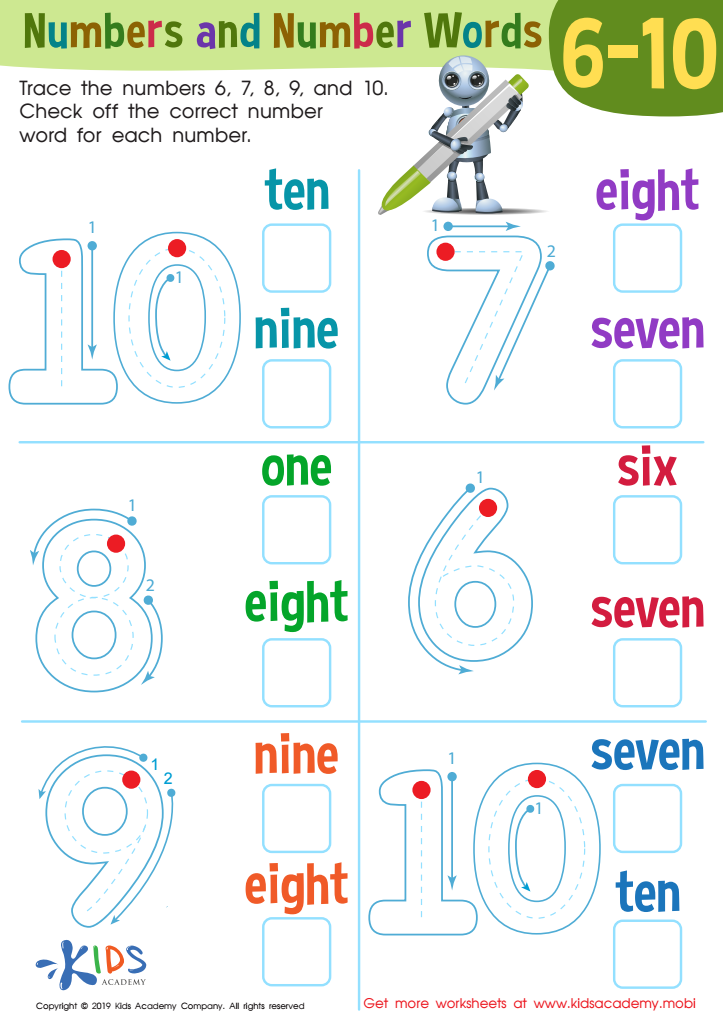
Numbers and Number Words 6–1 Worksheet
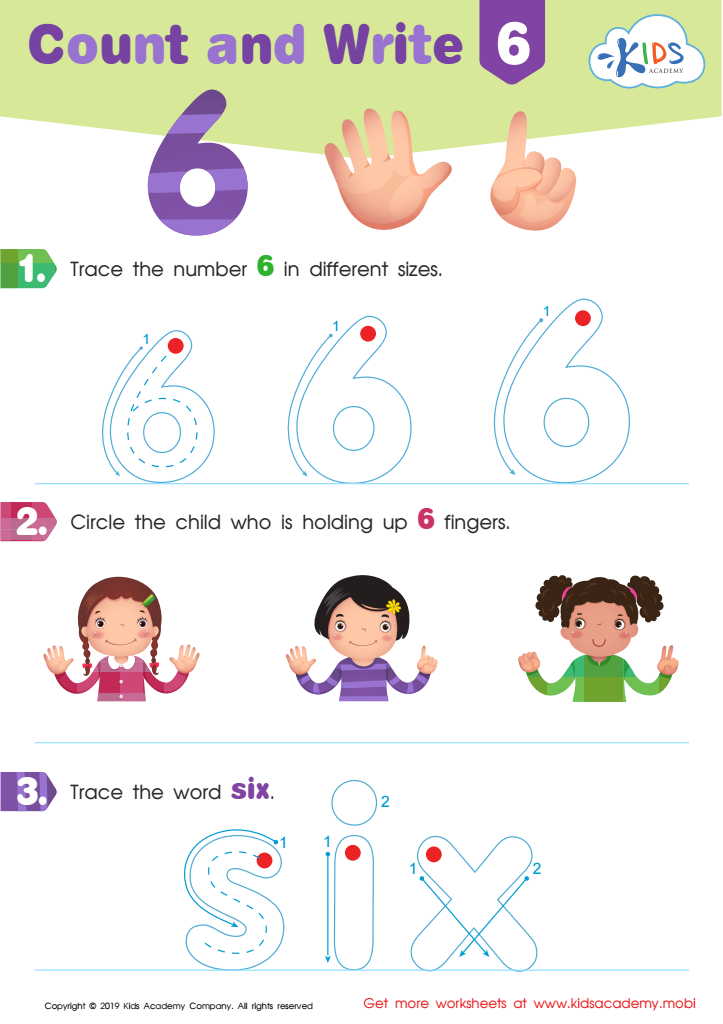
Count and Write 6 Worksheet







Parents and teachers should prioritize handwriting practice for the numbers 0–10 for children ages 5-6 for several reasons. First, early handwriting skills are foundational for developing fine motor skills, which are essential for countless daily tasks. Practicing numbers helps young learners strengthen the small muscles in their hands, improving their dexterity and coordination.
Additionally, clear handwriting is crucial for effective communication. As children grow, they will need to convey their mathematical understanding, and being able to write numbers legibly is key in assessments, homework, and in later life. Furthermore, engaging in handwriting activities can support cognitive development. When children physically write numbers, they reinforce numerical concepts, enhancing their comprehension and retention of mathematical relationships.
In a world increasingly reliant on digital communication, adopting handwriting skills can still provide the benefit of engaging various learning styles. It not only aids in literacy and numeracy but also fosters pride in their work when they see their own progress. Lastly, integrating fun and engaging handwriting activities into early learning can make education more enjoyable, laying a positive groundwork for a lifelong love of learning. Supporting this skill early contributes significantly to children's academic success and self-confidence.