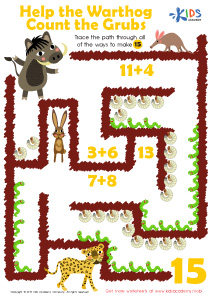
Mathematical reasoning Normal Subtraction Worksheets for Ages 5-6
4 filtered results
-
From - To
Discover our engaging Normal Subtraction Worksheets designed for children ages 5-6, focusing on enhancing mathematical reasoning skills. These worksheets provide a fun and interactive way for young learners to practice basic subtraction concepts and improve their problem-solving abilities. Through varied exercises, children will gain confidence in their math skills while reinforcing their understanding of subtraction. Each worksheet is tailored to meet developmental milestones and is packed with colorful illustrations to capture children’s attention. Perfect for classroom use or at home, our subtraction worksheets are an excellent resource to make learning math enjoyable and effective. Start your child's math journey here!
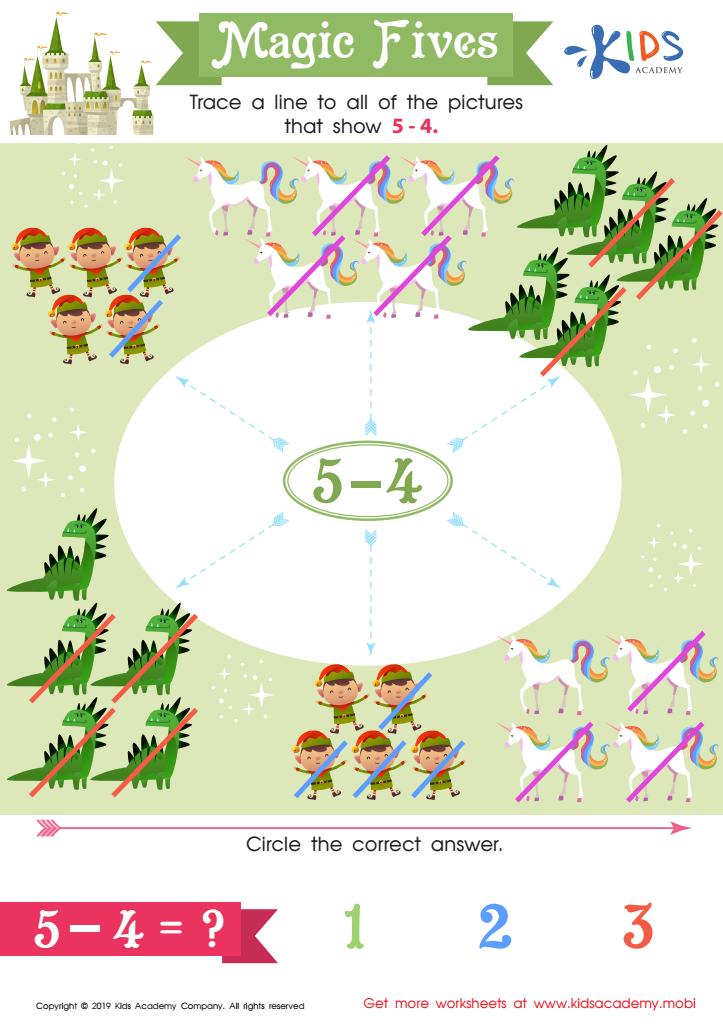
Magic Fives Worksheet
 Assign to My Students
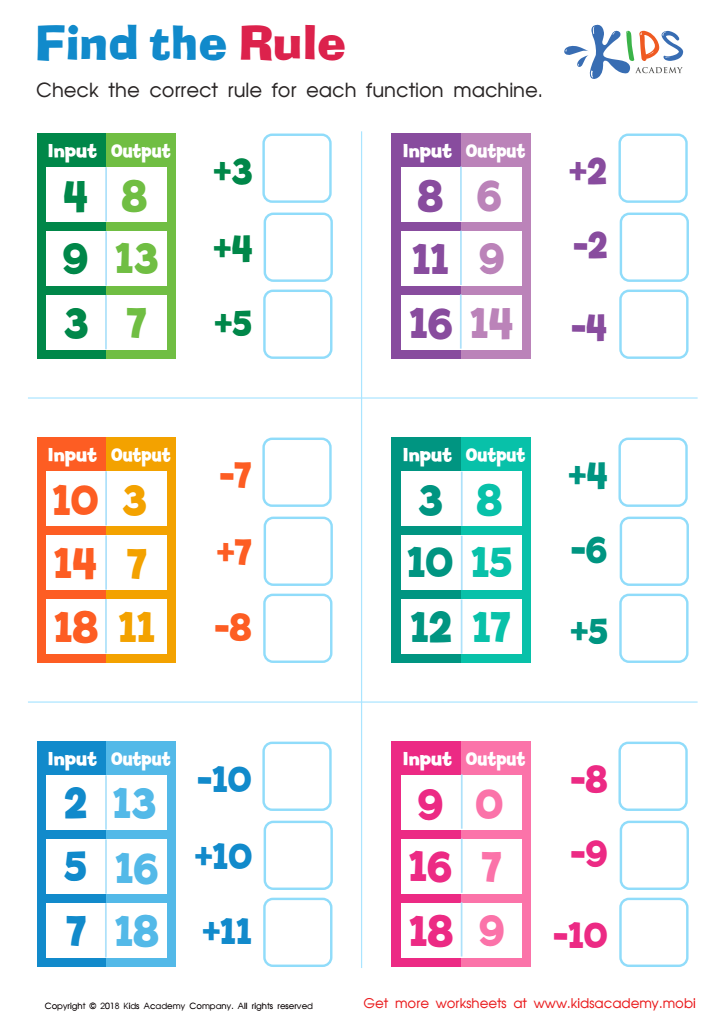
Find the Rule Worksheet
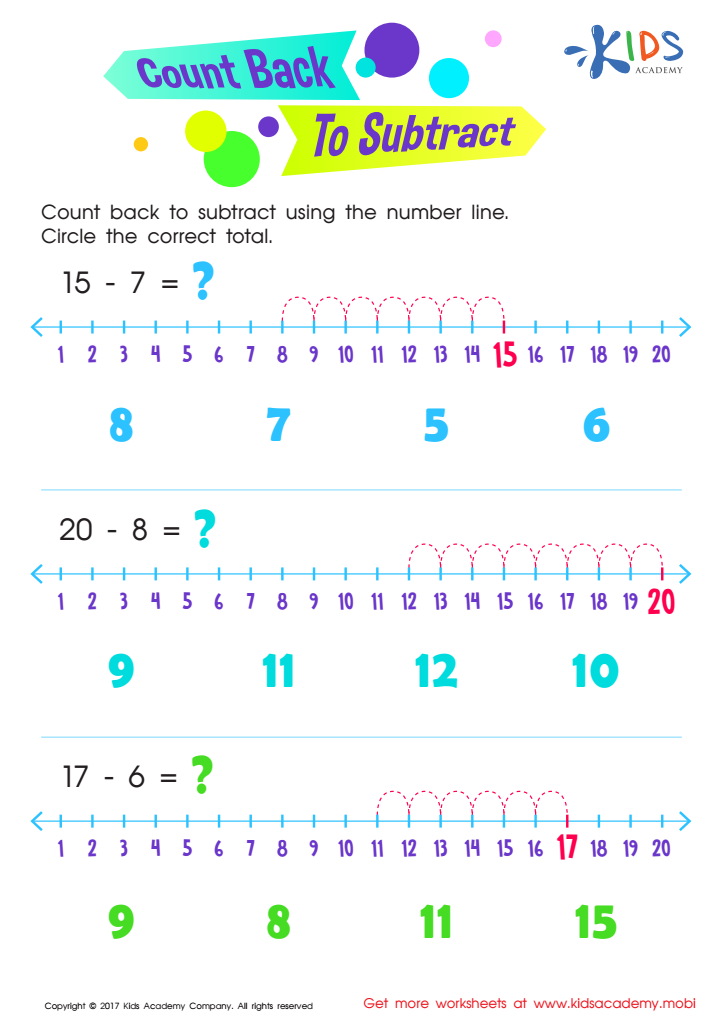
Count Back to Subtract Substraction Worksheet
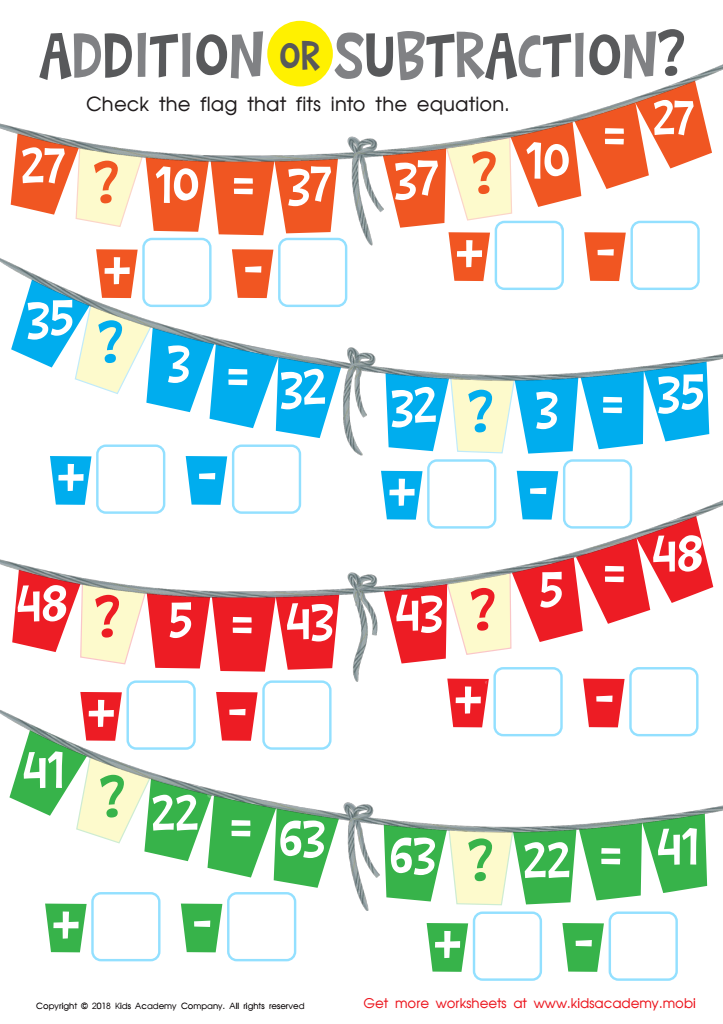
Addition or Subtraction? Worksheet








Mathematical reasoning in normal subtraction is a vital skill for children ages 5-6, and parents and teachers should prioritize it for several reasons. First, it lays the foundational understanding of number relationships and operations, essential for developing a strong mathematical background. At this age, children begin to grasp concepts of counting, quantity, and basic arithmetic operations. Facilitating their skills in subtraction helps them make sense of real-world scenarios, such as sharing, comparing quantities, or understanding how many items are left after a few are taken away.
Moreover, engaging in subtraction reasoning fosters critical thinking and problem-solving skills. Children learn to interpret problems, strategize solutions, and communicate their thought processes, which are translatable to broader learning experiences. This reasoning encourages persistence and boosts confidence, as they see their own capabilities in mathematics grow.
Additionally, strong mathematical reasoning contributes to cognitive development, enhancing logical thinking and pattern recognition. Parents and teachers should also keep in mind that positive experiences with subtraction can set the tone for attitudes towards math in later years. By nurturing these skills early on, we promote a lifelong appreciation and proficiency in mathematics, ultimately supporting children’s academic success.