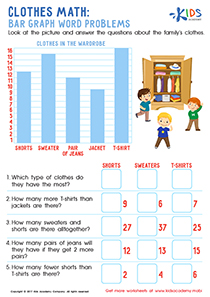
Reading comprehension Normal Two-step Word Problems Worksheets for Ages 5-6
3 filtered results
-
From - To
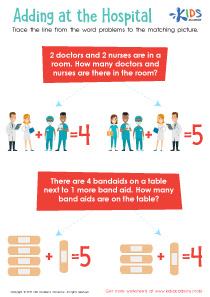
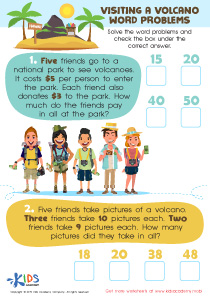
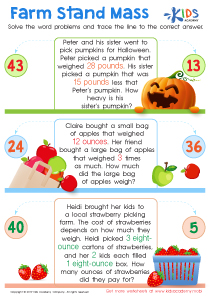
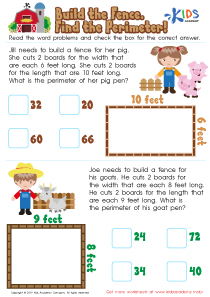
Enhance your child's reading comprehension and problem-solving skills with our "Normal Two-step Word Problems Worksheets" designed specifically for ages 5-6. These engaging worksheets feature captivating scenarios that encourage young learners to read carefully, analyze information, and think critically. Each problem is crafted to challenge kids while promoting cooperation between reading and math skills. Perfect for use at home or in the classroom, these printable worksheets nurture essential abilities that students need as they progress in their academic journey. Get your little learners excited about math with fun and interactive word problems that make learning enjoyable and effective!
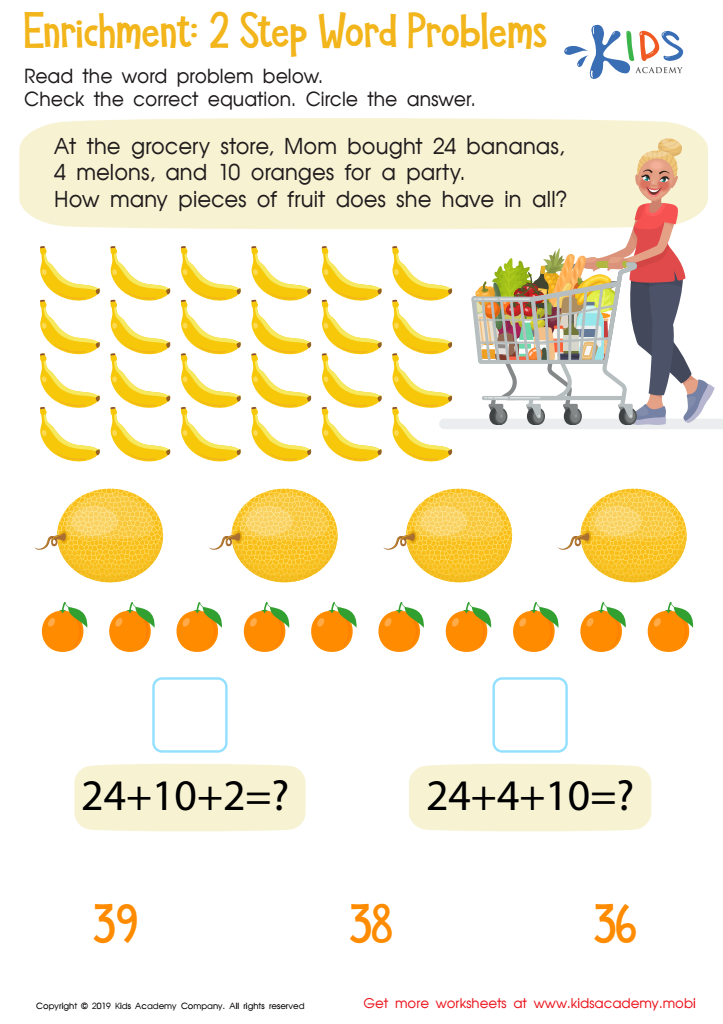
Enrichment -2 Step Word Problems Worksheet
 Assign to My Students
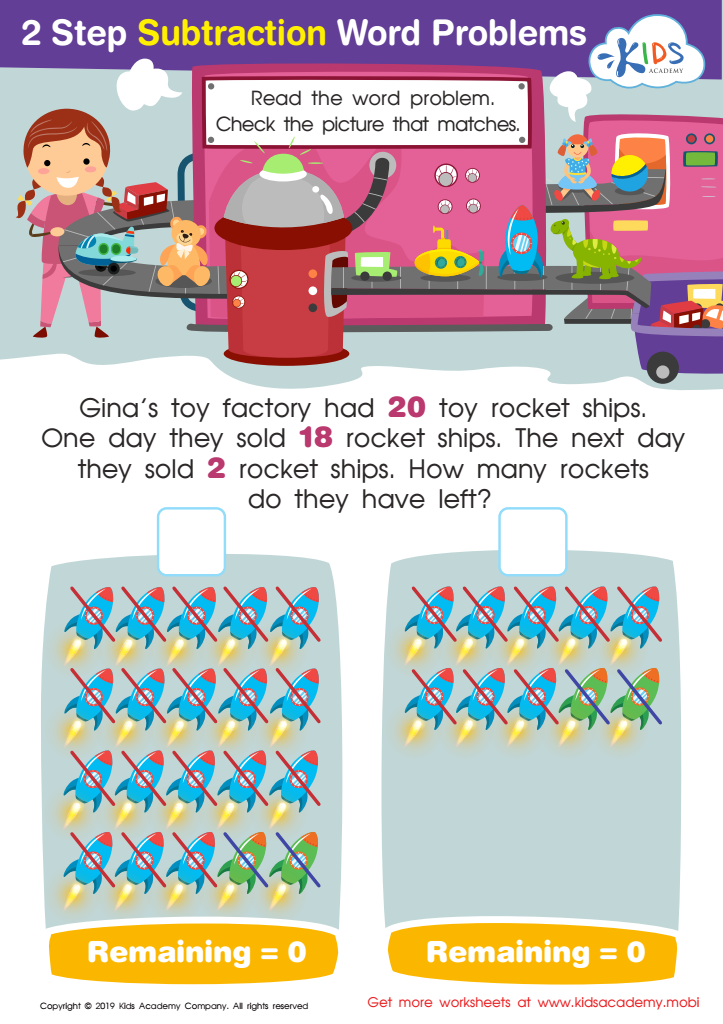
Step Subtraction Word Problems Worksheet
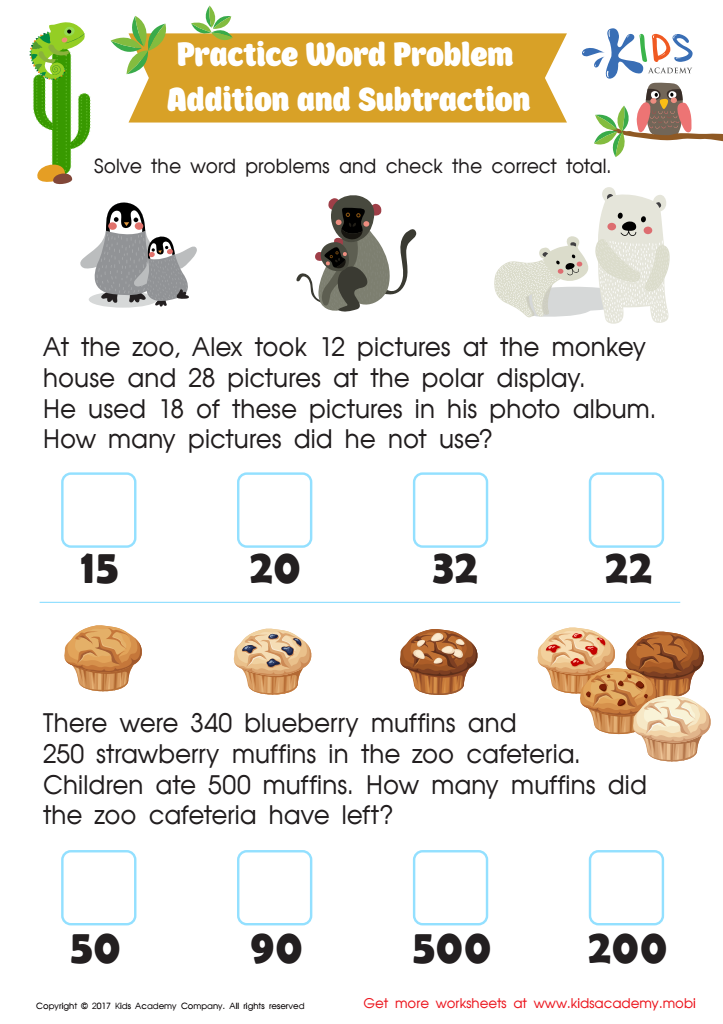
Addition and Subtraction: Word Problems Worksheet



Reading comprehension of normal two-step word problems is crucial for children aged 5-6 as it lays the foundation for their academic success, particularly in mathematics and language skills. At this developmental stage, children are beginning to make connections between language and reasoning, and understanding multi-step problems enhances their critical thinking abilities.
Firstly, these word problems require young learners to apply their reading skills in a mathematical context. As they decipher the language, they learn to identify relevant information, distinguish unnecessary details, and develop the ability to follow sequences. This analytical skill is essential not only in math but in everyday situations, enhancing their problem-solving capabilities.
Moreover, mastering comprehension at this age boosts confidence. Children who can successfully navigate two-step word problems often feel a sense of accomplishment, encouraging further exploration and learning.
Lastly, engaging with these problems fosters collaboration between parents and teachers, creating a unified approach to educating children. It allows for open discussions about various strategies, making learning interactive and enjoyable. Thus, prioritizing reading comprehension of two-step word problems can significantly benefit children's cognitive development and pave the way for future academic achievements.