
Letter recognition Normal Building Vocabulary Worksheets for Ages 5-6
4 filtered results
Difficulty Level
Grade
Age
-
From - To
Subject
Activity
Standards
Introduce your child to the captivating world of letters with our "Letter Recognition Normal Building Vocabulary Worksheets for Ages 5-6!" These engaging worksheets are thoughtfully designed to enhance early reading skills by focusing on letter recognition and vocabulary development. Perfectly suited for young learners, they combine fun activities with educational value to keep children motivated and eager to learn. With these worksheets, children will confidently identify letters, which is a crucial step towards becoming proficient readers. Give your child the advantage they deserve by incorporating these dynamic and educational worksheets into their daily learning routine.
Favorites
With answer key
Interactive
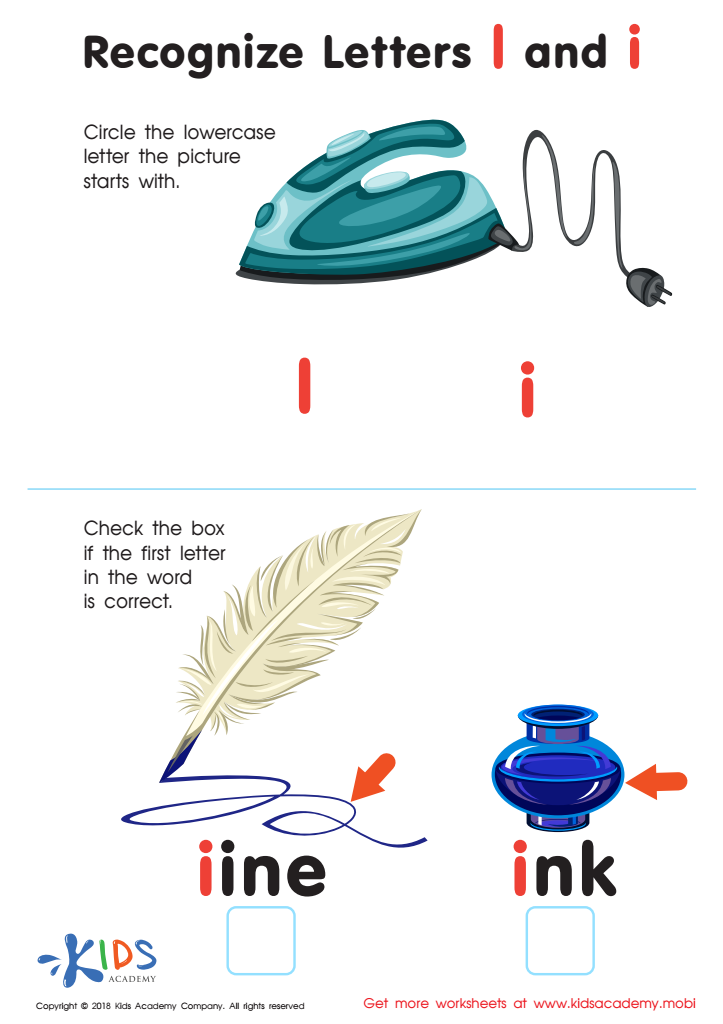
Recognize Letters l and i Worksheet
Help your child become familiar with uppercase and lowercase letters. Have them look at the pictures in the worksheet and circle the lowercase letter the picture starts with. For example: which one is the lowercase "i", the capital "I" or the small "i"?
 Assign to My Students
Recognize Letters l and i Worksheet
Worksheet











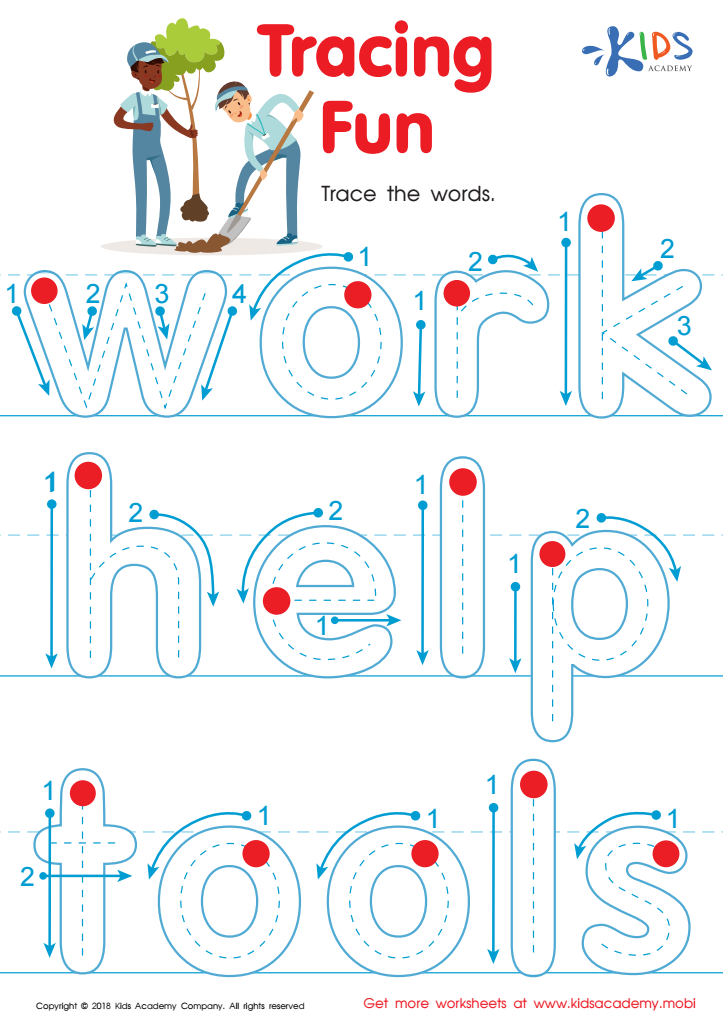
Tracing Fun Worksheet
Believe it or not, good handwriting helps with reading! Starting at the top left and writing legibly builds reading skills. This free worksheet helps little learners practice basic sight words. Red dots show them where to start and the words provide reinforcement without them realising. An enjoyable way to boost their reading and writing.
Tracing Fun Worksheet
Worksheet
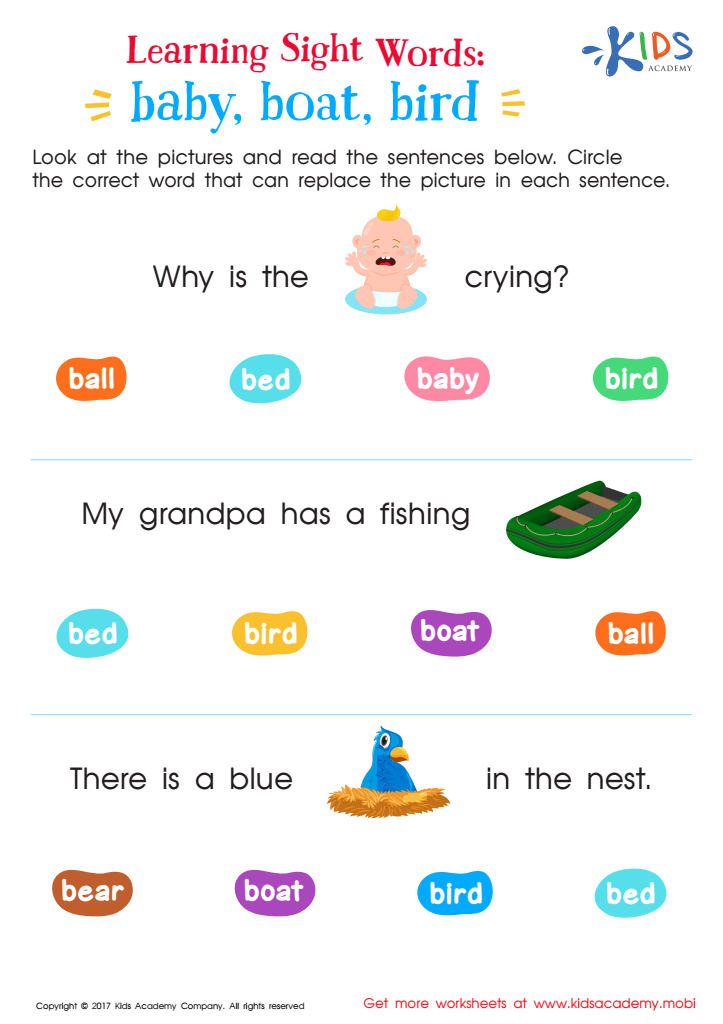
Baby, Boat, Bird Worksheet Sight Words Worksheet
Sight words are an essential part of fluency; help kids build it by writing and reading them. This worksheet is a great way to start.
Baby, Boat, Bird Worksheet Sight Words Worksheet
Worksheet
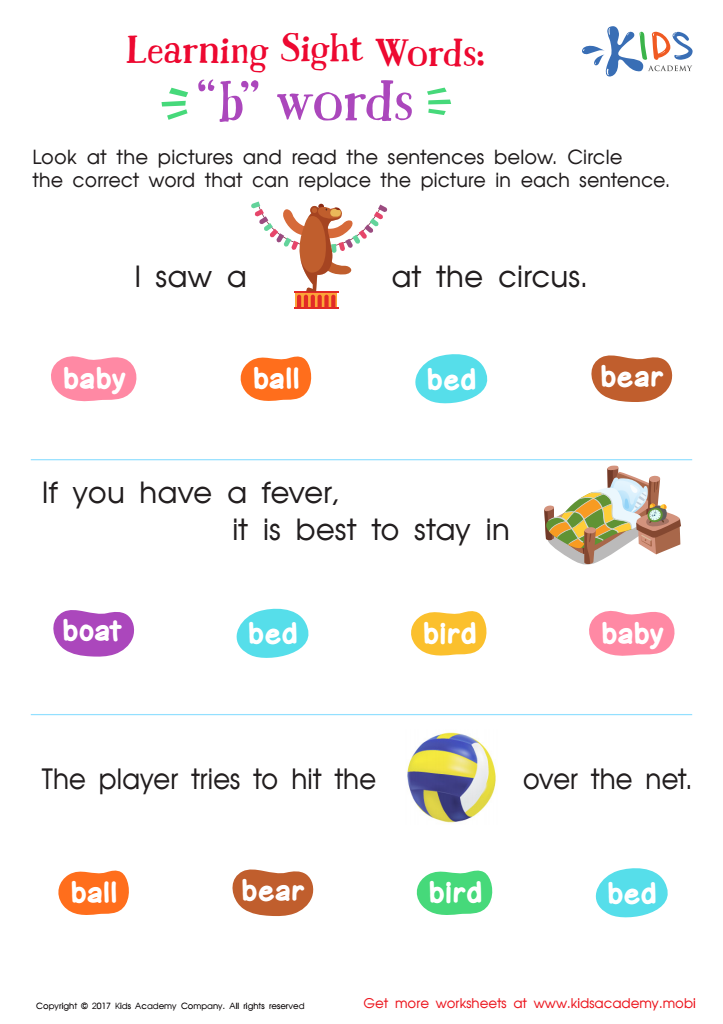
"B" Words Printable Sight Words Worksheet
Kids will learn sight words quickly with this fun worksheet! "B" Words offers guided practice with simple sentences and pictures. Build your child's reading confidence with this helpful worksheet and watch them become a master!
"B" Words Printable Sight Words Worksheet
Worksheet
Join Kids Academy for Free
Who is primarily going to use this learning content?








Letter recognition and building vocabulary are critical developmental milestones for children ages 5-6, serving as foundational skills for future reading and writing success. At this age, children are transitioning from pre-literacy skills to becoming early readers. Letter recognition, the ability to identify and name letters, is the first step towards understanding that letters represent specific sounds in spoken words. This skill is essential for phonemic awareness, enabling children to decode words and establish a basis for fluent reading.
Simultaneously, building a robust vocabulary supports comprehension and communication. As children learn new words, they expand their ability to articulate thoughts, understand stories, and engage in social interactions. A rich vocabulary enhances listening and speaking skills, promoting cognitive development and academic success.
For parents and teachers, focusing on these skills helps in early detection of potential learning difficulties, allowing for timely interventions. Fun, interactive activities such as reading picture books, singing alphabet songs, and playing letter-based games make learning enjoyable and effective. When children gain confidence in letter recognition and vocabulary, they are more likely to develop a lifelong love of reading, setting them on a positive educational trajectory. Ensuring these foundational skills are strong provides children with the tools they need to succeed in school and beyond.








