Rhyming skills development Normal Reading Worksheets for Ages 5-6
3 filtered results
-
From - To
Enhance your child's reading journey with our Rhyming Skills Development Worksheets, specially designed for ages 5-6. These engaging and interactive resources help young learners master the essential skill of recognizing and creating rhymes, which lays the foundation for stronger reading abilities. Each worksheet is filled with fun activities, colorful illustrations, and playful challenges that encourage kids to explore sounds and language patterns. Through repetition and creativity, children strengthen their phonemic awareness while boosting vocabulary and overall literacy skills. Perfect for classroom use or home practice, our worksheets make learning to read an enjoyable adventure for your little ones!
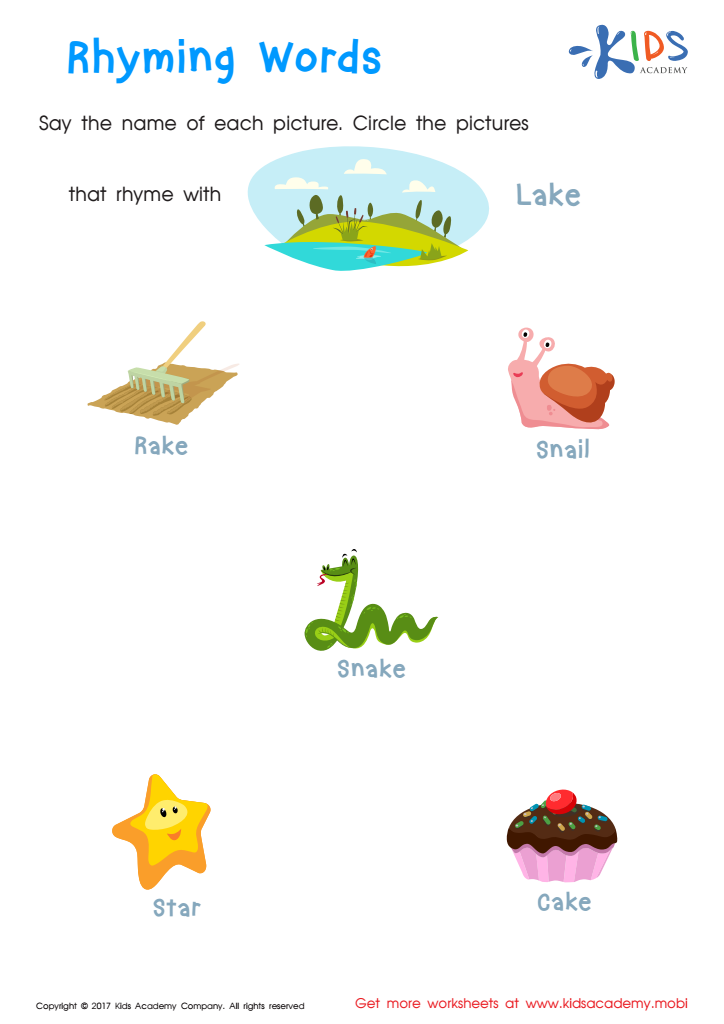
Rhyming Words Rhyming Worksheet
 Assign to My Students
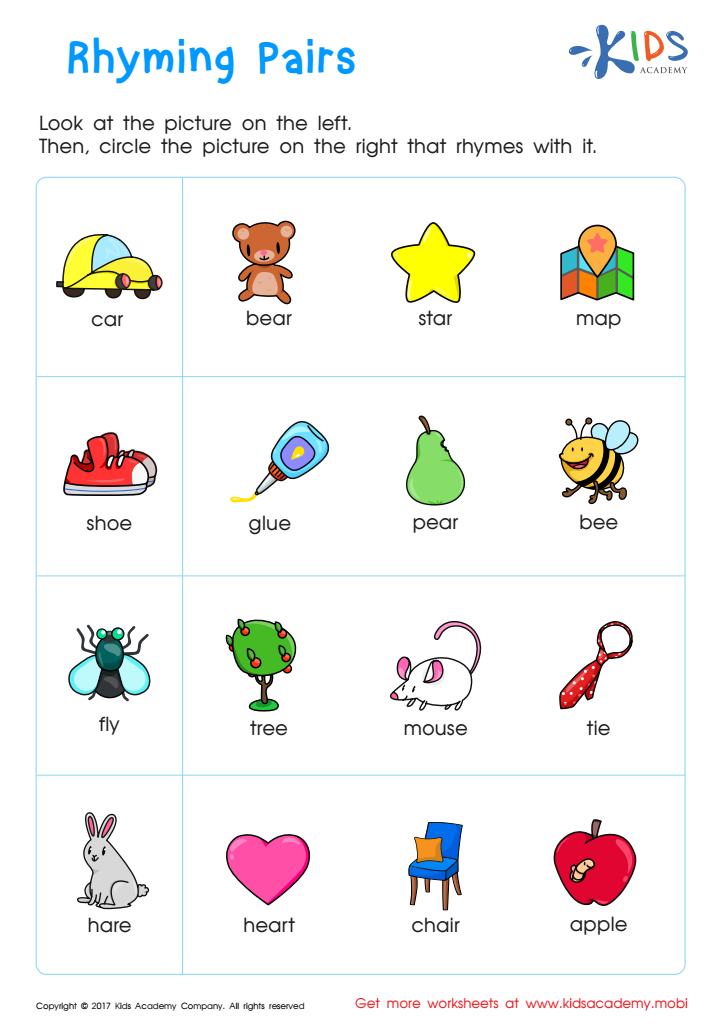
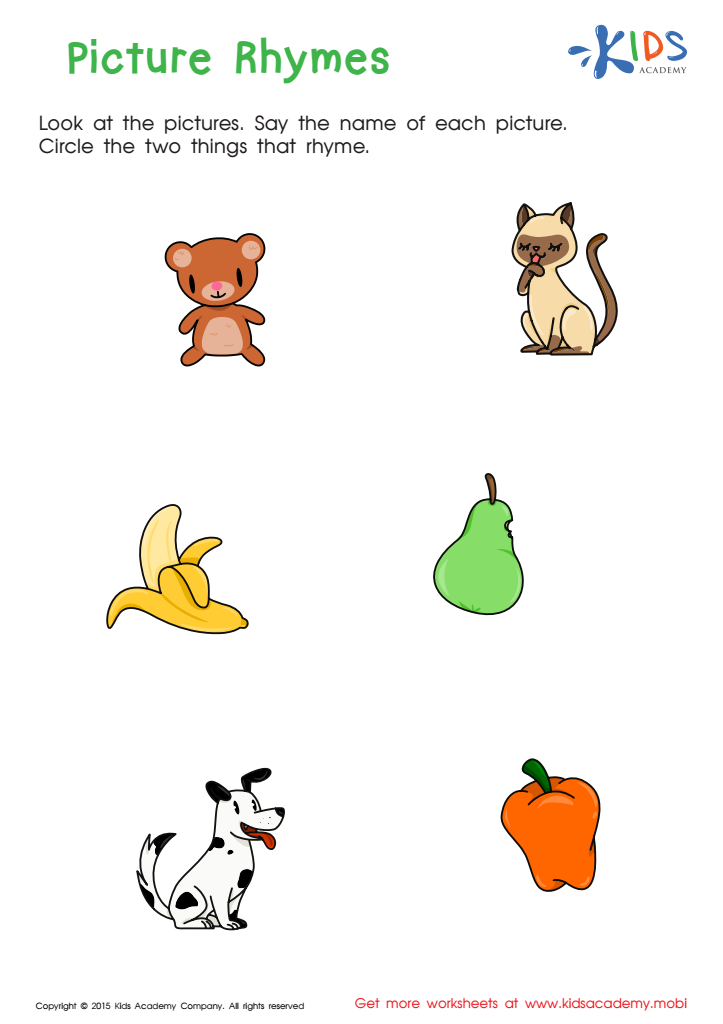
First Words: Picture Rhymes Worksheet







Rhyming skills are a crucial component in the early literacy development of children aged 5-6. When parents and teachers emphasize rhyming, they help foster phonemic awareness, which is the understanding of sounds in words. This skill is essential for learning to read and write, as it enables children to break down words into individual sounds and recognize sound patterns.
By engaging children in rhyming activities like nursery rhymes and songs, they enhance their listening skills and memory, making language acquisition more enjoyable and effective. Additionally, rhyming supports vocabulary development, as children encounter new words in playful contexts, allowing them to grasp meaning and usage more easily.
Understanding rhyme promotes deeper phonological processing, a critical element for later reading fluency and comprehension. As children become more comfortable with rhyming, they build confidence in their reading abilities, paving the way for future literacy success. Furthermore, these skills are often foundational for spelling, as children begin to notice similarities and differences between word structures.
Overall, prioritizing rhyming skills prepares young learners not only to read effectively but also to appreciate the beauty of language, setting a firm foundation for lifelong literacy.








