Problem-Solving Skills Normal Reading Comprehension Worksheets for Ages 5-6
5 filtered results
-
From - To
Enhance your child's reading comprehension with our engaging Problem-Solving Skills Normal Reading Comprehension Worksheets designed specifically for ages 5-6. These worksheets provide a perfect blend of literature and logic, helping young learners navigate through reading materials while improving their critical thinking. Each worksheet features age-appropriate stories that encourage children to analyze situations and answer questions, fostering an early love for reading. With colorful illustrations and interactive content, these resources are not only educational but also fun! Help your little ones develop essential problem-solving abilities and boost their reading confidence today with our expertly crafted worksheets. Start their learning adventure now!
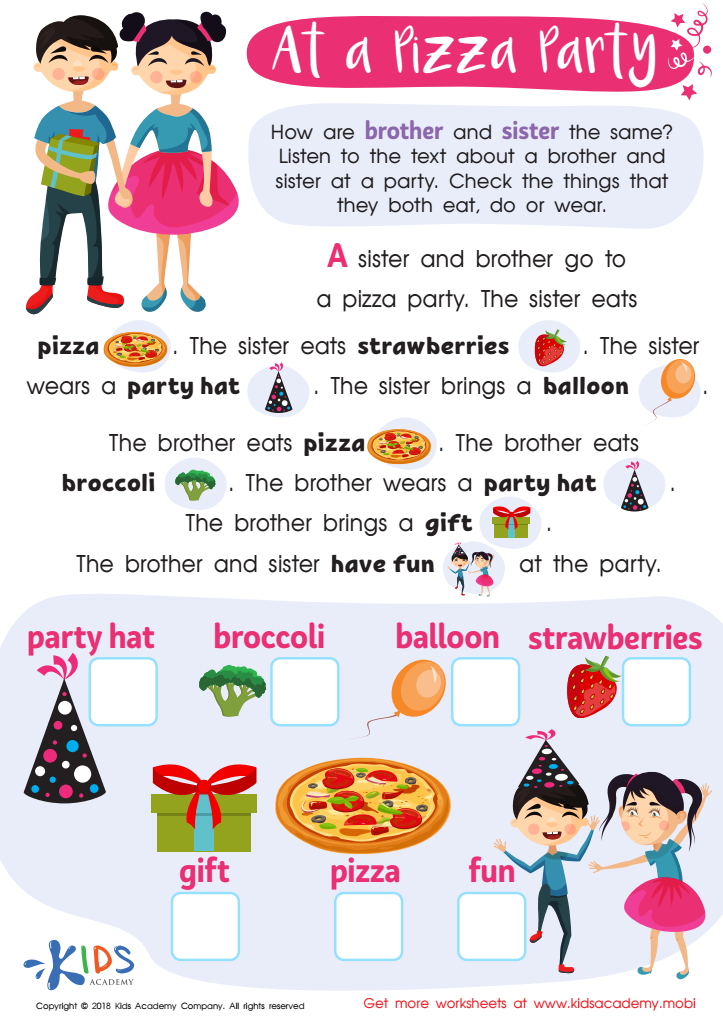
At a Pizza Party Worksheet
 Assign to My Students
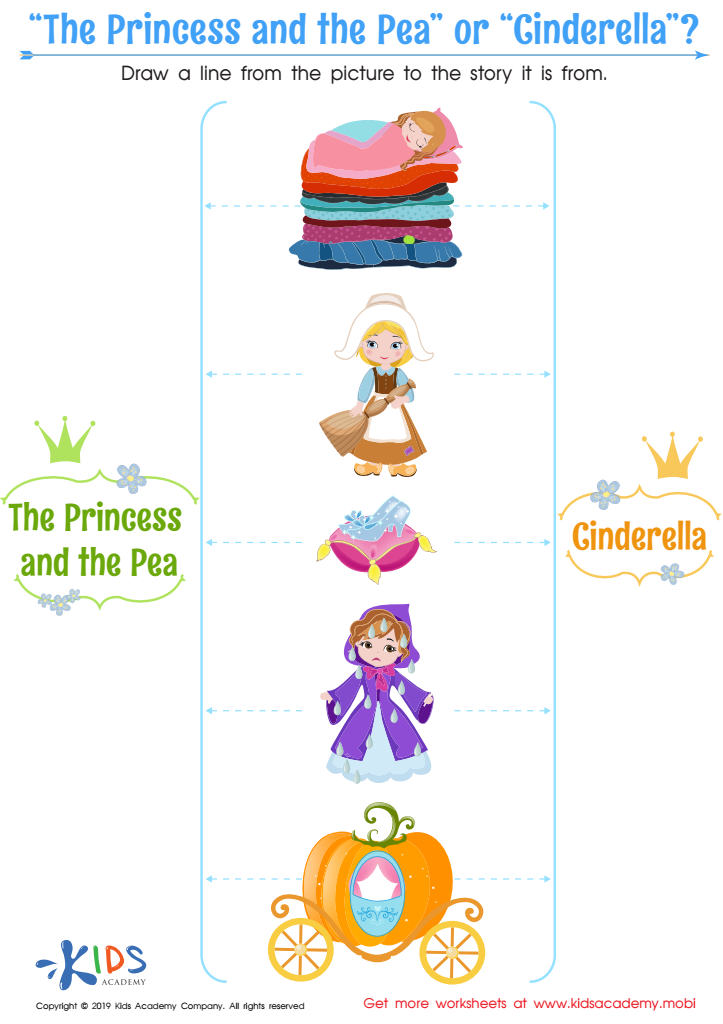
“The Princess and the Pea” or “Cinderella” Worksheet

Towns Worksheet
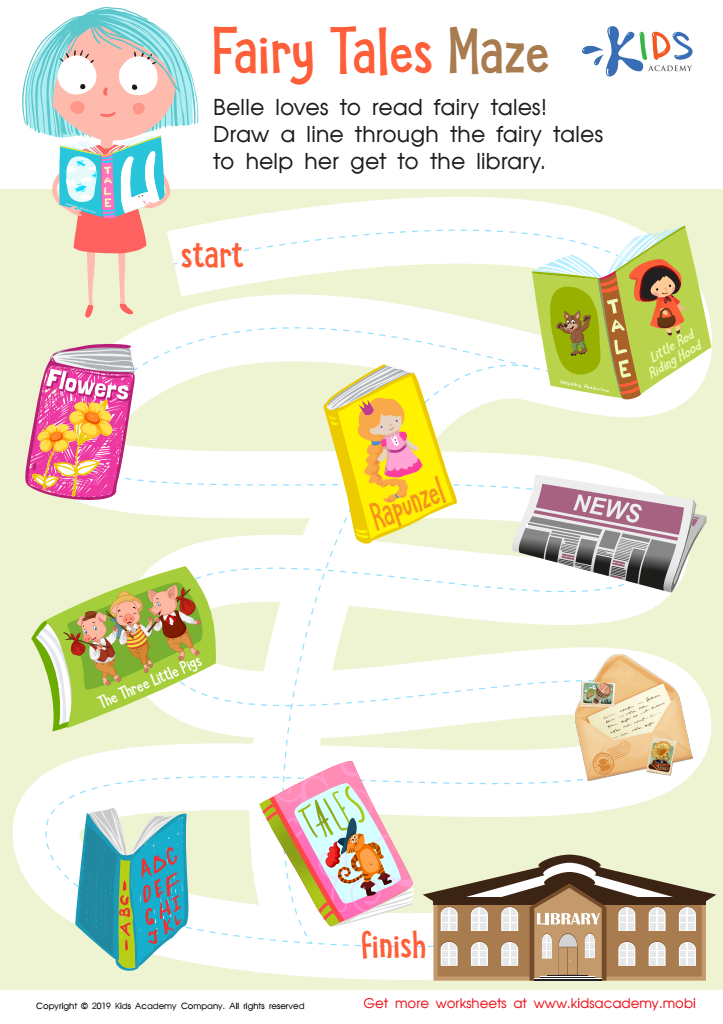
Fairy Tales Maze Worksheet
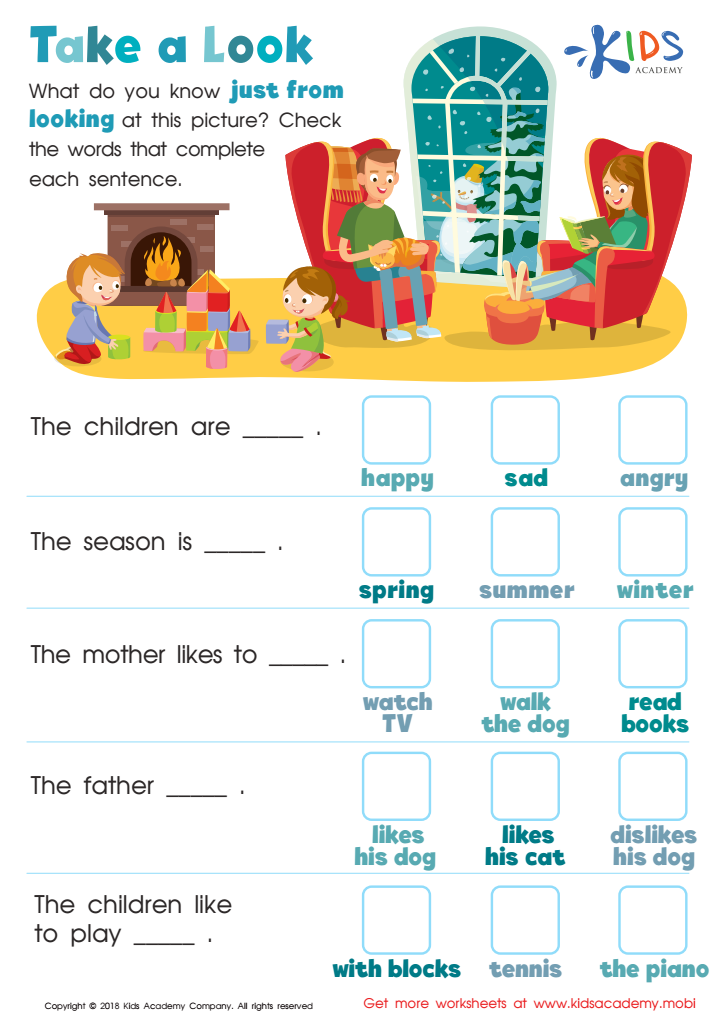
Take a Look - Part 1 Worksheet







Parents and teachers should prioritize problem-solving skills alongside reading comprehension for children aged 5-6 because both are essential components of cognitive and emotional development. At this age, children are naturally curious and eager to learn. By fostering problem-solving skills, we encourage them to think critically, develop resilience, and improve their ability to navigate challenges. This growth is crucial as it equips them with the tools to overcome obstacles, leading to greater academic success.
Reading comprehension is equally vital, as it forms the foundation for all future learning. When young learners grasp the skills to understand and engage with texts, they enhance their vocabulary and literacy skills, which are essential for effective communication. Integrating problem-solving with reading comprehension allows children to explore narratives actively, question various scenarios, and connect stories to real-life experiences.
Furthermore, these competencies promote social skills and emotional intelligence. Children who can solve problems and comprehend reading material effectively are more likely to engage in constructive conversations, collaborate with peers, and exhibit empathy. Ultimately, by investing in these skills at an early age, parents and teachers are setting children on a trajectory for lifelong learning, independence, and success in a rapidly changing world.








