Analytical skills Normal Reading Fiction Worksheets for Ages 5-6
5 filtered results
-
From - To
Enhance your child's reading experience with our engaging Analytical Skills Normal Reading Fiction Worksheets for ages 5-6. Designed to foster critical thinking and interpretation, these worksheets guide young learners through fun, age-appropriate stories that challenge their comprehension and analytical abilities. Each activity encourages children to identify main ideas, make connections, and draw conclusions, promoting deeper understanding. Perfect for classroom use or at-home learning, our resources help cultivate essential skills while instilling a love for reading. Dive into a world of imagination and inquiry—check out our collection and watch your child's confidence and analytical skills grow!
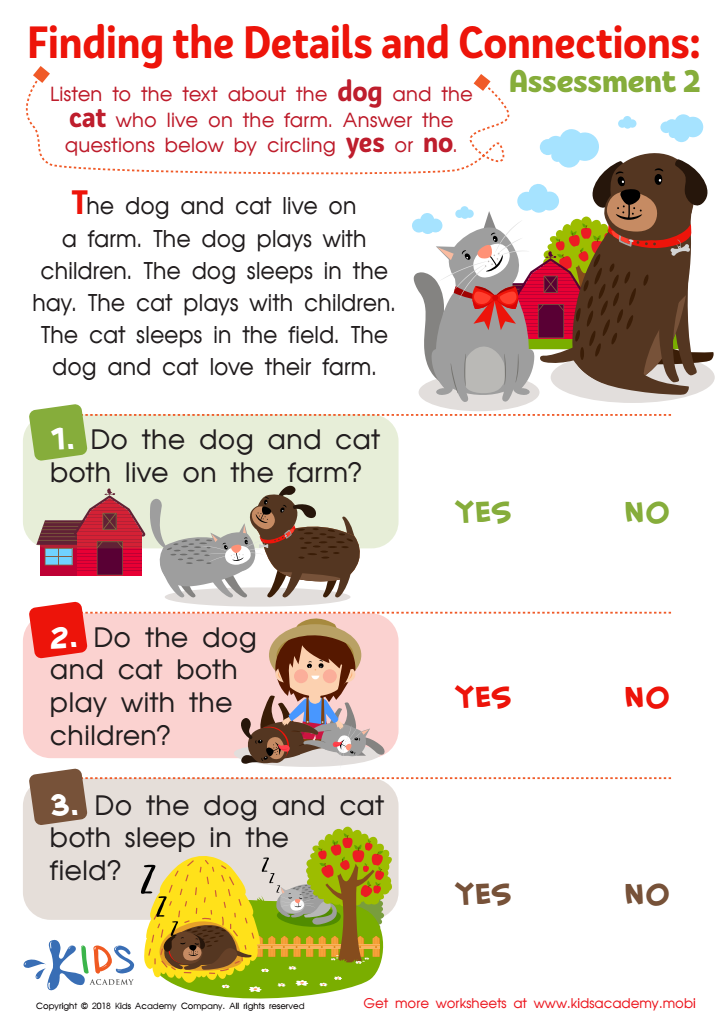
Finding the Details and Connections: Assessment 2 Worksheet
 Assign to My Students
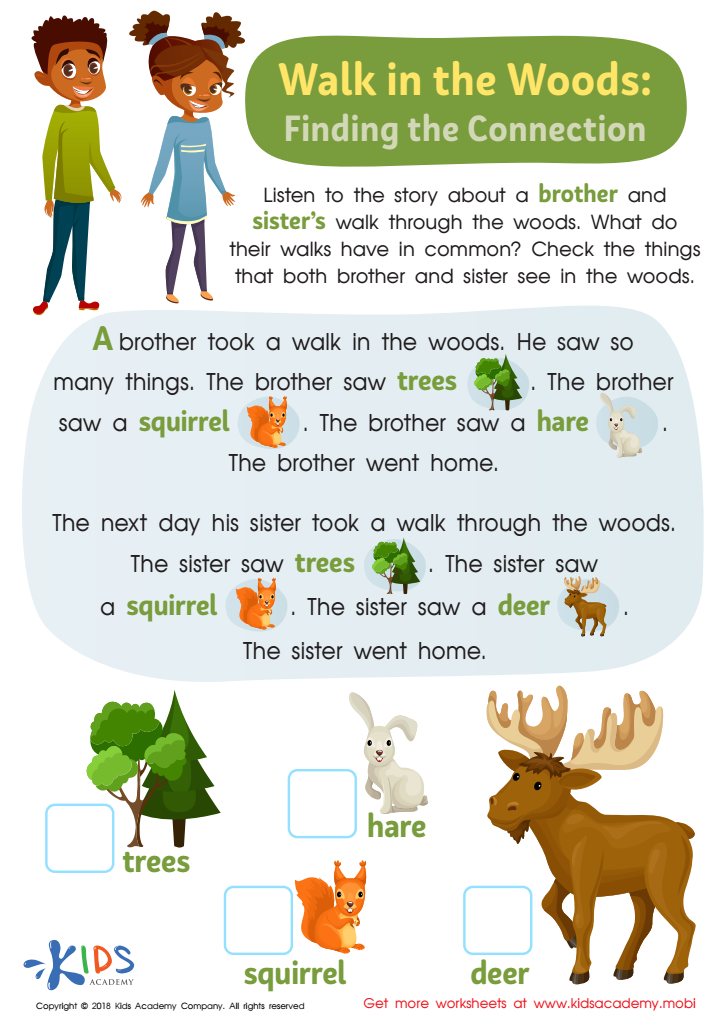
Walk In the Woods: Finding Connections Worksheet
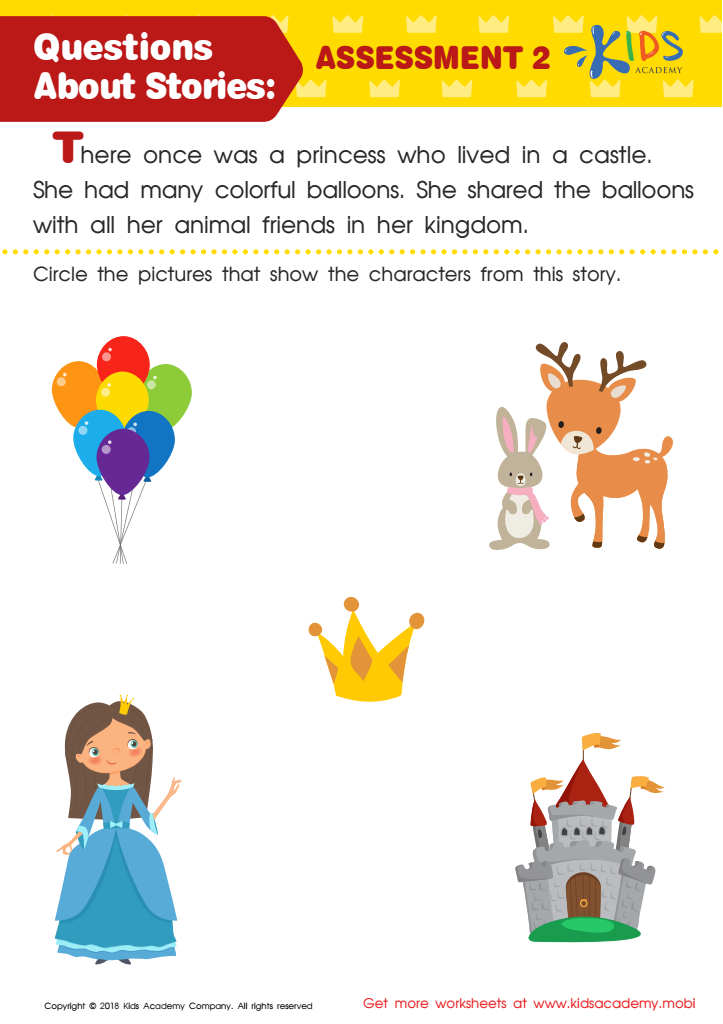
Questions About Stories: Assessment 2 Worksheet
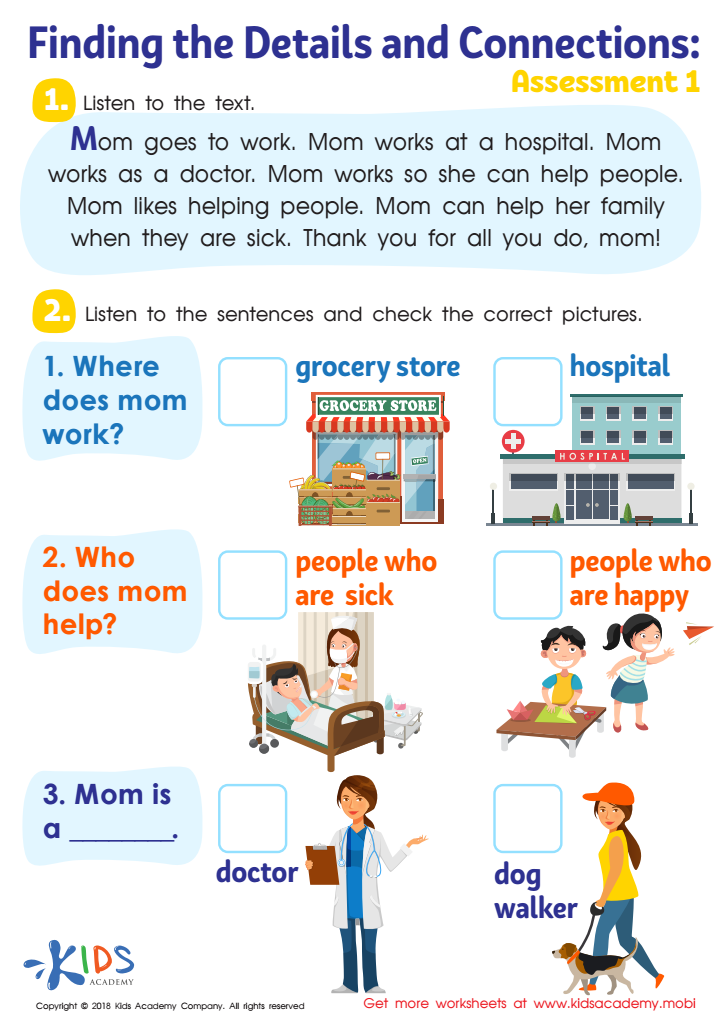
Finding the Details and Connections: Assessment 1 Worksheet
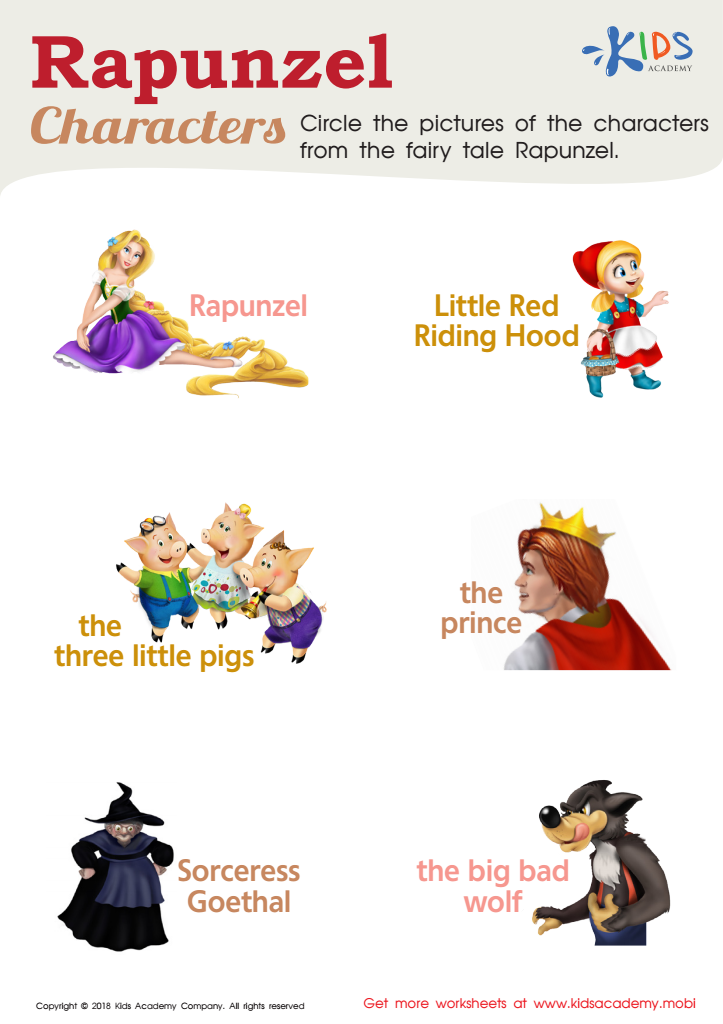
Rapunzel Characters Worksheet








Analytical skills are crucial for children aged 5-6 as they lay the foundation for critical thinking and problem-solving abilities essential for future academic success. Engaging with normal reading fiction at this age not only enhances vocabulary and language understanding but also requires children to interpret characters, plot developments, and themes. This fosters the ability to analyze information, draw conclusions, and make decisions based on their understanding of the story.
Parents and teachers should care about nurturing these skills because they empower children to become more independent thinkers. By discussing stories, asking open-ended questions, and encouraging predictions about what might happen next, adults can guide children toward deeper comprehension and critical engagement with texts. This early exposure helps children learn to think analytically about not just stories, but information they will encounter throughout their education and life.
Moreover, strong analytical skills contribute to emotional intelligence. Through fiction, children learn empathy by considering different perspectives and understanding characters' motivations. In a world that increasingly values creativity and analytical thinking, fostering these skills from an early age ensures that children develop resilience and adaptability, which are integral to their lifelong learning journey.







