Problem-Solving Skills Normal Reading Fiction Worksheets for Ages 5-6
4 filtered results
-
From - To
Enhance your child's problem-solving skills with our carefully designed reading fiction worksheets, created specifically for ages 5-6. These engaging and fun-filled activities encourage young readers to think critically as they explore imaginative stories. Featuring relatable characters and situations, our worksheets are perfect for developing analytical thinking, comprehension, and the ability to draw conclusions. Perfect for classroom use or at-home learning, our problem-solving skill worksheets offer a valuable, enjoyable educational experience. Help your child build a strong foundation in reading while enhancing their cognitive abilities, ensuring they are equipped to tackle any challenge they encounter. Explore our collection today!
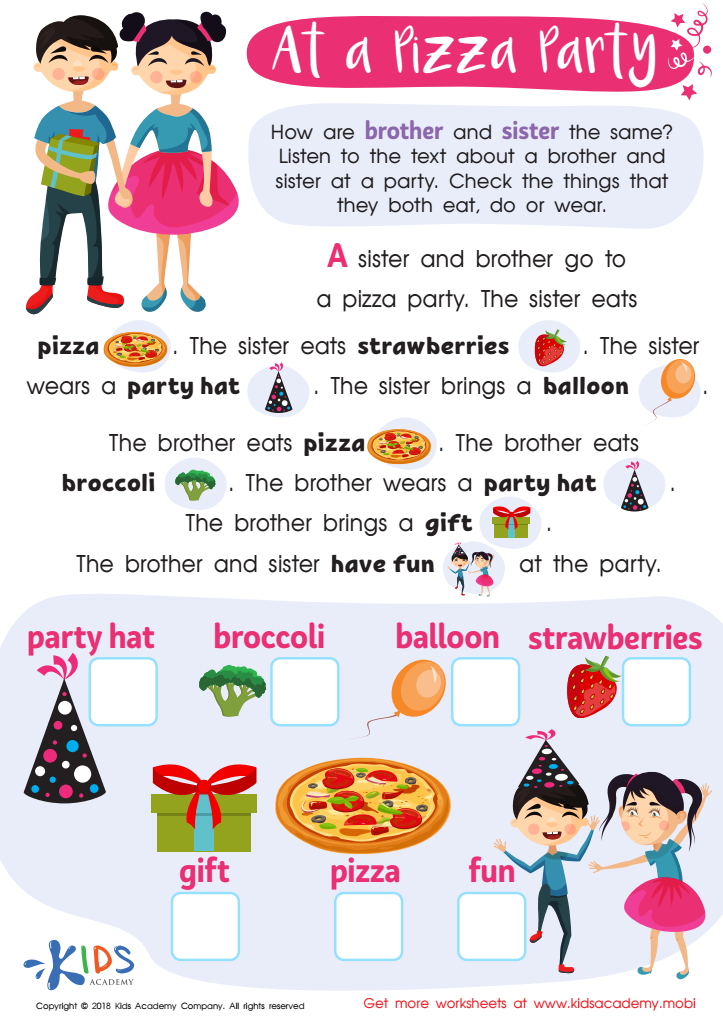
At a Pizza Party Worksheet
 Assign to My Students
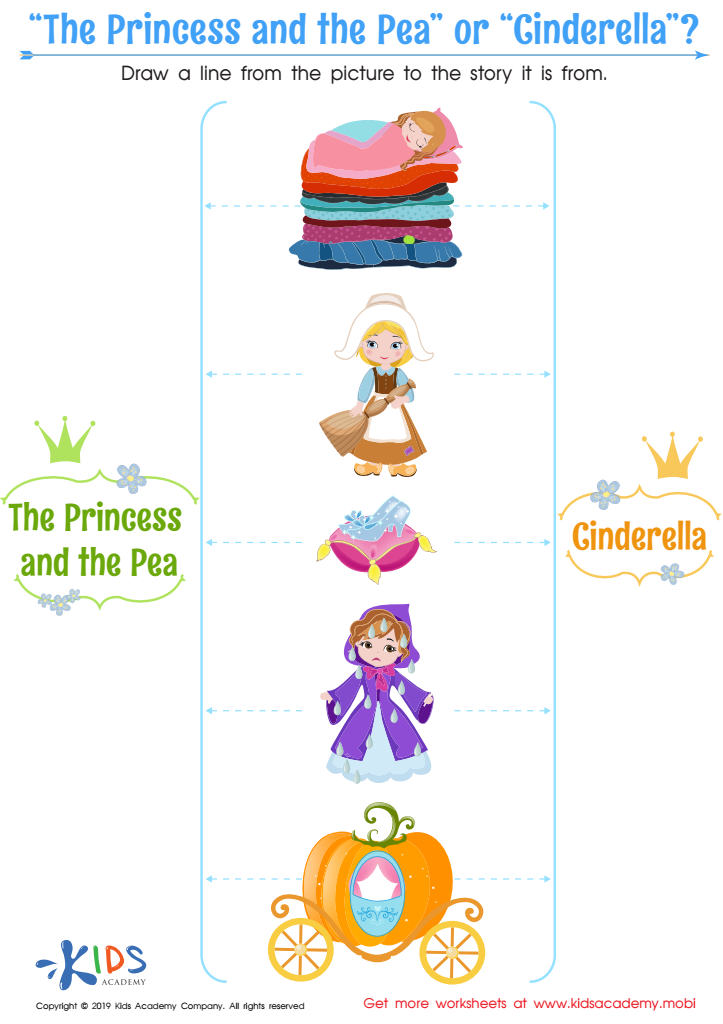
“The Princess and the Pea” or “Cinderella” Worksheet
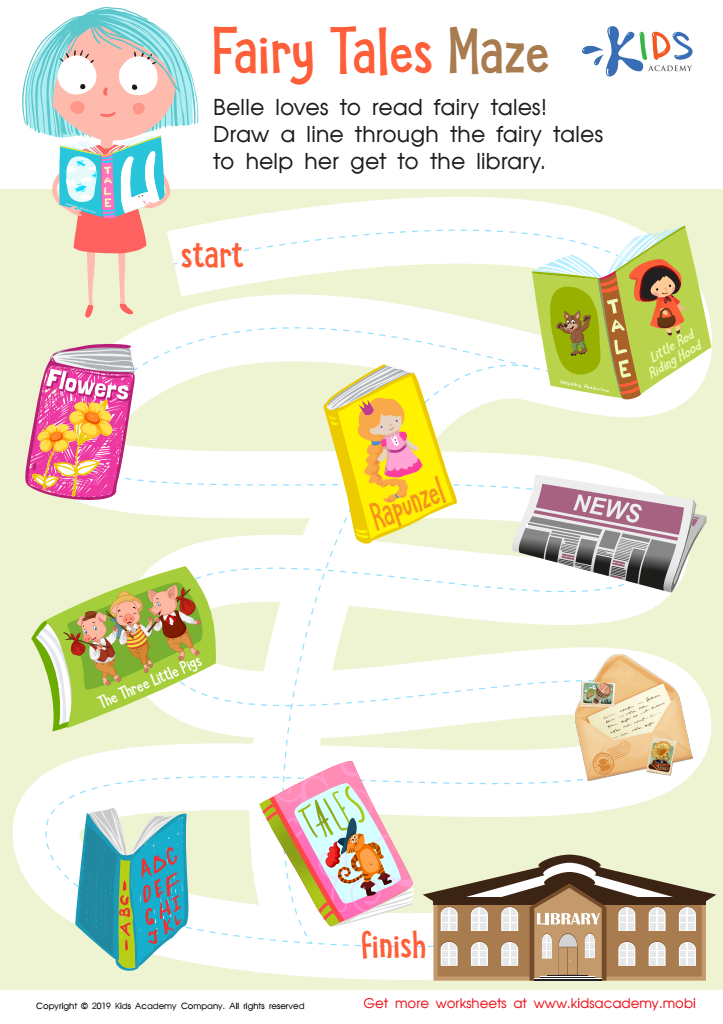
Fairy Tales Maze Worksheet
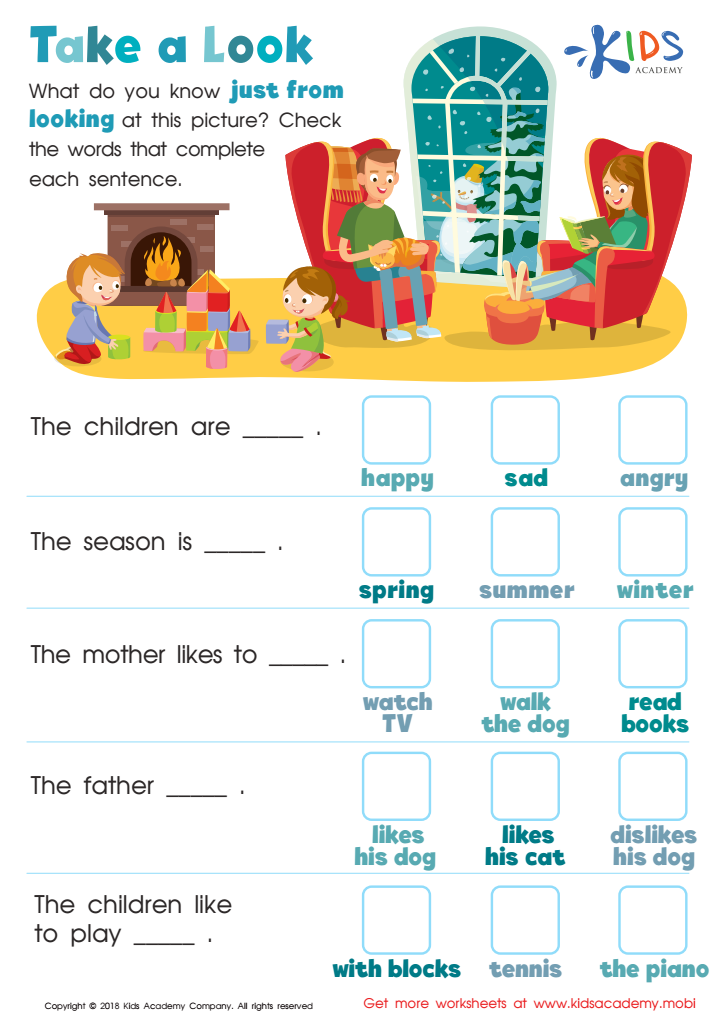
Take a Look - Part 1 Worksheet







Parents and teachers should care about problem-solving skills and reading fiction for children aged 5-6 because of the crucial developmental benefits these activities offer. At this age, children are in a critical period for cognitive, emotional, and social growth. Introducing problem-solving skills helps sharpen a child's logical thinking, creativity, and resilience. This can be done through puzzles, simple math problems, or engaging in everyday decision-making scenarios. These activities lay the foundation for critical thinking, which is essential for academic success and life challenges.
Reading fiction to young children offers complementary advantages. Listening to stories enhances vocabulary, comprehension, and listening skills. Fiction also exposes children to a variety of social situations and emotions, allowing them to develop empathy and understanding. As kids identify with characters and plotlines, they learn to navigate their own feelings and relationships.
Combining problem-solving exercises with reading fiction can be particularly powerful. For instance, discussing the problems a story character faces and brainstorming solutions together can marry the cognitive and emotional benefits. This holistic approach not only nurtures a well-rounded skill set but also fosters a love for learning and reading. Investing in these areas early ensures children are equipped with tools for both academic and personal growth.







