Animal identification Normal Science Worksheets for Ages 5-6
4 filtered results
-
From - To
Boost your child's animal knowledge with our interactive Animal Identification Normal Science Worksheets, designed specifically for ages 5-6. These engaging worksheets help young learners recognize and identify various animals through fun, age-appropriate activities. Each sheet blends colorful images with educational tasks to enhance learning and retention. Perfect for early grade teachers and parents alike, these worksheets foster curiosity and build foundational science skills. Download our worksheets today and watch your child confidently identify animals while developing critical thinking and observation abilities in an entertaining and educational way. Simple to use and perfect for growing minds!
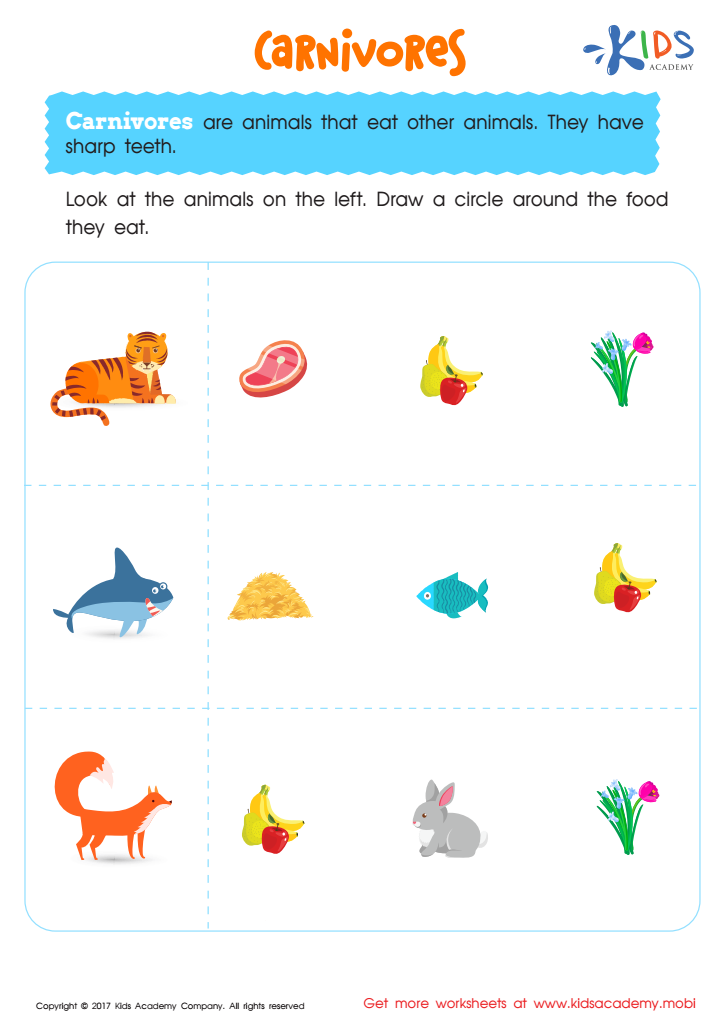
Carnivores Worksheet
 Assign to My Students
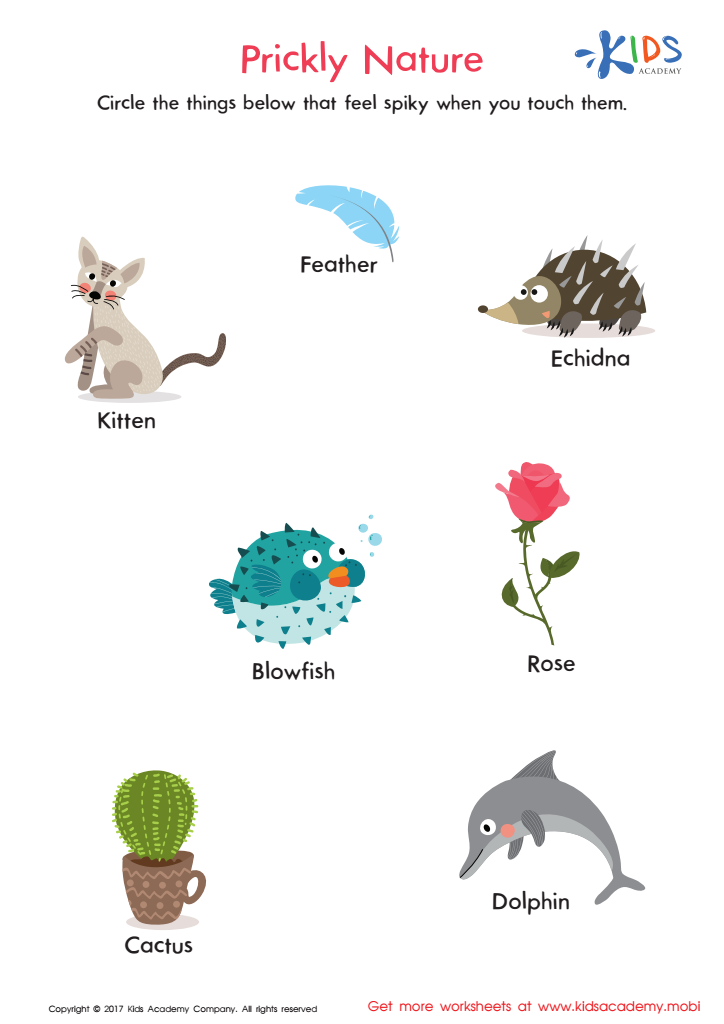
Prickly Nature Worksheet
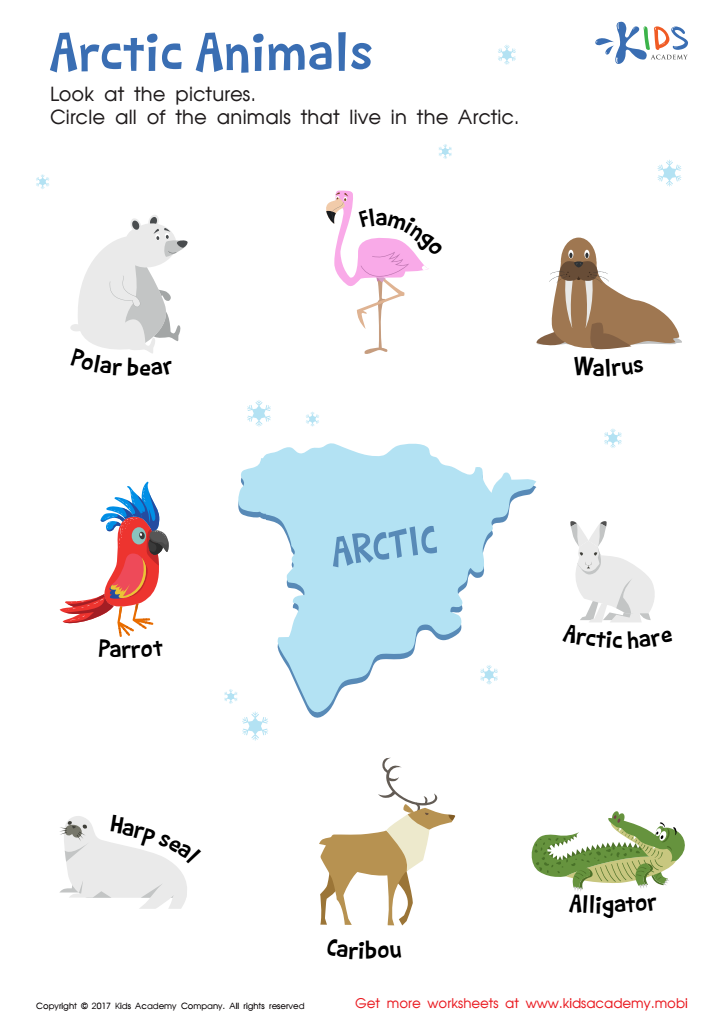
Arctic Animals Worksheet
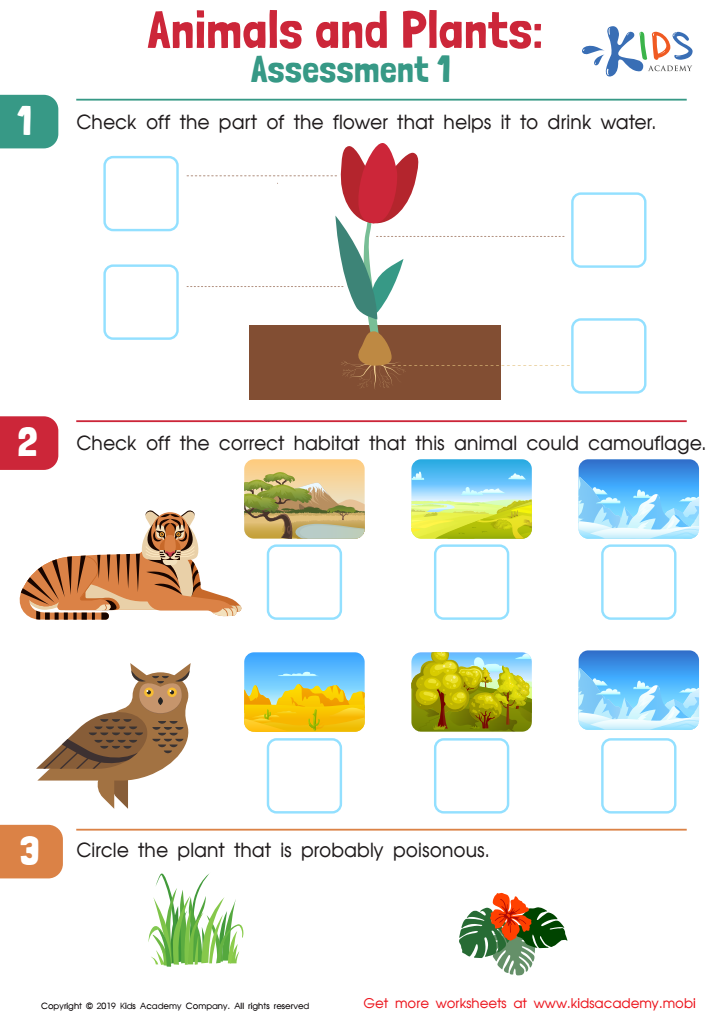
Animals and Plants: Assessment 1 Worksheet








Understanding animal identification and basic science concepts at ages 5-6 is crucial for several reasons. For one, it lays the foundation for a lifelong interest in the natural world and encourages curiosity and observation skills. Young children naturally have a fascination with animals, and teaching them to identify different species can enhance their cognitive development, including memory and classification skills.
Moreover, appreciating animal diversity fosters empathy and respect for living creatures. Teaching kids to be gentle with pets and wildlife can help nurture kindness and responsibility, important social-emotional skills.
Incorporating normal science concepts like habitats, diets, and life cycles extends beyond animal identification and integrates learning in broader contexts, such as understanding ecosystems and the importance of biodiversity. This holistic approach not only builds scientific literacy but also promotes environmental consciousness at an early age.
Additionally, discussing animals in a structured learning setting can support early literacy and language development. Describing animal characteristics, behaviors, and habitats introduces new vocabulary and concepts, enriching language skills.
Ultimately, involving children in such learning encourages active engagement, making education enjoyable and meaningful during their formative years. In doing so, parents and teachers spark a sense of wonder and foster skills that are beneficial across all areas of learning and personal growth.







