Developing analytical skills Normal Science Worksheets for Ages 5-6
3 filtered results
-
From - To
Boost your child's critical thinking and problem-solving abilities with our "Developing Analytical Skills Normal Science Worksheets for Ages 5-6." These engaging and fun worksheets offer a variety of activities to nurture analytical skills in young learners. Each worksheet is designed to improve your child's ability to observe, question, compare, and make predictions. Through hands-on exercises and interactive tasks, your child will develop a strong foundation in scientific thinking, preparing them for future academic success. Spark curiosity and support your child's natural love for learning with our science worksheets, tailored specifically for ages 5-6.
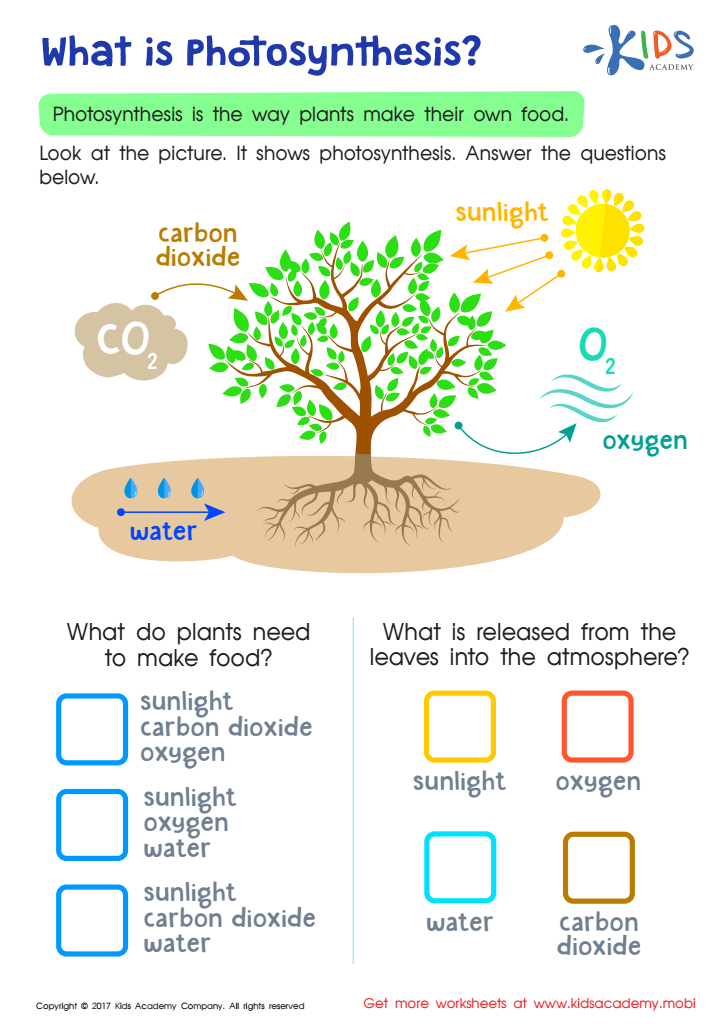
What is Photosynthesis Printable
 Assign to My Students
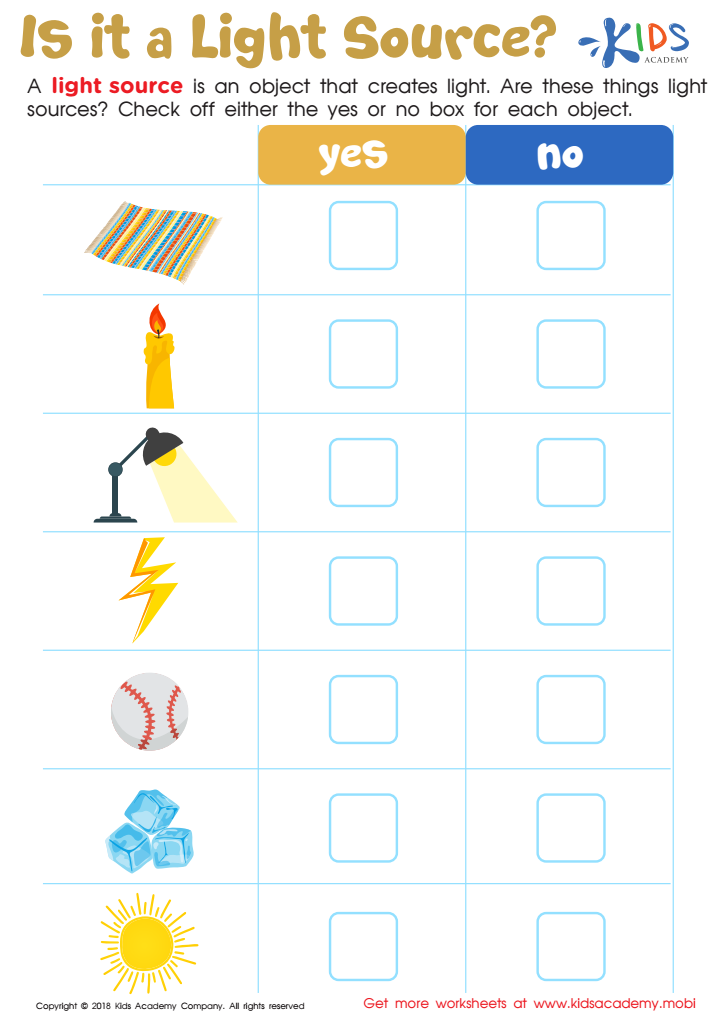
Is It a Light Source? Worksheet

How Light Travels Worksheet








Developing analytical skills in normal science for children ages 5-6 is crucial as it lays a strong foundation for their future learning and intellectual growth. At this formative stage, children's brains are exceptionally receptive to new concepts and experiences. When we engage them in science-related activities, we spark their curiosity and wonder about the natural world. This not only boosts their cognitive development but also fosters a lifelong love for learning.
Analytical skills enable young children to observe, categorize, compare, and infer—a skill set that is fundamental for problem-solving. When kids experiment with simple science projects, such as mixing colors or studying plant growth, they learn to ask questions, gather data, and draw conclusions. These early experiences help develop critical thinking and reasoning skills, which are essential for academic success and everyday life.
Moreover, by nurturing these skills, parents and teachers can support children in becoming more capable and confident learners. This confidence extends beyond science and helps in areas like mathematics, reading comprehension, and even social interactions. Encouraging analytical thinking at an early age equips children with the tools they need to navigate complex situations, make informed decisions, and approach challenges with a problem-solving mindset. Therefore, investing in the development of these skills is a vital step towards a well-rounded, educated individual.







