Enhancing observational skills Normal Science Worksheets for Ages 5-6
3 filtered results
-
From - To
Discover our "Enhancing Observational Skills" Normal Science Worksheets designed specifically for ages 5-6. These engaging worksheets aim to boost young learners' ability to notice details in their environment, fostering curiosity and a love for exploration. Through fun and interactive activities, children will practice identifying objects, observing nature, and distinguishing between similarities and differences. Each worksheet promotes critical thinking and observational practices essential for foundational scientific learning. Perfect for home or classroom use, these resources help early learners develop the skills needed for inquiry and discovery, making science exciting and accessible! Enhance your child's educational journey today with our enjoyable science worksheets.
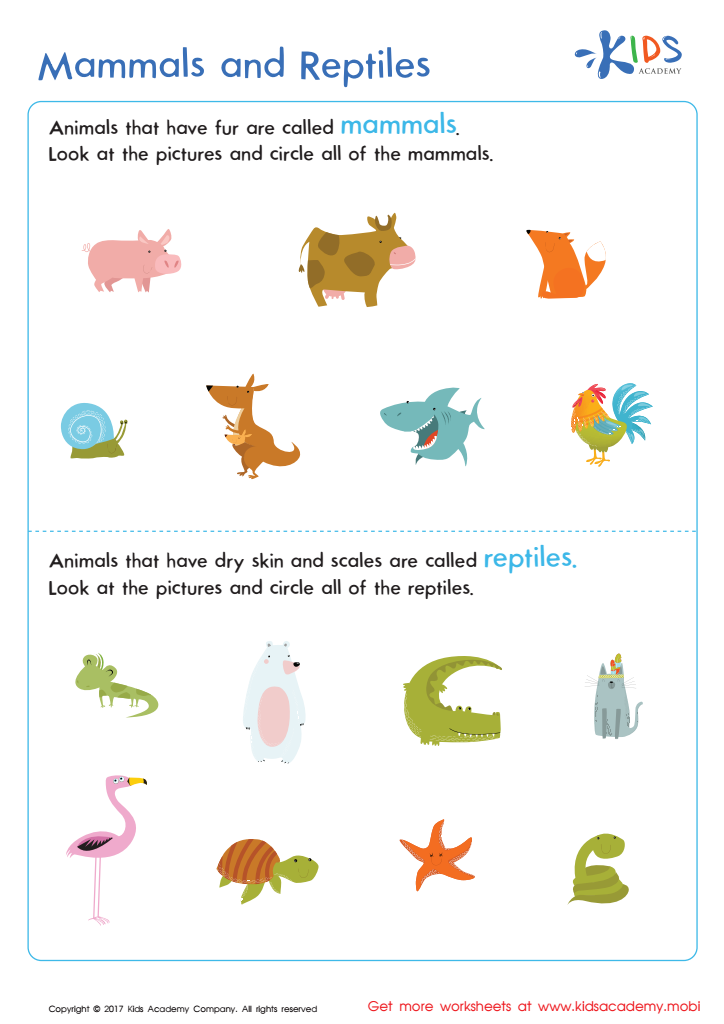
Mammals and Reptiles Worksheet
 Assign to My Students
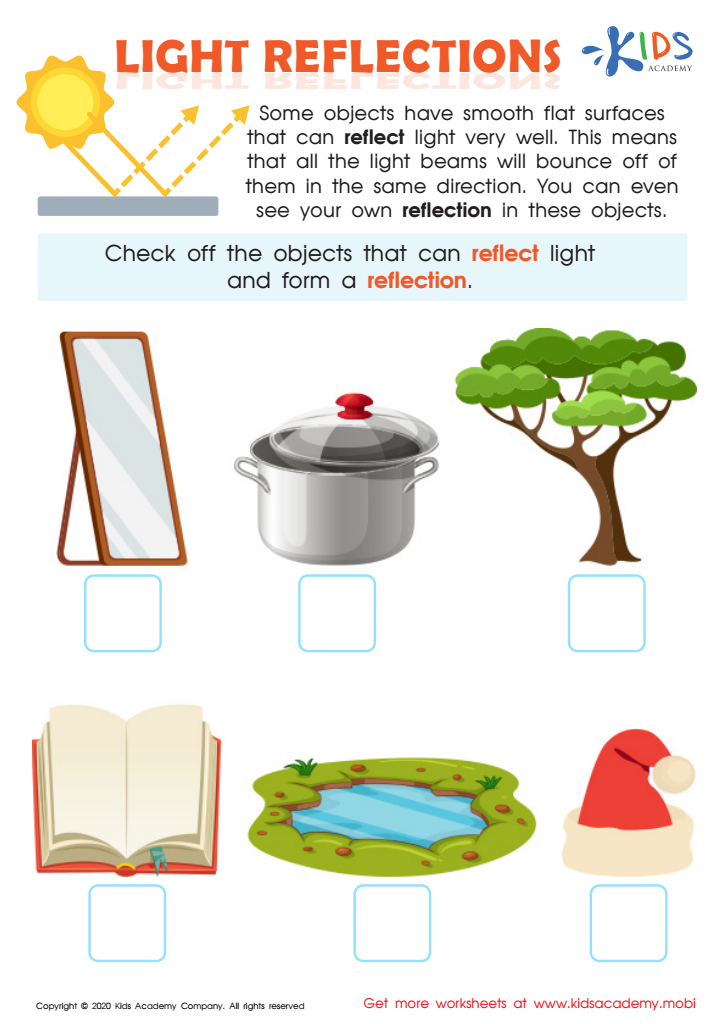
Light Reflections Worksheet
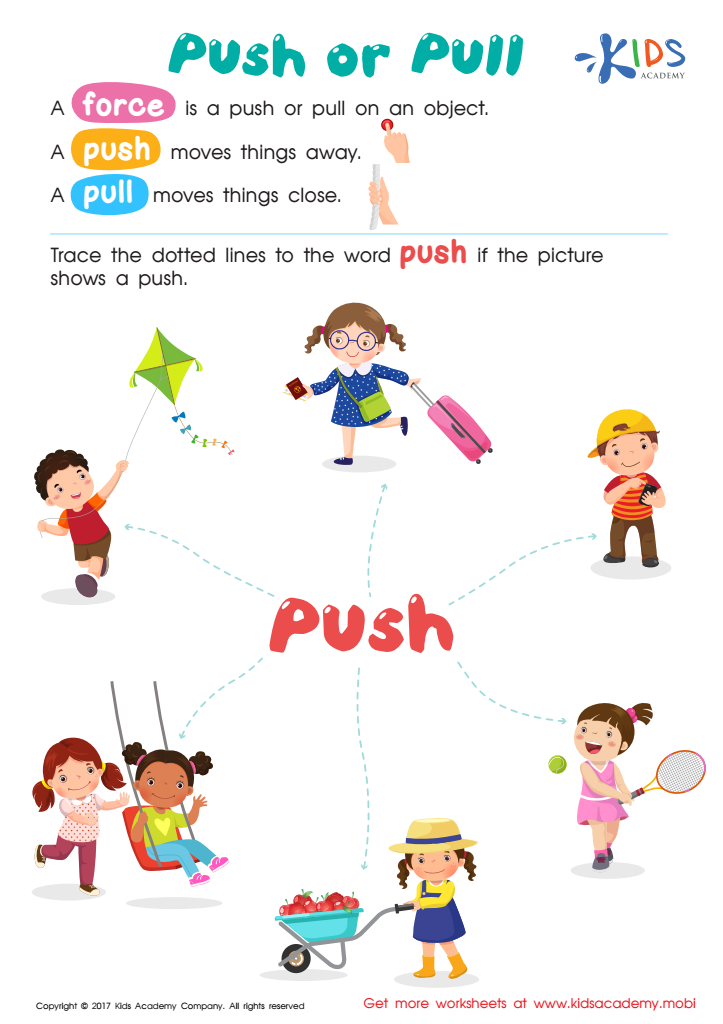
Push or Pull Worksheet







Enhancing observational skills in children aged 5-6 is crucial for their cognitive and social development. At this early age, children are naturally curious and eager to explore their environment. Teachers and parents should prioritize the development of observational skills because these skills lay the foundation for scientific thinking and inquiry. Observational skills enable children to notice details, recognize patterns, and ask questions about the world around them.
As they engage in age-appropriate scientific inquiry, such as simple experiments or nature walks, children learn to make and describe observations, fostering critical thinking and reasoning. Improved observational skills also enhance vocabulary as children learn to articulate what they see, hear, and feel. This has positive effects on literacy and communication development.
Moreover, observational skills foster empathy and social awareness, as children become better at interpreting emotions and nonverbal cues in others. By nurturing these abilities early on, educators and parents encourage lifelong learning habits, curiosity, and resilience. In a rapidly changing world where problem-solving and creativity are essential, cultivating these skills provides children with a strong foundation for success in their academic and personal lives. Therefore, enhancing observational skills must be a priority for both parents and teachers.







