Science knowledge Normal Science Worksheets for Ages 5-6
3 filtered results
-
From - To
Discover our Science Knowledge Worksheets, designed specifically for young learners aged 5-6! These engaging printable worksheets are perfect for introducing foundational science concepts in a fun and interactive way. Each worksheet helps to develop essential understanding in areas such as the environment, living things, and basic earth science. With colorful visuals and age-appropriate language, children will enjoy exploring the wonders of science through exciting exercises. Whether at home or in the classroom, these worksheets foster curiosity and critical thinking while aligning with early educational standards. Ignite your child’s passion for science today with our delightful resources!
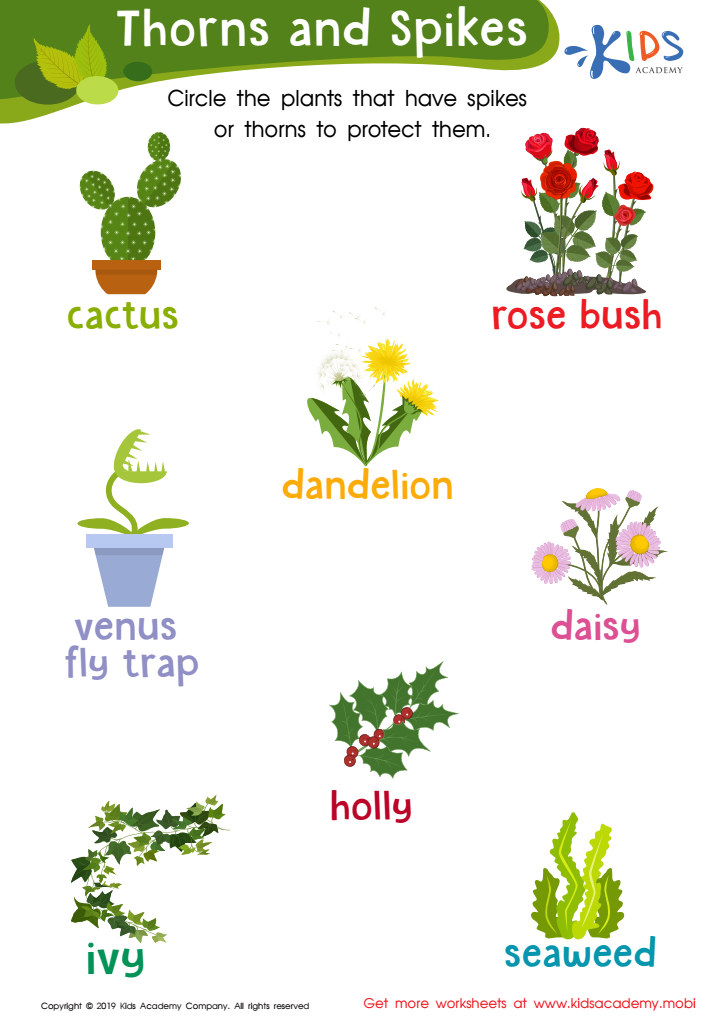
Thorns and Spikes Worksheet
 Assign to My Students
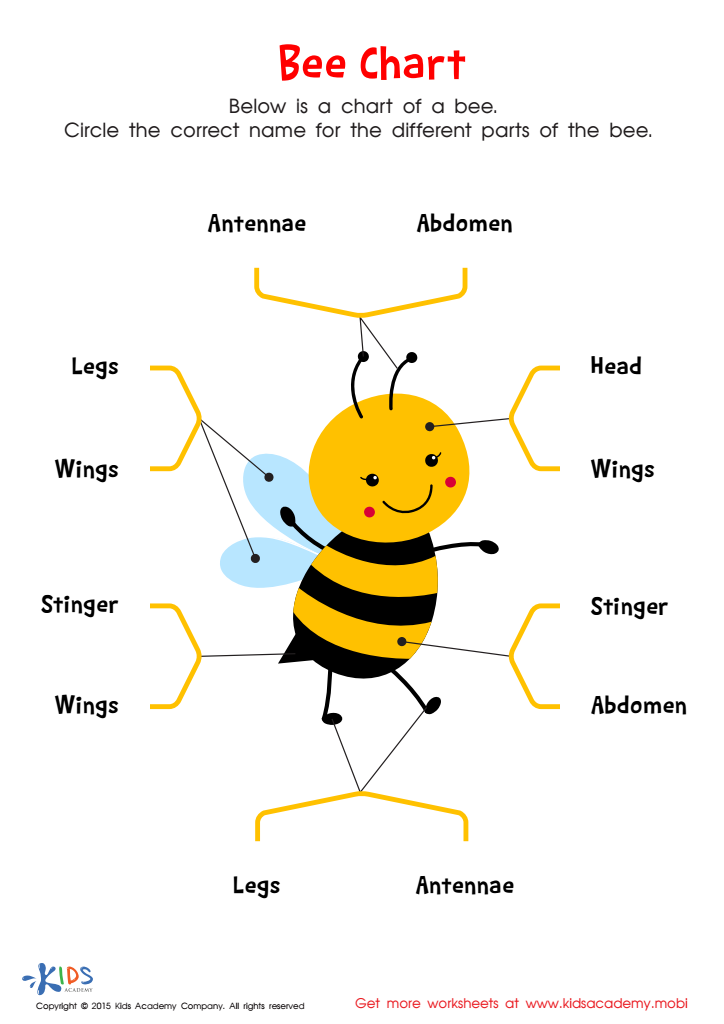
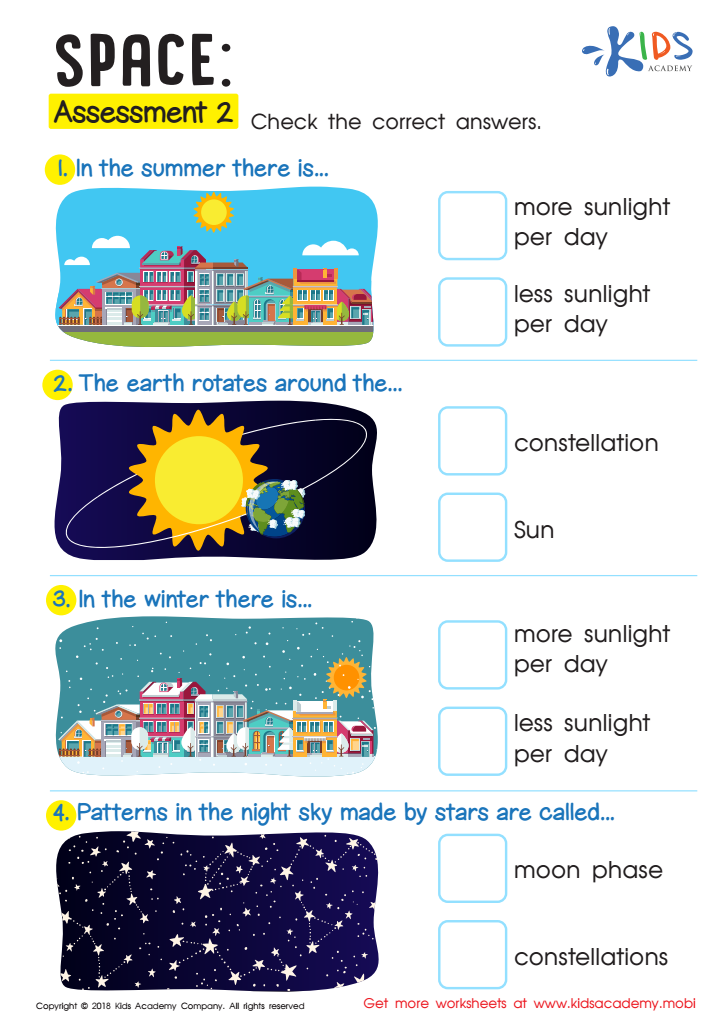
Space: Assessment 2 Worksheet








Understanding 'Normal Science' is crucial for parents and teachers of children aged 5-6 because it lays a foundational understanding of the world around them. At this age, children are naturally curious, asking questions and exploring their environment. Knowledge of Normal Science, which encompasses everyday scientific principles and their applications, allows caregivers to nurture this curiosity effectively.
Early science education fosters critical thinking and creativity, encouraging children to investigate, ask questions, and discover answers. This exploration not only enhances their cognitive development but also builds essential skills such as problem-solving and reasoning. Moreover, integrating science into everyday activities, like baking or observing plants, makes learning engaging and relatable.
Additionally, understanding basic scientific concepts prepares children for future formal education. It instills an appreciation for inquiry-based learning and promotes a positive attitude towards science, ultimately leading to greater interest and achievement in the subject as they progress through school. For parents and teachers, cultivating a love for science early on can inspire lifelong learners, empowering children to understand and navigate the complexities of the world with confidence and enthusiasm. By prioritizing science knowledge, we foster an environment ripe for discovery and growth.







