Space knowledge Normal Science Worksheets for Ages 5-6
3 filtered results
-
From - To
Explore the wonders of the universe with our "Space Knowledge Normal Science Worksheets" tailored for children ages 5-6! These engaging and interactive worksheets are designed to introduce young learners to fascinating space concepts, from planets and stars to rockets and the moon. Each activity fosters critical thinking and creativity while helping children develop essential science skills. With vibrant illustrations and age-appropriate content, kids will enjoy hands-on learning experiences that make science fun. Ideal for homeschoolers or classroom use, these worksheets are the perfect resource to spark curiosity about the cosmos and inspire future astronomers! Discover the universe today!
 Assign to My Students
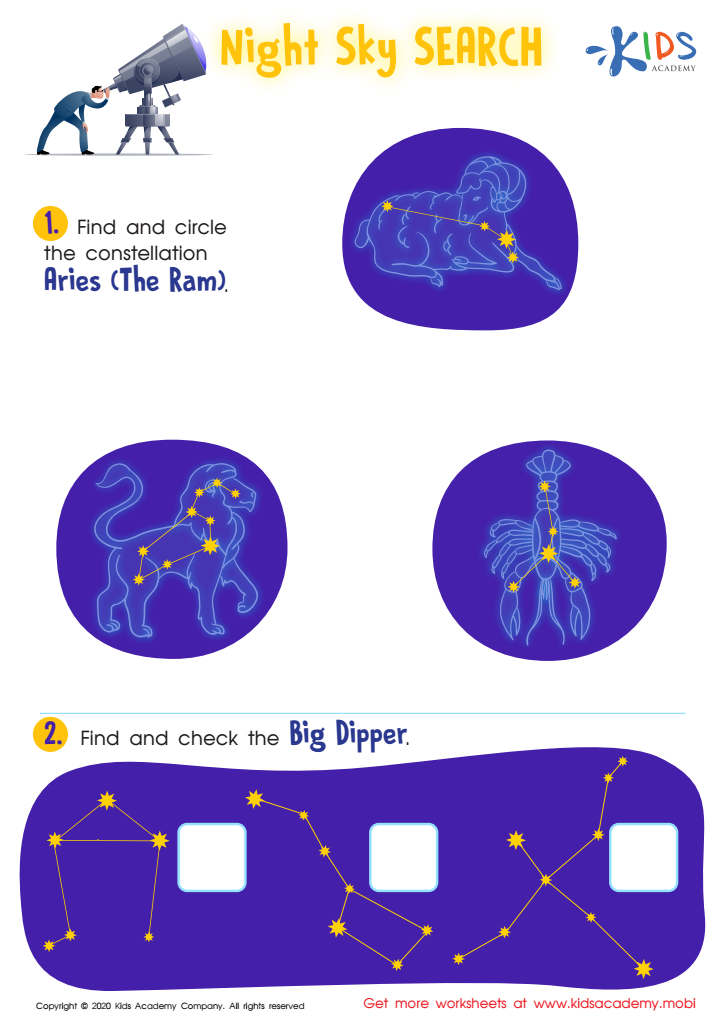
Night Sky Search Worksheet
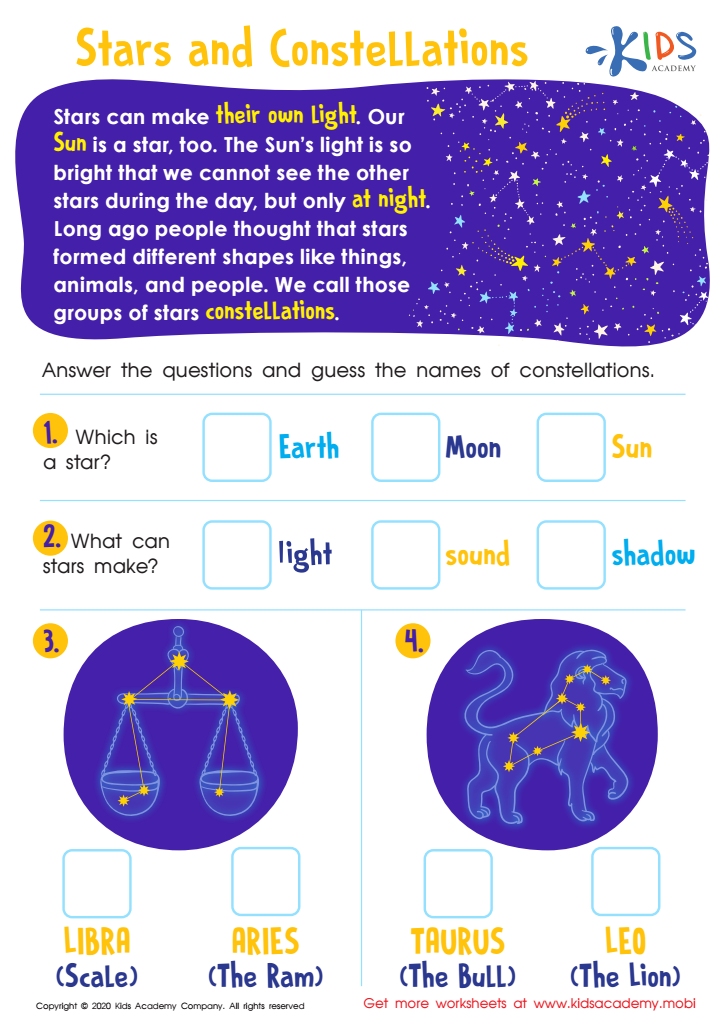
Stars and Constellations Worksheet







Understanding space knowledge and normal science is crucial for children aged 5-6, as it lays the foundation for their curiosity and interest in the natural world. At this age, children are naturally inquisitive, often asking questions about the sky, stars, and planets. Introducing them to space knowledge allows them to explore these big ideas in a way that is accessible and engaging.
By teaching young learners about space, parents and teachers can enhance critical thinking and observational skills. Children learn to make connections between their everyday experiences and scientific concepts, such as gravity, day and night, and the seasons. This foundational knowledge helps to foster children’s imaginative thinking and creativity, encouraging them to ask more profound questions and seek answers through exploration and inquiry.
Furthermore, early exposure to science, including space topics, can instill a lifelong love for learning and discovery. It promotes an understanding of basic scientific principles, nurturing future scientists, engineers, or even astronauts. Importantly, teaching space knowledge can create opportunities for interactive learning experiences, like stargazing or visiting planetariums, making science feel alive and relevant.
In summary, nurturing space knowledge at this early age not only satisfies curiosity but also inspires future exploration.







