Understanding photosynthesis Normal Science Worksheets for Ages 5-6
3 filtered results
-
From - To
Discover the fascinating world of photosynthesis with our engaging "Understanding Photosynthesis Normal Science Worksheets" designed specifically for ages 5-6. These worksheets provide a fun and interactive way for young learners to grasp the basics of how plants make their food using sunlight, water, and carbon dioxide. With colorful illustrations and simple explanations, children will explore key concepts while developing critical thinking skills. Perfect for both classroom and home learning, these worksheets foster curiosity about nature and the environment. Start your child’s scientific journey today and help them understand the vital role of photosynthesis in our everyday lives!
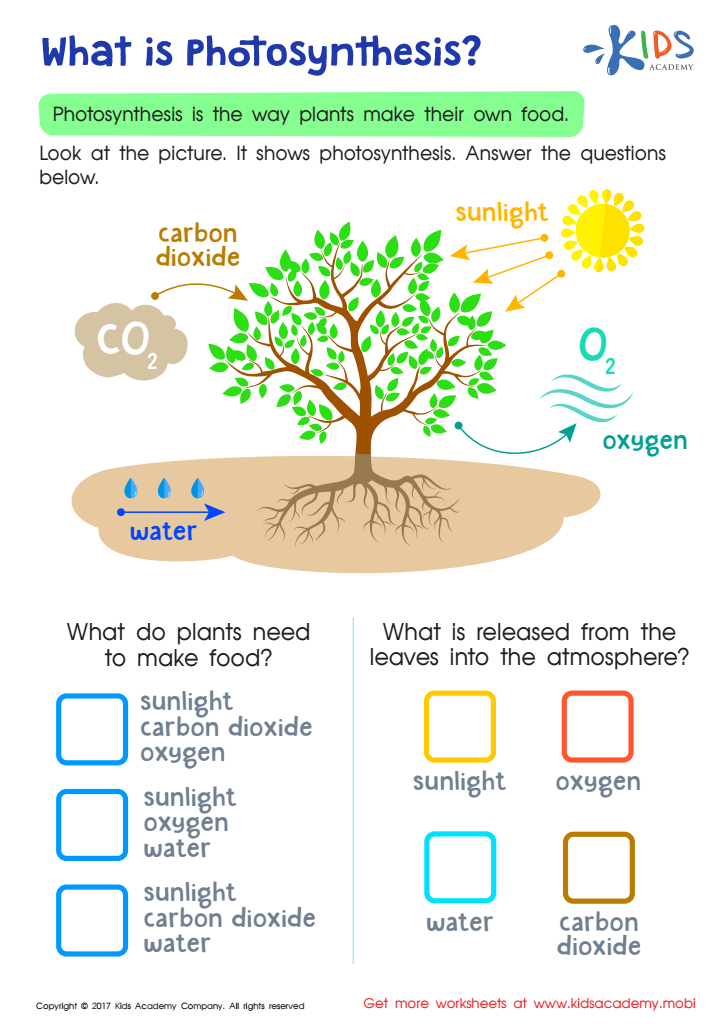
What is Photosynthesis Printable
 Assign to My Students
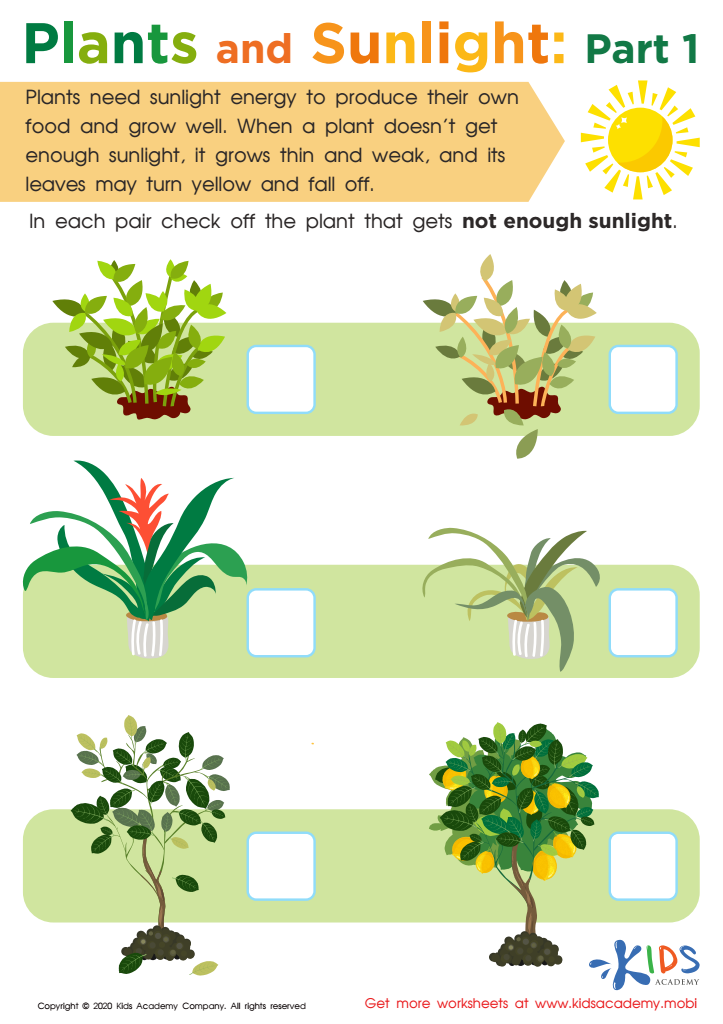
Plants and Sunlight: Part 1 Worksheet
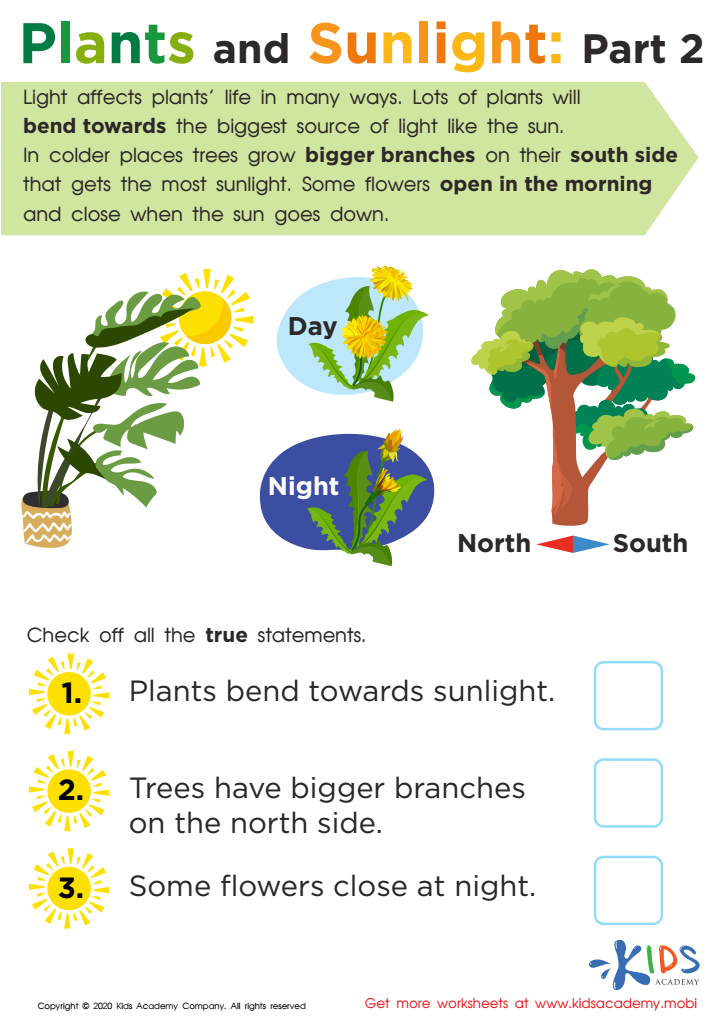
Plants and Sunlight: Part 2 Worksheet








Understanding photosynthesis is essential for young learners as it lays the foundation for their knowledge of nature and the environment. For children ages 5-6, introducing the concept of how plants make their food provides an engaging way to explore the interconnectedness of life on Earth. It fosters curiosity about the natural world, inspiring questions about plants, sunlight, water, and air.
Parents and teachers play a crucial role in cultivating this curiosity. By discussing how plants "breathe" and "eat," they can simplify complex scientific ideas into relatable concepts, making learning fun. This foundational understanding helps children appreciate the importance of plants in their environment, including the oxygen they produce and the food they provide.
Additionally, this knowledge extends beyond science; it teaches critical thinking, observation skills, and the value of inquiry. When children see how these processes work, they develop respect for nature and an understanding of ecological balance. Involving parents and caregivers in discussions about photosynthesis also encourages family bonding and experiential learning, such as gardening together. Fostering a love for science early on can empower children to become thoughtful, environmentally-conscious citizens in the future.







