Observational skills Normal Our Planet and Environment Worksheets for Ages 5-6
6 filtered results
-
From - To
Enhance your child's observational skills with our engaging "Normal Our Planet and Environment Worksheets" designed for ages 5-6! These vibrant, interactive worksheets encourage young learners to explore and observe the world around them, from the wonders of nature to the importance of environmental stewardship. Activities focus on honing critical thinking and observation techniques, nurturing curiosity about plants, animals, and ecosystems. Each worksheet combines fun illustrations with thought-provoking questions that stimulate discussion and deepen understanding. Perfect for at-home learning or classroom use, these resources aid in developing essential skills for early scientific inquiry while instilling a love for our planet. Download now!
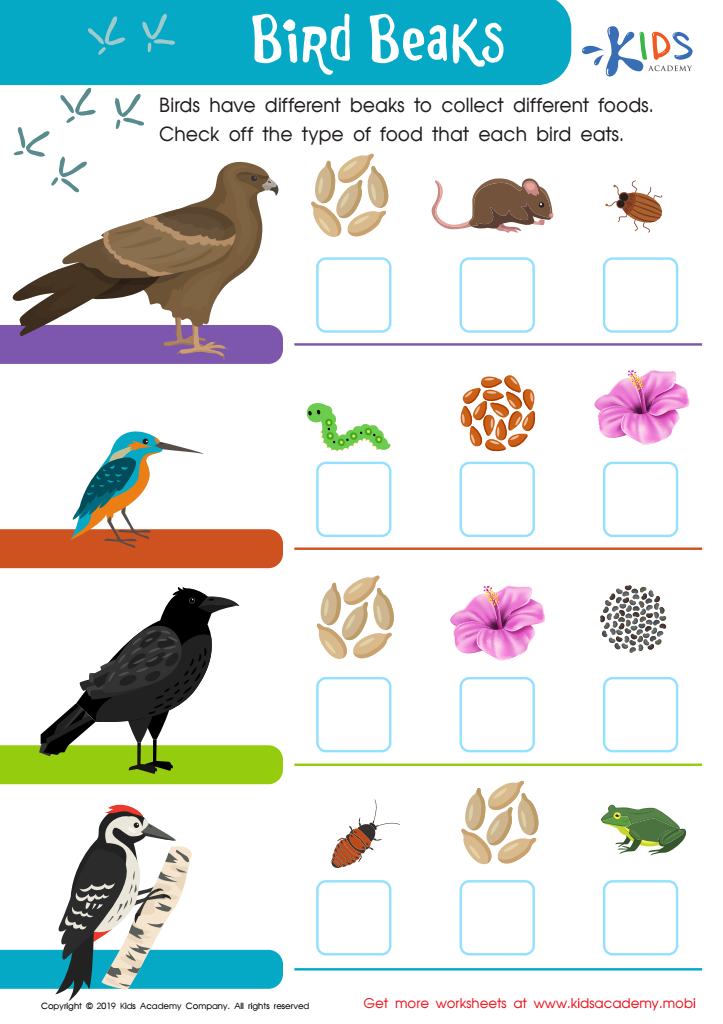
Bird Beaks Worksheet
 Assign to My Students
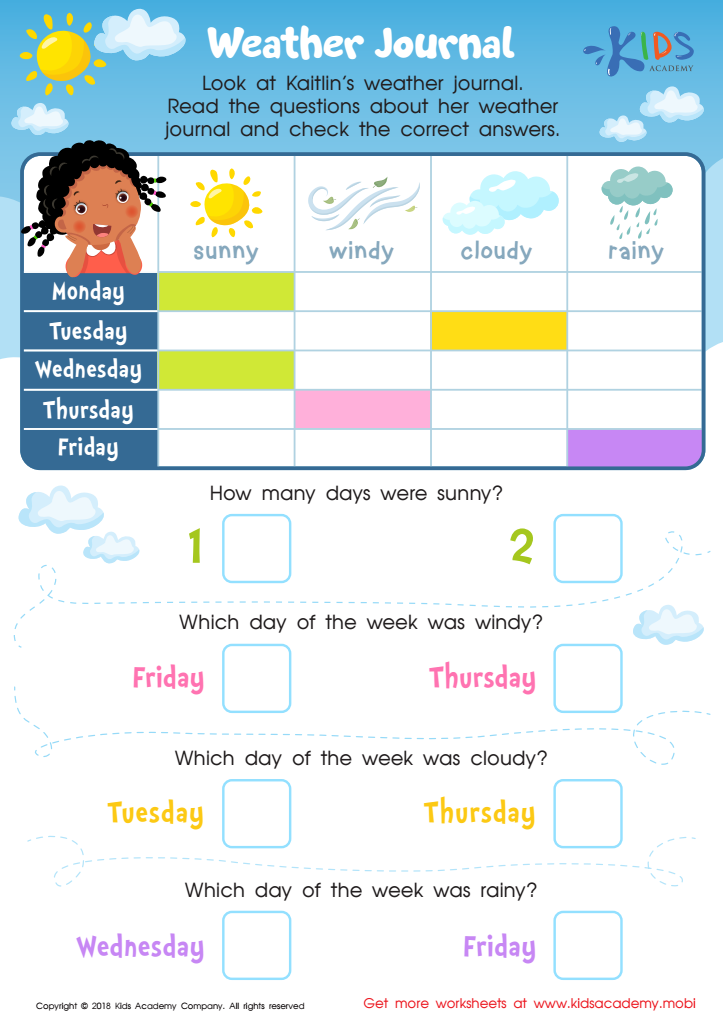
Weather Journal Worksheet
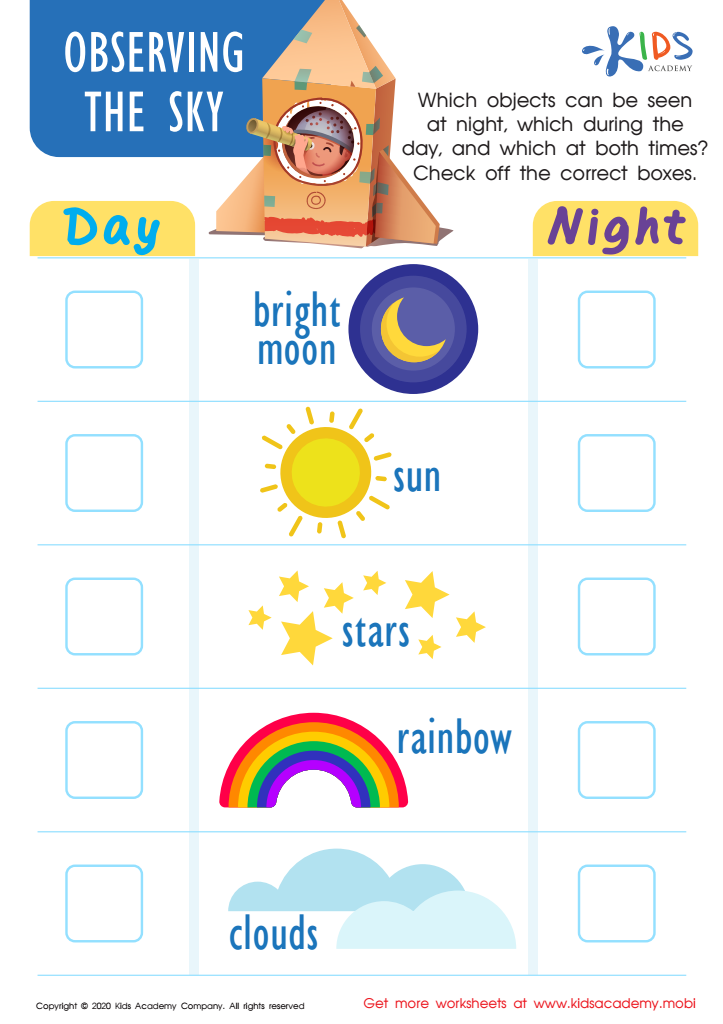
Observing the Sky Worksheet
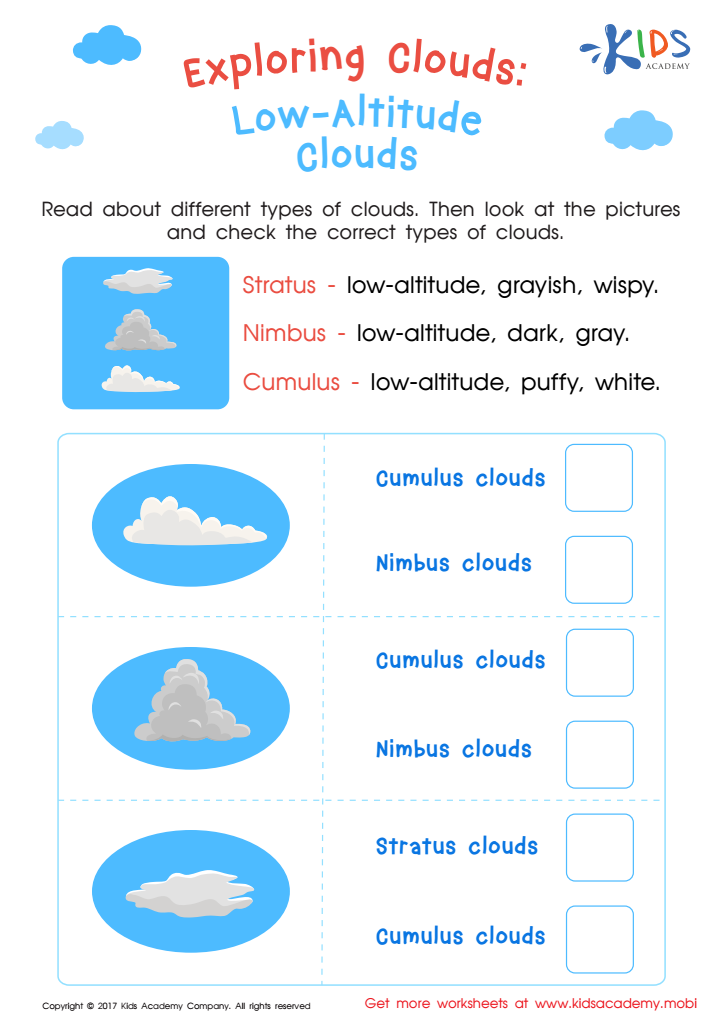
Exploring Clouds: Low Altitude Clouds Printable
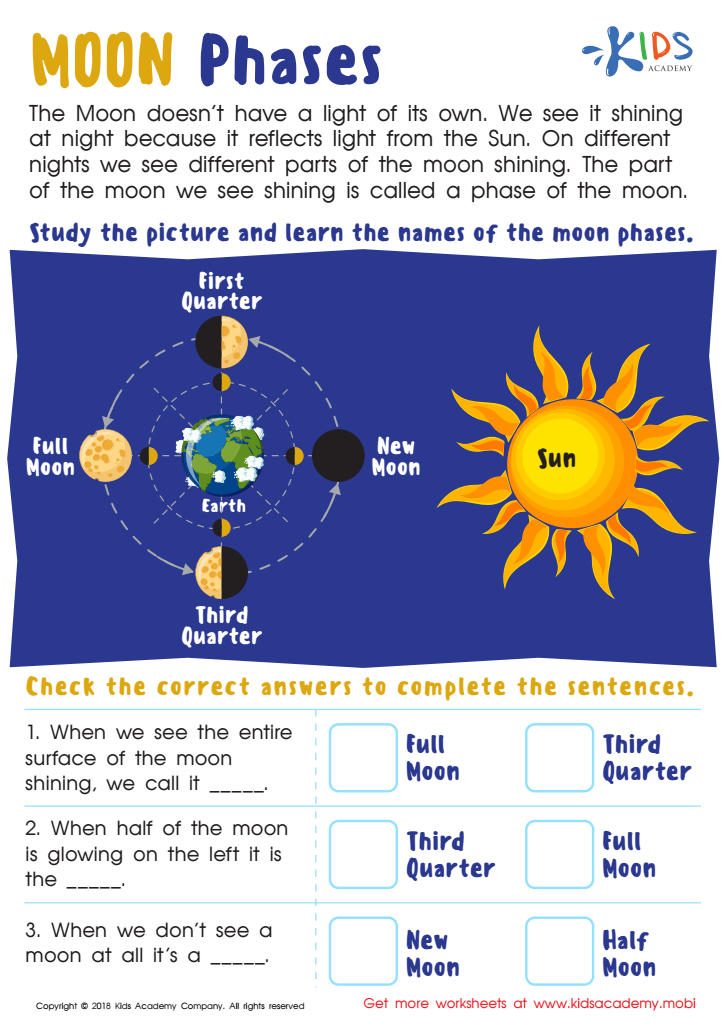
Moon Phases Worksheet
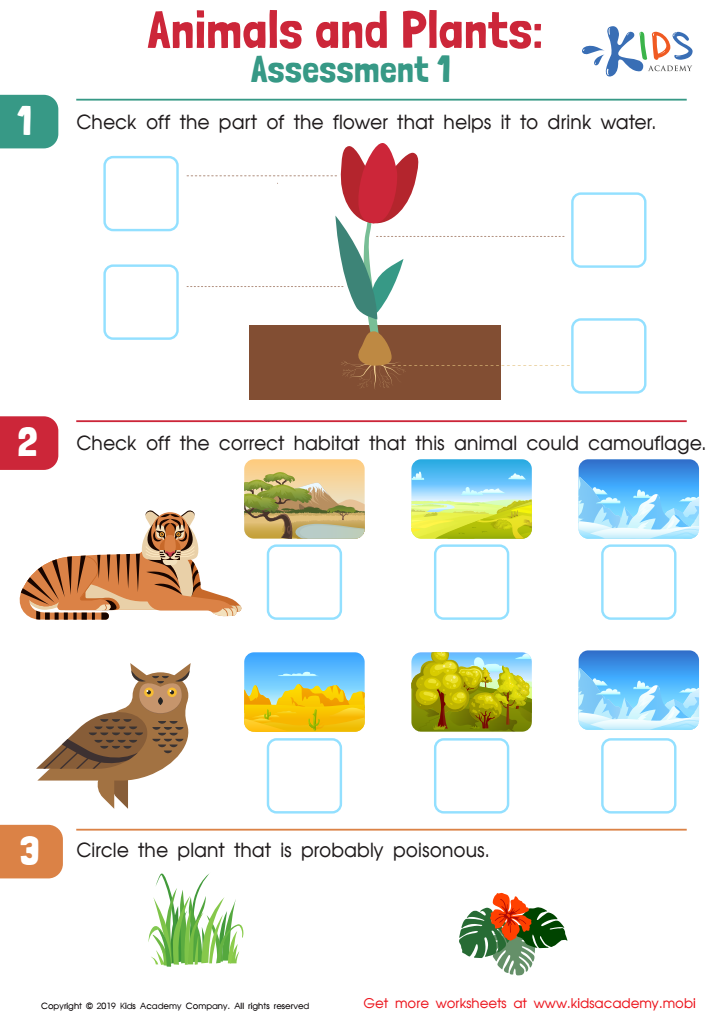
Animals and Plants: Assessment 1 Worksheet






Observational skills are essential for young children, especially when exploring our planet and environment. For children aged 5-6, these skills lay the foundation for curiosity, critical thinking, and problem-solving. Parents and teachers should nurture observational skills because they empower children to notice and appreciate their surroundings, fostering a deep connection to nature.
At this developmental stage, children learn through hands-on experiences. Encouraging them to observe plants, animals, and weather patterns enhances their understanding of concepts like growth, ecosystems, and seasons. Engaging in activities such as nature walks, scavenger hunts, or classroom explorations not only sparks their curiosity but also promotes language skills and observation vocabulary.
Moreover, developing observational skills helps instill a sense of responsibility towards the environment. Children become aware of conservation and the impact of human actions, nurturing a generation that cares for the planet. These skills also build focus and attention, vital for academic success.
In summary, fostering observational skills in early childhood not only enriches educational experiences but helps shape informed, environmentally-conscious citizens who can contribute to a sustainable future. Hence, parents and teachers play a crucial role in prioritizing these skills in young learners.







