Observational skills Normal Space Worksheets for Ages 5-6
3 filtered results
-
From - To
Boost your child's observational skills with our engaging "Normal Space Worksheets for Ages 5-6"! Designed by experts, these printable worksheets are a fun way to introduce young learners to the wonders of space. Through exciting activities, children enhance their ability to notice details, make connections, and develop critical thinking. Perfect for parents and teachers, these resources align with early science curriculums and are ideal for classrooms or homeschool settings. Encourage your little astronomers to explore the cosmos, shine in their observational skills, and uncover mysteries of the universe with these captivating, educational worksheets!
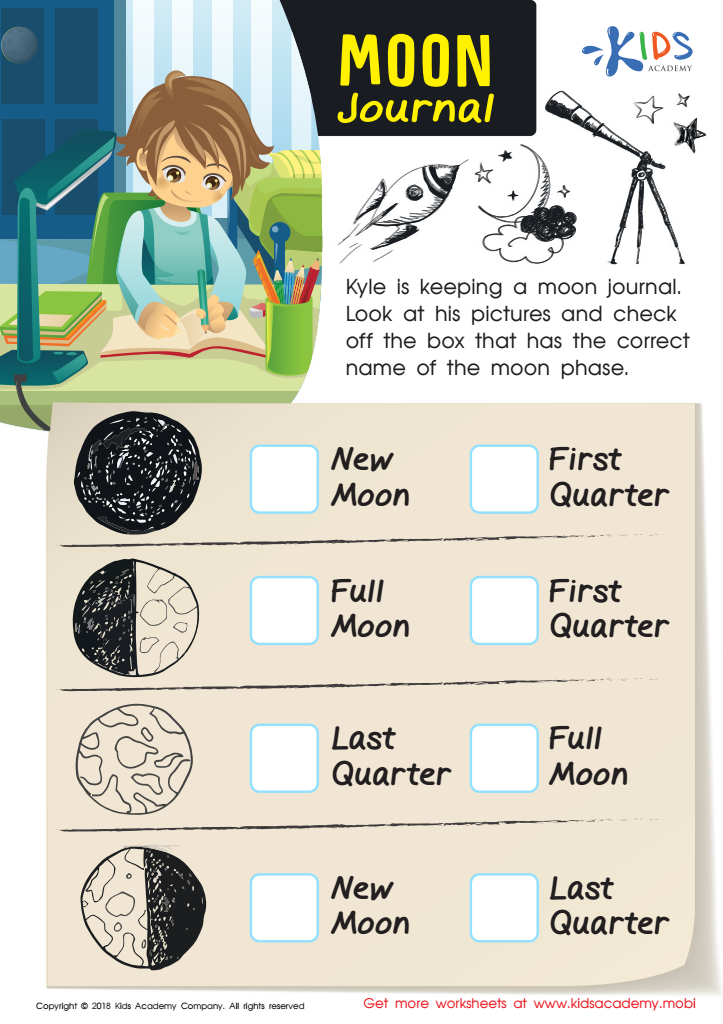
Moon Journal Worksheet
 Assign to My Students
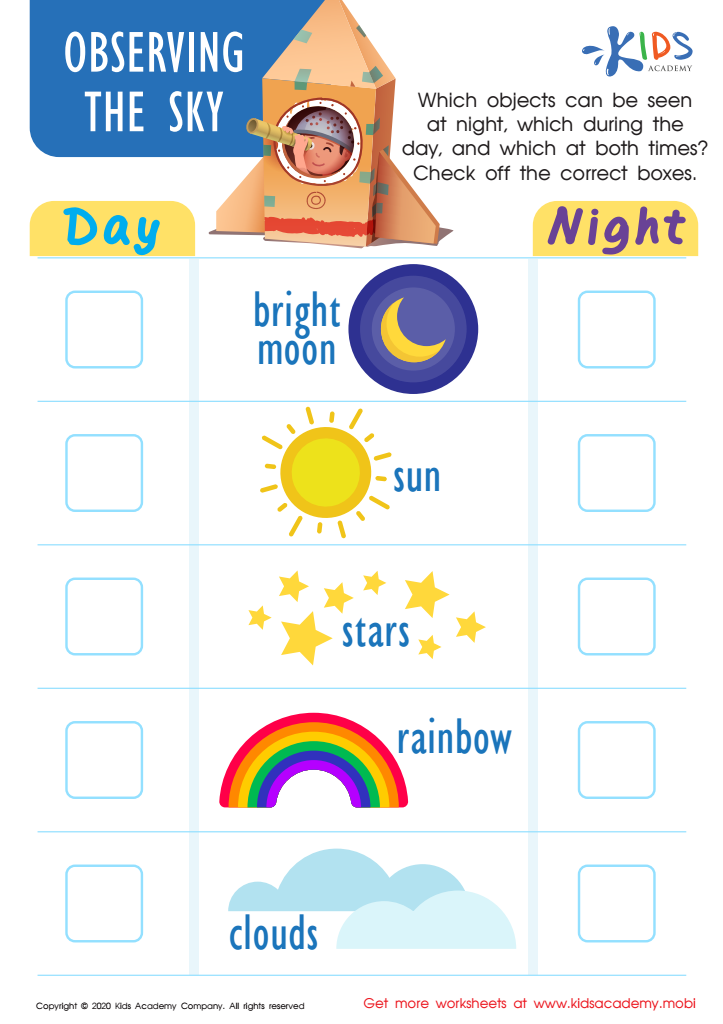
Observing the Sky Worksheet
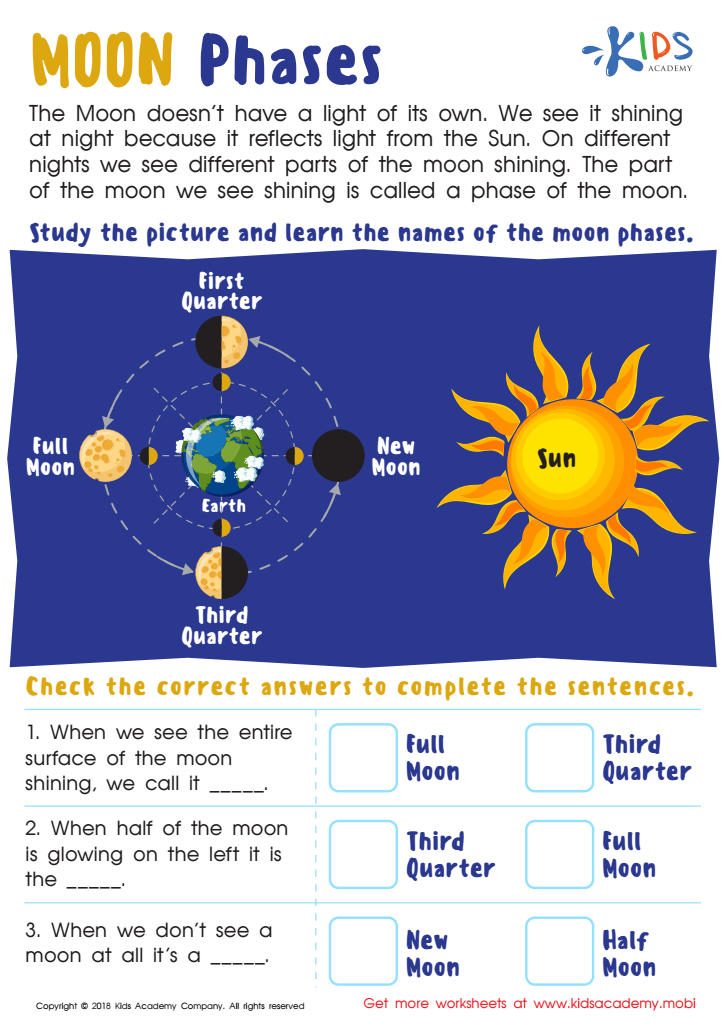
Moon Phases Worksheet


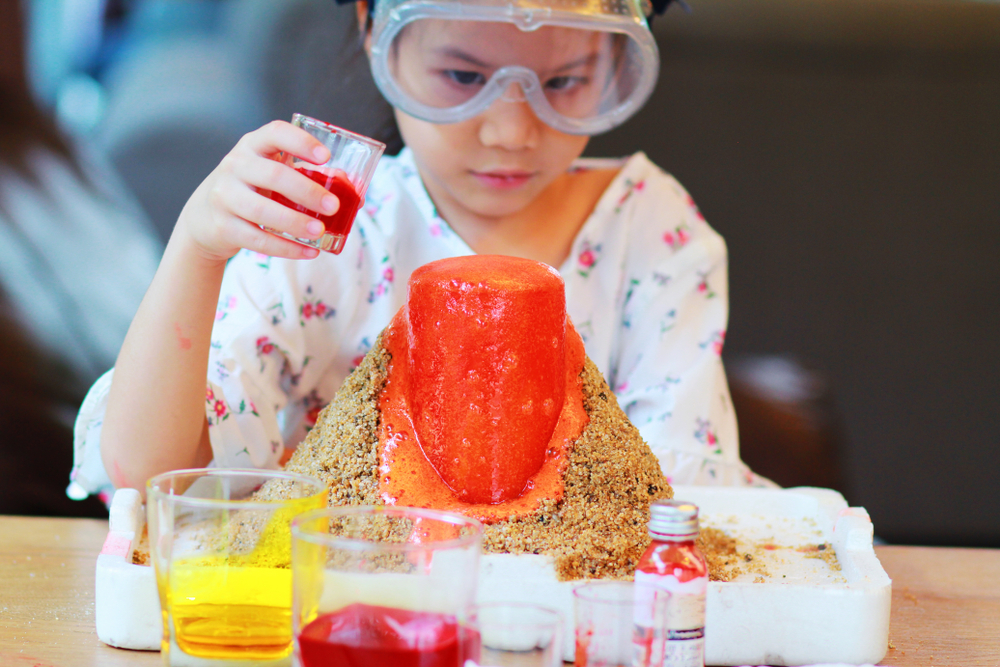




Observational skills in young children, especially those aged 5-6, are essential for their developmental growth, and both parents and teachers should invest time and carefully plan to build spaces that incorporate elements promoting these skills. During these early years, children are like sponges — they absorb information through engaging with their surroundings. Observational skills enable them to notice details, understand patterns, and gather important information about the world around them.
Incorporating a "Normal Space"—an environment with stimulating objects such as books, nature taps, and interactive displays—enhances a child's natural curiosity and cognitive development. When a child interacts with diverse stimuli, they hone their ability to differentiate colors, shapes, and sizes, thereby bolstering both visual acuity and critical thinking.
Developing these skills is also foundational for academic success. Improved observational abilities can lead to better reading comprehension and mathematics skills as they become adept at spacing objects and recognizing sequences. Moreover, a child proficient in observation is likely to have better social understanding, as they can read nonverbal cues and understand social dynamics.
In essence, fostering observational skills in a nurturing and well-planned space not only prepares children for academic challenges but also enriches their ability to interact meaningfully with the world, making a vital difference in their overall development.







