Building vocabulary Normal Social Studies Worksheets for Ages 5-6
3 filtered results
Difficulty Level
Grade
Age
-
From - To
Subject
Activity
Standards
Enhance your child's vocabulary with our engaging Normal Social Studies Worksheets, specially designed for children ages 5-6. These worksheets provide a fun and interactive way for young learners to explore essential social studies concepts while expanding their language skills. Through a variety of activities, including matching, word searches, and fill-in-the-blanks, children will develop a richer vocabulary that supports their understanding of the world around them. Ideal for home or classroom use, these printables foster critical thinking and encourage curiosity about social structures, communities, and cultures. Equip your little learners for success with our thoughtfully crafted vocabulary-building resources today!
Favorites
With answer key
Interactive
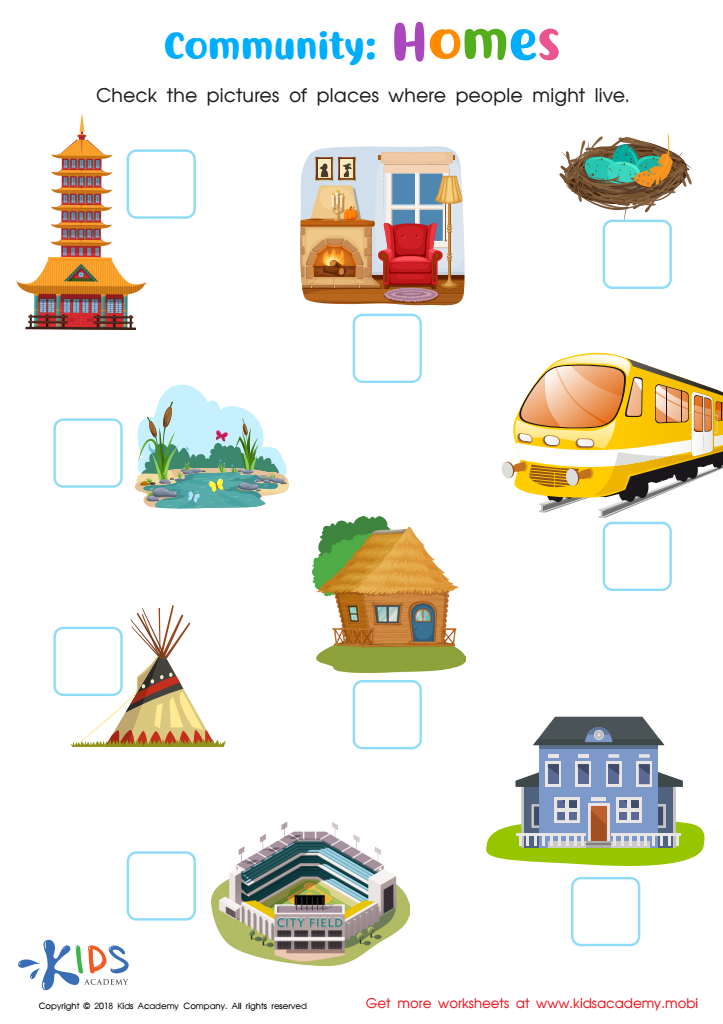
Community: Homes Worksheet
Help your child discover the different types of homes with this free worksheet! Full of colors and pictures, they'll assess which are suitable for people to live in. As they check each picture, they'll use their fine motor skills to draw a conclusion. They'll recognize familiar homes and learn about new ones. There's no place like home!
 Assign to My Students
Community: Homes Worksheet
Worksheet
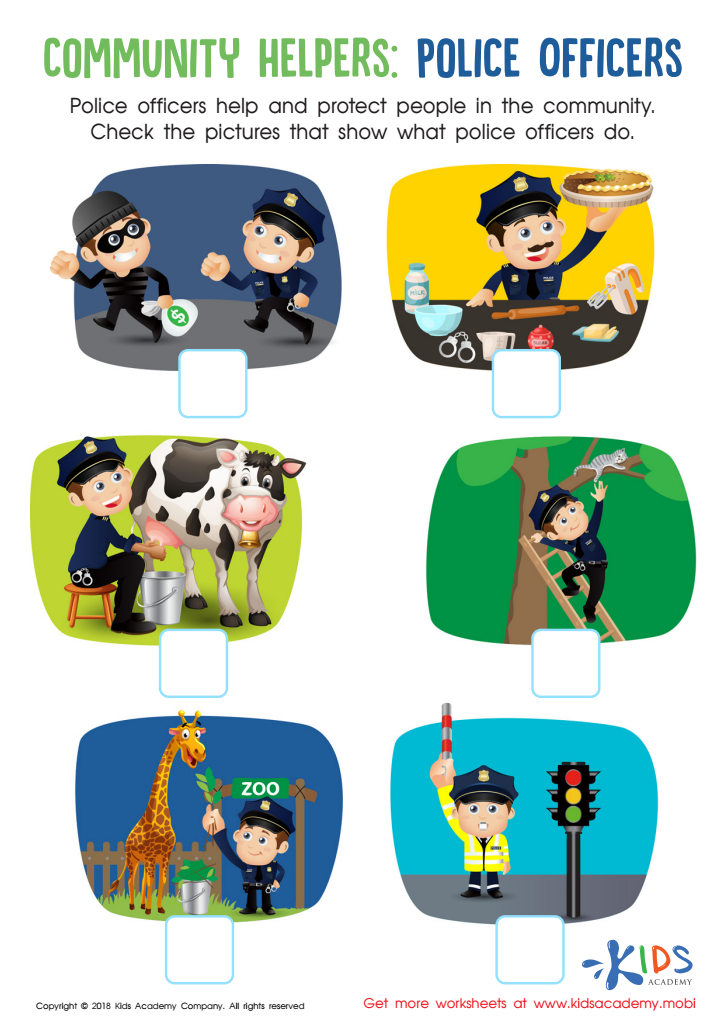
Police Officers Community Helpers Worksheet
Ask your child about police officers and how they help the community. Reference this worksheet to test their knowledge of police duties by asking them to name what the officers are doing in the pictures. Check which pictures correctly depict the duties of a police officer. Answering these questions together can help your child understand how police officers keep the community safe.
Police Officers Community Helpers Worksheet
Worksheet
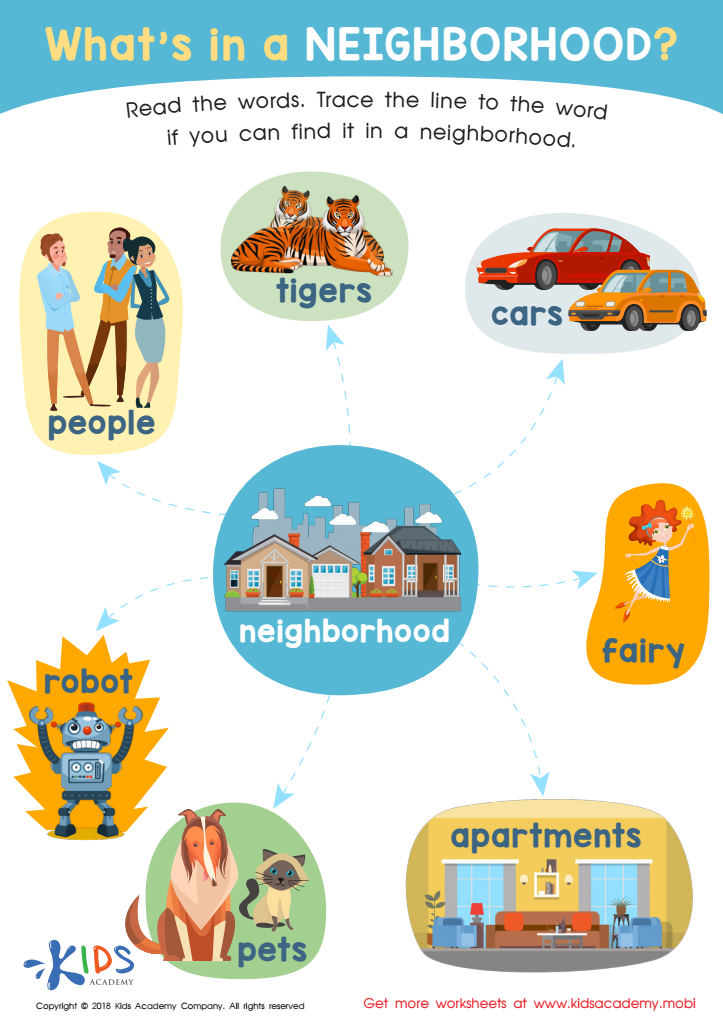
What's in a Neighborhood? Worksheet
This fun worksheet uses picture clues and traceable lines to help kids learn neighborhood words. Kids will match the neighborhood pictures to the correct words and practice connecting the two. The bright colors make it a great way for kids to practice understanding the qualities of a neighborhood.
What's in a Neighborhood? Worksheet
Worksheet
Join Kids Academy for Free
Who is primarily going to use this learning content?


.jpg)





Building vocabulary is essential for young children, especially in the context of social studies. For ages 5-6, children are at a crucial stage where they begin to understand their world, form relationships, and develop their identity. A rich vocabulary helps children articulate their thoughts, feelings, and experiences, which is vital for social interactions and comprehension of social concepts.
Teachers and parents play a pivotal role in this development. By introducing age-appropriate vocabulary linked to social studies—such as "community," "friendship," "diversity," and "respect"—they can help children better understand their environment and the importance of being active, informed citizens. Furthermore, engaging activities like storytelling, discussions, and vocabulary games can make learning enjoyable and memorable, fostering a love for language and knowledge.
Moreover, strong vocabulary skills are linked to better reading and comprehension abilities, laying the foundation for academic success. It empowers children to express themselves confidently and encourages critical thinking as they explore various cultural and societal themes. Overall, nurturing vocabulary within the context of social studies not only enhances language skills but also cultivates empathy, awareness, and ultimately, social responsibility. Thus, it is imperative for parents and teachers to prioritize vocabulary development in early education.