Map reading skills Normal Social Studies Worksheets for Ages 5-6
6 filtered results
Difficulty Level
Grade
Age
-
From - To
Subject
Activity
Standards
Enhance your child's map reading skills with our engaging social studies worksheets designed specifically for ages 5-6. This resource introduces young learners to essential map concepts through fun, interactive activities. Children will explore fundamental elements such as symbols, direction, and the significance of maps in understanding their world. By completing these worksheets, kids will develop critical thinking and spatial awareness, laying the groundwork for future geography lessons. Perfect for home or classroom use, our printables are a great way to build foundational skills while ensuring that learning remains enjoyable. Dive into map reading today and watch their confidence soar!
Favorites
With answer key
Interactive
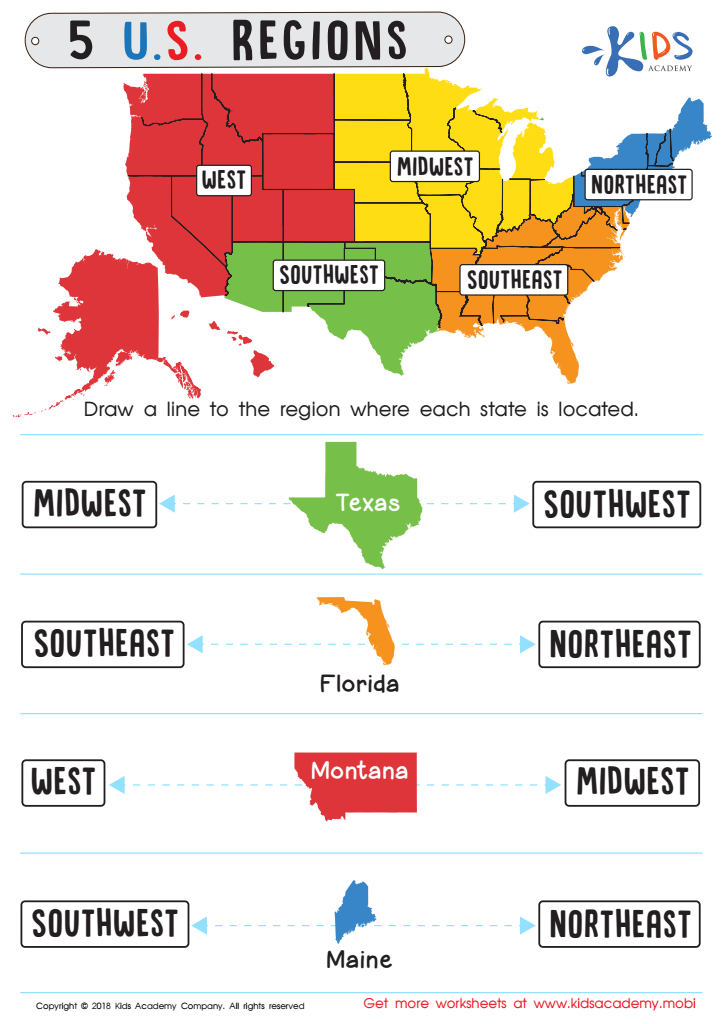
5 U.S. Regions Worksheet
Familiarize students with states & capitals in your country before starting. Look at the map and ask kids to name some states. Then have them draw a line to the region each state is located in. This'll help them recognize the different places and make the exercise easier.
5 U.S. Regions Worksheet
Worksheet
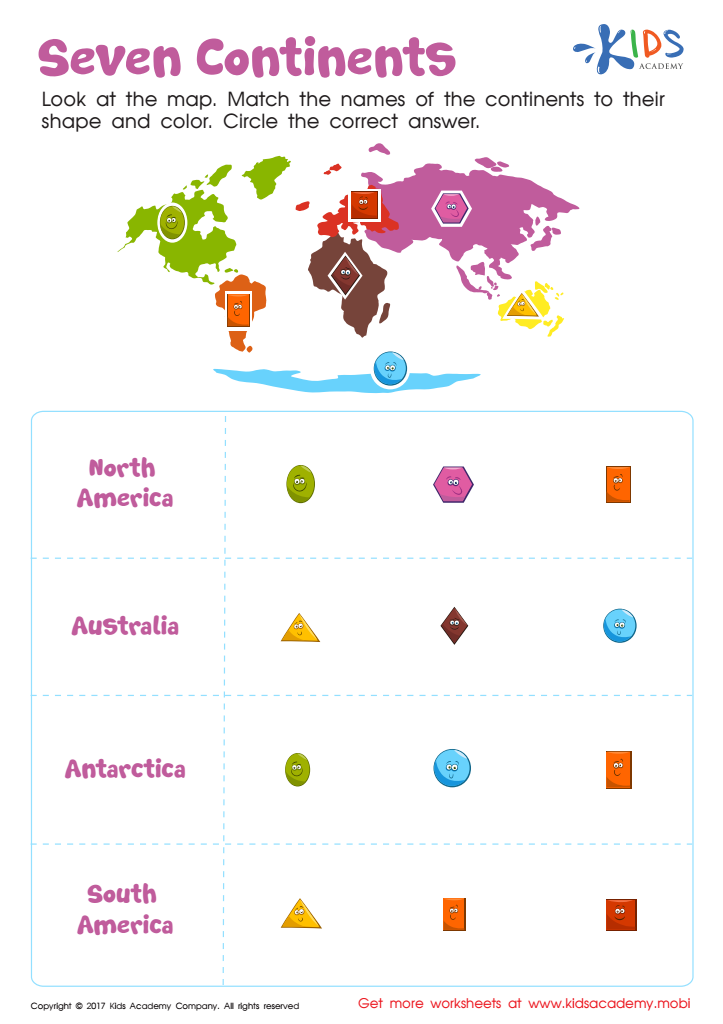
Seven Continents Worksheet
Geography teaches kids about the world! Encourage exploration with a seven continents worksheet - it'll help your child identify each continent using fun shapes.
Seven Continents Worksheet
Worksheet
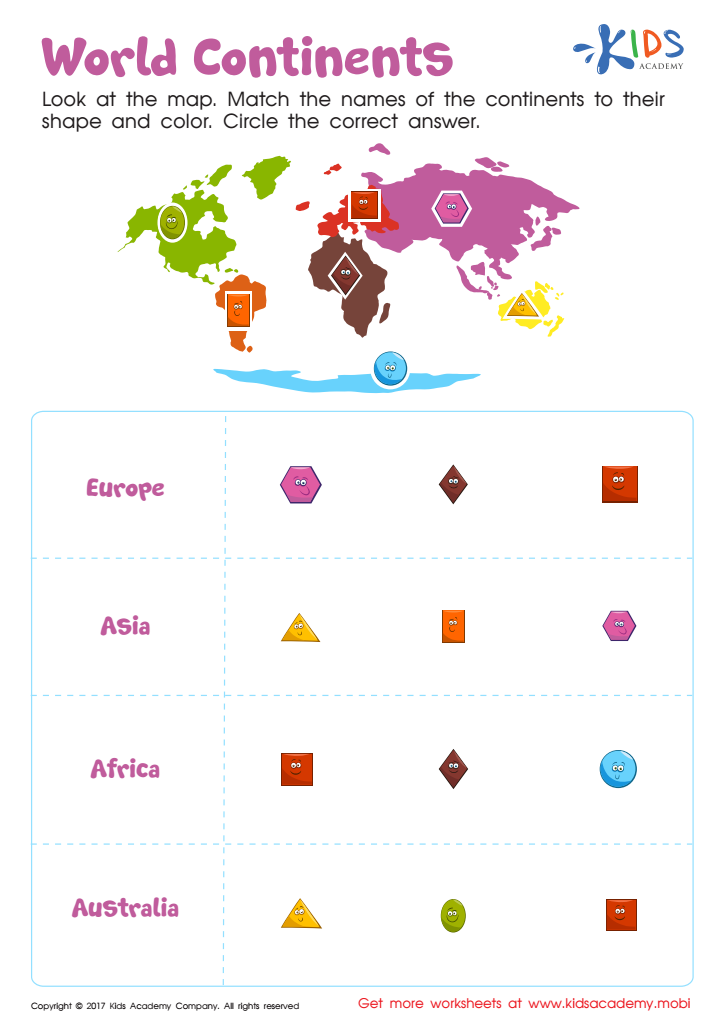
World Continents Worksheet
Help expand your child's knowledge of the world with this fun worksheet! It features goofy shapes to identify each continent, making learning the seven continents fun and memorable.
World Continents Worksheet
Worksheet
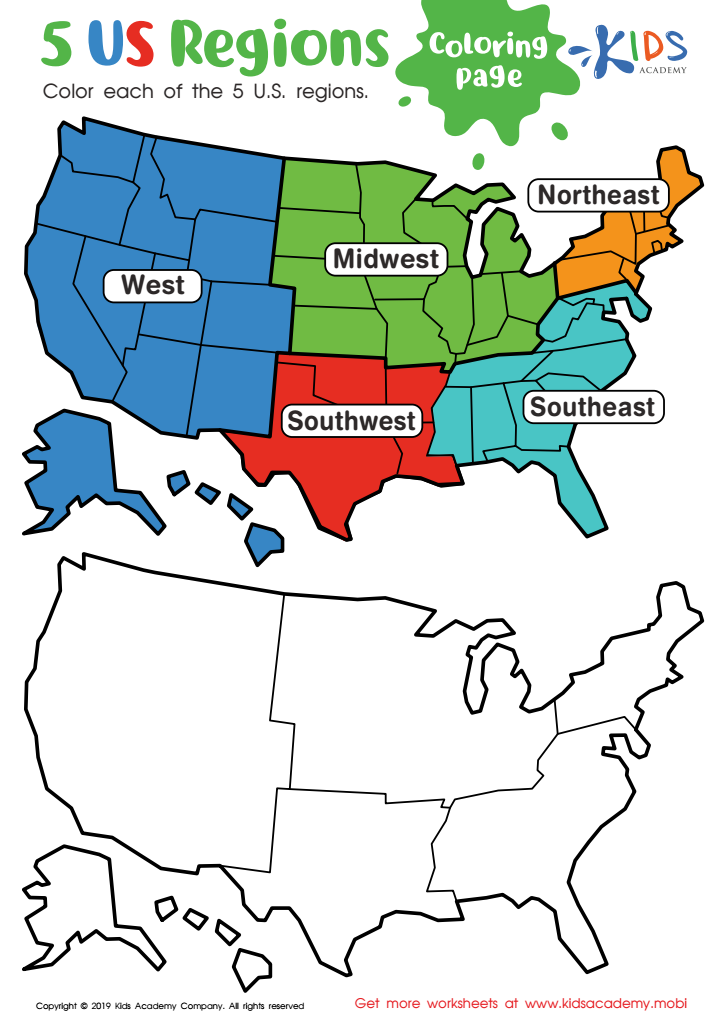
US Regions Coloring Page Worksheet
Our great nation is split into five distinct regions: Southeast, Southwest, West, Midwest, and Northeast. Each is known for its own special offerings and states. Let your kids have fun learning about the regions with a coloring activity! It's a great way for them to understand where each region stands on the map.
Download (PDF)
 Assign to My Students
Assign to My Students
US Regions Coloring Page Worksheet
Worksheet
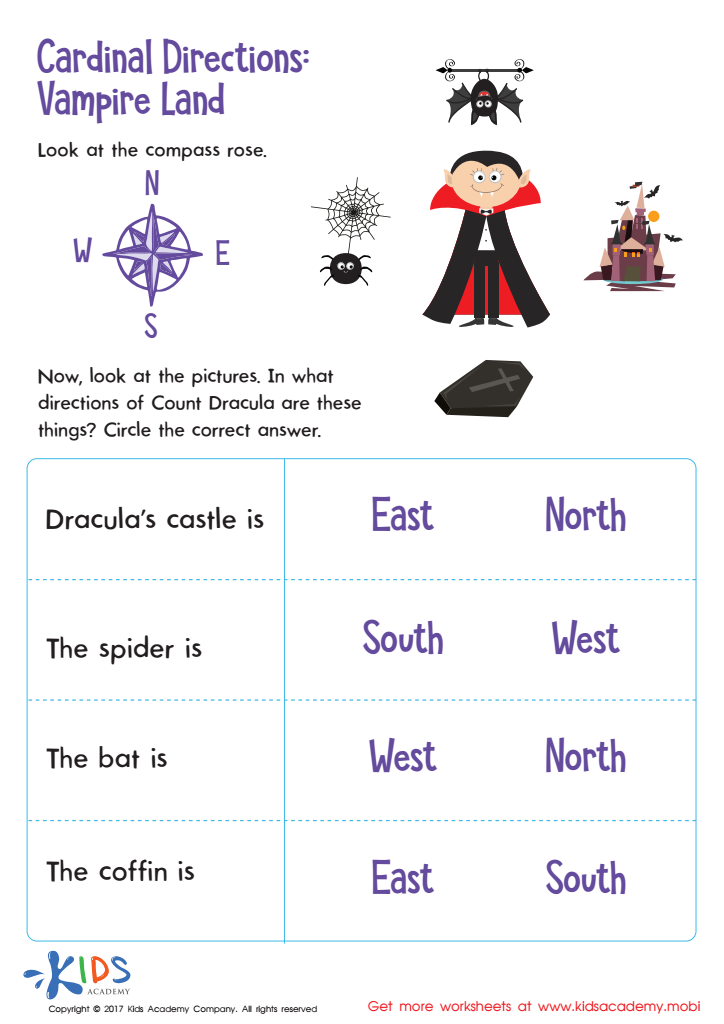
Cardinal Directions Printable
Perfect for fall, let's go to Transylvania with Count Dracula to learn cardinal directions. This printable worksheet introduces the compass rose and offers valuable practice. Kids will love the fun vampire theme! Get them motivated and help them discover the world with this spooky worksheet.
Cardinal Directions Printable
Worksheet

Towns Worksheet
Towns are generally quiet and safe, making them attractive for young families. Cities have more people, businesses and tall buildings. Roads are busy, and there is often plenty to do and see. Help your kids check which pictures in this worksheet show towns.
Towns Worksheet
Worksheet
Join Kids Academy for Free
Who is primarily going to use this learning content?





.jpg)


Teaching map reading skills in social studies for children ages 5-6 is essential for several reasons. Firstly, it fosters spatial awareness, helping children understand their environment and how to navigate it. At this age, when children are naturally curious about the world around them, introducing maps provides a tangible way to explore geography, enhancing their ability to visualize locations and directions.
Map reading also promotes critical thinking and problem-solving skills. As children learn to interpret symbols and legends, they begin to make connections between abstract concepts and real-world applications. This cognitive development is crucial as it lays the foundation for more complex organizational and analytical skills in later years.
Furthermore, encouraging map literacy nurtures a sense of community and belonging. Young learners can relate map concepts to their neighborhoods, families, and schools, which instills a sense of pride in their local environment. By incorporating discussions about cultural landmarks and important features, parents and teachers help children build connections to history and community values.
Ultimately, enhancing map reading skills in early education equips children with foundational tools that promote independence and creativity, allowing them to explore and understand the world in a meaningful way.