Verb identification Normal Grammar Worksheets for Ages 5-6
3 filtered results
-
From - To
Enhance your child's understanding of verbs with our Verb Identification Normal Grammar Worksheets, specially designed for ages 5-6! These engaging activities help young learners recognize and understand verbs in sentences, promoting essential language skills. Each worksheet features colorful illustrations and straightforward exercises tailored to keep children motivated and excited about learning. From identifying action words to strengthening sentence construction, our resources offer fun practice to boost confidence and fluency in grammar. Perfect for both classroom and home use, these worksheets provide an effective way to ensure your child builds a solid foundation in language arts. Download now and watch their skills flourish!
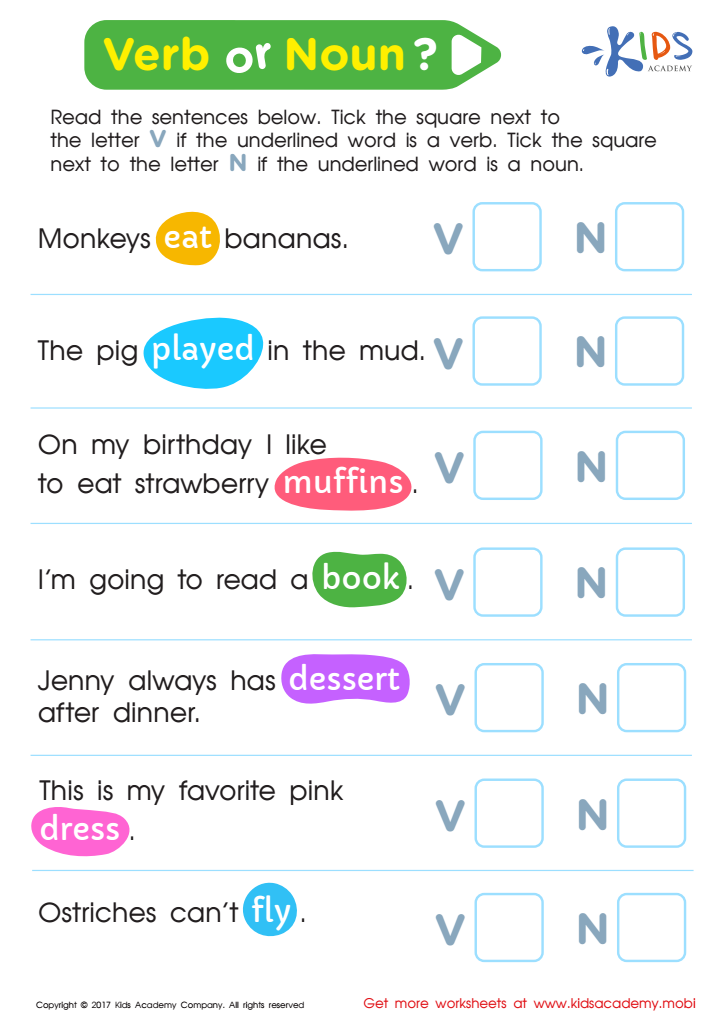
Verb or Noun Worksheet
 Assign to My Students
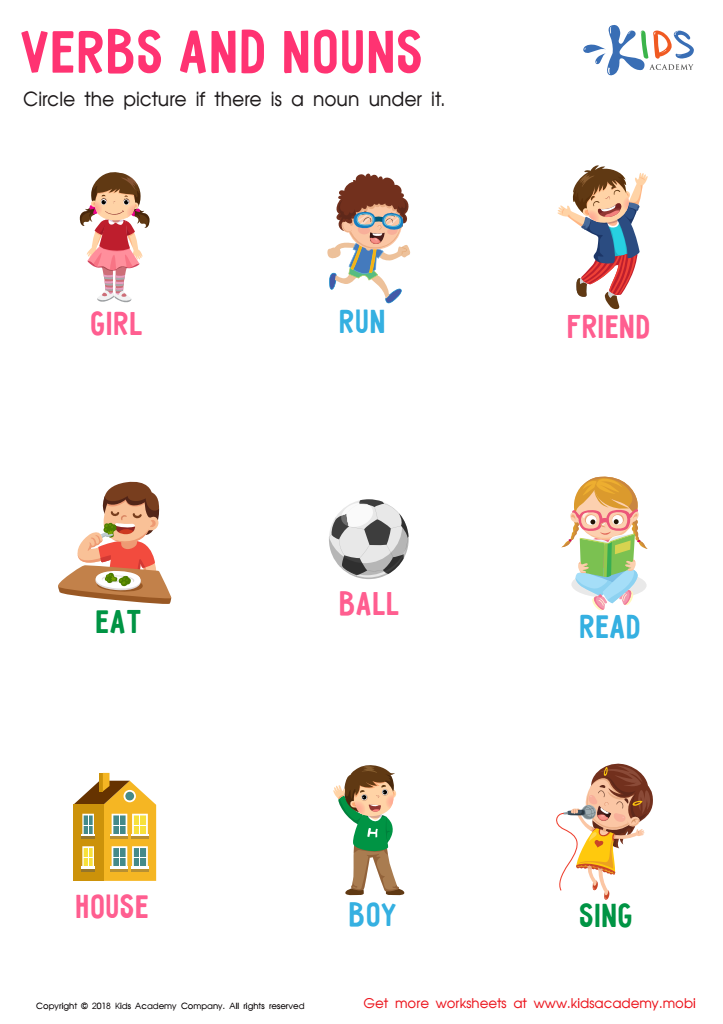
Verbs and Nouns Worksheet
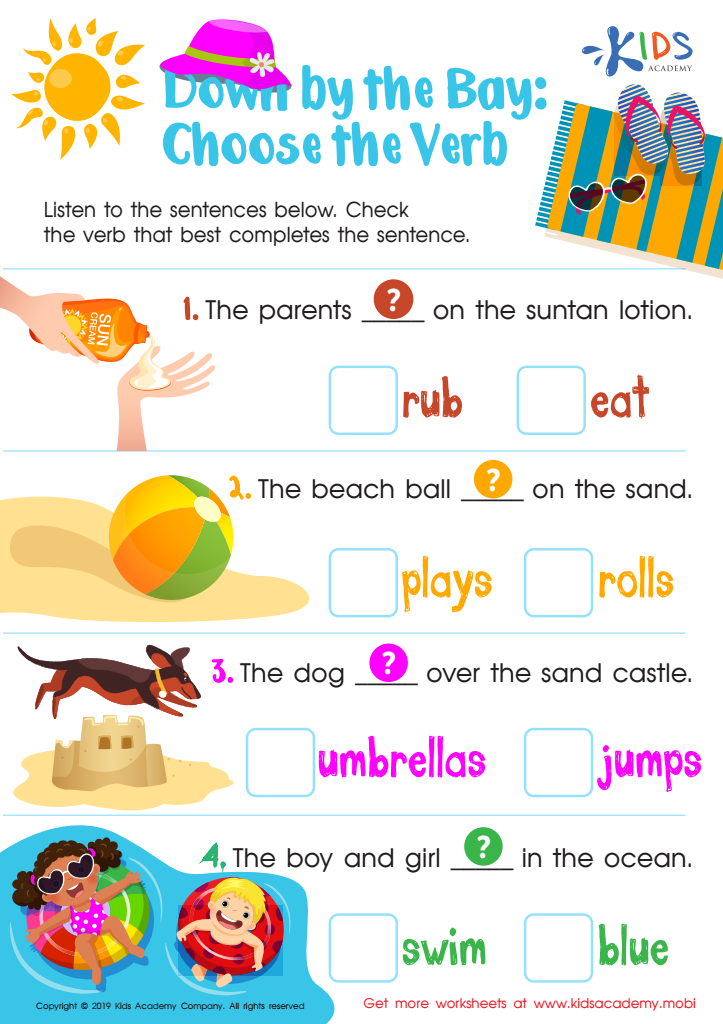
Down by the Bay: Choose the Verb Worksheet







Verb identification is a foundational aspect of language development for children aged 5-6. Understanding verbs — the action words in sentences — is crucial for several reasons. Firstly, verbs are essential for constructing meaningful sentences, allowing children to convey their thoughts, feelings, and experiences effectively. By mastering verb identification, children begin to understand action and description, enhancing their overall communication skills.
Additionally, recognizing verbs helps in reading comprehension. As children learn to identify actions within texts, they can better understand the plot, character dynamics, and overall meaning of stories. This skill directly correlates to their ability to engage with written material, fostering a lifelong love for reading.
Moreover, learning verbs supports language grammar, helping young learners build sentences accurately. By identifying and using verbs correctly, children can develop better writing and speaking skills, aiding their academic success.
Parents and teachers play a vital role in this development. They can create engaging activities to practice verb identification, such as games, storytelling, and go-along activities that encourage exploration of verbs in various contexts. By prioritizing verb identification, adults empower children to communicate effectively and become confident language users, setting a strong foundation for future learning.