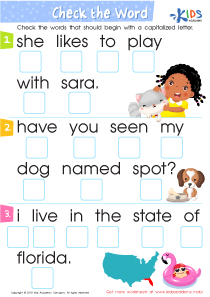
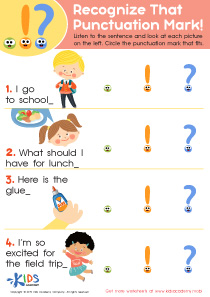
Sentence construction Normal Writing Worksheets for Ages 5-6
6 filtered results
-
From - To
Enhance your child's writing skills with our Sentence Construction Normal Writing Worksheets, designed specifically for ages 5-6. These engaging worksheets help young learners understand the basics of sentence structure, enabling them to form complete sentences confidently. Featuring fun themes and age-appropriate exercises, kids will enjoy activities that include arranging words in the correct order and creating their own sentences. This crucial early learning tool is ideal for developing grammar, vocabulary, and critical thinking. Elevate your child's literacy journey with our expertly crafted writing worksheets, fostering foundational writing skills for young budding writers. Explore more on Kids Academy!
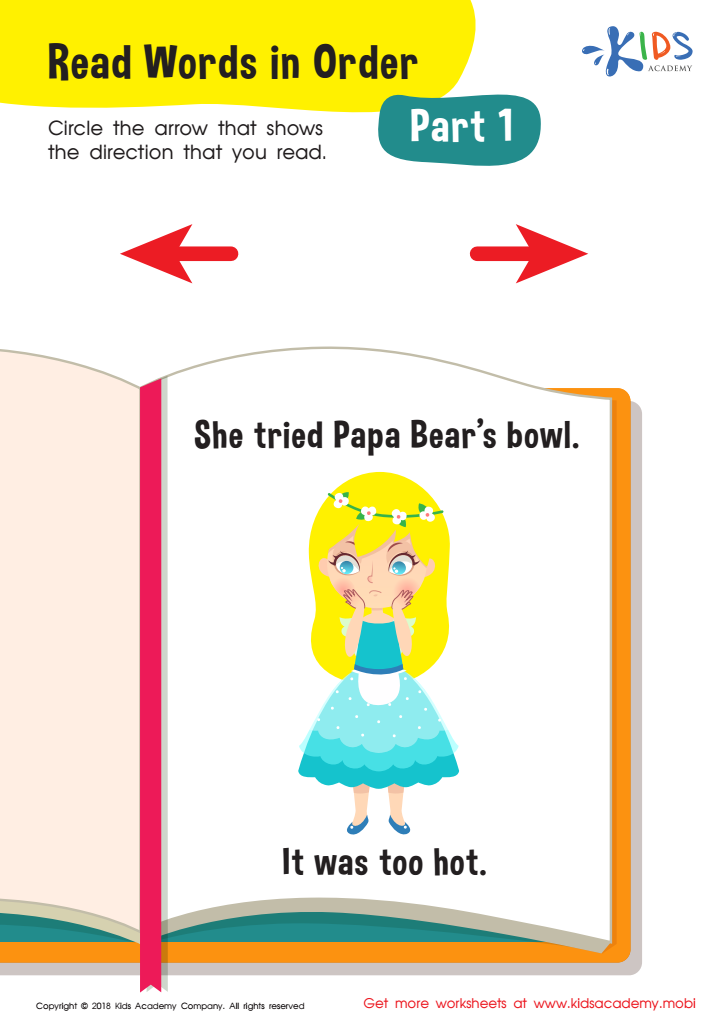
Read Words Order Part 1 Worksheet
 Assign to My Students
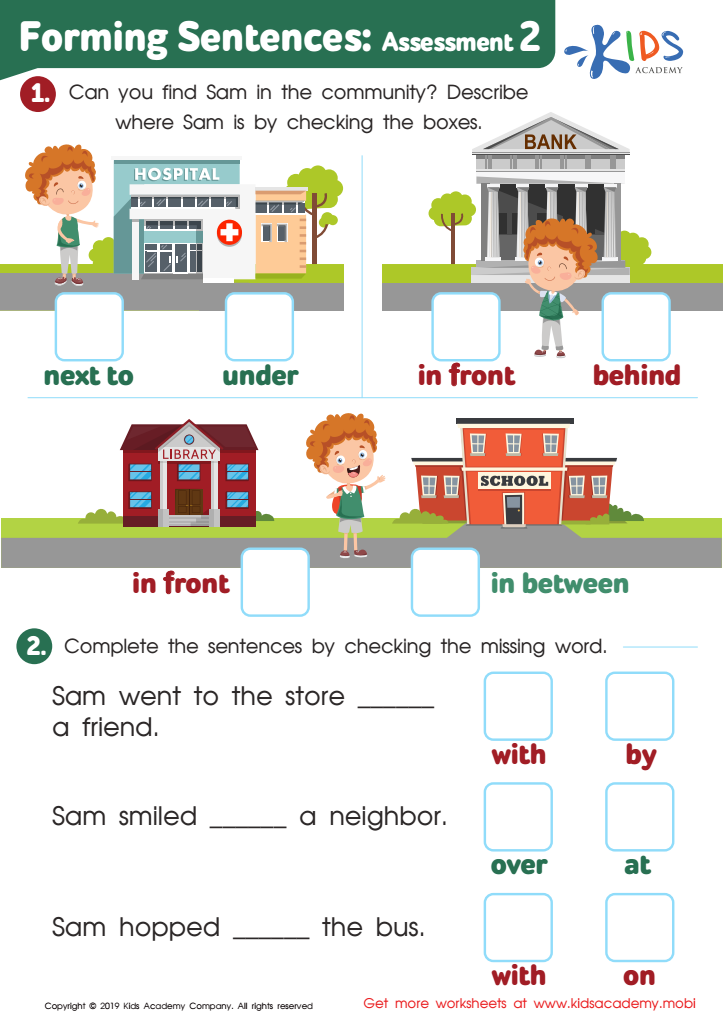
Forming Sentences: Assessment 2 Worksheet
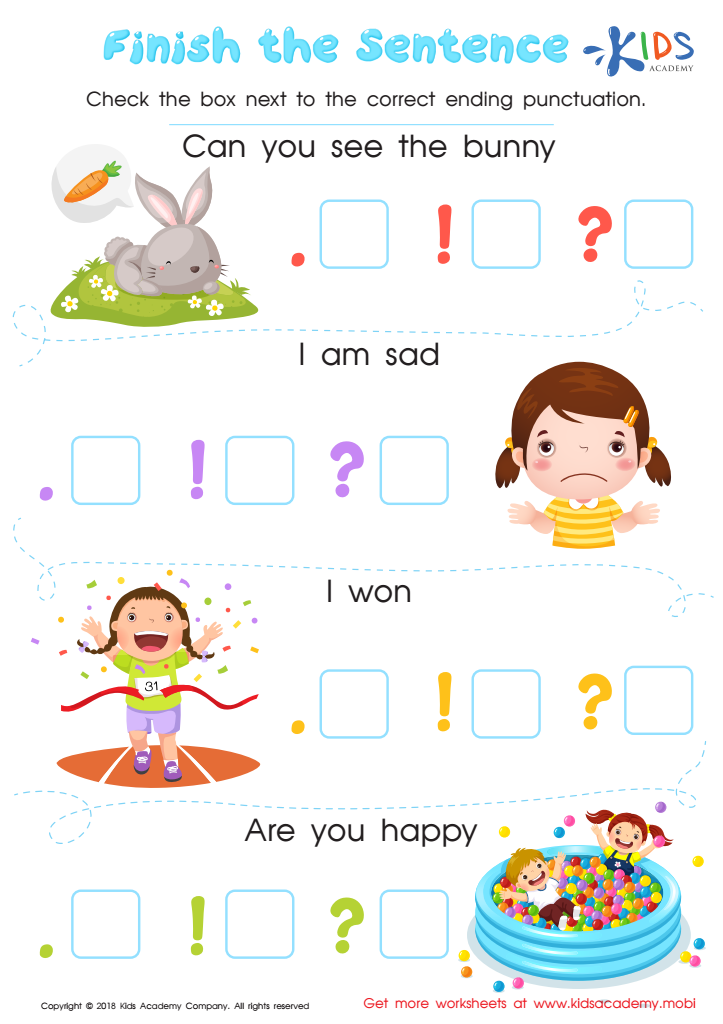
Finish the Sentence Worksheet
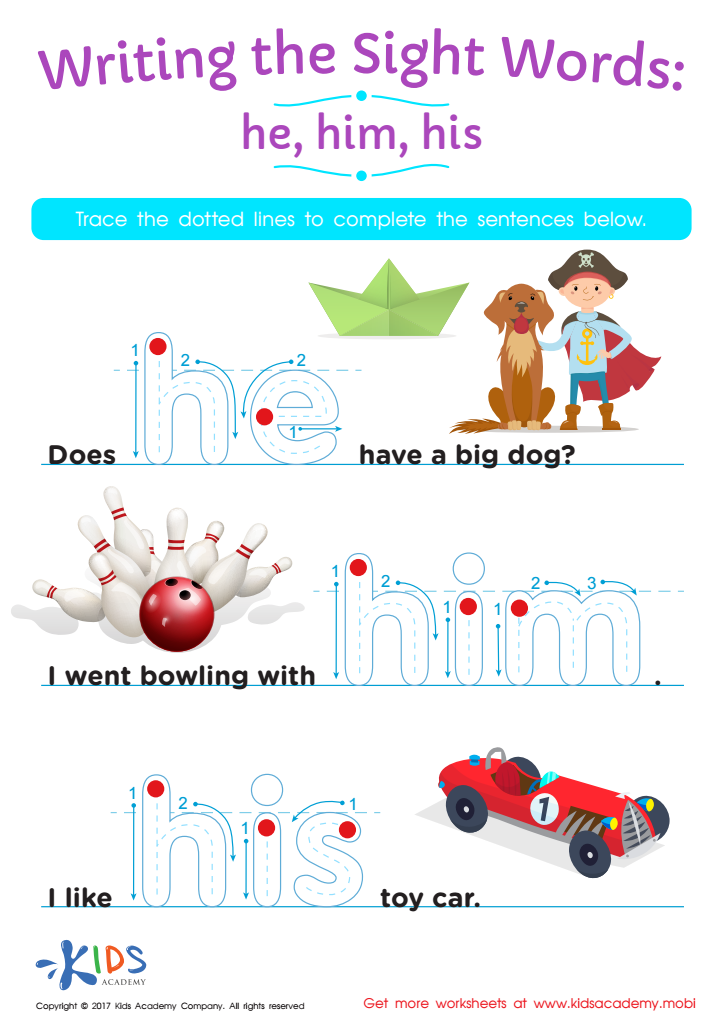
He, Him, His Printable Sight Words Worksheet
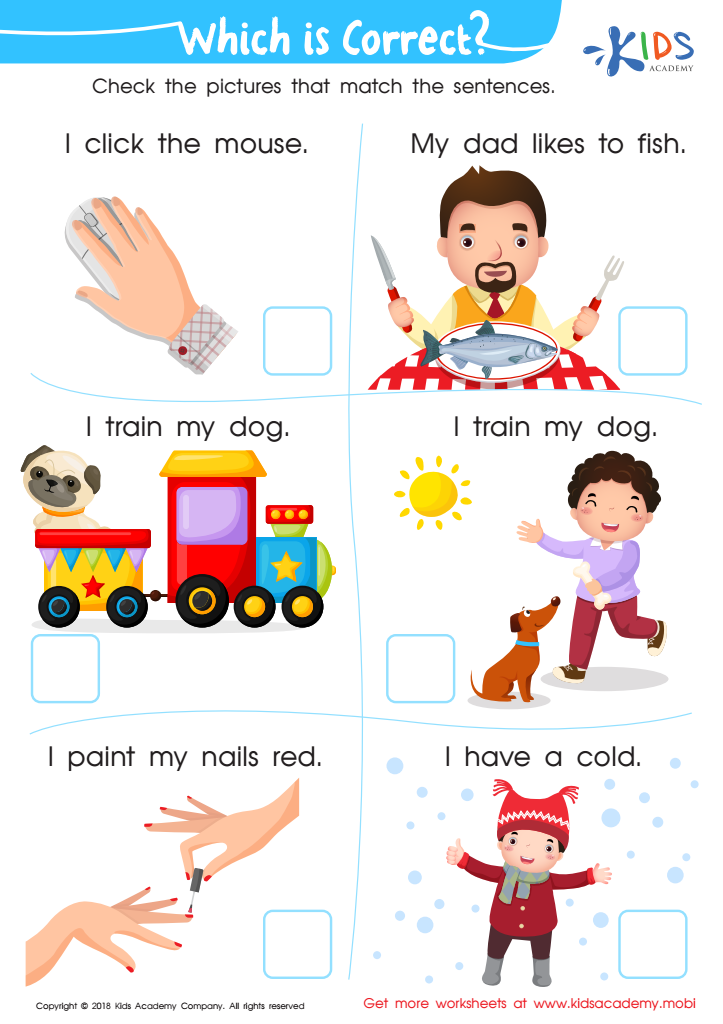
Which Is Correct? Worksheet
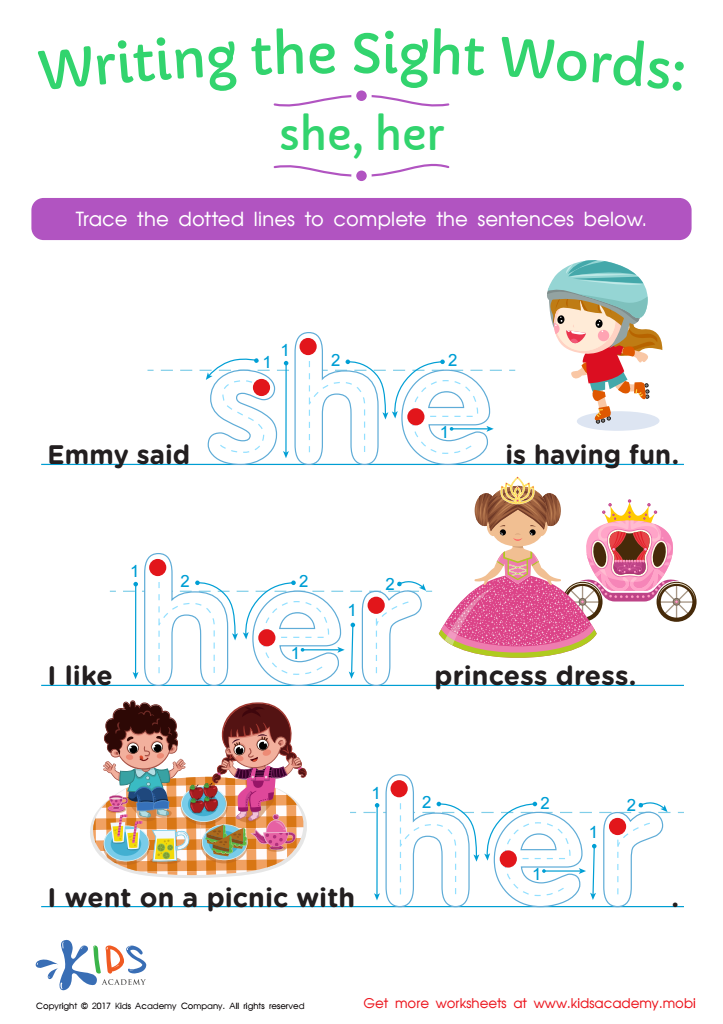
She, Her Printable Sight Words Worksheet








Parents and teachers should care about sentence construction for children aged 5-6 because it is foundational to effective communication and literacy development. At this stage, children are transitioning from simple phrases to more complex sentences, which is crucial for expressing their thoughts clearly. Mastering sentence construction helps enhance their reading comprehension, as well-constructed sentences provide clear meaning and context. This early skill is vital for academic success, as it influences their abilities in other subjects such as math, science, and social studies, where instructions and concepts are communicated through written language.
Additionally, good sentence structure fosters creativity and boosts confidence. When children can convey their ideas effectively, they are more likely to participate in classroom discussions, share stories, and engage with their peers. It also enables them to follow and write sequential narratives, an important aspect of story-telling and understanding the beginning, middle, and end of events.
Finally, early attention to sentence construction lays the groundwork for future learning. As children grow, they will encounter more complex grammatical rules. A strong foundation simplifies this progression, ensuring they don't struggle with basic writing skills later on. In essence, emphasizing sentence construction at an early age equips children with critical communication skills essential for lifelong learning and success.