Phonics practice Normal Beginning Consonants Worksheets for Ages 5-7
4 filtered results
Difficulty Level
Grade
Age
-
From - To
Subject
Activity
Standards
Boost your child’s reading skills with our Phonics Practice Normal Beginning Consonants Worksheets, specially designed for ages 5-7! These engaging worksheets help young learners recognize and practice consonant sounds at the beginning of words, laying a foundation for early literacy. Fun activities include tracing, matching, and identifying consonants, making learning enjoyable and effective. Perfect for teachers and parents alike, these printable resources are ideal for reinforcing phonics lessons at home or in the classroom. Start your child’s reading journey today and watch them develop confidence in their phonics abilities! Explore our comprehensive collection and make learning a fun adventure!
Favorites
With answer key
Interactive
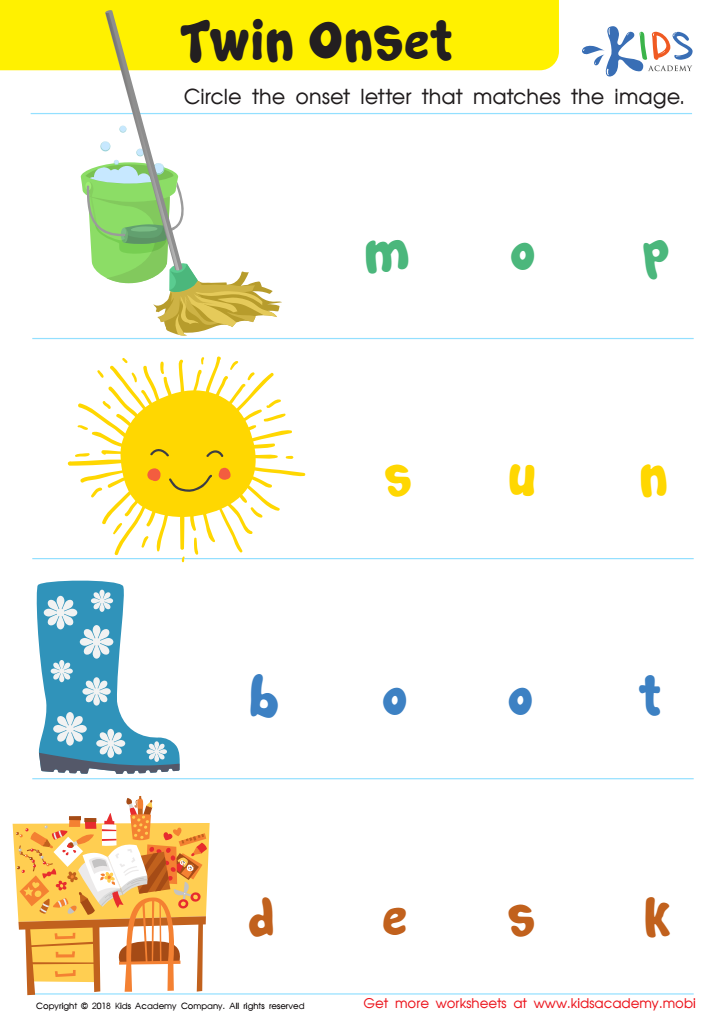
Twin Onset Worksheet
Children's phonological skills and reading/spelling strategies are strengthened by isolating initial consonants. This fun PDF worksheet encourages kids to trace the correct onset letter and hone fine motor skills. It's a great way to introduce early reading and spelling.
 Assign to My Students
Twin Onset Worksheet
Worksheet
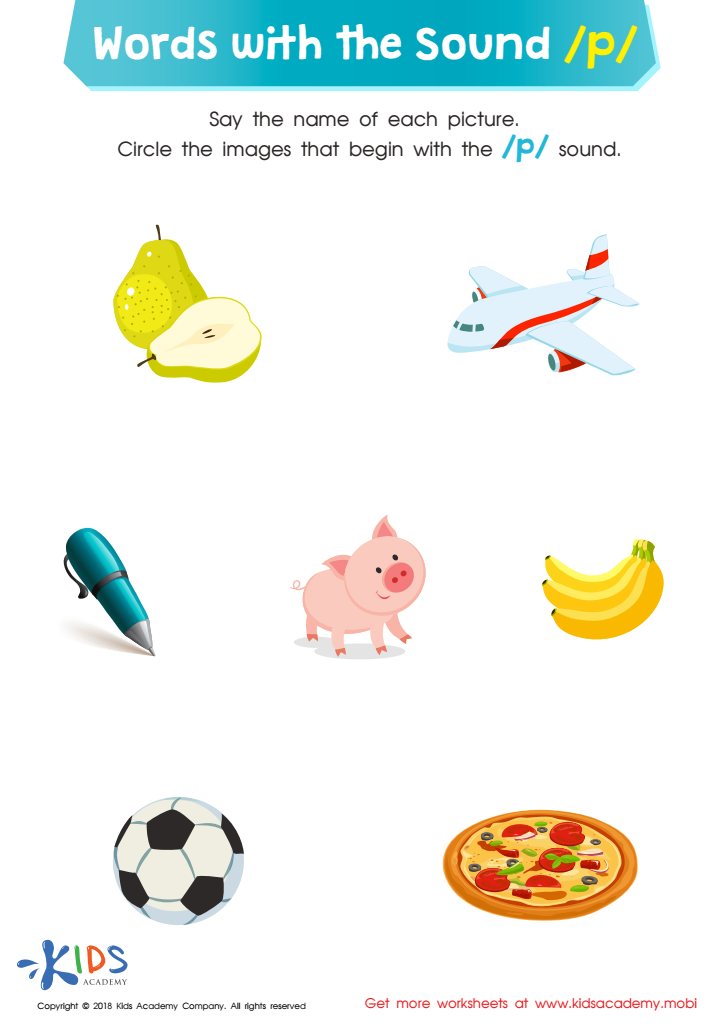
Words with sound p Reading Worksheet
Working on this fun worksheet? Name each picture aloud and listen carefully before circling those that start with the letter «p»! Pizza, pig, plane, or banana - practice phonics to help your child recognize the letter «p» sound for successful early reading and decoding!
Words with sound p Reading Worksheet
Worksheet
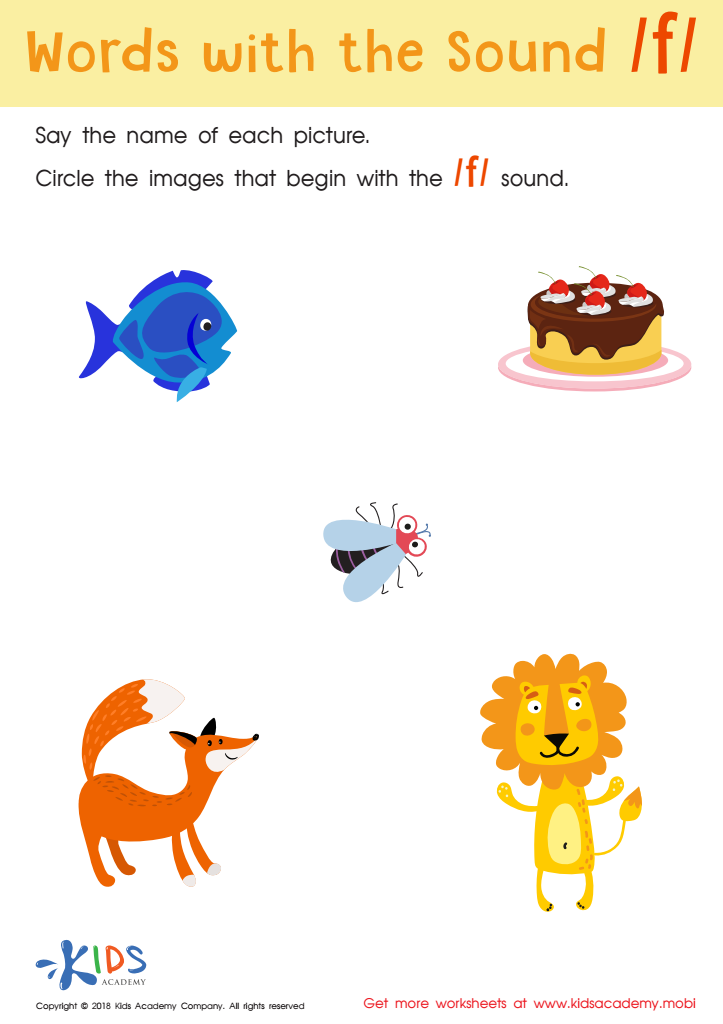
Words with sound f Reading Worksheet
This illustrated phonics worksheet is ideal for preschool or kindergarten. It helps boost learners' literacy skills with a focus on the letter "f". Ask your child to name all the pictures, listening for that sound. Examples are fish, fox, lion, bug. When they can identify which words start with "f", have them circle the images. Congratulate them on a job well done!
Words with sound f Reading Worksheet
Worksheet
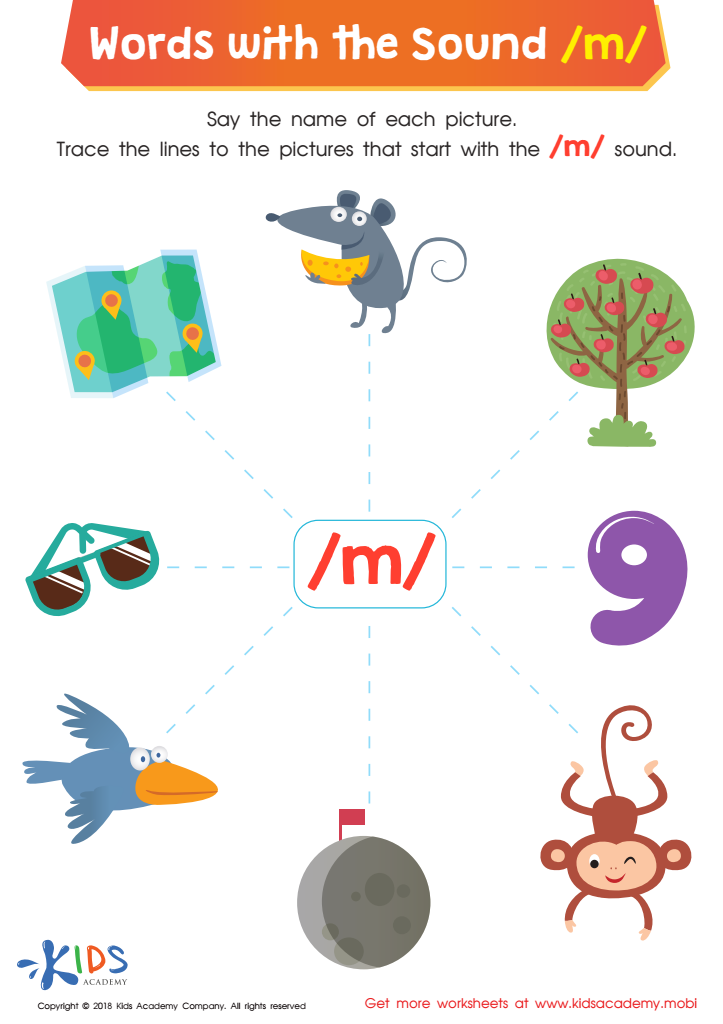
Words with Sound M Reading Worksheet
Emerging readers will use this traceable worksheet to name and trace pictures with the letter sound «m». Bright, engaging pictures make this fun and build confidence while strengthening fine motor skills. They won't even know they're also working on reading skills!
Words with Sound M Reading Worksheet
Worksheet
Join Kids Academy for Free
Who is primarily going to use this learning content?


Phonics practice, especially focusing on normal beginning consonants, is crucial for children aged 5-7 as it lays the foundation for literacy development. At this stage, children are typically learning to read and write, and understanding consonant sounds greatly aids their decoding skills. By mastering beginning consonants, children can sound out words, which boosts their ability to read simple texts independently.
Additionally, phonics fosters language comprehension and vocabulary expansion. When children can recognize and articulate consonant sounds, they become more adept at exploring new words and understanding their meanings. This early practice also provides children with the confidence needed to participate in reading activities both in the classroom and at home.
Moreover, gaps in phonics knowledge can lead to challenges in later academic performance. Early intervention through effective phonics practice ensures that children build strong literacy skills, reducing the risk of encountering difficulties in reading fluency and comprehension later on.
Parents and teachers play a significant role by engaging children in phonics activities that are both fun and informative. By working together, they can create a supportive environment that encourages learning and fosters a lifelong love for reading. Ultimately, prioritizing phonics practice contributes to a child's overall academic success and personal growth.