Filters

55 filtered results

Clear all filters
Favorites
With answer key
Interactive

55 filtered results

Difficulty Level

Grade


Check out this FREE Trial Lesson on Alphabet for age 5-7!

N

Favorites
With answer key
Interactive
  • 5-7
  • Fine Motor Skills
  • Alphabet
  • Normal
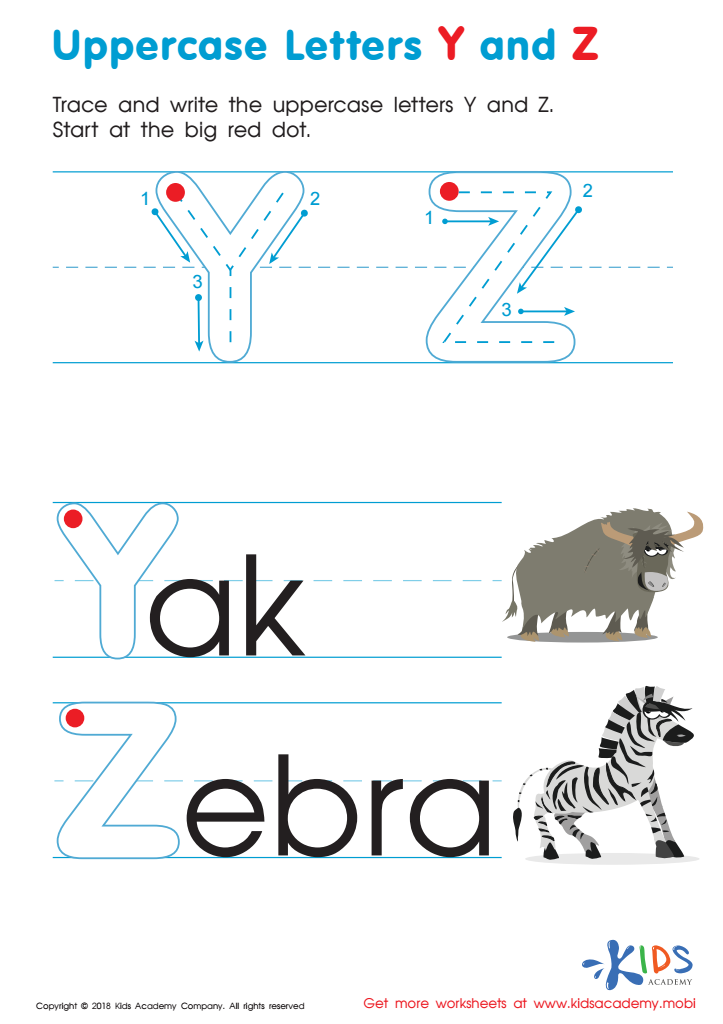
Uppercase Letters Y Z Worksheet

Uppercase Letters Y Z Worksheet

Help your child learn their ABCs with this fun tracing activity! They must trace and write Y and Z in uppercase form, starting from the red dot. Kids will love the fun images for extra engagement. Guiding their hand carefully will help them practice and perfect their writing skills.
Uppercase Letters Y Z Worksheet
Worksheet
Letter A Coloring Page

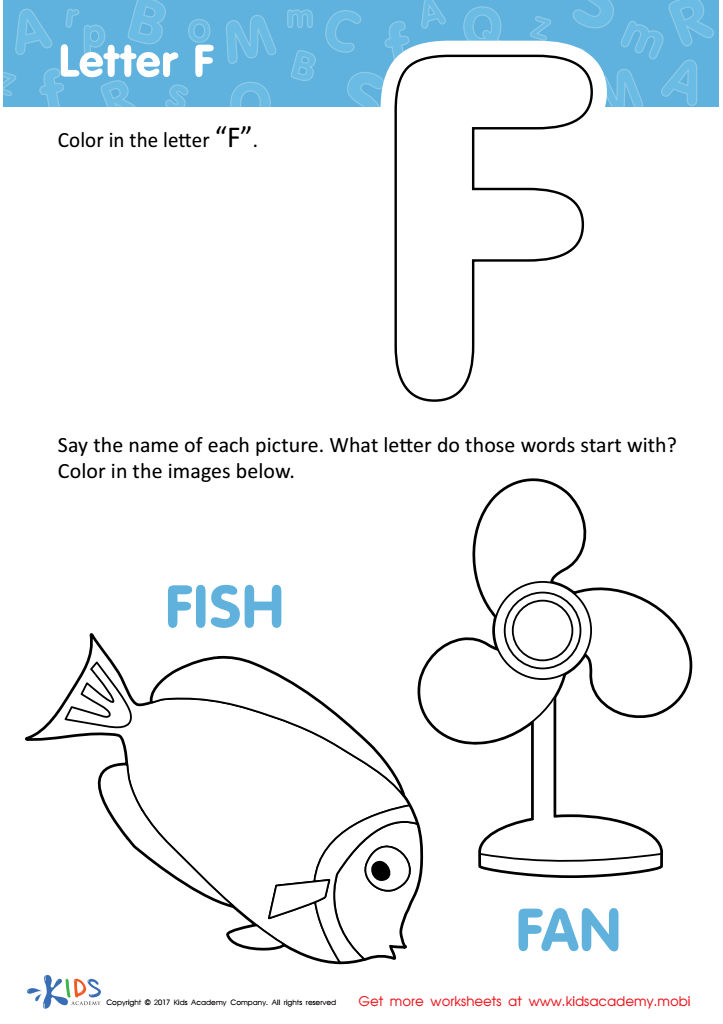
Letter F Coloring Sheet

Coloring pages help kids learn to recognize letters and sounds. Our "F" page has kids color a fish and a fan. It's a great way to introduce them to the letter "F" using words they already know.
Download (PDF)
Assign to My Students
Letter F Coloring Sheet
Worksheet
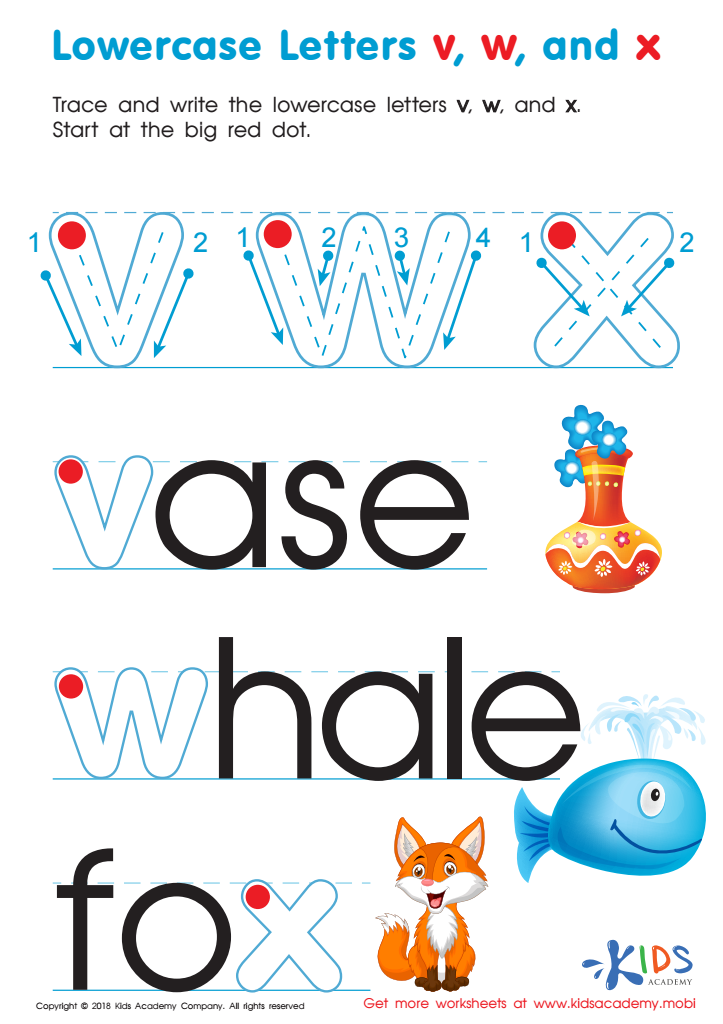
Lowercase Letters v w x Worksheet

Lowercase Letters v w x Worksheet

Help your child learn to write lowercase letters v, w, and x, starting at the big red dot. This activity will help them develop writing skills and correctly identify the letters. Guide them as they trace the letters and enjoy watching them improve!
Lowercase Letters v w x Worksheet
Worksheet
Letter N Coloring Page

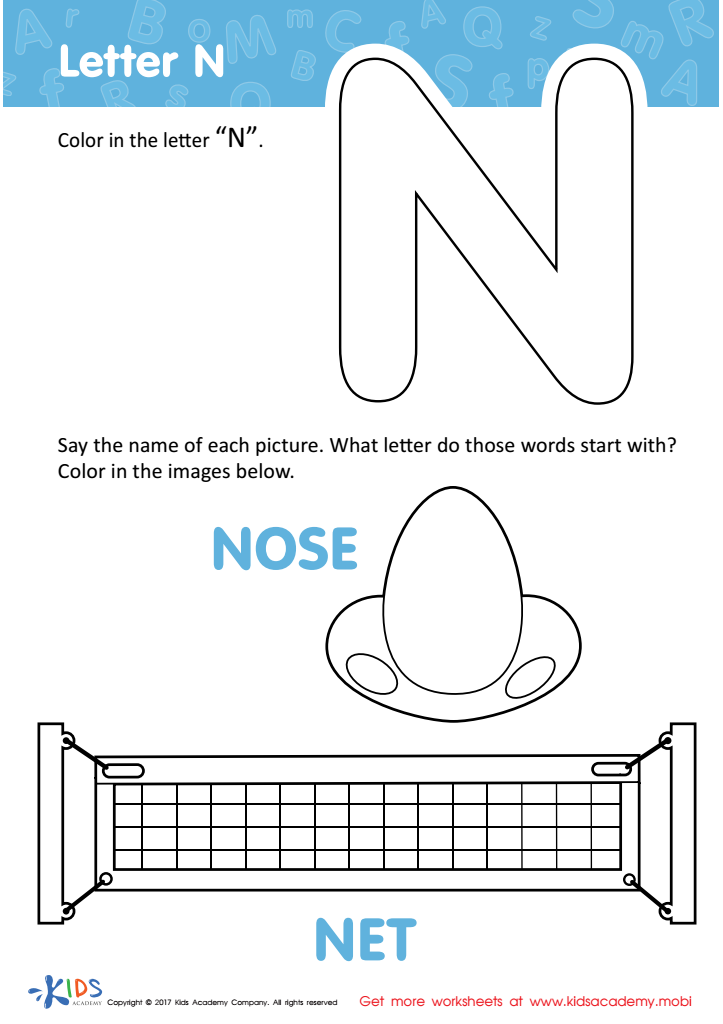
Letter N Coloring Sheet

Let your child get creative and learn the alphabet with this letter "N" coloring page! It's a fun way to recognize the letter, featuring a body part all kids know. Coloring and reinforcing recognition of "N" will help your child have fun while learning!
Download (PDF)
Assign to My Students
Letter N Coloring Sheet
Worksheet
1, 2 or 3? Worksheet

1, 2 or 3? Worksheet

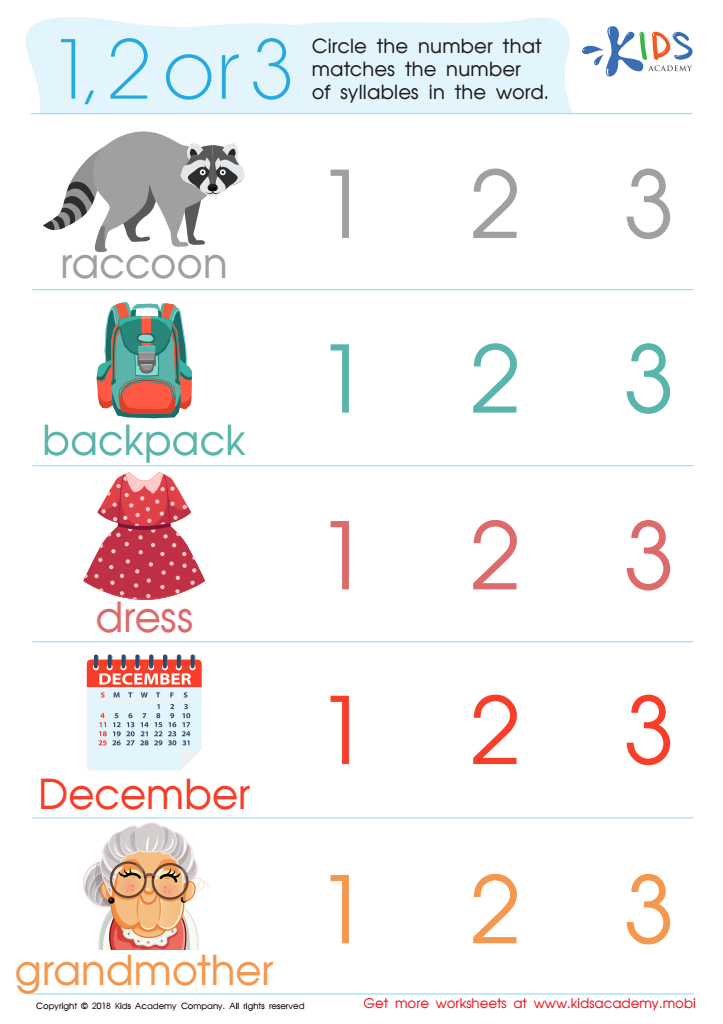
Do your kids know about syllables? Test their understanding with this worksheet. Read the words aloud and ask them to say them with you. Help them circle the number that matches the number of syllables in each word. Perfect for expanding knowledge or testing how much they've already learned.
1, 2 or 3? Worksheet
Worksheet
letter d worksheets
letter d worksheets

Letter D Tracing Page

Trace and write capital and lowercase letter "D" with our free printable alphabet worksheet! Be careful not to mix up "b" and "d" - just look at the ducks and write their first letter. The dolphin wants to join the fun too - do you like dolphins? Get more fun worksheets and activities at Kids Academy!
Letter D Tracing Page
Worksheet
Uppercase Letters V, W, and X Worksheet


Uppercase Letters V, W, and X Worksheet

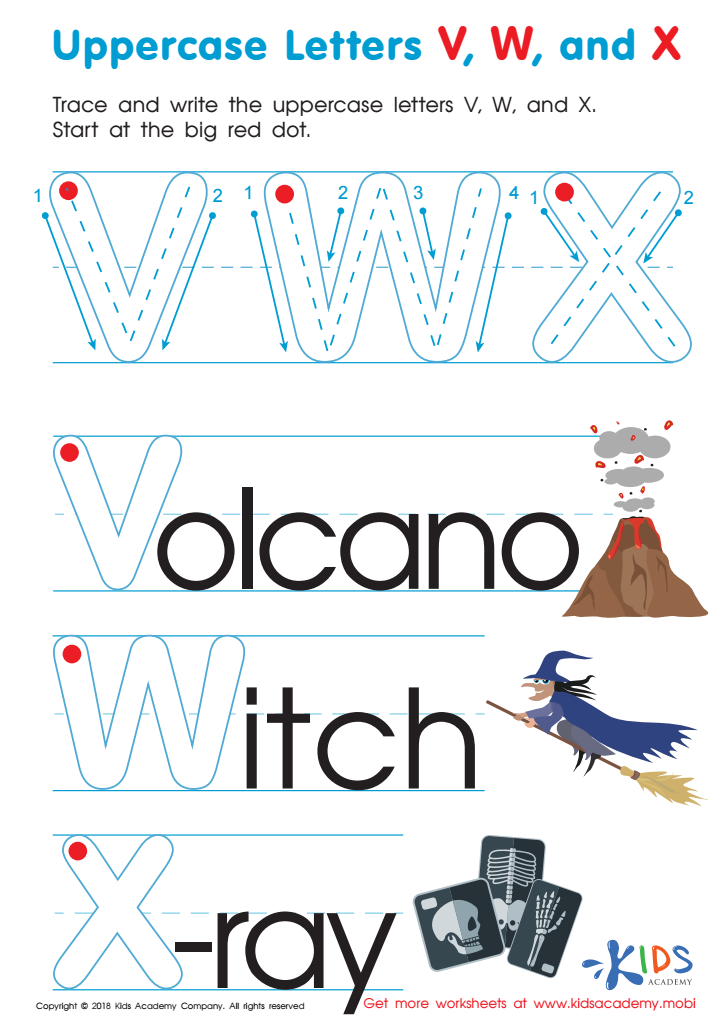
This worksheet is perfect for kids struggling to write uppercase letters V, W, and X. Warm up their brains first by having them name words starting with these letters. Then, help them trace and write each letter from the big red dot. With your assistance, they will quickly sharpen their writing skills.
Uppercase Letters V, W, and X Worksheet
Worksheet


... 2 3

Fine motor skills are crucial for young children, particularly those aged 5-7, as these skills significantly impact their ability to write, manipulate objects, and perform daily tasks autonomously. Parents and teachers should prioritize developing fine motor skills, particularly in the context of learning the normal alphabet, as these skills form the foundation for successful handwriting and overall academic performance.

As children learn to write the alphabet, they are not only mastering letters but also enhancing their dexterity, hand-eye coordination, and grip strength. These skills enable children to blend academic learning with physical actions and are essential for tasks such as using scissors, drawing, and buttoning clothing.

Moreover, strong fine motor skills contribute to a child's self-confidence and independence. When children can effectively manage writing and other tasks, they are likely to engage more in classroom activities and feel capable in their learning environment.

In summary, nurturing fine motor skills during the developmental window of ages 5-7 is vital for literacy, academic success, and the overall growth of a child's confidence and independence. Care from both parents and teachers is essential in providing the right support and activities to foster these skills early on.