Phonics development Normal Alphabet Worksheets for Ages 5-7
3 filtered results
-
From - To
Enhance your child’s reading skills with our Phonics Development Normal Alphabet Worksheets, tailored for ages 5-7. These engaging, expertly designed activities incorporate fun visuals and practical exercises to help young learners master letter sounds and word formation. Perfect for both classroom and home use, each worksheet supports essential reading foundations, blending phonemic awareness with hands-on practice. Our carefully curated collection aims to build confidence, foster a love for reading, and facilitate smoother transitions to advanced literacy skills. Invest in your child’s educational journey with resources trusted by parents and educators alike. Join the path to phonics proficiency today!
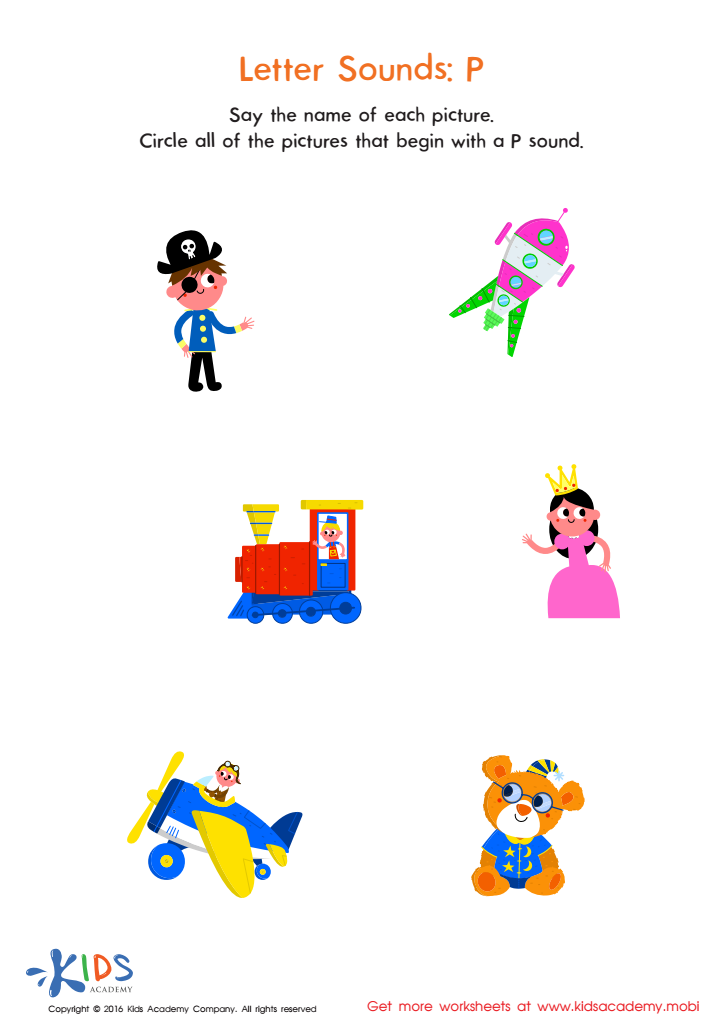
Letter P Sound Worksheet
 Assign to My Students
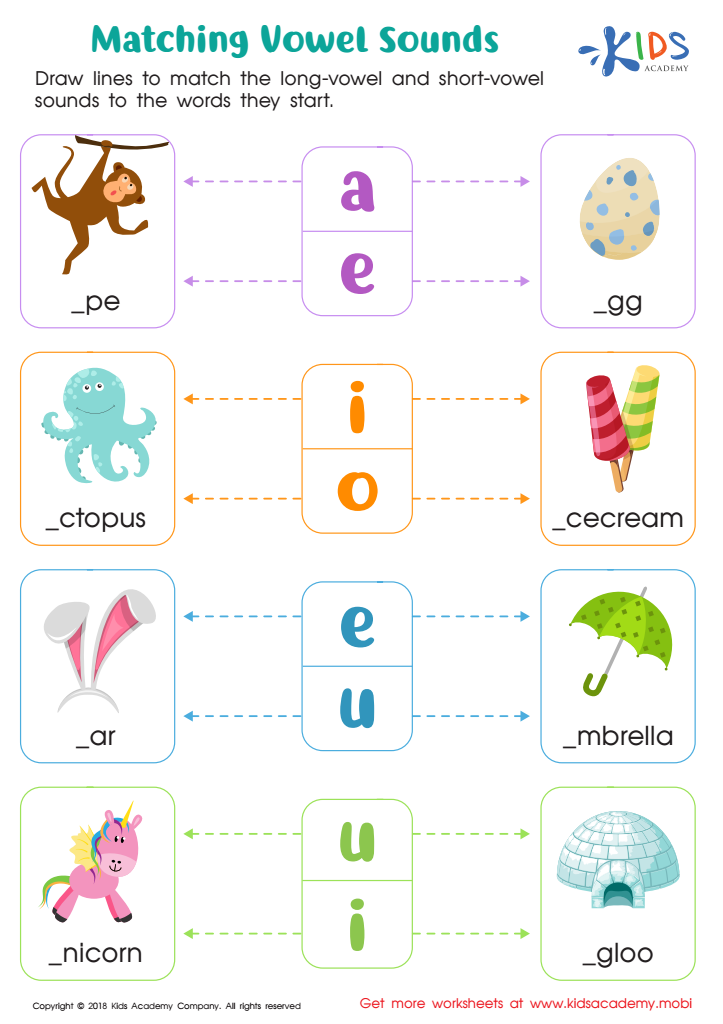
Matching Vowel Sounds Worksheet
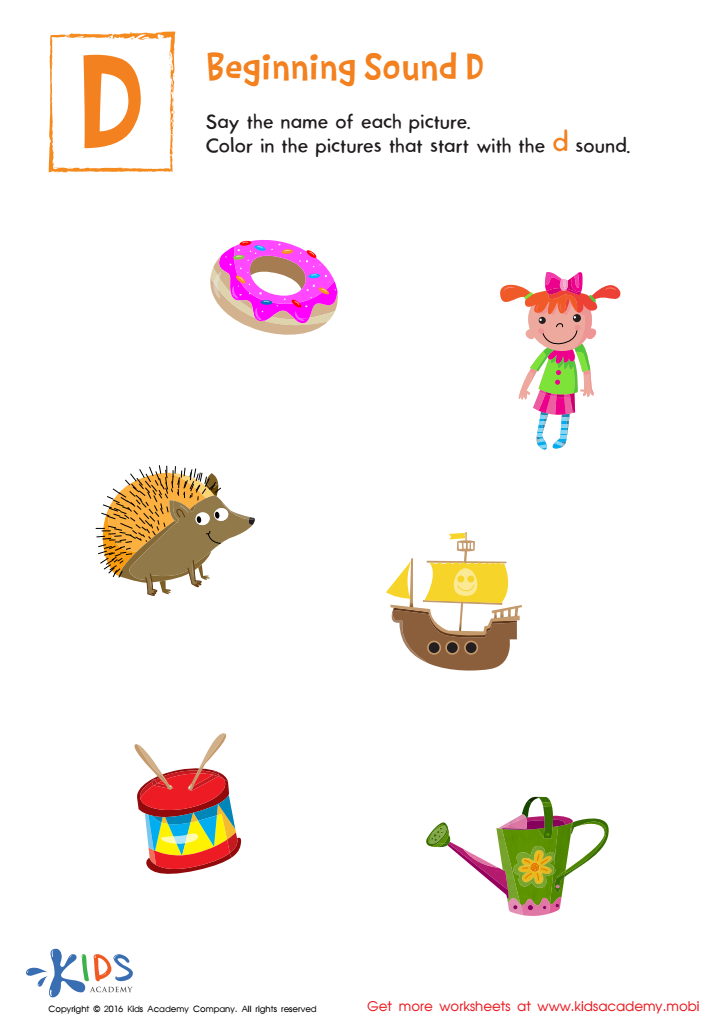
Beginning Sound D Worksheet








Phonics development is crucial for children aged 5-7 as it serves as the foundation for their reading and writing skills. At this critical stage, children are transitioning from recognizing letters to understanding how these letters form words. Phonics focuses on the relationship between sounds and their corresponding letters or groups of letters in the normal alphabet. This systematic instruction helps children decode new words, making reading a less daunting task and boosting their confidence.
When parents and teachers emphasize phonics, they provide tools to help children identify familiar sounds in unfamiliar words, thereby improving their reading accuracy and fluency. Reading fluency, in turn, is directly linked to better comprehension skills, as children can focus on what the text means rather than on laboriously sounding out each word.
Moreover, phonics development supports correct spelling by helping children understand the principles of word formation. Engaging young learners through phonics also fosters a love for reading early on, transforming reading from a challenge into an enjoyable activity. All these benefits are paramount as academic success in later years heavily relies on strong literacy skills. Therefore, parents and teachers should prioritize phonics development to establish a solid educational foundation that will benefit children throughout their schooling and life.







