Rhyming skills development Normal Alphabet Worksheets for Ages 5-7
4 filtered results
-
From - To
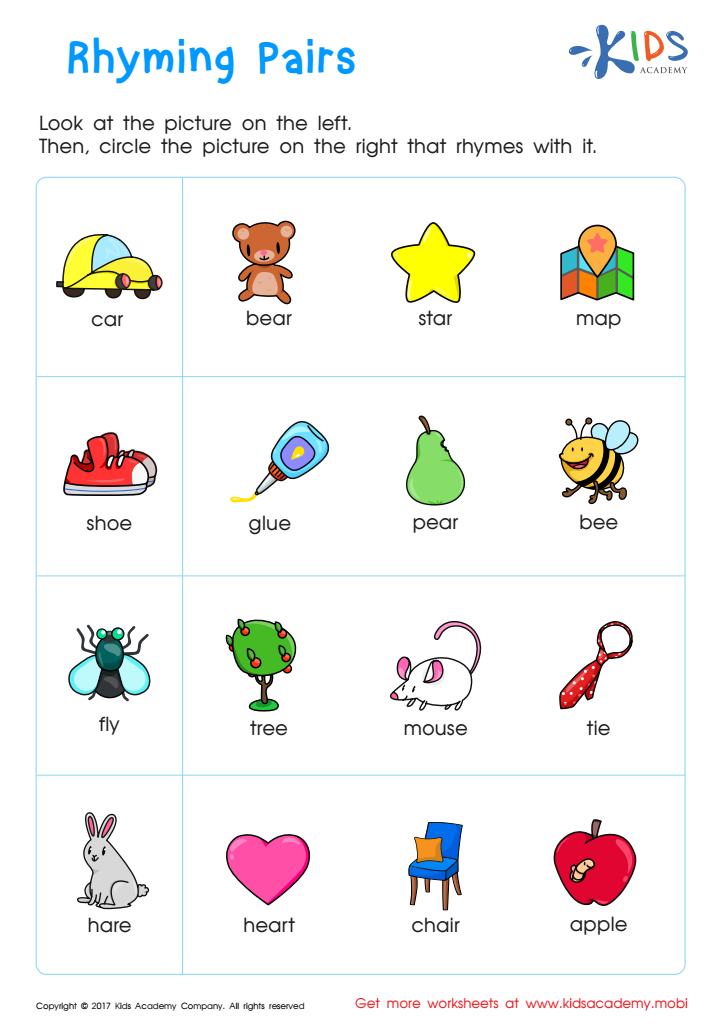
Unlock the magic of reading with our Rhyming Skills Development Normal Alphabet Worksheets designed for ages 5-7! These engaging worksheets help young minds connect and predict sounds through fun, interactive exercises. By recognizing and creating rhymes, children develop essential phonemic awareness, which is the foundation for reading and spelling proficiency. Our expertly crafted activities enhance listening skills and foster a love for language. Perfect for early readers, each worksheet is designed to make learning enjoyable and effective. Join us in turning the alphabet into a world of rhythm and rhyme! Visit Kids Academy for more.
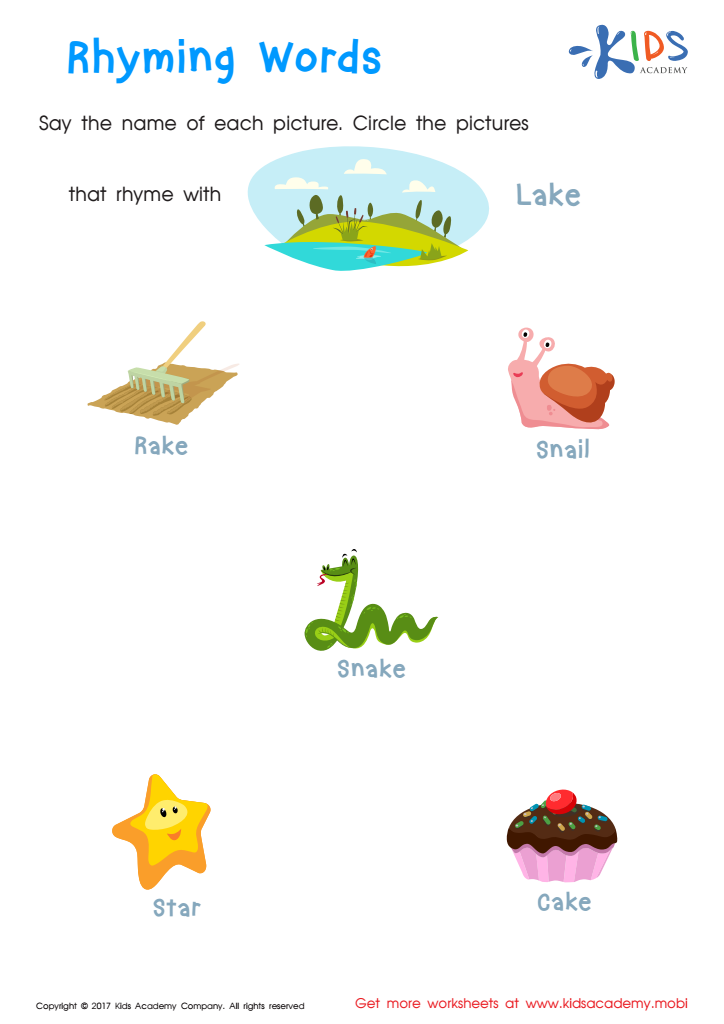
Rhyming Words Rhyming Worksheet
 Assign to My Students
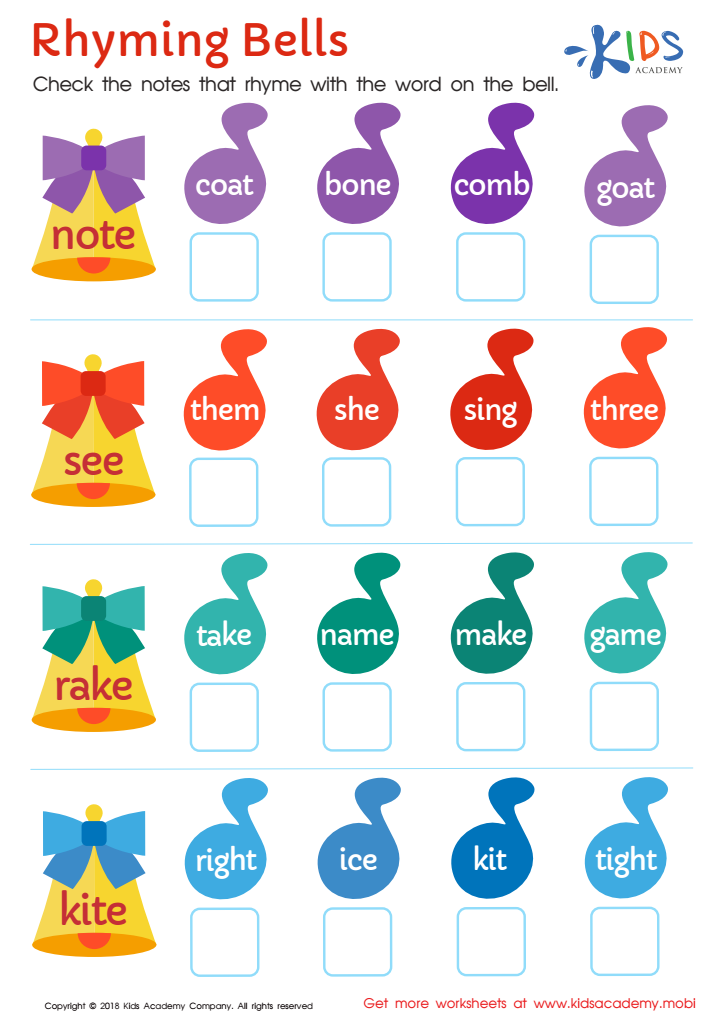
Rhyming Bells Worksheet
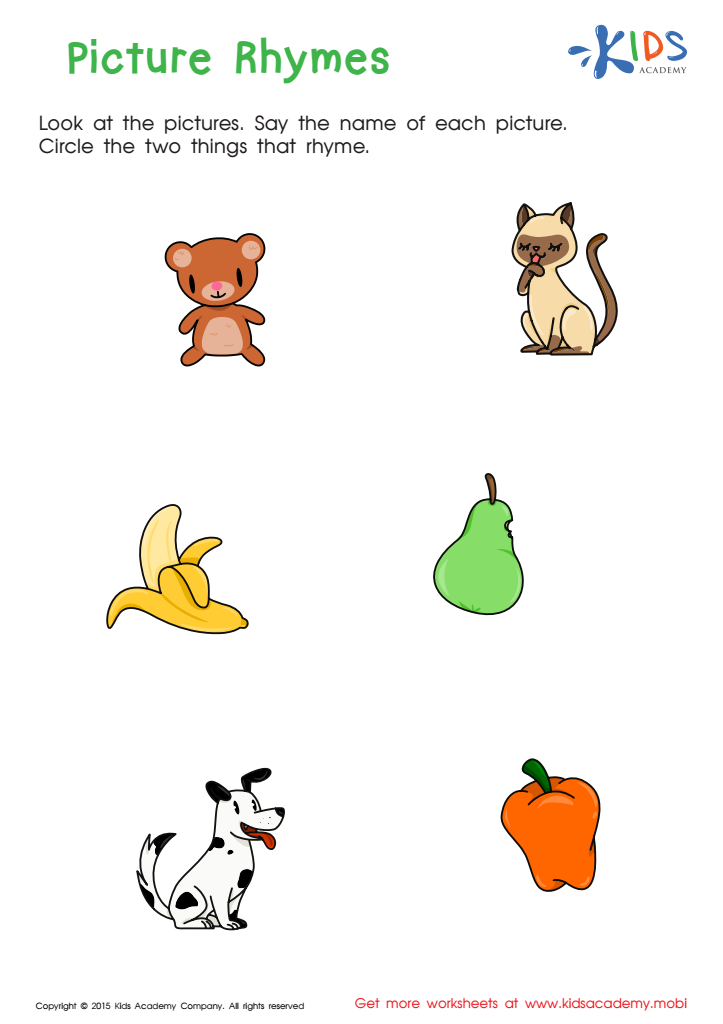
First Words: Picture Rhymes Worksheet







Rhyming skills are crucial for children aged 5-7 because they serve as a foundational aspect of early literacy development. Parents and teachers must prioritize these skills as they significantly enhance phonological awareness, which is the ability to recognize and manipulate the sound structures in words. This is essential for reading and spelling proficiency.
When children engage in rhyming activities, they learn to identify sound patterns, which helps them decode new words more easily. This skill supports their ability to predict word construction and comprehend lyrics and poetry. Moreover, recognizing rhymes fosters a love for language, making learning enjoyable and encouraging a lifelong interest in reading.
Rhyming also develops memory and cognitive flexibility. As children store and retrieve similar-sounding words, they improve their memory recall, contributing to broader language and cognitive skills. Repeated rhyming exercises enhance vocabulary growth by introducing new words in an accessible and memorable way.
In addition, rhyming activities help build social and emotional bonds in educational settings. Group rhyming games and songs require cooperation and listening, promoting interpersonal skills.
In summary, rhyming skills not only streamline the process of learning to read and write but also enrich a child's overall cognitive, emotional, and social development, underscoring the importance for both parents and teachers in early education.







