Sound differentiation Normal Alphabet Worksheets for Ages 5-7
3 filtered results
-
From - To
Explore our engaging Sound Differentiation Normal Alphabet Worksheets, specifically designed for children aged 5-7. These worksheets provide a fun and interactive way for young learners to understand and distinguish sounds associated with each letter of the alphabet. Through a variety of activities, children will enhance their phonetic awareness, improve their listening skills, and develop early literacy competencies. Our resources are ideal for both classroom learning and home practice, ensuring a comprehensive approach to sound differentiation. Foster a love for reading and writing while helping your child excel in their language skills with our thoughtfully crafted worksheets. Start their journey to literacy today!
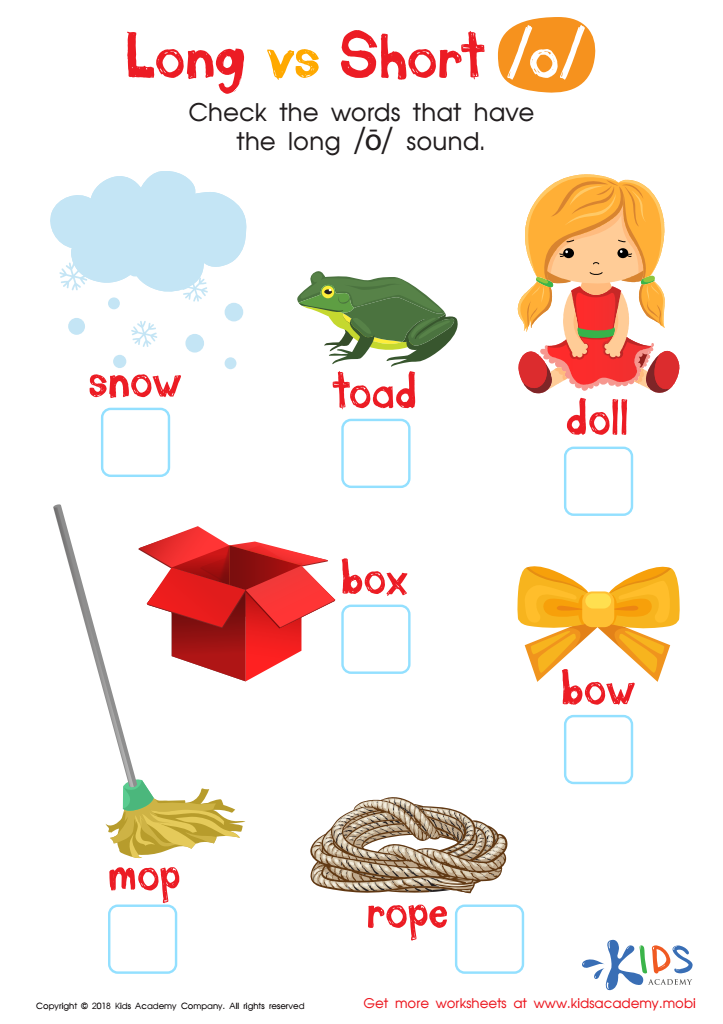
Long vs Short O Reading Worksheet
 Assign to My Students
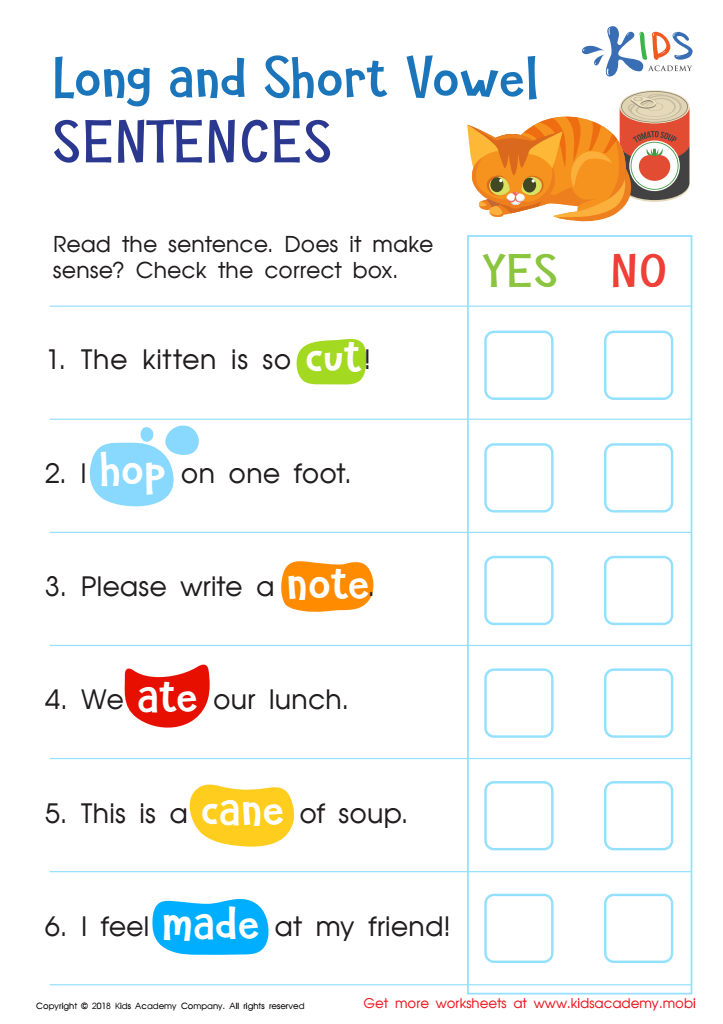
Long and Short Vowel Sentences: Assessment Worksheet
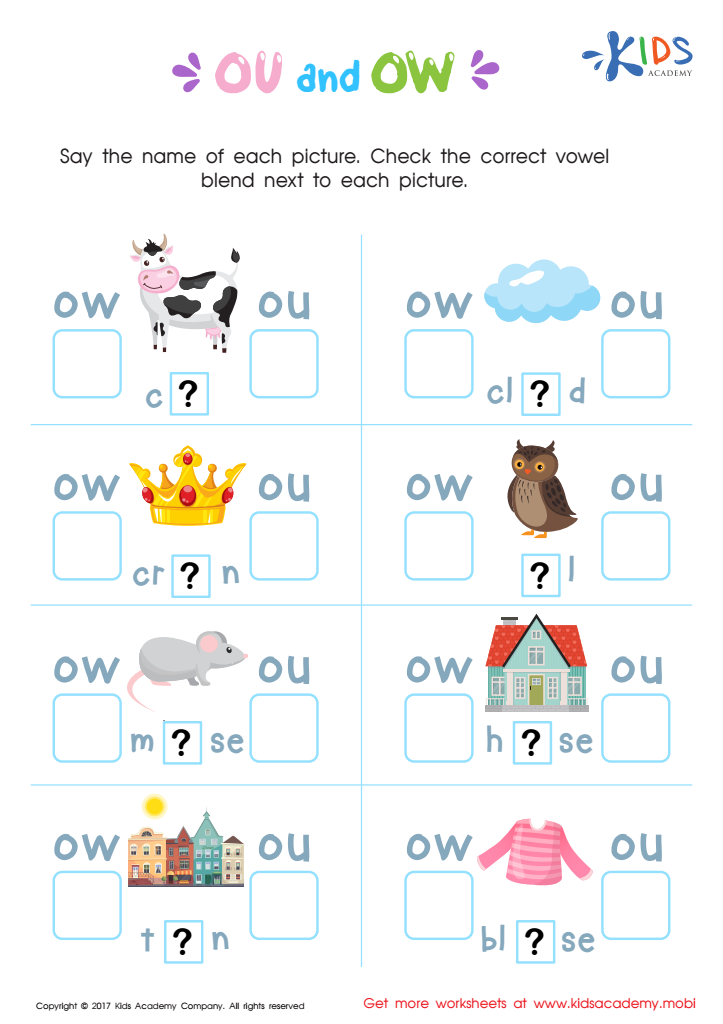
OU and OW Words Worksheet






.jpg)
Sound differentiation using a normal alphabet is crucial for children aged 5-7 as it lays the foundation for their literacy skills. At this stage, children are building their understanding of language, and differentiating sounds helps them develop phonemic awareness, a core component of reading. When children can identify and manipulate individual sounds, they become better equipped to decode words and enhance their spelling abilities.
Additionally, sound differentiation supports vocabulary development and enhances comprehension skills. These early years are vital for instilling a love for reading, and a strong grasp of sounds enables children to read independently and explore literature easily. Furthermore, understanding sound patterns boosts their confidence and encourages perseverance as they encounter more complex texts.
For parents and teachers, fostering a sound differentiation framework means creating engaging and effective learning environments. Incorporating playful activities, such as rhymes and phonetic games, helps maintain children's interest while reinforcing these critical skills. Ultimately, prioritizing sound differentiation prepares children not just for immediate literacy challenges but also sets a strong academic foundation for their future learning endeavors. Investing in this aspect is essential for nurturing proficient, eager, and confident readers.







