Visual discrimination skills Normal Alphabet Worksheets for Ages 5-7
5 filtered results
-
From - To
Enhance your child's visual discrimination skills with our Normal Alphabet Worksheets designed for ages 5-7. These expertly crafted activities help kids recognize letter differences, improving reading readiness and observational abilities. Perfect for at-home learning or classroom use, each worksheet features engaging visuals and fun exercises to develop attention to detail and cognitive development. With consistent practice, young learners will boost their ability to differentiate letters, paving the way for successful literacy skills. Visit Kids Academy for a comprehensive collection of interactive and printable resources tailored to inspire young minds and support early educational milestones.
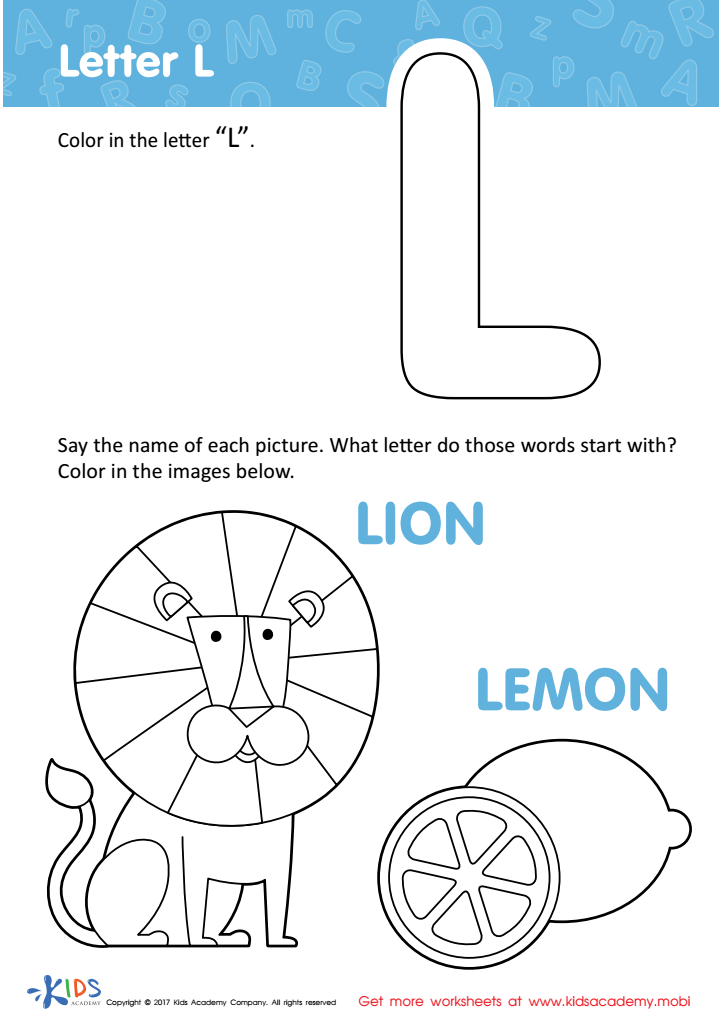
Letter L Coloring Sheet
 Assign to My Students
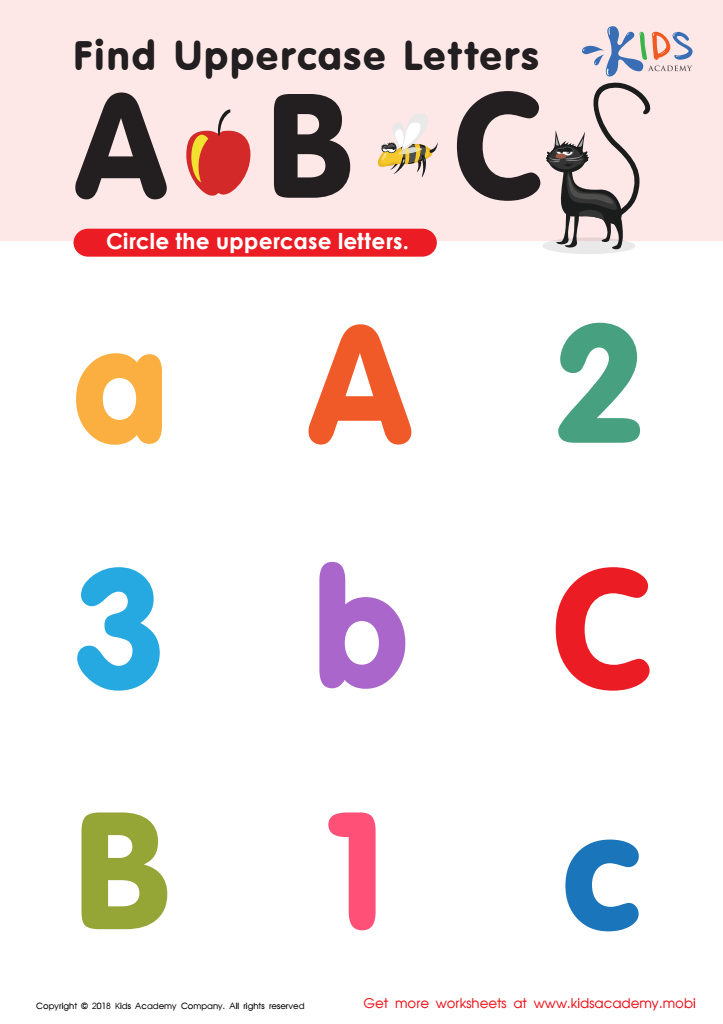
Find Uppercase Letters A, B, and C Worksheet
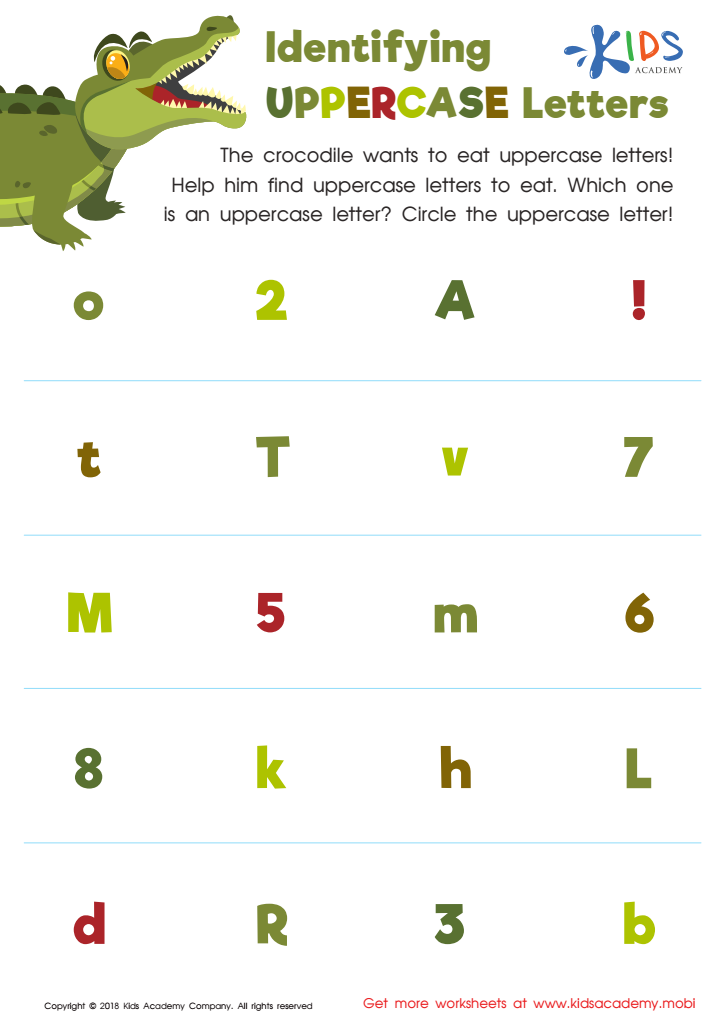
Identifying Uppercase Letters Worksheet
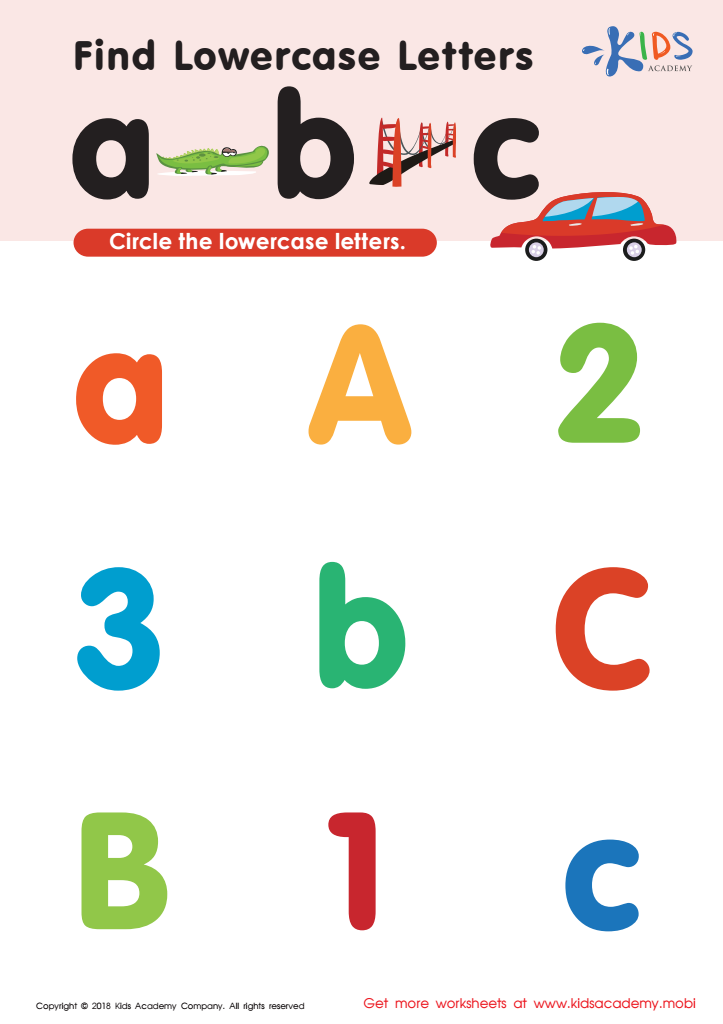
Find lowercase letters a b c Worksheet
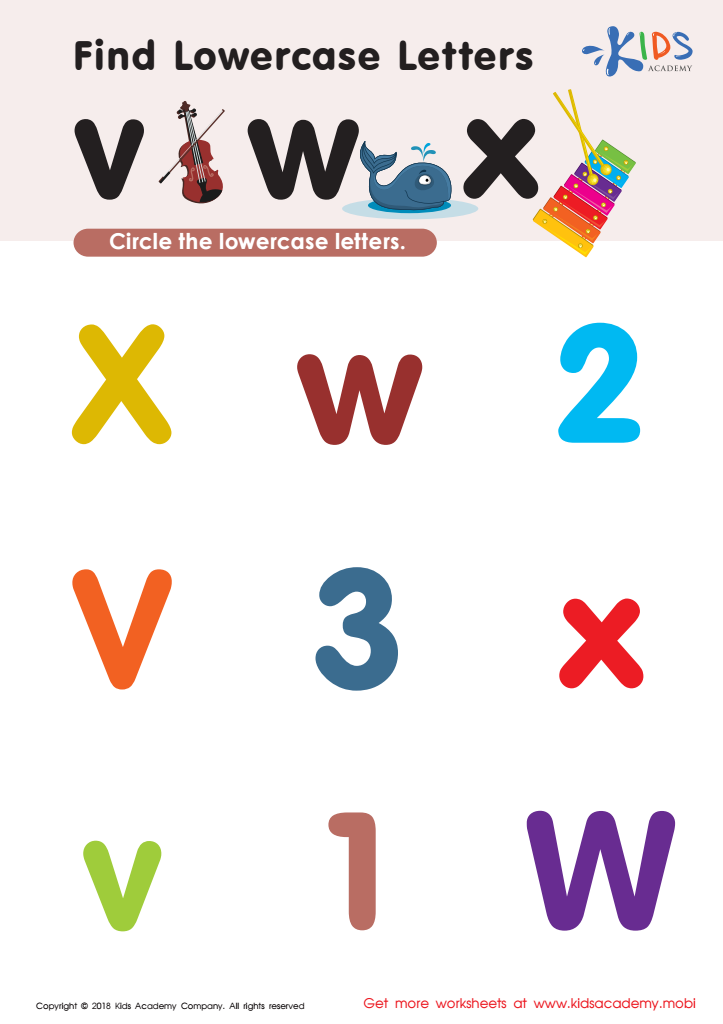
Find Lowercase Letters v w x Worksheet







Visual discrimination skills play a critical role in a child's development, particularly during the early learning years, such as ages 5-7. These skills enable children to distinguish differences and similarities among shapes, sizes, colors, and even letters and numbers. For parents and teachers, nurturing visual discrimination is crucial for several reasons.
Firstly, visual discrimination lays the groundwork for reading and writing. At this age, children begin to recognize and differentiate between various letters in the alphabet, like "b" and "d" or "p" and "q," helping them avoid common reading errors. This accuracy is essential for effective word recognition and reading fluency, both foundational elements of literacy.
Secondly, strong visual discrimination supports mathematics learning. Identifying different numbers, shapes, and patterns helps children understand and solve mathematical problems more easily. For instance, distinguishing between "6" and "9" or different geometric shapes is highly important.
Moreover, improved visual discrimination enhances everyday tasks and increases children’s confidence and independence. For example, sorting objects, distinguishing between different signs, and navigating their environment become more manageable.
Lastly, fostering these skills creates a more inclusive and supportive learning environment. By identifying children who may struggle with visual discrimination early on, teachers and parents can provide targeted interventions, ensuring that all students have the opportunity to succeed.
In summary, emphasizing visual discrimination for 5-7-year-olds establishes a foundation for academic success in reading, writing, and math, while also boosting general cognitive and motor skills.







