
Vocabulary Building Normal Alphabet Worksheets for Ages 5-7
11 filtered results
Difficulty Level
Grade
Age
-
From - To
Subject
Activity
Standards
Enhance your child's vocabulary with our engaging Vocabulary Building Normal Alphabet Worksheets designed for children aged 5 to 7. These printable worksheets combine fun activities with essential vocabulary skills, helping young learners associate words with visuals while reinforcing their understanding of the alphabet. Each worksheet is tailored to promote language development through enjoyable exercises like matching, filling in the blanks, and word recognition. By integrating play and learning, these resources keep children interested and motivated as they expand their language abilities. Perfect for homeschooling or classroom settings, these worksheets offer an effective way to support your child's literacy journey!
Favorites
With answer key
Interactive
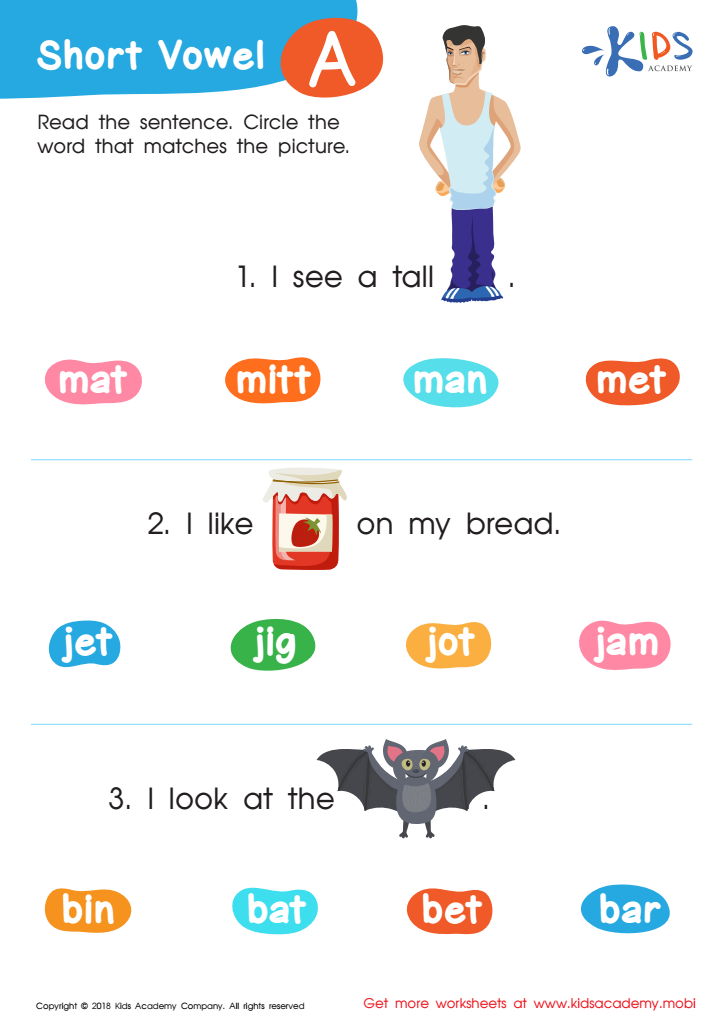
Short Vowel /a/ Worksheet
This free PDF helps new readers use sight words and pictures to read basic sentences. Then, they use accompanying word choices to find the correct word with the short a vowel sound. A key early reading skill, discriminating between short vowel sounds can be tricky in monosyllabic words, so use this PDF to help your reader reinforce it.
Short Vowel /a/ Worksheet
Worksheet
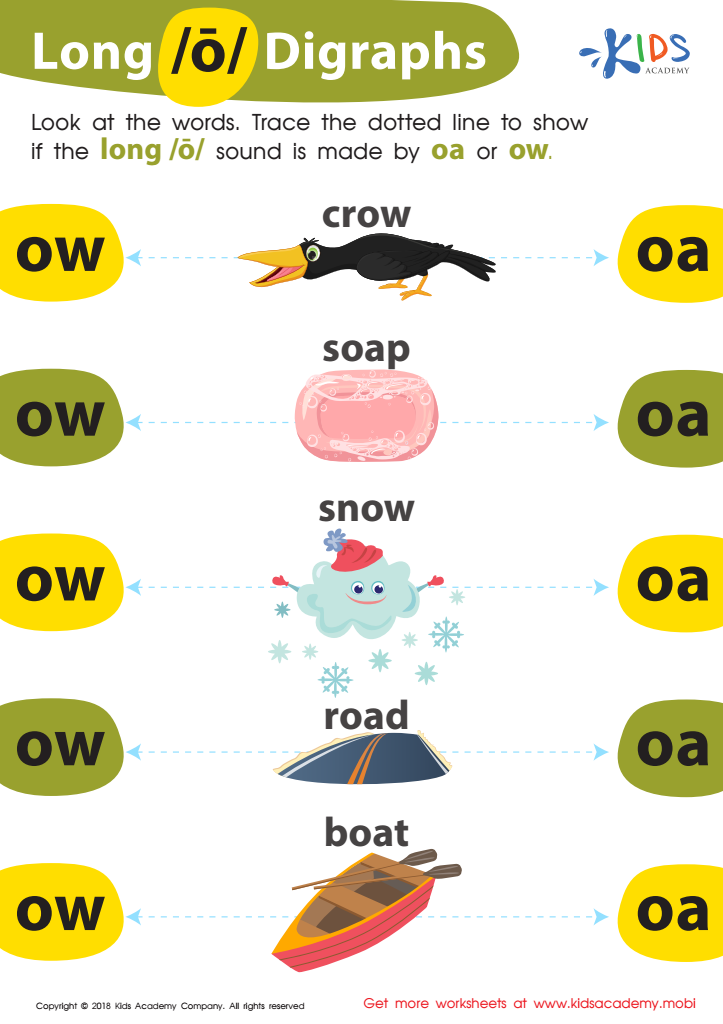
Reading: Long O Digraphs Worksheet
Reading and decoding words can be complex for learners when they start studying digraphs, two letters that make one sound. This worksheet focuses on the long O sound, /oa/ and /ow/. With the understanding of digraphs, students can decode more words and build their reading confidence.
Reading: Long O Digraphs Worksheet
Worksheet
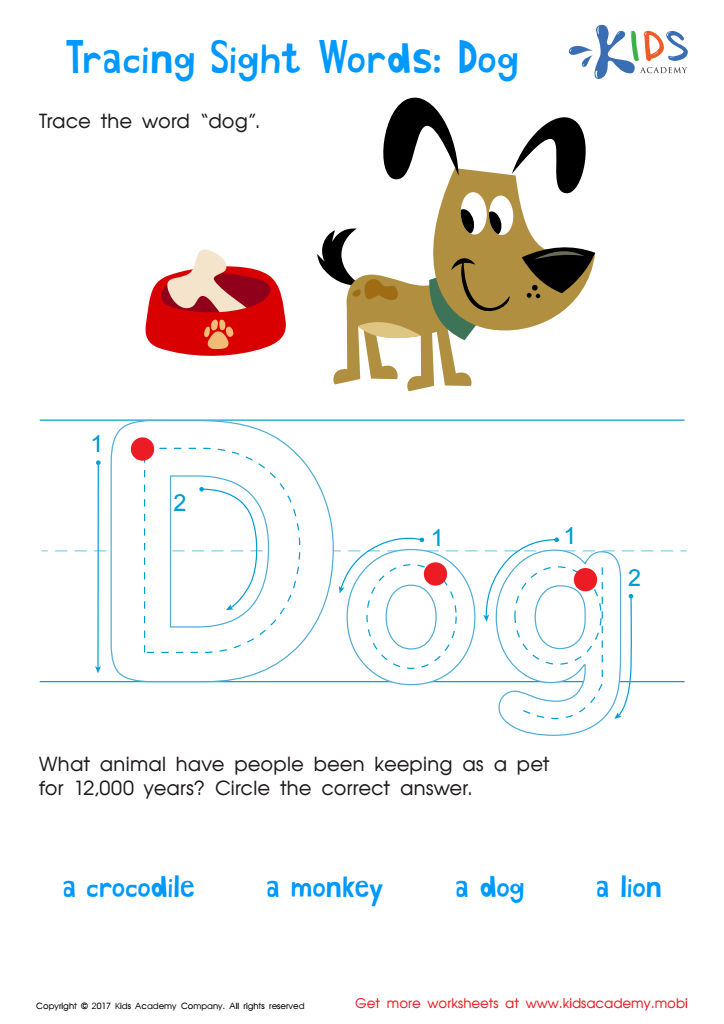
Dog Worksheet Sight Words Worksheet
Get your kids excited to read with our dog-themed sight words worksheet!
Excite your child to read with our sight words worksheet: dog edition! Featuring a lovable dog character to put a smile on any kid's face, this worksheet helps kids practice reading and writing the word "dog". Build a library of words they can read quickly and promote increasing literacy skills with early fluency! Get them ready for reading with our dog-themed sight words worksheet!
Dog Worksheet Sight Words Worksheet
Worksheet
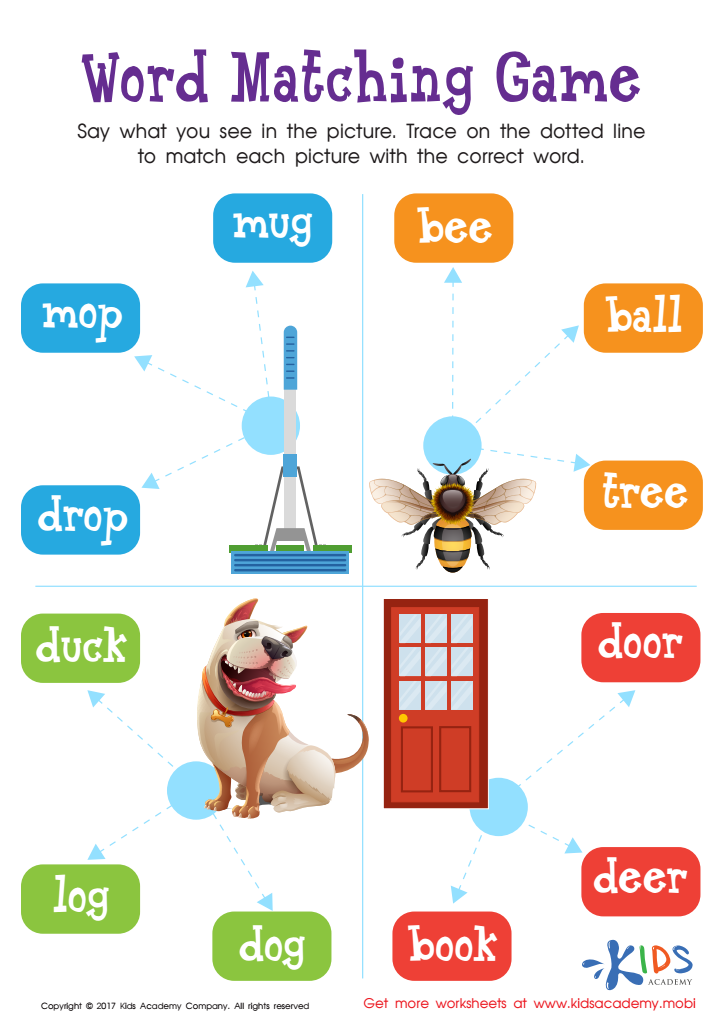
Word Matching Game Worksheet
Help your early reader develop prereading skills with this fun matching worksheet! Visual cues help them learn sight words, decode words in word families, and identify phonetic patterns. They'll practice discerning sounds past initial consonants while saying the name of the picture and finding the matching word - and reading at the same time!
Word Matching Game Worksheet
Worksheet
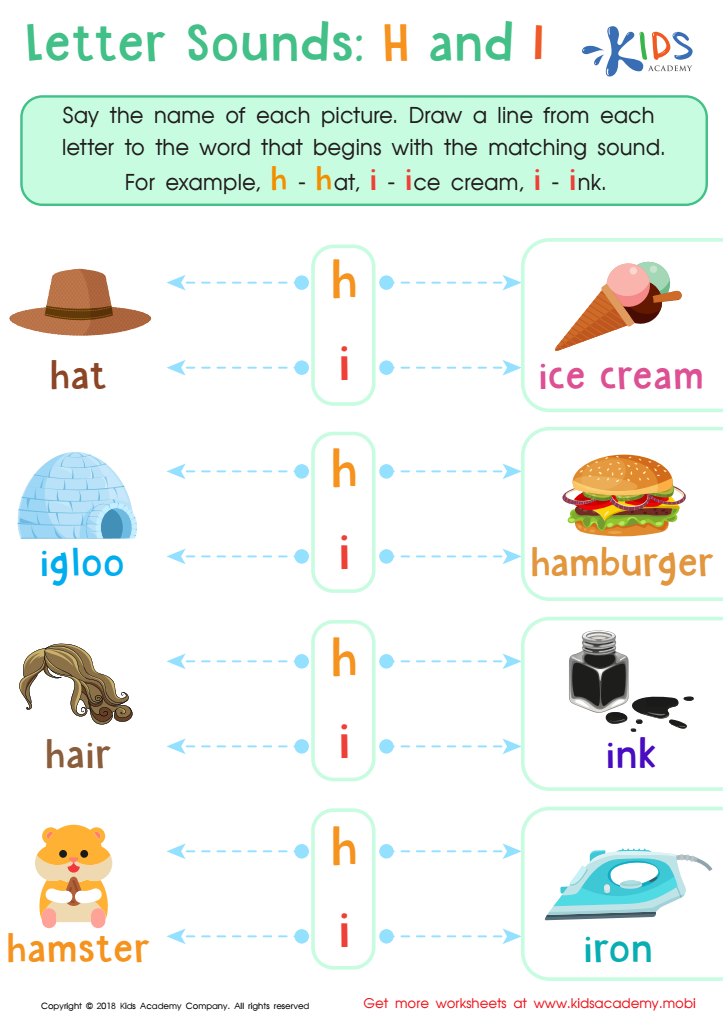
Letter H and I Sounds Worksheet
Preschoolers will have fun and develop reading and writing skills at the same time! They'll use pictures to recognize familiar words and differentiate between 'H' and 'I' sounds. Then they'll trace lines to connect each sound to the picture, improving their fine-motor skills. Bright and cheerful visuals make learning a breeze!
Letter H and I Sounds Worksheet
Worksheet
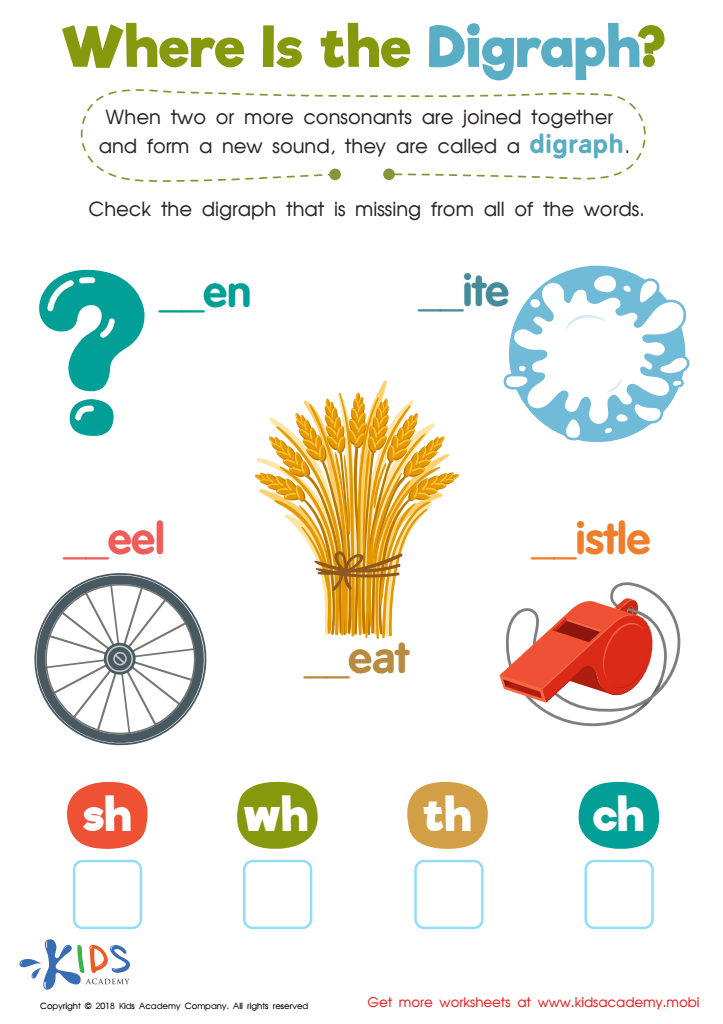
Where Is the Digraph? Worksheet
Teach your child about digraphs - two or more consonants that form one sound, like /wh/, /sh/, and /ch/. Show them words with these sounds and use this worksheet to help. Ask them which digraph is missing from the words and point out the pictures. 80 words.
Where Is the Digraph? Worksheet
Worksheet
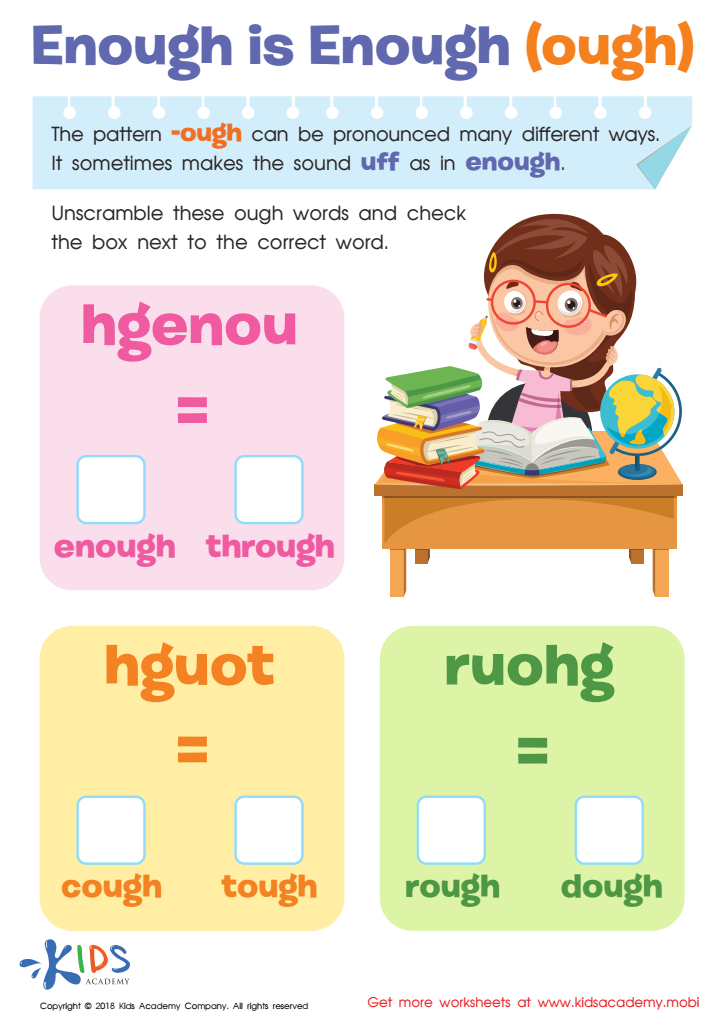
Enough Is Enough (ough) Worksheet
As your students learn more about reading and pronouncing words, they can explore how some word patterns can be said differently. The 'ough' pattern, for instance, can be pronounced several ways. 'Enough' has the 'uff' sound. Provide your students with examples of words pronounced similarly and help them unscramble 'ough' words on this worksheet, ticking the box for the correct word.
Enough Is Enough (ough) Worksheet
Worksheet
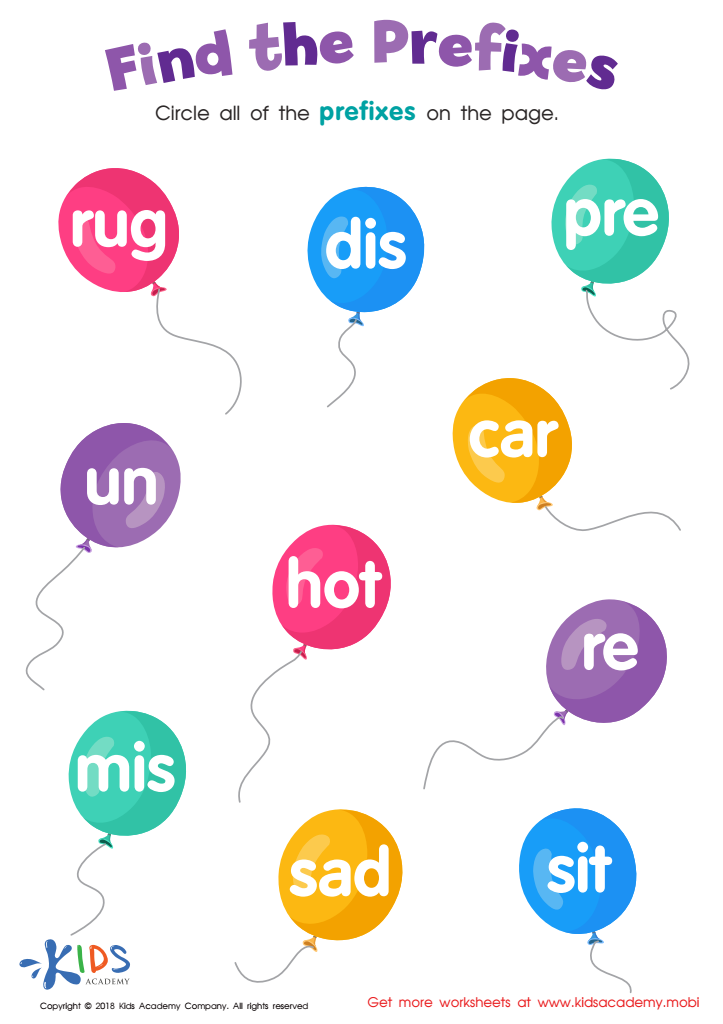
Reading: Find the Prefixes Worksheet
Students are asked to circle all prefixes on this worksheet and brainstorm a list of words that have them. It's a great tool for teaching vocabulary and helps students understand new and unfamiliar words by recognizing how prefixes change meaning.
Reading: Find the Prefixes Worksheet
Worksheet
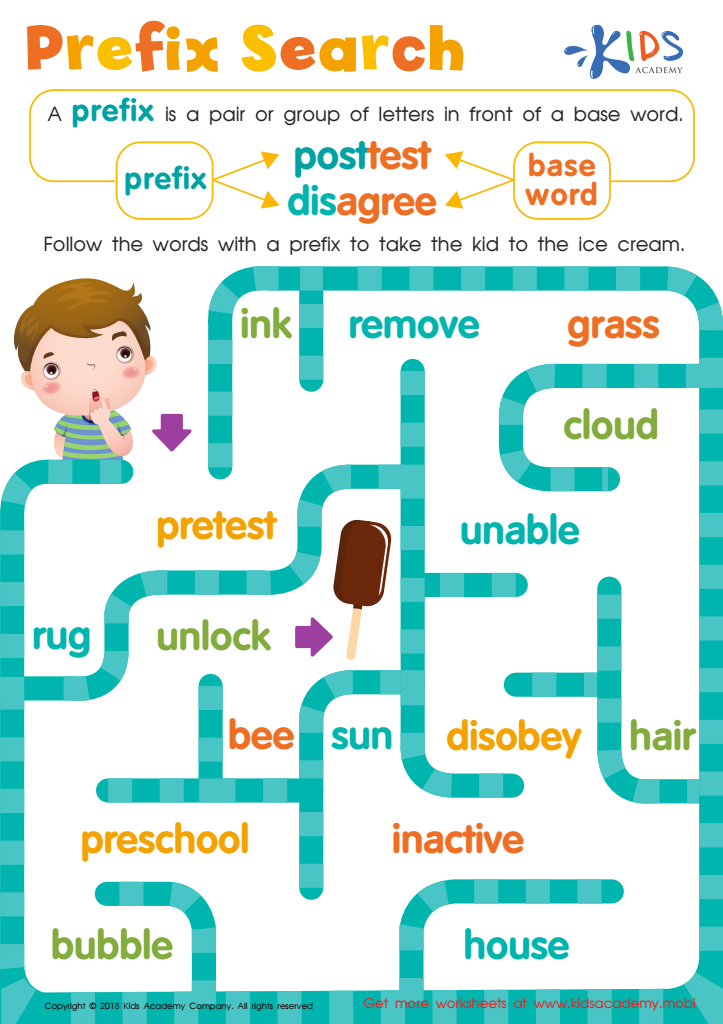
Reading: Prefix Search Worksheet
Maze your way through prefixes! This worksheet helps students practice reading new words with a prefix and figuring out the base word. An understanding of prefixes gives students the skills to comprehend new words. A fun and useful activity for the reading classroom!
Reading: Prefix Search Worksheet
Worksheet
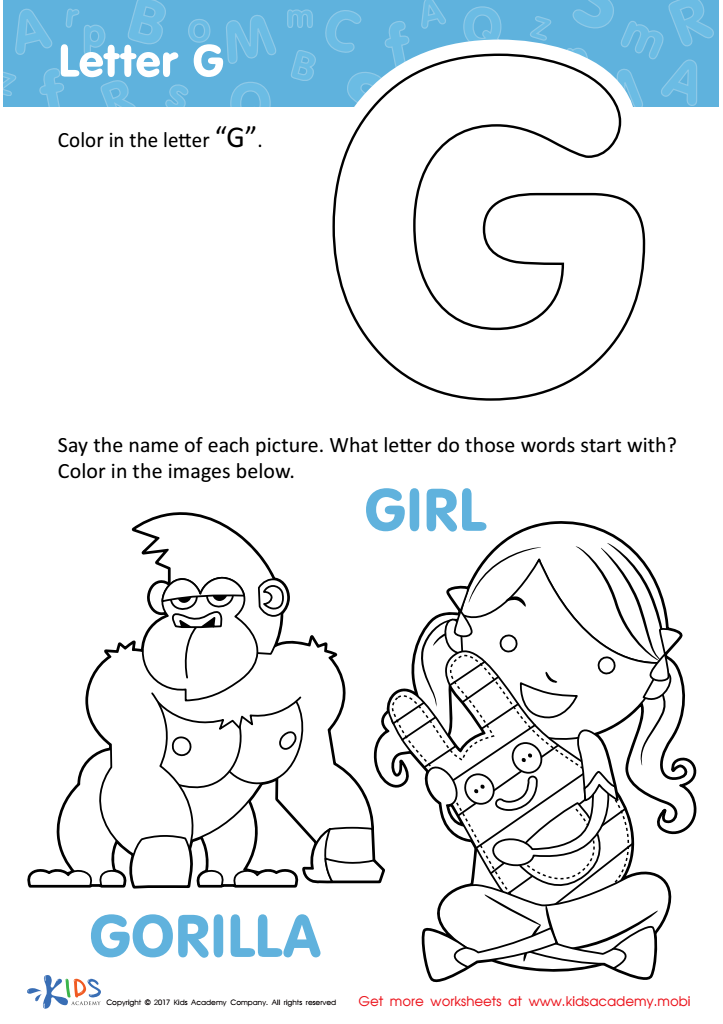
Letter G Coloring Sheet
This "G" coloring page encourages creativity and teaches kids the letter "G" sound. With its fun visuals and familiar words, it's sure to excite your child. Plus, you can talk about the letter’s sound with the pictures given.
Download (PDF)
 Assign to My Students
Assign to My Students
Letter G Coloring Sheet
Worksheet
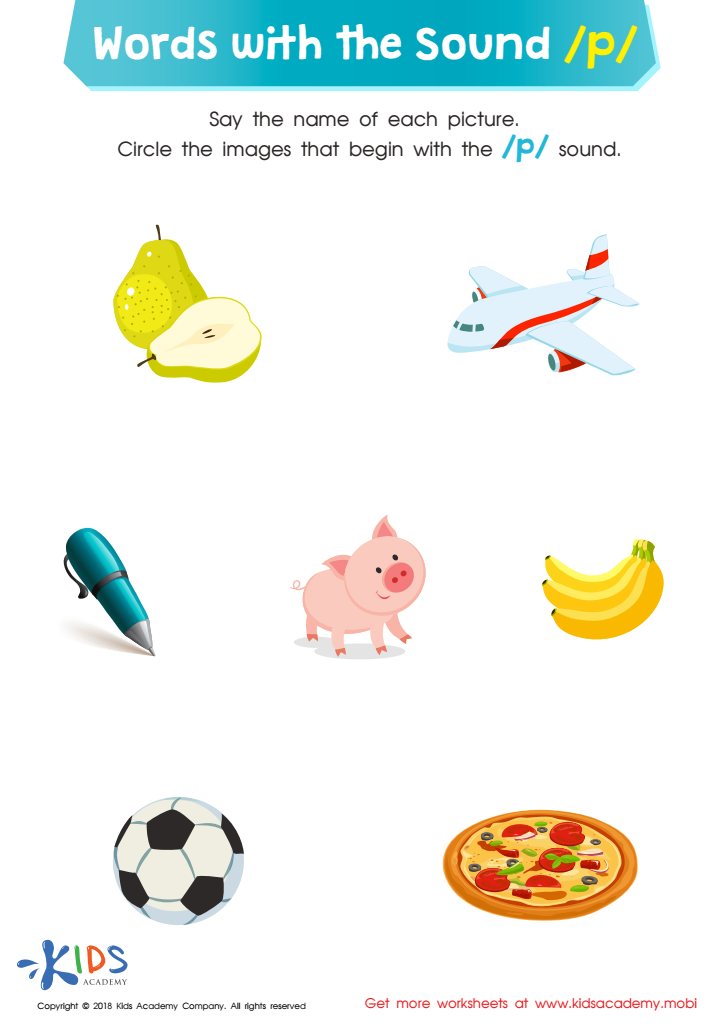
Words with sound p Reading Worksheet
Working on this fun worksheet? Name each picture aloud and listen carefully before circling those that start with the letter «p»! Pizza, pig, plane, or banana - practice phonics to help your child recognize the letter «p» sound for successful early reading and decoding!
Words with sound p Reading Worksheet
Worksheet
Join Kids Academy for Free
Who is primarily going to use this learning content?








Vocabulary building is crucial for children ages 5 to 7, laying the foundation for their future academic success and effective communication. At this stage, children are rapidly developing language skills, and a rich vocabulary enhances their ability to express themselves, understand classroom instructions, and engage in conversations. Additionally, a strong vocabulary supports reading comprehension, crucial for literacy development.
Parents and teachers play a pivotal role in vocabulary acquisition. By exposing children to a variety of words through discussions, storytelling, and playful activities, they can spark curiosity and foster a love for language. This engagement not only helps kids grasp new concepts but also enables them to articulate their feelings and thoughts competently.
Furthermore, children with an expansive vocabulary tend to perform better academically, as they are more equipped to tackle complex texts and instructions. This early investment in language skills can have lifelong benefits, impacting future learning, career opportunities, and social interactions. Therefore, fostering vocabulary development in young children should be a priority, as it nurtures critical thinking, creativity, and self-confidence, ultimately shaping well-rounded individuals ready to navigate the complexities of the world.







