Enhance your child's early literacy skills with our "Vowel Recognition Normal Vowels and Consonants Worksheets" designed specifically for ages 5-7. These engaging worksheets help children distinguish between vowels and consonants, fostering essential reading and writing abilities. Each activity includes colorful visuals and fun exercises that keep young learners motivated while they practice identifying the five core vowels: A, E, I, O, U. Perfect for at-home learning or classroom reinforcement, these worksheets promote phonemic awareness and improve overall phonics understanding. Start their journey toward confident reading and writing today with our thoughtfully crafted printables!

Check out this FREE Trial Lesson on Vowels and Consonants for age 5-7!

Short and Long Vowel Sort

Favorites
With answer key
Interactive
  • 5-7
  • Vowel Recognition
  • Vowels and Consonants
  • Normal
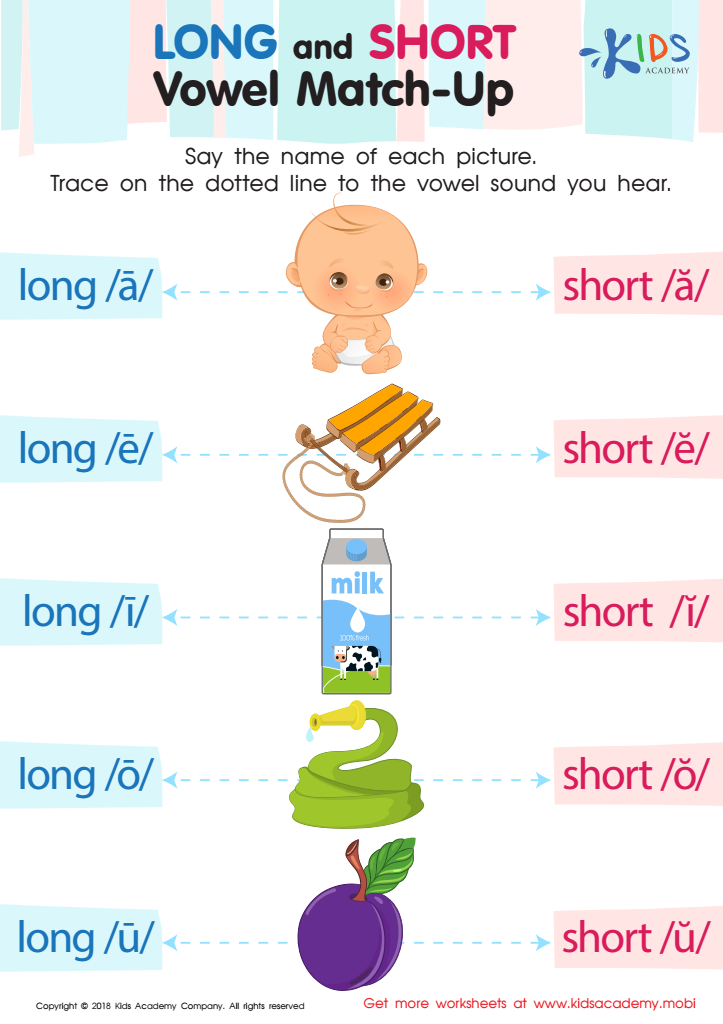
Long and Short Vowel Match up Reading Worksheet

Long and Short Vowel Match up Reading Worksheet

Help your reader build confidence and refine their decoding skills! This worksheet combines long and short vowel recognition with a traceable component to improve fine motor skills. Your learner will name each picture and trace the dotted lines to get to the correct vowel sounds.
Long and Short Vowel Match up Reading Worksheet
Worksheet
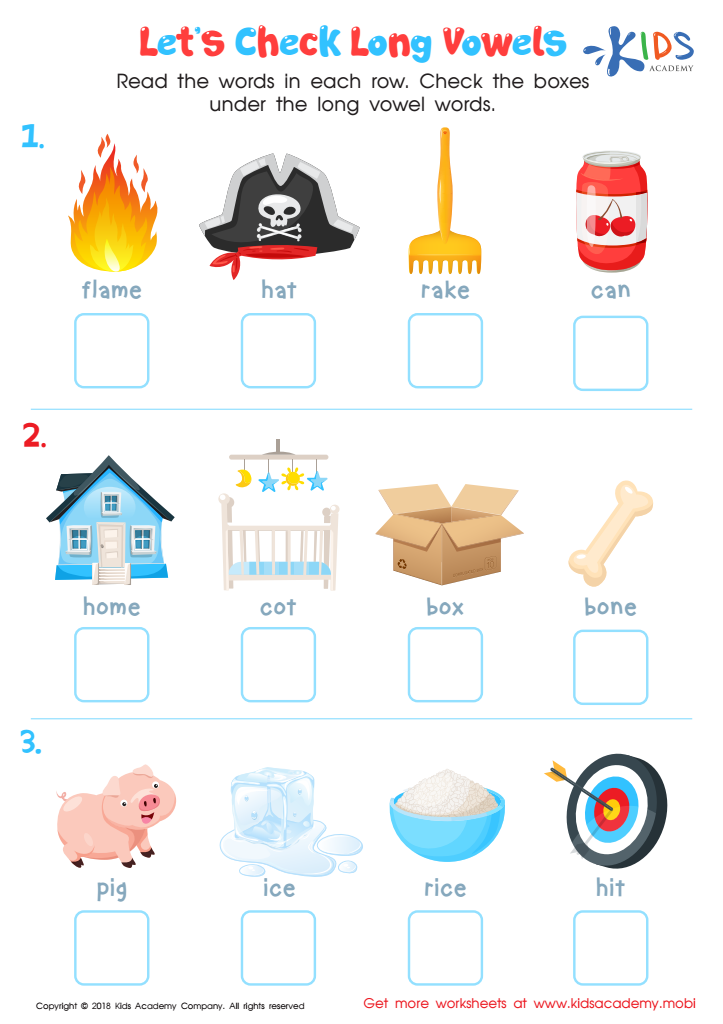
Let's Check Long Vowels: Assessment Worksheet

Let's Check Long Vowels: Assessment Worksheet

This worksheet helps your child identify objects and learn long vowel sounds. Ask them to say the names of the four objects in each row. Then, help them check the boxes to confirm they know the long vowel sounds. This will help them develop their reading skills.
Let's Check Long Vowels: Assessment Worksheet
Worksheet
Short Vowels /e/, /i/, and /u/ Worksheet

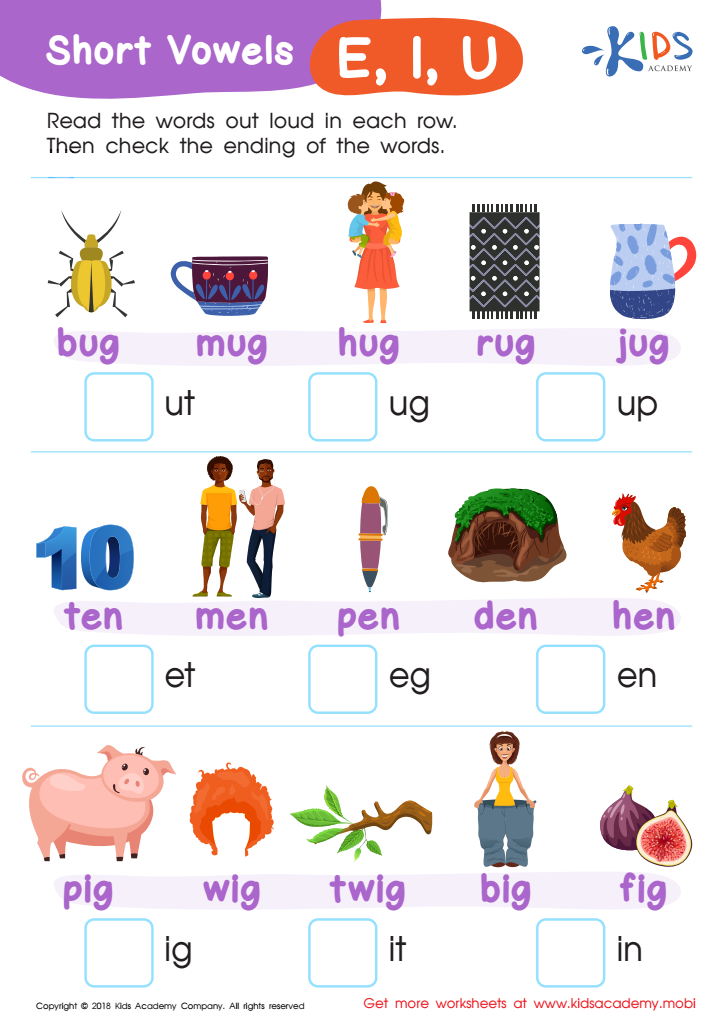
Short Vowels /e/, /i/, and /u/ Worksheet

Your emergent reader can have fun while practicing their short vowel sounds with this free, brightly colored worksheet. They'll identify one-syllable words by their pictures, then match the correct ending for each. They'll gain an understanding of how short vowel sounds vary in closed syllables with different endings, without even realizing it!
Short Vowels /e/, /i/, and /u/ Worksheet
Worksheet
Short Vowel Eggs Worksheet

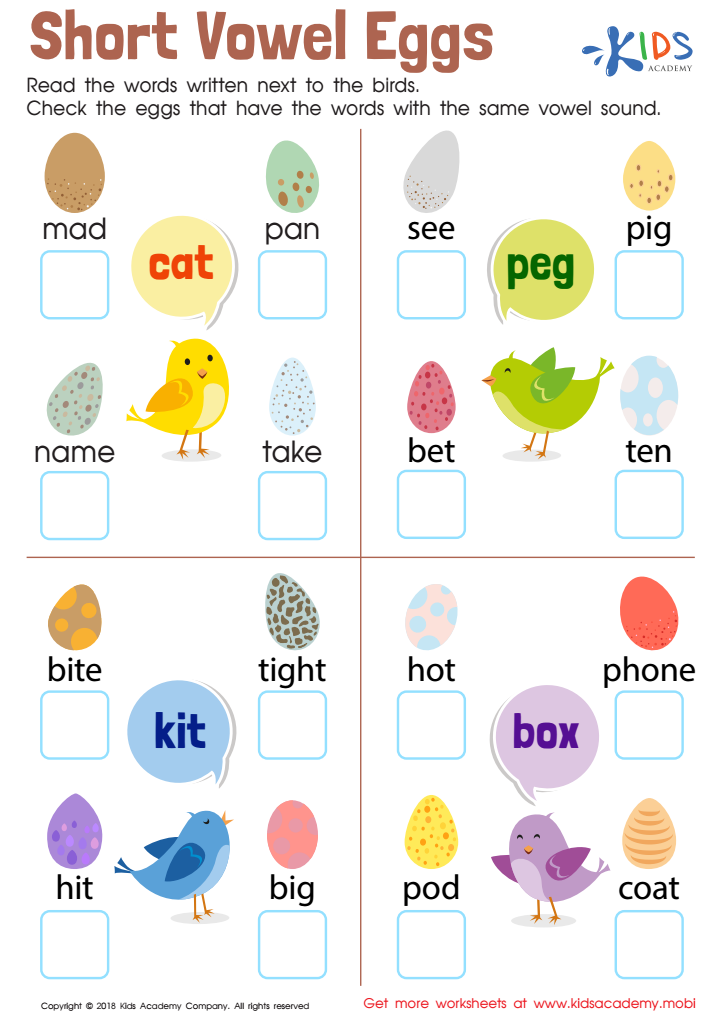
Short Vowel Eggs Worksheet

Your students will love helping these birdies pick the short vowel eggs! Have them read the words in the thought bubbles, then check off the boxes with the same short vowel sounds. The bright colors of this free Worksheet will draw them in and get them practicing their vowels!
Short Vowel Eggs Worksheet
Worksheet
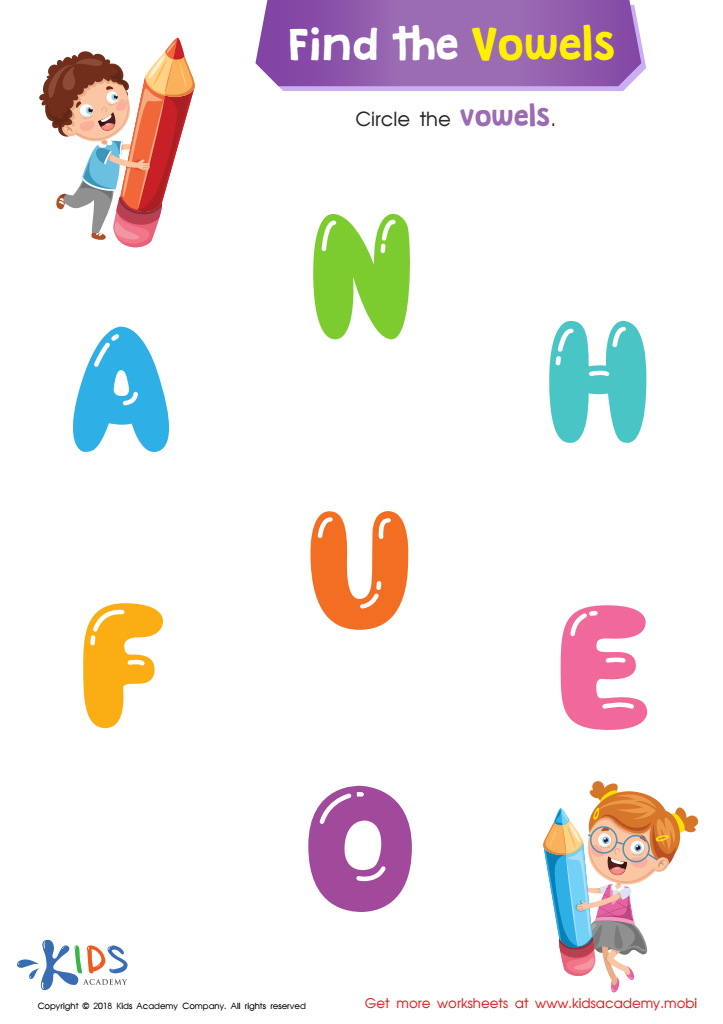
Find the Vowels Reading Worksheet

Find the Vowels Reading Worksheet

This worksheet helps kids identify vowels with bright colors and engaging activities to strengthen their visual discrimination and fine motor skills. Young learners will find it easy to succeed and be excited to keep reading!
Find the Vowels Reading Worksheet
Worksheet
Long and Short Vowel Sentences: Assessment Worksheet


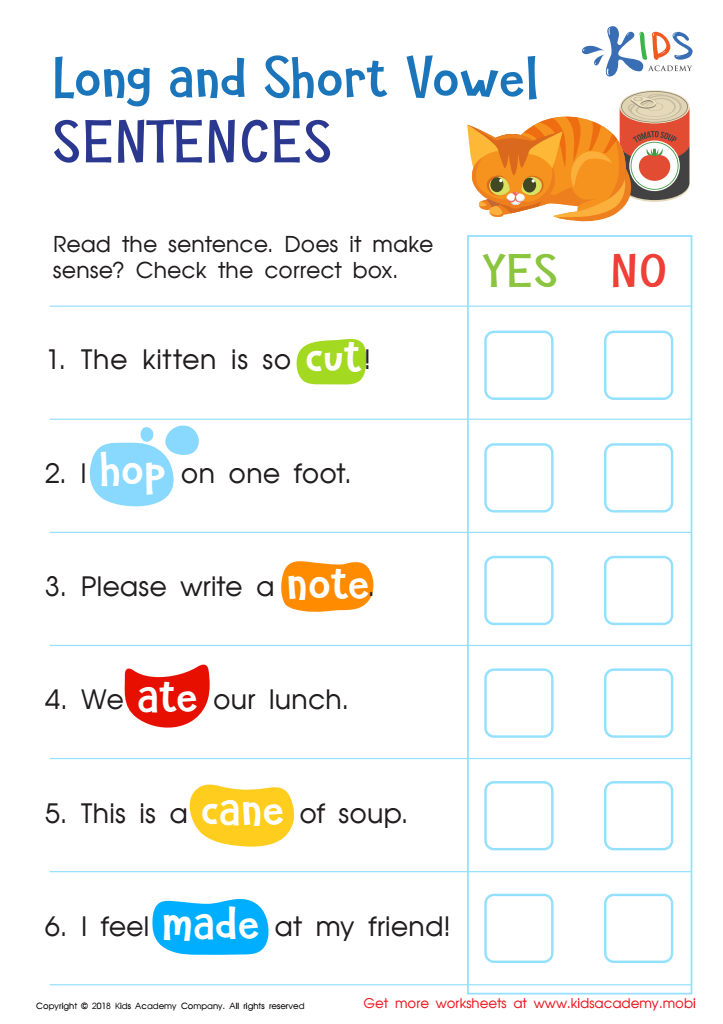
Long and Short Vowel Sentences: Assessment Worksheet

This printable worksheet helps kids practice differentiating between short and long vowel sounds. They'll use context clues to figure out which words make sense in simple sentences. A great way to build reading and writing skills!
Long and Short Vowel Sentences: Assessment Worksheet
Worksheet


Vowel recognition, particularly understanding normal vowels and consonants, is essential for children aged 5-7, as this foundational skill underpins their literacy and language development. During this critical learning stage, children begin to decode written language, distinguishing between vowel sounds and consonant sounds to form words.

Parents and teachers should care about vowel recognition because it directly impacts reading fluency and comprehension. When children can reliably identify vowels, they can more easily sound out words, recognize irregular spellings, and decode new vocabulary. This skill lays the groundwork for spelling, writing, and overall communication abilities, allowing children to express their ideas clearly.

Additionally, mastering vowel sounds enhances phonemic awareness, aiding in the development of stronger reading habits in the long run. Children learn best through engaging activities that integrate vowel and consonant practice into games, rhymes, and songs. By nurturing this recognition, parents and teachers foster a love for reading and learning while helping build self-confidence in young learners.

Ultimately, promoting vowel and consonant recognition sets the stage for academic success, ensuring children can navigate their educational journey with the essential tools they need to thrive.