Basic measurement concepts Normal Worksheets for Ages 5-7
3 filtered results
-
From - To
Discover engaging worksheets designed to introduce basic measurement concepts for children aged 5-7. Our "Basic Measurement Concepts" collection is tailored to help young learners understand height, weight, length, and volume through fun and interactive activities. Each worksheet encourages hands-on learning, enhancing observational skills and the ability to make comparisons. Perfect for educators and parents, these printable resources offer a variety of exercises that promote critical thinking and foundational math skills in a playful context. Guide your child's journey in mastering measurements through enjoyable challenges that will make learning both effective and entertaining! Explore our worksheets and inspire confident young learners today!
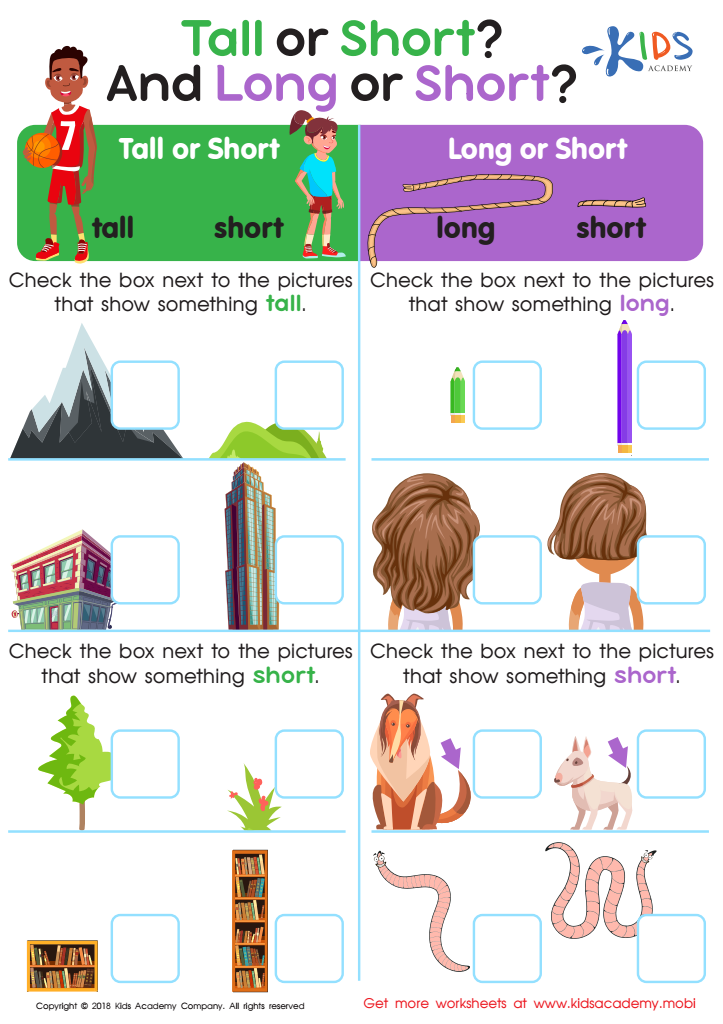
Tall or Short and Long or Short? Worksheet
 Assign to My Students
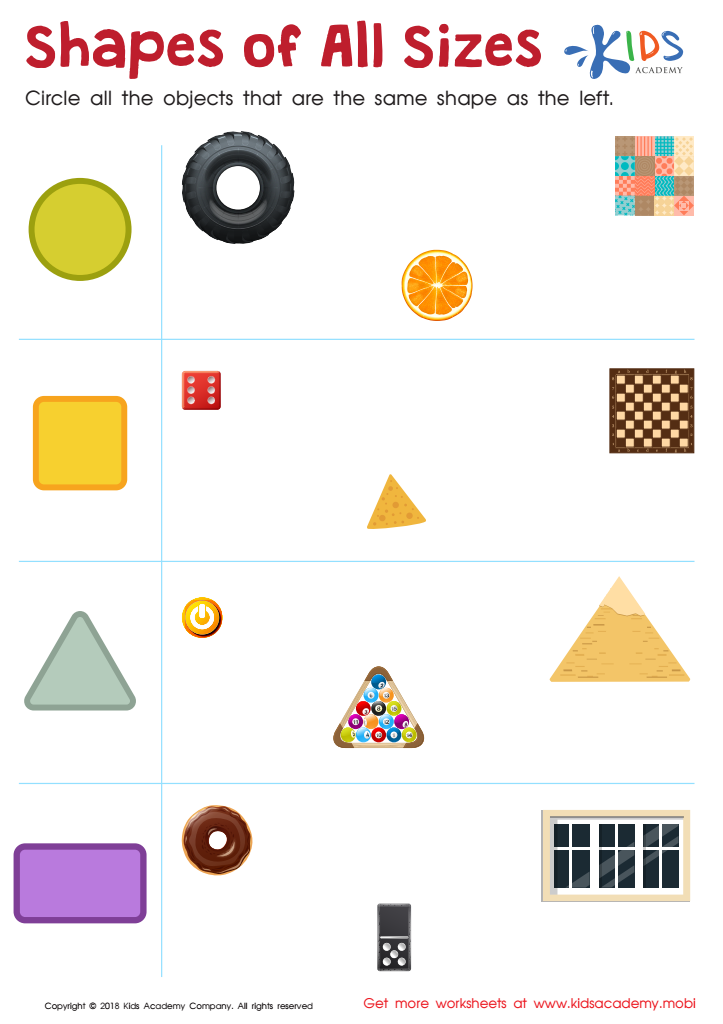
Shapes of All Sizes Worksheet
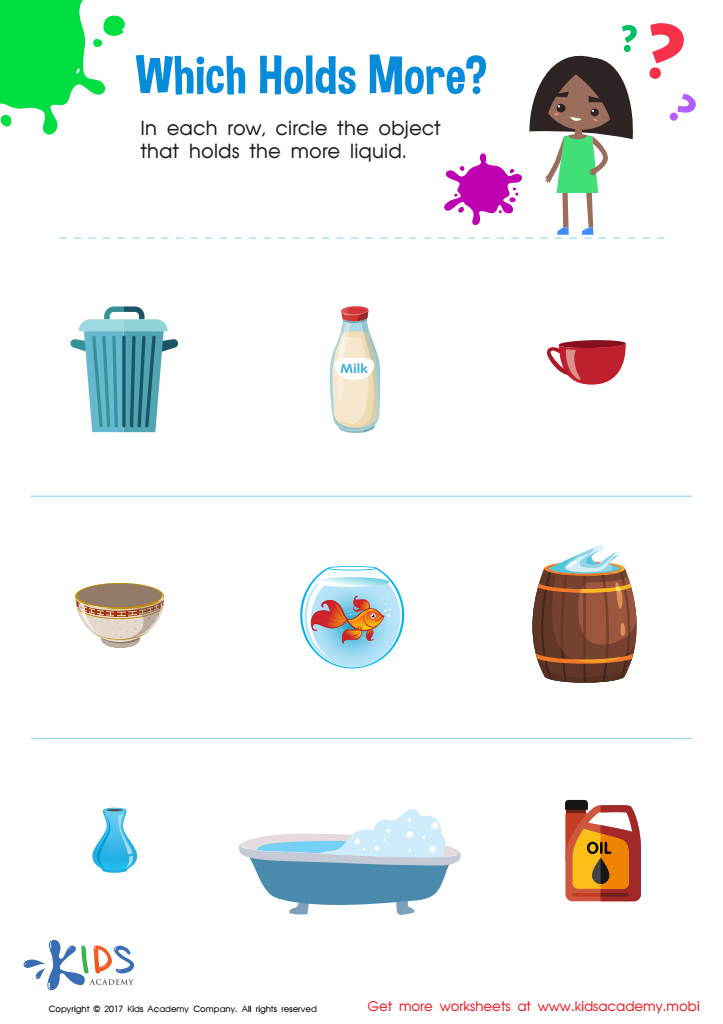
Which Holds More: Capacity Worksheet







Understanding basic measurement concepts is crucial for children aged 5-7 as it lays the foundation for their cognitive development and real-world application. At this stage, children are naturally curious about their environment, and measurement offers them a way to make sense of the world around them. Learning about length, weight, and volume enhances their critical thinking and problem-solving skills, enabling them to compare objects and make informed decisions.
For parents and teachers, introducing measurement concepts fosters communication and engagement. It provides opportunities for hands-on activities, like cooking or gardening, where children can apply what they've learned in fun, tangible ways. This process not only reinforces mathematical understanding, but it also cultivates teamwork, creativity, and a sense of accomplishment.
Moreover, early measurement experiences can influence future attitudes toward mathematics. A solid grasp of measurement gives children confidence when tackling more advanced mathematical concepts in later grades.
By engaging with measurement concepts, parents and teachers help children develop a love for learning and an appreciation for math in everyday life, ensuring that they are better prepared for future academic challenges and everyday problem-solving tasks. This foundation ultimately supports children's overall growth, self-efficacy, and lifelong learning habits.








