
Chess strategy understanding Normal Worksheets for Ages 5-7
3 filtered results
Difficulty Level
Grade
Age
-
From - To
Subject
Activity
Standards
Introduce young minds to the fascinating world of chess with our "Chess Strategy Understanding" worksheets, crafted specifically for ages 5-7 at Kids Academy! These printable activities are designed to be age-appropriate, making complex strategic concepts accessible and fun for younger students. Through engaging exercises, kids will develop critical thinking, problem-solving skills, and an appreciation for chess. Perfect for early learners, these worksheets foster curiosity and encourage a love for this timeless game. Help your child embark on a strategic journey today with our expertly designed materials that simplify chess concepts! Ready, set, checkmate!
Favorites
With answer key
Interactive
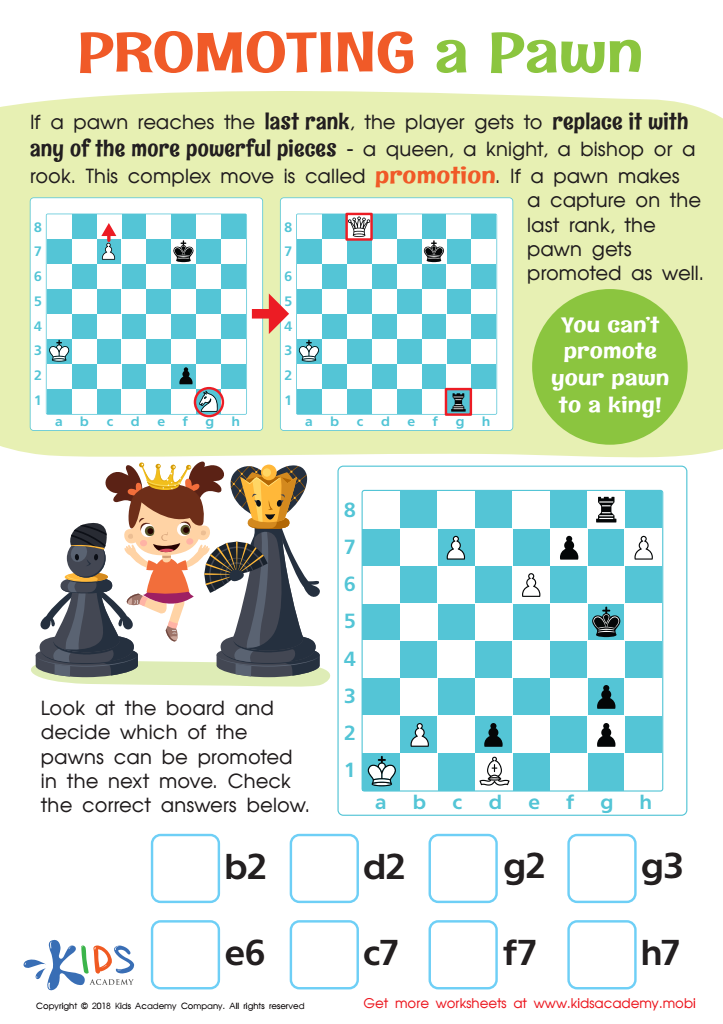
Promoting a Pawn Worksheet
Teach your kids all about pawns with this fun worksheet! Pawns may seem restricted, but experienced players can guide them across the board. If a pawn reaches the last rank, the player can upgrade it to a more powerful piece (e.g. queen, knight), or promote it if it captures an enemy piece. Give them the tools to master the game!
 Assign to My Students
Promoting a Pawn Worksheet
Worksheet
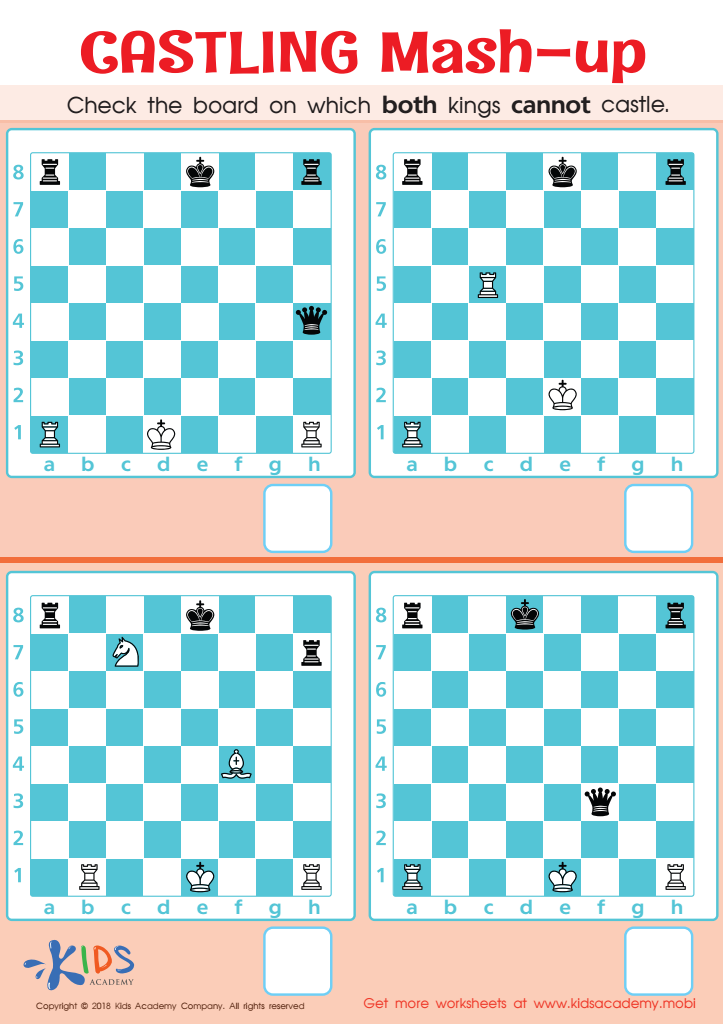
Castling Mash–up Worksheet
Before starting the worksheet, ensure your child understands castling in chess. If not, take time to explain it. Once they have a clear grasp of the rules, help them complete the exercise. Check the board to ensure that neither king can castle.
Castling Mash–up Worksheet
Worksheet
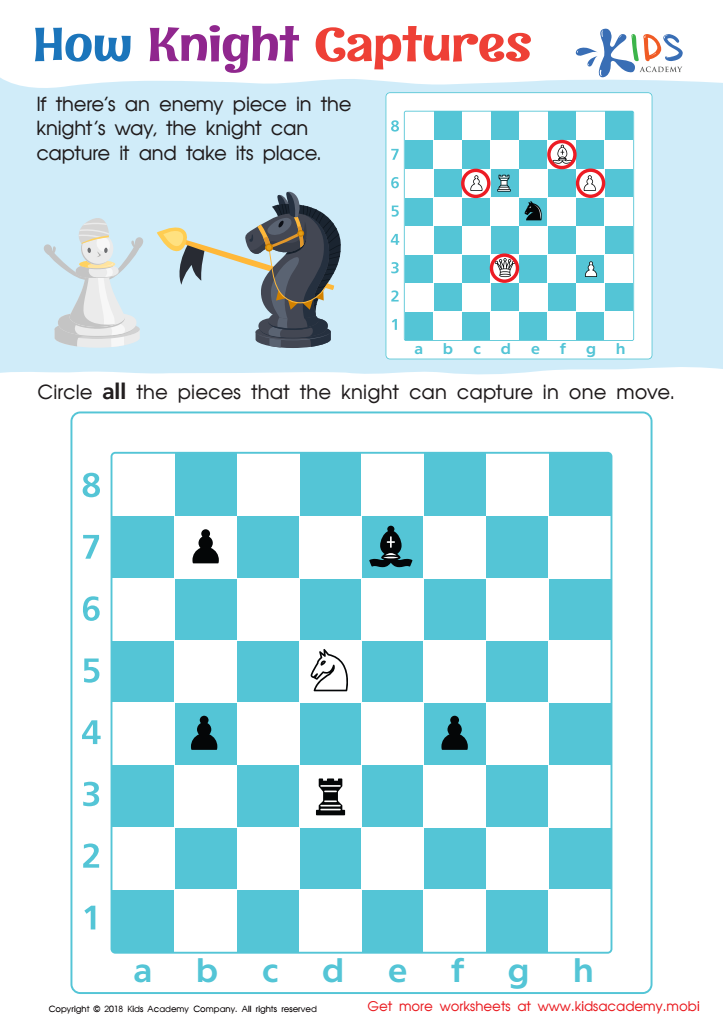
How Knight Captures Worksheet
Test your child's knowledge of chess pieces by asking them to identify the knight. It is shaped like a horse and its goal is to capture the enemy king in order to win the game. The knight has the advantage of being able to jump over other pieces, taking them out and taking their place. See how many pieces the knight can capture in one move with this worksheet.
How Knight Captures Worksheet
Worksheet
Join Kids Academy for Free
Who is primarily going to use this learning content?





Chess is not only a captivating game but also a powerful educational tool, especially for young children aged 5-7. When teaching kids chess strategies, parents and teachers are facilitating more than just the mastery of the game—they are significantly boosting cognitive and life skills.
First and foremost, chess promotes critical thinking and problem-solving abilities. Understanding chess strategies requires planning several moves ahead, recognizing patterns, and anticipating the opponent’s responses. These skills translate into better decision-making and logical reasoning in everyday situations.
Additionally, playing chess strengthens memory and concentration. Children must remember the pieces’ movements, previous plays, and learn to concentrate deeply during the game, which can enhance their attention span in academic studies.
Moreover, the practice of patience and perseverance is inherent in chess. Children learn that success in the game often comes from thoughtful and persistent effort rather than immediate results. This understanding fosters resilience and a growth mindset, beneficial for tackling challenging situations later in life.
Social skills also improve as chess players engage in increasing levels of interaction. It teaches respect for others, as well as turn-taking and sportsmanship—a gracious attitude whether winning or losing.
In conclusion, teaching chess strategy to young children provides a holistic approach to development, nurturing essential cognitive and social skills that benefit their overall growth, both in school and beyond.








