
Community awareness Normal Worksheets for Ages 5-7
3 filtered results
Difficulty Level
Grade
Age
-
From - To
Subject
Activity
Standards
Our "Community Awareness Normal Worksheets for Ages 5-7" offer engaging, educational activities designed to teach young learners important community concepts. These printable worksheets cover topics such as local landmarks, community helpers, and rules, helping children understand their role within the community. By mastering these fundamental ideas, children develop social skills and a sense of responsibility. Colorful and age-appropriate, each worksheet encourages curiosity and exploration while providing a fun and interactive learning experience. Ideal for classroom use or at-home practice, our worksheets are an excellent resource to build a solid foundation of community awareness.
Favorites
With answer key
Interactive
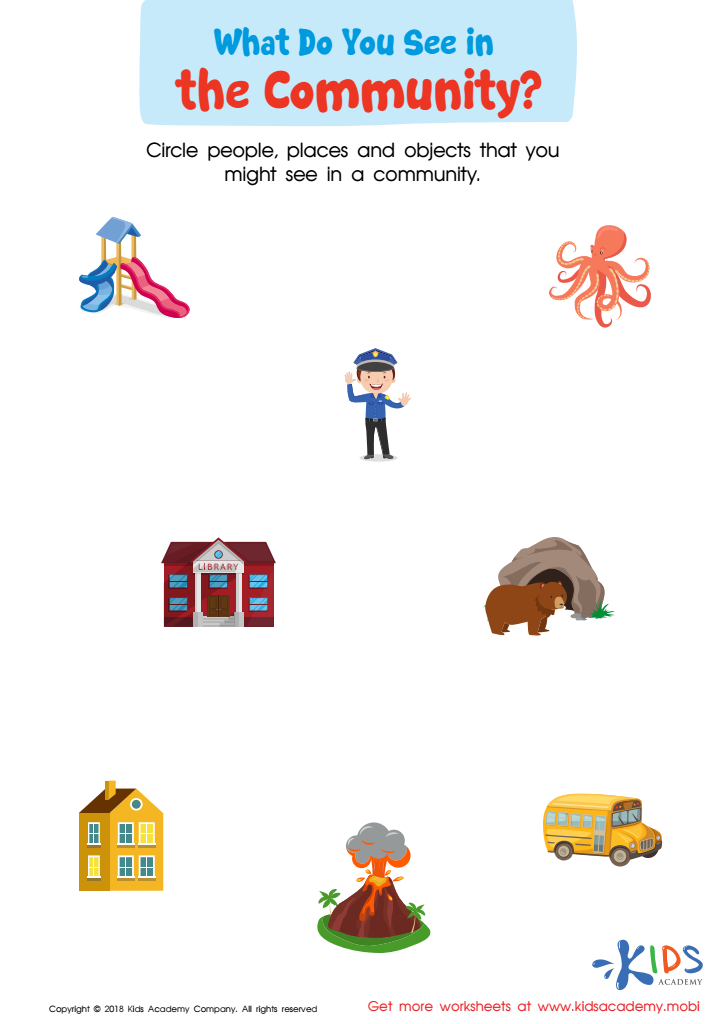
What Do You See in the Community Worksheet
This free social studies PDF can help your children learn about their local community. They'll identify its members, places and objects using engaging and recognizable pictures. As they trace circles around them, they'll also practice fine motor skills. It's a great way to introduce social science concepts and help them understand the importance of community.
 Assign to My Students
What Do You See in the Community Worksheet
Worksheet
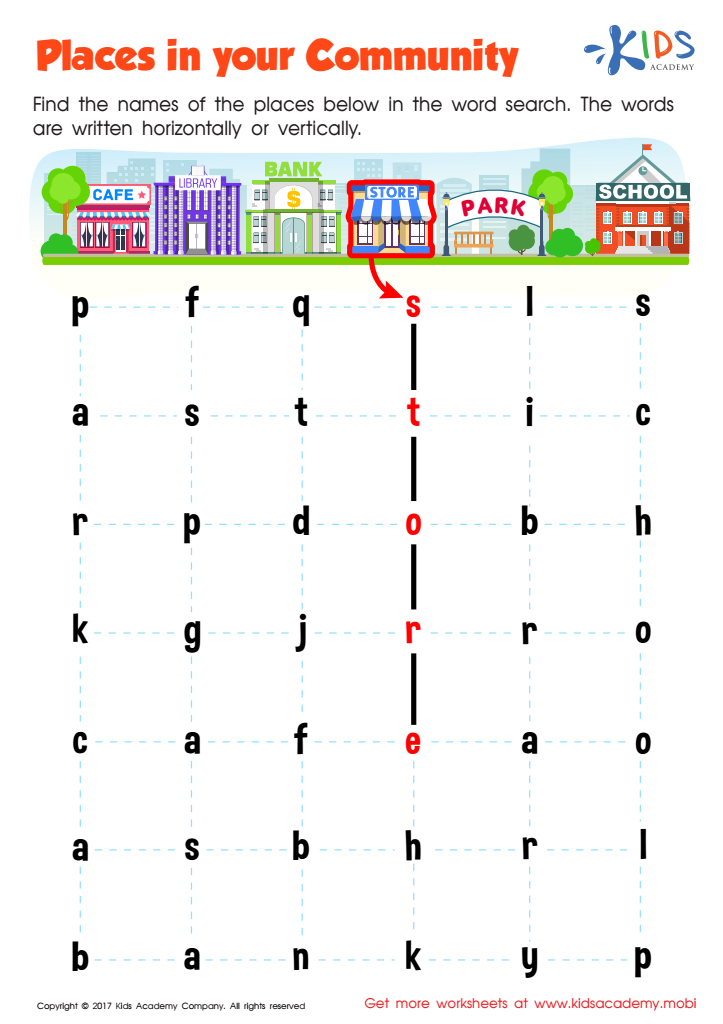
Places in Your Community Worksheet
Find and circle words related to common places in your community, like library, fire station, and more. Practicing vocabulary and spelling, your child will gain a better understanding of their community.
Places in Your Community Worksheet
Worksheet
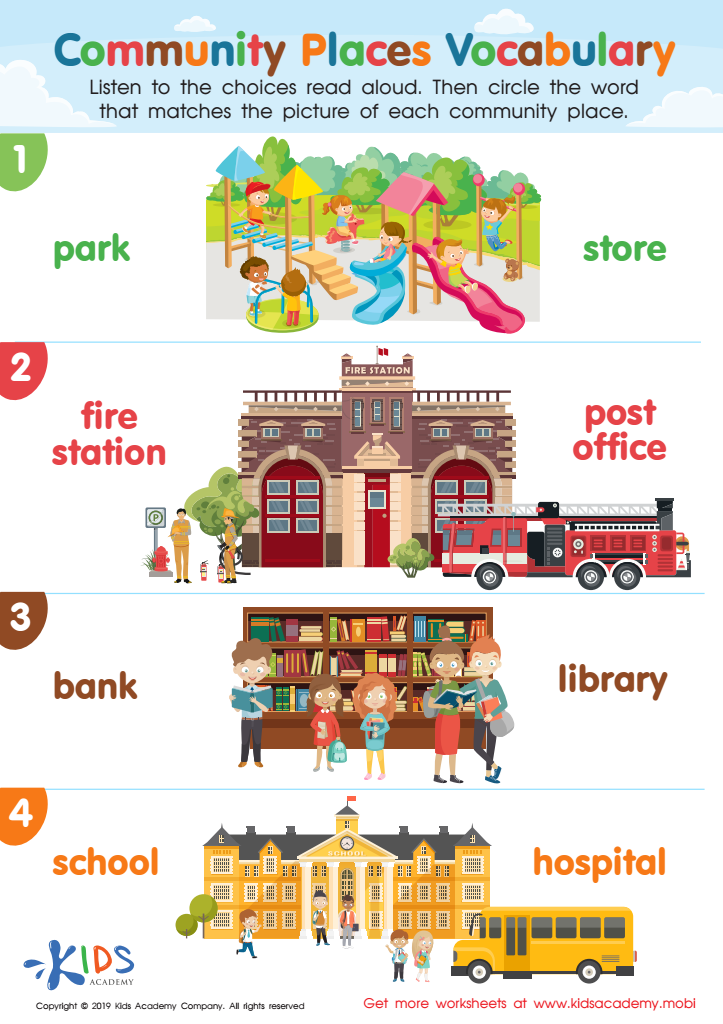
Community Places Vocabulary Worksheet
Help your kids identify community places with this fun worksheet. Ask them to listen to the choices read aloud and circle the word that matches the picture. This activity encourages dialogue about different people, places, and things in their community and the places they love to visit.
Community Places Vocabulary Worksheet
Worksheet
Join Kids Academy for Free
Who is primarily going to use this learning content?






.jpg)
Fostering community awareness in children ages 5-7 is crucial for their development and helps cultivate responsible, empathetic, and socially aware individuals. At this formative stage, children are highly impressionable, and lessons on community involvement can be particularly impactful.
For parents and teachers, encouraging community awareness helps children understand their role within the larger society. It allows them to grasp essential values like cooperation, respect, and kindness. Simple activities like recycling, neighborhood cleanups, or understanding different community roles (e.g., firemen, teachers, and healthcare workers) can significantly influence their social conscience.
Moreover, community awareness can bolster children's sense of belonging. Inclusivity and diversity are often better understood and accepted at a young age, and knowing different people contributes to a more egalitarian worldview. Children who are aware of their community tend to be more empathetic and less prejudiced.
Additionally, these experiences can improve problem-solving skills and resilience. They learn that their actions impact others, instilling a sense of responsibility and accountability early on.
Ultimately, nurturing community awareness sets a strong foundation for children to grow into conscientious adults, positively contributing to society. Hence, parents and teachers should prioritize community-based education as an integral part of early childhood development.








