Differentiating shapes Normal Worksheets for Ages 5-7
3 filtered results
-
From - To
Introducing our "Differentiating Shapes Worksheets" for ages 5-7! These engaging, printable worksheets help young learners master the identification and differentiation of various shapes. Each activity is thoughtfully designed to develop critical thinking and visual perception skills in a fun, interactive way. Children will enjoy tracing, coloring, and matching shapes as they build a solid foundation in geometry. Perfect for both classroom and home use, our worksheets support individual learning and reinforce key concepts. Boost your child's confidence and shape recognition abilities with these expertly crafted resources from Kids Academy. Ready to make learning shapes an exciting adventure?
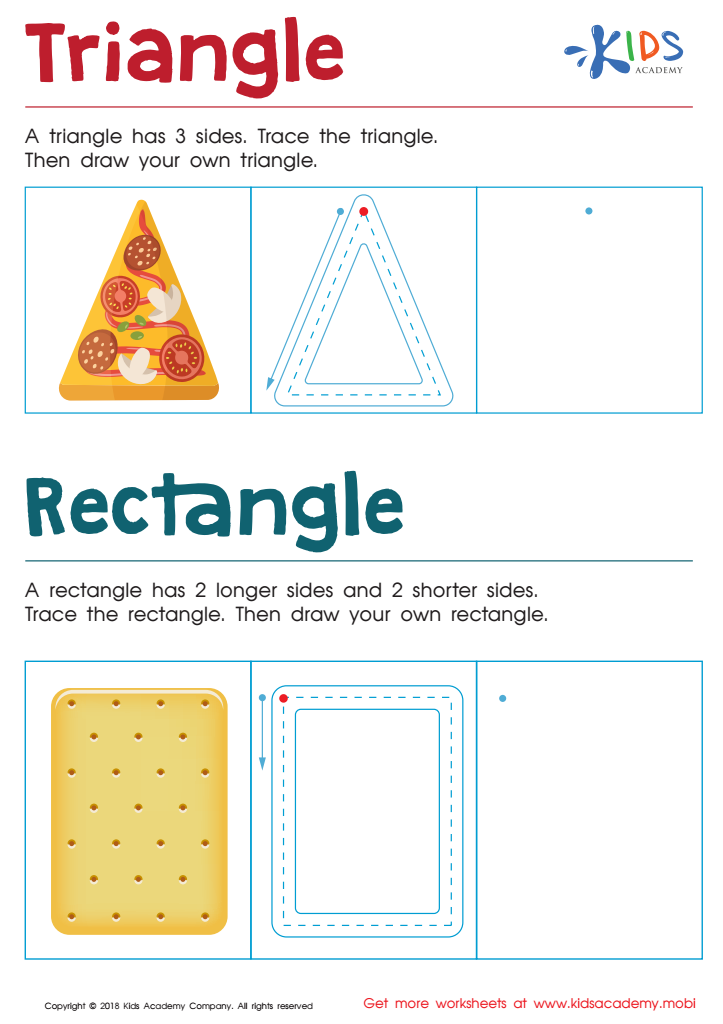
Triangle Rectangle Worksheet
 Assign to My Students
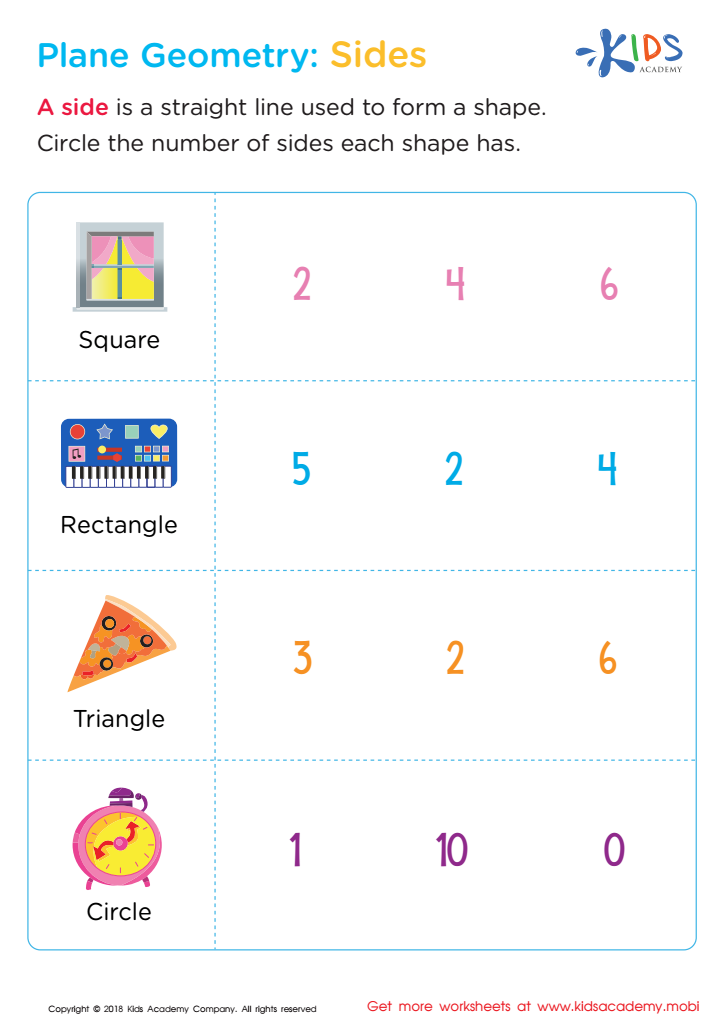
Plane Geometry: Sides Worksheet
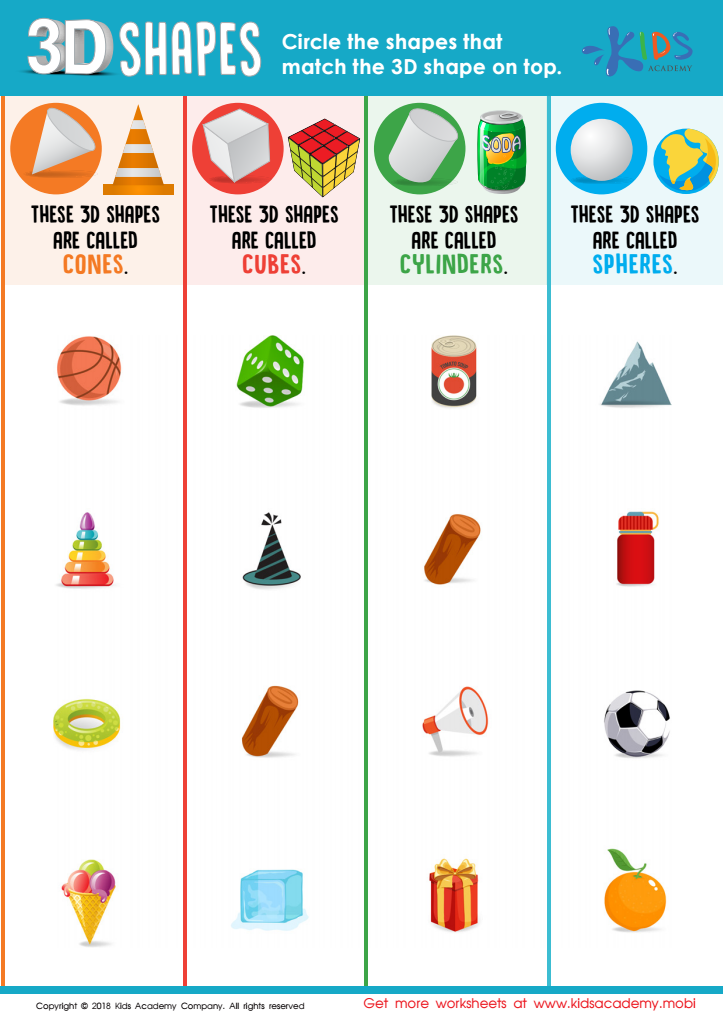
3D Shapes Worksheet








Differentiating shapes is a crucial aspect of early childhood education, especially for children aged 5-7. Understanding shapes helps young learners develop spatial awareness and geometry skills, foundational for more advanced mathematical concepts. By recognizing and distinguishing between different shapes, children enhance their observation and analysis abilities, critical thinking, and problem-solving skills. These cognitive skills are fundamental for learning diverse subjects and navigating everyday tasks.
For parents, engaging in shape-related activities strengthens the parent-child bond and provides valuable learning moments. Simple activities such as identifying shapes in the environment can make learning fun and interactive. Consistent exposure to shapes also sharpens keen observation and aids children in making connections between what they see and what they learn.
Teachers benefit too by having varied strategies to cater to different learning styles, ensuring that each child grasitates these concepts effectively. Visual, auditory, and kinesthetic learners all find entry points into understanding shapes through differentiated instruction. This inclusivity helps maintain student engagement and foster a positive learning environment. Supporting shape differentiation at this age sets learners on a successful path in academics and beyond, forming a solid foundation for their future mathematical proficiency and everyday functional skills.








